

In my experience, people tend to be a bit too generous in their descriptions of deceased friends and loved ones laid out in caskets. “She looks so peaceful.” “He looks like he’s sleeping, doesn’t he?” Or my personal favorite, “They made her look so beautiful, didn’t they?” Oh please. No disrespect intended, but I have never liked the idea of the obligatory viewing of the body at funeral homes and have avoided it as much as possible, even with relatives. Dead people always look like they are missing something essential, and they are. They are missing the look of life, which can even be perceived in those who are in a deep sleep. I have no intention of being on display upon my own death, which is one of the reasons I will be cremated and sent on my merry way to the Grand Tetons National Park. Ashes to ashes, dust to dust, and I will be nourishing plants and animals until I am completely and efficiently recycled back into the biosphere.
Speaking of animals, somehow many other species look different to me in death than humans, that is, if they haven’t started to decompose. This is especially true of insects, birds, reptiles, and amphibians. They often retain their colors and external patterns for a while, which is much better than rapidly fading to gray or some other shade that is the antithesis of living flesh. Let’s face it, many of these critters have colors and patterns more striking than the most expensive tattooists can paint on human epidermis. Artist and naturalist Christopher Marley has a sincere appreciation for the shapes, forms, and colors of the natural world and has created artistic designs using the preserved bodies of dead creatures, along with some minerals, in a breathtaking exhibit called “Exquisite Creatures.”
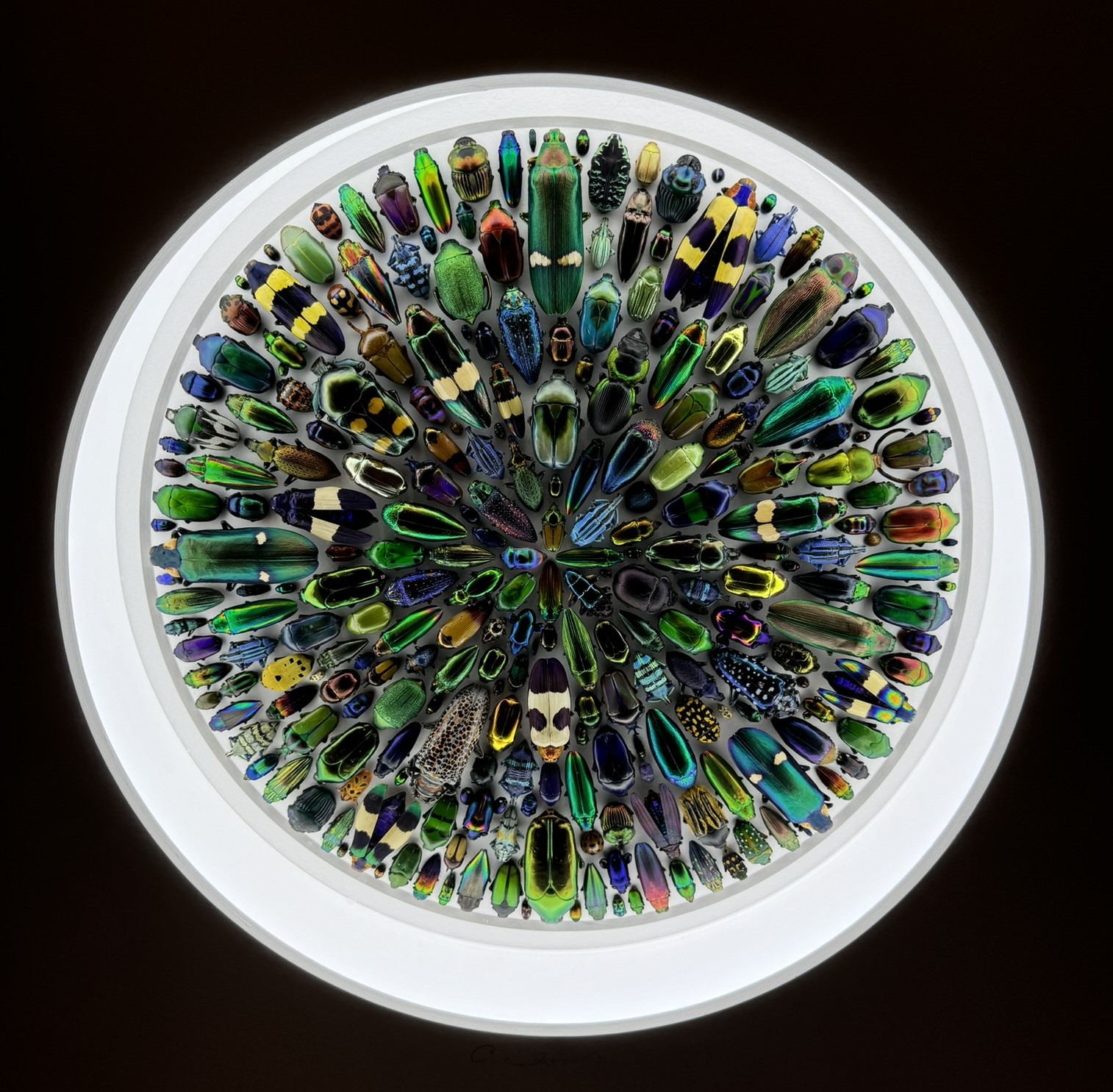
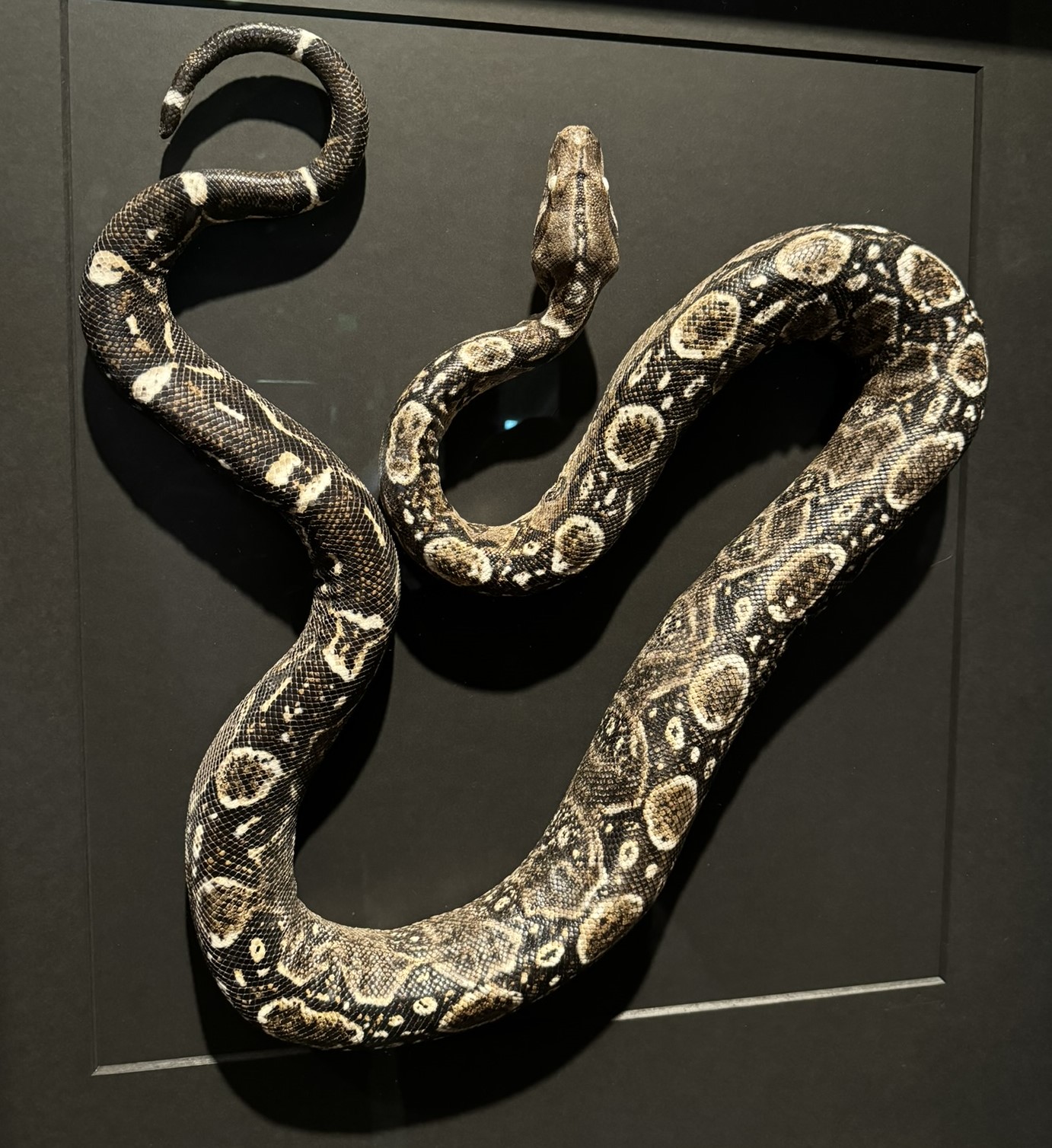
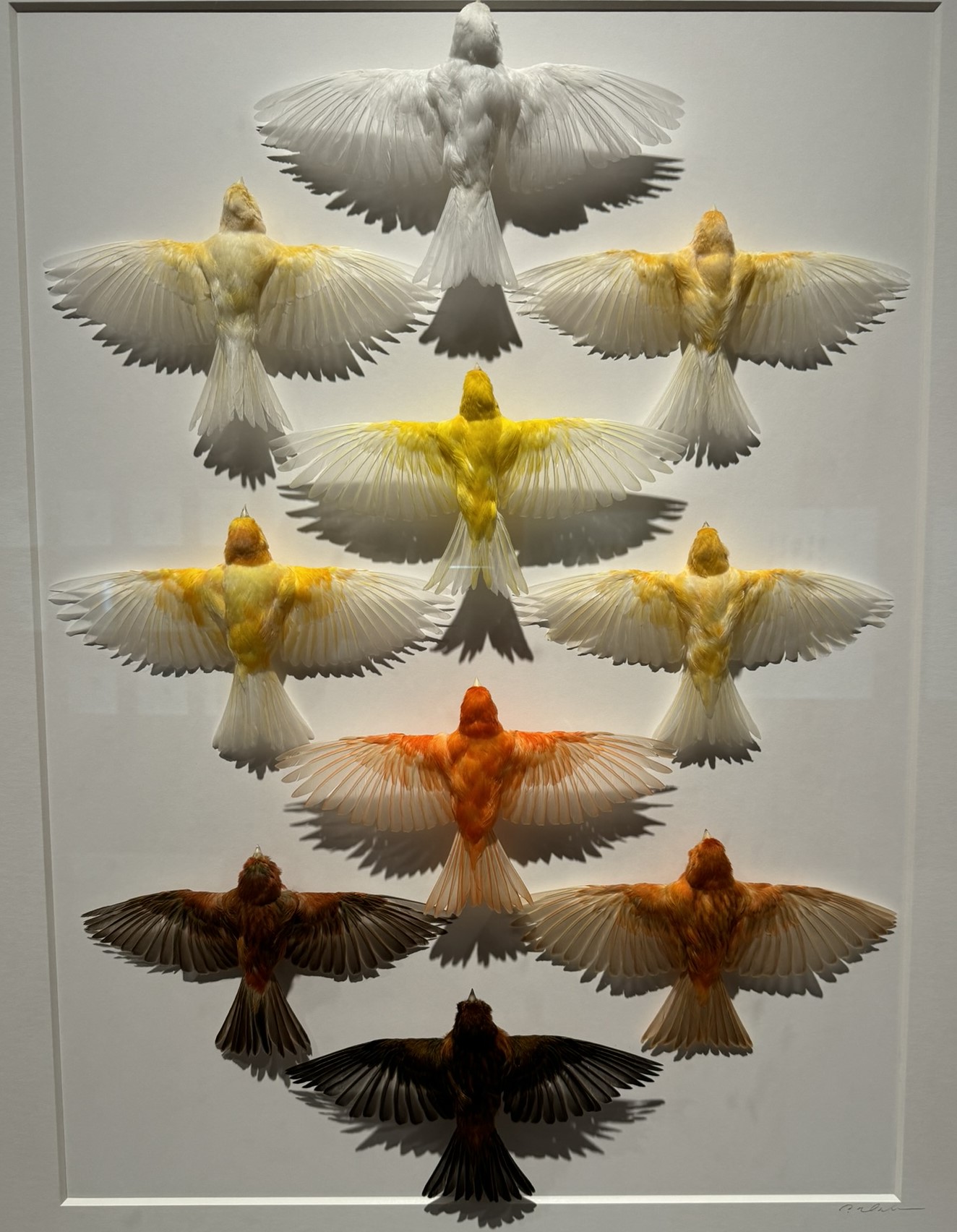
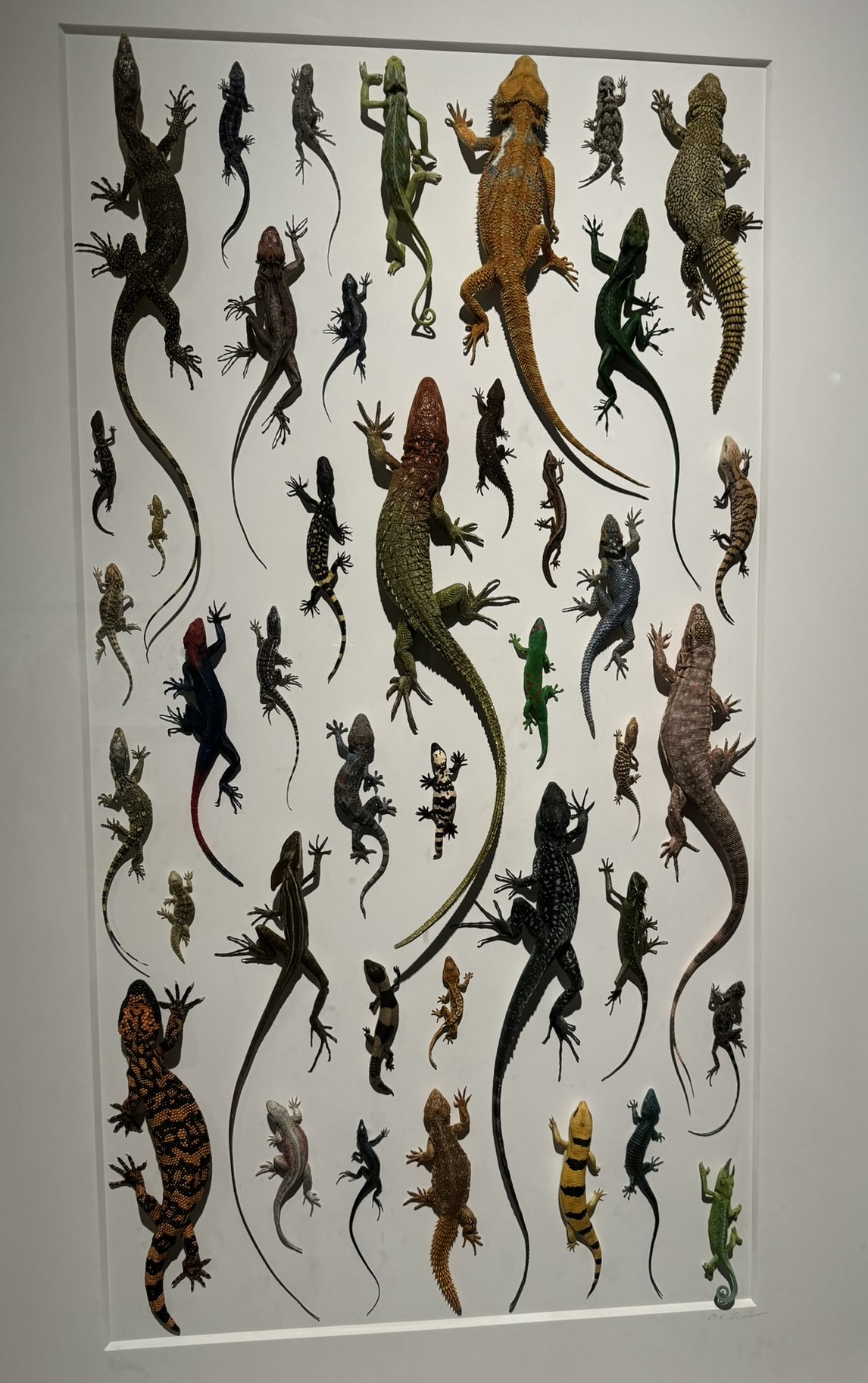
My wife and I were fortunate enough to catch Marley’s show at Crystal Bridges Museum of American Art in Bentonville, Arkansas in July 2024. Most of the specimens are matted and framed under glass, hanging on the walls of the exhibit hall, with back lighting to enhance the incredible colors and designs of his arrangements. Kaleidoscopes of beetles, butterflies, moths, shells, and feathers are on display along with carefully choreographed groupings of snakes, lizards, skinks, fish, crustaceans, and birds. Some of the bug collections look almost exactly like beads of water resting on an impervious surface. The iridescence of the shells and exoskeletons is stunning, especially as they are arranged under the perceptive and sensitive eye of this artist.
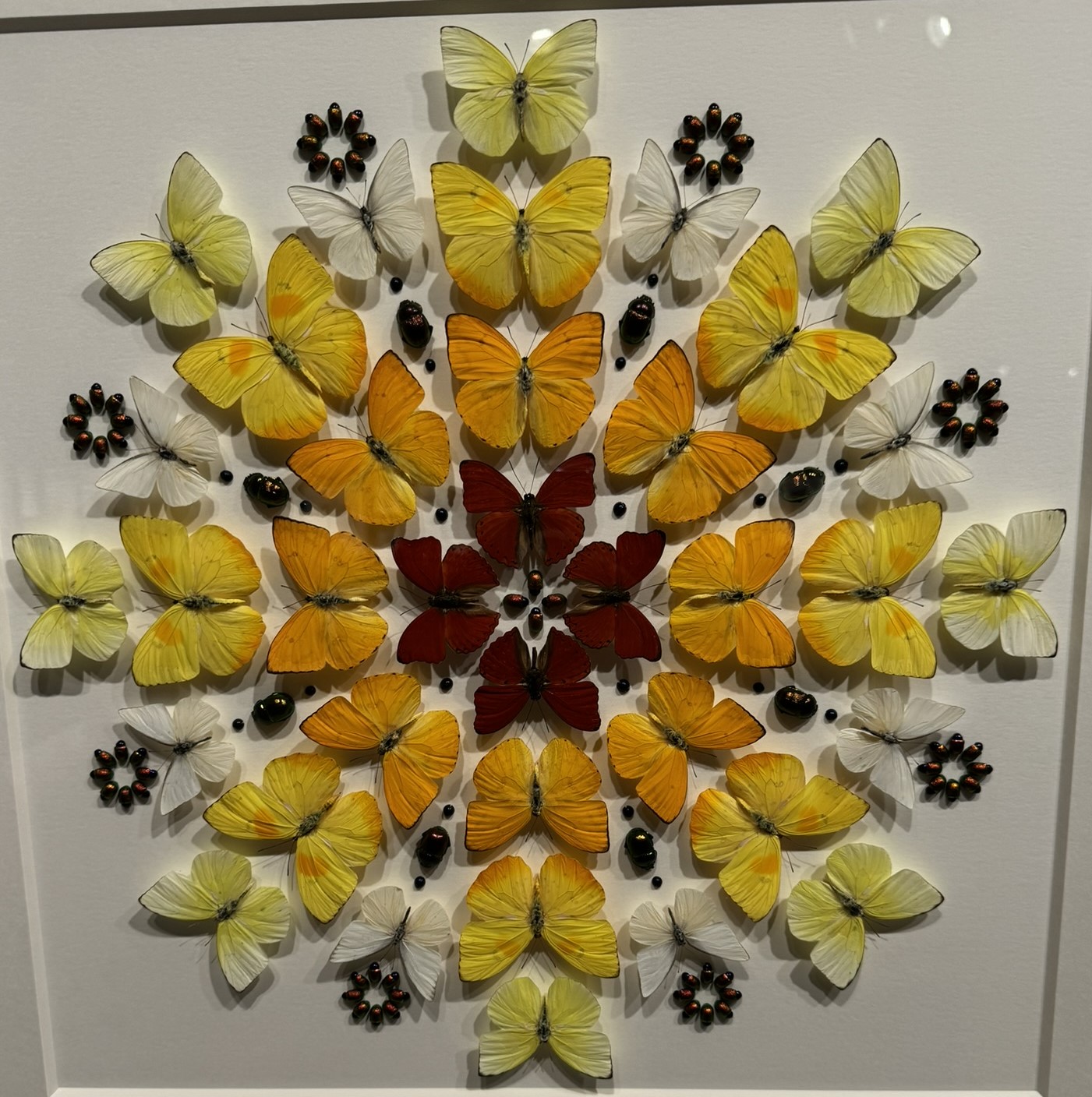
Marley collects the subjects of his work from a network of people around the world. His first book published in 2008 titled Pheromone focused on his artwork with insects. In the words of his publisher, “Marley has used his skills as a designer, conservator, taxidermist, and environmentally responsible collector to make images and mosaics that produce strong, positive emotional responses in viewers.” I completely concur with that evaluation. We were blown away with how he has taken many creatures that are often repulsed by people in general and molded their forms into magnificent displays that are indeed exquisite.
[Note: The photographs included here are not great quality, primarily because the gallery was so crowded and getting close and lined up to take a photograph was extremely difficult. Also, no photograph can replicate the experience of seeing these displays in person.]



 If You Want My Opinion