
The Little Girl in the White Dress

Isn’t it odd what scares us?  Oh, this is not to be a discourse about death, doctors, dentists, or dogs (some folks seem to be horrified of them).  I am fascinated and quite intrigued by the unusual things that scare us, especially harmless ones that, under just the right circumstances, can be bone chilling.  You know what I mean.  A perfect example?  Clowns.  What could be more cheerful and fun than a clown?  Unless, of course, the clown has daggers for teeth and lives in a neighborhood sewer.  Even the most innocent clown can be frightening, particularly to small children at birthday parties.  Must be all that makeup.  There are plenty of full-grown adults who shiver at the sight of a clown.

Then there is the terror that is invoked by certain elements of situations, environments, or settings.  An illustration is the best way I can describe what I mean here.  A colleague and I were riding home one night through the dark countryside.  It must have been overcast, because the only thing we could see was the portion of the road illuminated by his headlights.  For some reason it occurred to me that seeing something on the side of road in the headlights for a brief moment could be terrifying, like a little girl in a white dress, all alone, just standing there watching us as we pass by her.

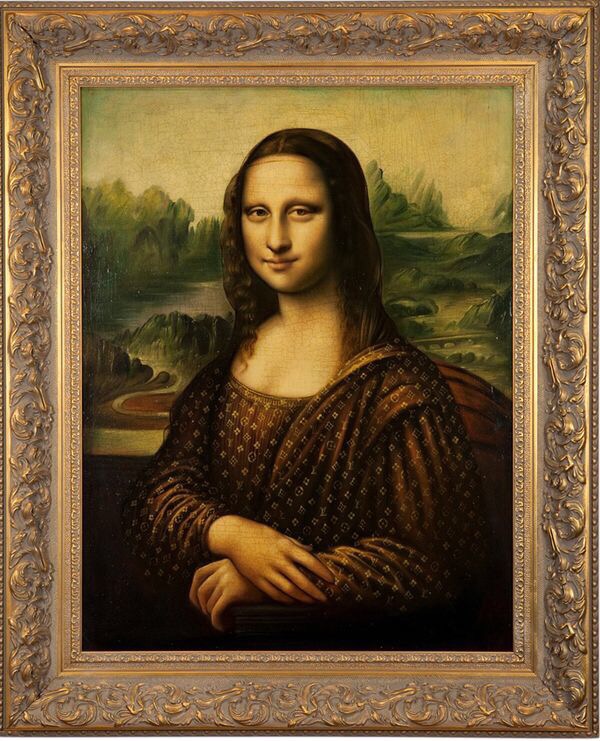
Why should a little girl like the one pictured here in this 1935 oil painting by Rose Trellis Caracciolo be so frightening, standing on the side of the road on a pitch-black night, perhaps with even a faint smile on her face?  I asked my colleague, the driver, that very question.  I will never forget his answer, and it is as good an explanation as I have ever heard for the situation.  “Because you know she ain’t supposed to be there.”

No Easy Way to Say It

Losing a family member to death leaves a significant empty space for those left behind.  The death of a parent summons feelings of vulnerability and a sense of one’s own mortality.  Even when death is an end to suffering, there is a certain finality to it that brings sadness.  However, even in the darkness of these times, there is plenty of humor that always accompanies the human comedy, and the recent death of my father is no exception.

I wrote last week about “the call” I received from the nursing home informing me that my father had passed away.  The words spoken by the facility’s representative reminded me of other testimonies I have heard from people who have received “the call.”  A couple of weeks before he died, my father had suffered from an infected lymph gland in his neck that was very inflamed and painful.  He was on some very strong antibiotics that zapped what little energy he had left at age 94, but it appeared that he was getting better and was strong enough to get out of bed.  His nurse told me that he had actually eaten dinner only an hour or so before he died.  So the representative who called had the unpleasant task of giving me news that by no means was a surprise but was nevertheless not altogether expected either.

Herein lies the comedy.  You have to wonder how nursing home personnel are trained to deliver such bad news to loved ones.  In this case, the voice on the other end of the phone said, “Mr. ————? I was calling to let you know there’s been a change in your father’s condition,” to which I replied, “Okay.”  And then she handed it to me: “He passed away this evening.”  Now, at this point, I began asking the predictable questions about how he was found, how he died, what time it happened, etc.  What I really wanted to say was, “Why yes, I would say that is a fairly significant change in his condition.”  It would be hard to immediately come up with a better example of the understatement of the year.

My wife has told many people the story of “the call” she received about her mother’s death, which occurred while she was in a rehab center only a day or so after my wife had been with her.  The nurse who called and delivered the message told my wife that her mother had “expired.”  Really?  Expired?  I realize now that this is a technical term used in the geriatric healthcare industry, but I can’t imagine why you would use that term when talking to the daughter of the deceased.  Expired?  Can we renew her?  Did we not put down a large enough deposit?  It makes the deceased sound more like a library card or a driver’s license.

The truth is that there is no easy way to tell a person that someone they love has died.  It’s bitter and heartbreaking.  It is so precise and final.  It defies couching or masking.  There is no sufficient euphemism, although we certainly do our best with words like “passed” or “passed away” or “crossed over.”  I don’t envy those who are charged with the duty of bearing the saddest news of all, but I can’t help but find the humor in delivery methods like these.  Expired?  Really?

God’s Cathedral

There are still plenty of outdoor places in America you can visit that are protected enough to offer a glimpse at how the landscape on this continent may have appeared to early native inhabitants and explorers.  A prime example are some of the national parks.  I think the National Park Service is one of the best government programs of all, and I wish our federal leaders would find some other areas to cut funding and leave this division alone.  We have some incredible treasures around the country, several of which I have visited.  I have never been disappointed.

One of the best parks to visit to experience what I am describing is Yosemite National Park in the High Sierra region of California.  First protected in 1864, Yosemite is best known for its waterfalls, but within its nearly 1,200 square miles, you can find deep valleys, grand meadows, ancient giant sequoias, a vast wilderness area, and much more.  There are so many places in this park where you can stand, and for as far as the eye can see, there is no sign of civilization.  The vistas are absolutely breathtaking, including perhaps the most photographed view of all from just beyond the tunnel on Wawona Road, where the valley opens up and welcomes you to what many people refer to as God’s Cathedral.  Indeed, the scene is like a place of worship on a monumental scale, and for those who have any appreciation at all for the beauty of the natural world, it invokes a sense of reverence and awe.

Yosemite Valley
Yosemite Valley from Tunnel View on Wawona Road

My wife and I joined up with a good friend of ours there in July, 2013, staying several nights in a cabin and spending our days hiking along the valley floor and up to one of the high spots overlooking the valley.  Yosemite is another one of those places that reminds me just how small I am and how magnificent this planet is.  John Muir, the famous naturalist who helped draw up the proposed boundaries of the park in 1889, described Yosemite as being “full of God’s thoughts, a place of peace and safety amid the most exalted grandeur and enthusiastic action, a new song, a place of beginnings abounding in first lessons of life, mountain building, eternal, invincible, unbreakable order; with sermons in stone, storms, trees, flowers, and animals brimful with humanity.”

The Legend of Bob Dylan

My older son and I recently saw Bob Dylan and his band in concert.  My son is quite the connoisseur of classic pop music going back to before he was born, and to some extent, before I was born.  Going to this show was what he requested for his birthday because he feels certain that there won’t be too many more chances to see Dylan live, and judging from how frail the aging rocker looked on stage, I would agree.  While 73 doesn’t seem so old when considering how many of his contemporaries are still touring extensively, Dylan doesn’t seem to “get around” with the same agility of guys like Mick Jagger or Paul McCartney.

Just before the show began, the house lights went out and the stage was dark.  A single member of his band came out in the dark, picked up a guitar, and started playing a gentle, folksy tune.  It was like being in church.  When the lights went up, the rest of the band was in place, wearing matching outfits.  I leaned over to my son and said, “How often do you see band members dressed alike?”  He replied, “I never have.”  They were definitely representing a different era, when rock-n-roll was reaching adolescence and getting more rebellious, but there was still a touch of class and style left over from the very early days of the bands that accompanied Buddy Holly and Elvis.


President Barack Obama presents Bob Dylan with a Medal of Freedom (May 29, 2012)

Most people don’t become legends during their lifetimes, nor do they become iconic.  Bob Dylan is an exception.  Some of his songs clearly define the rock-n-roll era, especially the elements in the genre that are most significant historically: protest, reflection, freedom, and change.  More than any other popular musician and songwriter from my generation that I can recall, Bob Dylan has proven over and over again that rock-n-roll was never just about the music, and certainly not about beautiful voices.  Hell, he never even tried to make pretty sounds with his voice, that is, on the occasions that he decided to sing instead of speak his songs.  But I would argue with anyone that his lyrics were some of the most powerful and moving of that generation.

At this particular show, Bob Dylan sang an incredible variety of music in a short time. He was probably on stage for less than two hours altogether, but during that time, we heard folk, blues, country, reggae, and rock.   He never picked up a guitar, but he played a miniature grand piano, and of course, the harmonica.  The instrumental variety from his band was impressive, including tunes using a violin and a huge string bass.  It was clear that he was playing what he wanted to play, not what the crowd expected or necessarily wanted.  He didn’t include “Like a Rolling Stone,” which no doubt irritated some of the audience.  But he did play “Tangled Up In Blues” and “Blowing In the Wind.”  Dylan performed that last song as his finale for the single encore he gave, and true to form, he used a variation so different from the original recorded version that I didn’t even recognize it until he was into the chorus.  I leaned over to my son and said, “I almost didn’t recognize this one, the way he’s playing it.”  Looking straight ahead to the stage, admiring the legend, my son replied, “He’s earned the right to do it anyway he wants.”  I couldn’t agree more.

The Call

On Saturday evening, I got the call.  Actually, the call came in the form of three voice mails left on my cell phone because I was at a musical event and had my phone turned completely off.  The calls and messages left were from the nursing home, where my father has spent that last five years of his life.  Most of those years could not really be characterized as “living” in the sense that most of us use the word.  Oddly enough, I just posted a few days ago about my sorrow in watching my dad’s recent, rapid decline.

Getting one voice mail from the nursing home is common; getting three back-to-back in a matter of a few minutes indicated something serious.  I have been expecting this call for quite a long time.  At times I have dreaded it, at others I have longed for it, which has been the case recently.  Had the call been to inform me that, due to either illness or accident, my father had been taken to the hospital, it would certainly have anguished me.  The last thing I wanted, any of us who knew him really wanted, was for him to go through the agony of multiple trips to the hospital for procedures to prolong a life not worth living anymore.

There is a certain finality to the words “Your father passed away this evening.”  At the age of 94, the phrase is not unexpected, and as I have indicated in this case, it has quietly been hoped for by friends and family.  He certainly was ready to go and had been for a few years.  He frequently expressed his astonishment that he was still alive. “I never dreamed I’d live this long,” he said many times when we visited him.  “I don’t know why the Lord is keeping me here.”  Good question.  I don’t know the answer.  I can’t say for certain, but maybe he knows the answer . . . now.

You Can’t Run Away from a Bad Diet

For years my wife has been telling me that, while she knows we need to exercise for our health and well-being, exercise won’t help her shed the pounds she wants to lose (she doesn’t have that much to shed truly).  I have always resisted her on this point, thinking that burning off calories with vigorous exercise has to eventually result in weight loss.  While that still may be true with a sensible diet, the fact remains that exercise without cutting back portions and watching the amount of calories and fat we take in will not result in any serious weight loss.  Such are the findings of a team of British cardiologists in a recent study, which they explain in an editorial in the British Journal of Sports Medicine.  In essence, they are claiming that even though regular exercise reduces the risk of developing a number of health issues such as heart disease, dementia, some cancers, and type 2 diabetes, it doesn’t promote weight loss.

Once again, my wife is smarter than I.  This information that she knew and that I was slightly skeptical about is even more troubling for her than it is for me because she also knows that, as we both age, her metabolism as a woman slows down at a much faster rate than mine does as a man.  This means that I can take in more calories than she, and with everything else being equal, my weight remains stable.  No, it certainly isn’t fair and is another example of how women get the shaft from nature.  I’m not so concerned about how my wife’s body looks (well, yes it does matter, but it isn’t my main concern), but I do want her to be healthy and well as we march toward retirement in the next ten years.  I am convinced that avoiding obesity is essential in achieving that goal, for both of us.  Beyond that extreme though, I hope we can both eat well, exercise regularly, and maintain our fitness as we age so we can enjoy that retirement by traveling around and exploring, relatively free of pain and with as much physical flexibility and stability as possible.

Peering Out to Infinity

To celebrate the 25th anniversary of the launching of the Hubble Space Telescope, today the New York Times (nytimes.com) posted some favorite photographs of astronomers and others involved in the Hubble project over the years — photos taken by the telescope.  According to Hubblesite.org, this magnificent device represents “one of NASA’s most successful and long-lasting science missions. It has beamed hundreds of thousands of images back to Earth, shedding light on many of the great mysteries of astronomy. Its gaze has helped determine the age of the universe, the identity of quasars, and the existence of dark energy.”

(A cluster of 3,000 stars known as Westerlund 2 in the constellation Carina. )
Upon seeing some of these images and trying to grasp the scale in size, distance from the Earth, and time associated with them, it is certainly understandable why so many people still turn to supernatural or religious explanations for the vastness and wonder of the universe.  How can the mind comprehend it?  It is equally understandable why atheists such as Richard Dawkins make such proclamations as the following: “The world and the universe is (sic) an extremely beautiful place, and the more we understand about it the more beautiful does it appear.”

I try to get to the coast as often as I can, primarily because I like the way it puts my life in perspective for me.  I feel so small when I look out at the ocean and am soothed by the sound of endless waves pounding the shore.  To paraphrase a Beatles tune, all my troubles seem so far away.  Looking at these Hubble images and contemplating how small I am on this planet, in this solar system, in this galaxy that shares the universe with one hundred billion other galaxies — perhaps many more — magnifies this experience but makes me deeply appreciate my life, my consciousness, and all that I perceive.  How very fortunate am I.

For the Birds

One of my favorite pastimes is feeding birds.  I have had bird feeders close to my windows since I was a young boy, and I never tire of watching them gather around a feeder, flitting about to get the best position or to carry a seed to a nearby tree to eat in a more secure location.  I am no bird specialist and can only identify the most common species that inhabit or pass through my part of the world.  I don’t know their calls or that much about their habitats or characteristics.   I am not a birder as such and have never gone out of my way to search for particular species.  I can count on one hand how many times I’ve used a set of field glasses or binoculars to look at them.  I simply enjoy watching them around my house and feel good about providing them food, water, and shelter, especially during the colder months.  Their colors, designs, sounds, and antics fascinate me.

One of my favorite species that graced our feeders about this time last year are the Rose-Breasted Grosbeaks.  They have that stark contrast of red, white, and black that you often find in some woodpeckers, but these are more like finches and frequent the feeders in the spring on their way to or from their nesting areas.  I was able to peer at them through one of the doors that leads out to our deck where the feeder is hanging.

In the open feeders, I use safflower seed exclusively because the squirrels don’t like it and won’t take over the feeders as they do with sunflower seed.  I also have a suet-cake feeder attached to a tree in front of the house.  It is one of those feeders that is caged to allow only small birds in and keeps out larger birds, squirrels, possums, and raccoons.  I don’t have anything particularly against the furry critters, but I am partial to the birds, and I have a soft spot for the small ones too.  There’s something so magical to me about these little creatures, graced with the exceptional gift of flight, and clothed in so much beauty.

Defining Art

Yes, I realize the title of this post is about as vague as it gets.  Nevertheless, how we define what is, and isn’t, art as a worldwide culture is something that puzzles me.  In America at least, so many of us seem to have no real criteria by which to judge if a work can be considered art — no standard.  I understand how subjective the appreciation of art is, and I suspect survival from generation to generation has played a major role in determining what has been defined as art throughout human history.  In my lifetime, Americans have become less and less prescribed in their definition of art, and to my way of thinking, this is an unfortunate trend.  We tend to use the terms “art” and “artist” to describe almost any form of creativity.  I am the first to admit that I don’t have a true appreciation for a great deal of modern art, which includes painting, sculpture, poetry, and a few other mediums.  Okay, those are perhaps my own shortcomings and limitations due to a lack of education or sensibility.  


What I’m referring to here, though, is how modern culture seems to lump all creativity into one huge basket, with very little discernment or discrimination.  We use the term “artist” so loosely.  We consider Leonardo da Vinci to be an artist, but we also use the same word to describe Thomas Kinkade.  Most people would recognize Beethoven as an artist, but we hear the same word used to describe Taylor Swift.  Really?  What happened to words like “entertainer?”  I play the guitar a little, the piano a bit more, and I sing well enough that people have paid me to do so at weddings, funerals, parties, etc.  I have even written a handful of songs that I think are pretty good.  Am I an artist?  I would be embarrassed if someone referred to me that way or called my creations art.  I am an amateur musician, singer, and composer.  There are plenty of people who have made a very good living doing the same thing, only a whole lot better than I do.  Are they artists?  Well, not in my mind.  I would call them professionals, and that goes for many of my musical idols.

I am not advocating that, as a culture, we have to have some kind of hard and fast rule to define art and identify artists.  But I would like to see a little more differentiation to show respect to those among us who have exceptional gifts of creativity — timeless, perhaps.  I suppose we all know that Michelangelo is actually a great artist or even a master, and that his work is not comparable to the images of Elvis we see painted on velvet canvases for sale at roadside stands.  Or do we?

Mountain Hiking

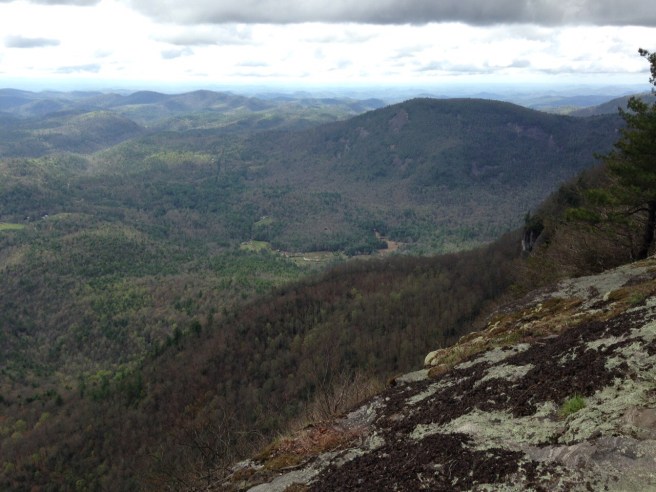
My wife and I really love to hike, and we have had the opportunity to hike in some beautiful spots: along the Pacific coast, in the desert, at Yosemite, and many other lesser known spots.  Some of the greatest rewards of hiking are the vistas that some trails include, and some of the best I have ever seen are on mountain trails.  Today, we hiked along the ridge that goes to the summit of  Whiteside Mountain just outside Highlands, NC.  The view from 4,800 feet was breathtaking.  We have certainly been at higher elevations in other places, but the view today was spectacular, probably because of the mix of sun and clouds and the multiple shades of green introduced by the onset of spring.


I cannot understand people who have no appreciation for the outdoors — for the majestic presence of mountains and seashores, the mighty rumbles of thunder, the magnificent beauty of an ancient tree, a field in bloom, or a rushing river.  I look forward to more excursions to follow trails like the one on this mountain, to see open sky and miles and miles of the earth below.