

They started appearing on our television during the first hour of prime time, usually beginning in early December and lasting until a few days before Christmas. They were advertised heavily because they were only aired once a year. They were typically thirty minutes long, but a few stretched out for an hour. Some were fully animated in the Disneyesque style, but the oldest one was actually a puppet based production using a technic called stop motion animation. These timeless Christmas specials, broadcast every year during my formative years in the 1960s, were as important in heralding in the holiday season as the Macy’s Thanksgiving Day Parade and the Norelco commercial featuring Santa completely airborne before sliding into a village on an electric shaver. Some of my earliest Christmas memories involve making sure my homework and chores were all finished by 8:00 p.m. so I could plop on the floor in front of a television the size of a modern compact car to watch these simple but wonderful programs, in living color, no less.
“Rudolph the Red-Nosed Reindeer” was probably my favorite television Christmas special and happens to be the longest running of its kind in history, dating back to 1964. It was a groundbreaking production, introducing the stop motion animation mentioned earlier and the use of a recently invented LED light bulb capable of emitting visible red light, Rudolph’s incredible nose, of course. Sponsored by General Electric, the show was the brainchild of filmmaker Arthur Rankin, Jr., who went on to produce several other classic Christmas specials. With a cast of characters including Rudolph, Hermey, Yukon Cornelius, Bumble (the Abominable Snowman), and Santa Claus, the show came to life at the hands of Tadahito Mochinaga, a Japanese filmmaker inspired by Disney’s Mickey Mouse who invented the special type of animation used in the program. I can still remember feeling so sorry for the misfits of this story, from Rudolph and the dysfunctional unwanted toys to the poor elf whose dream was to become a dentist. Critics have argued that the story and the song written by Robert May and Johnny Marks on which the show is based are plagued by troubling ethical issues, but that was not my interpretation at all. I thought “Rudolph the Red-Nosed Reindeer” was a delightful morality tale about diversity, inclusion, and empathy. God knows we could use a little more of all of that these days.

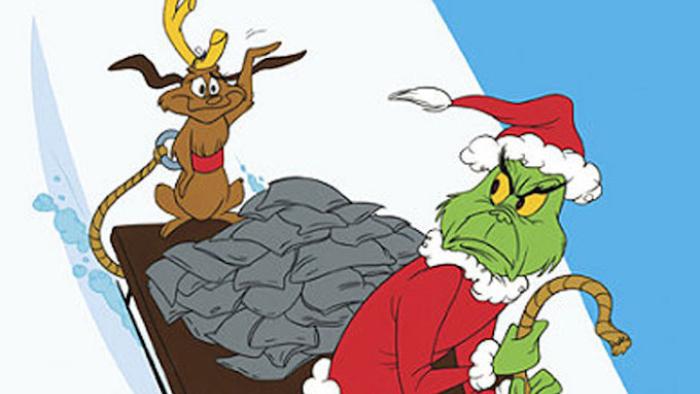
A close second Christmas special for me was the 1966 fully animated “How the Grinch Stole Christmas,” based on the children’s book with the same title by Dr. Seuss. Featuring the unmistakable voice of Boris Karloff as the Grinch, this is another one of those classics that is still running each season on network television. Like most of these television specials, this book and show were designed to teach children of all ages an important lesson: the joy of Christmas doesn’t come from material things but from community and love for one another. I certainly received that message as a child, but what I remember most about the show was the incredibly creative and hilarious song, “You’re a Mean One, Mr. Grinch,” with lyrics by Dr. Seuss, musical composition by Albert Hague, and performance by Thurl Ravenscroft, best known for the voice of Kellogg’s Frosted Flakes hero, Tony the Tiger – “They’re GREAT!” Every year in early December on Facebook, I post a few lines from this memorable song to help usher in the Christmas season for my Friends.
Third in line is another fully animated production by Arthur Rankin, Jr. “Frosty the Snowman” first aired in 1969 and has been a Christmas standard every year since. It features the recognizable narrative voice of Jimmy Durante and was his final film role. It also includes the unique voices of Billy De Wolfe as the selfish Professor Hinkle and comic actor Jackie Vernon as Frosty. One point of trivia about the animation is the fact that the narrator’s and Hinkle’s characters were drawn to look like their real-life counterpart actors. Once again, here is another Christmas special adapted from a song, which was written by Jack Rollins and Steve Nelson and first recorded by Gene Autry and the Cass County Boys in 1950 and later recorded by Jimmy Durante that same year. By the end of the show, we all know that greediness doesn’t pay and that there is a certain magic associated with Christmastime.

My final favorite is likely at the top of many viewers’ lists and is perhaps quoted more than all the others combined. The fully animated 1965 production of “A Charlie Brown Christmas” features all the most familiar characters from the imagination of Charles Schulz and his long-running Peanuts comic strip. In addition to its memorable lines and scenes, the special also includes a very fine soundtrack by American jazz pianist Vince Guaraldi. The show received both Emmy and Peabody awards and is firmly implanted in holiday memories of millions of Americans. After all, who hasn’t looked at a pathetic Christmas tree and dubbed it a “Charlie Brown tree?” Like the lesson the Grinch learned, the Peanuts kids teach us that the true meaning of Christmas is about love, respect, and friendship.















































 If You Want My Opinion