Rock & Roll Hall of Fame

My wife and I took a brief trip to Cleveland, Ohio in August, 2024. We had hoped to do so in 2020 while my wife was working temporarily in Fort Wayne, Indiana, when I could fly in, and we could then drive over to Cleveland. But the world shut down when COVID struck. We both love rock music, and as an amateur rock and pop musician, I was interested in visiting one of the top destinations the city has to offer: the Rock & Roll Hall of Fame. However, we both agreed that we would need more than a single objective to justify flying from our home in Springfield, Missouri, through O’Hare airport in Chicago, and then on to Cleveland. We found one. We discovered that one of our favorite bands, Hootie and the Blowfish, was touring in 2024 and that Cleveland was one of their stops. They were going to be playing at the magnificent Blossom Music Center in Cuyahoga Falls, Ohio, about 20 minutes south of Cleveland. We had a twofer and were good to go!

Neither one of us knew much about Cleveland and didn’t have high expectations beyond what we planned to do while in the city. We were pleasantly surprised. Situated on the southwestern shore of Lake Erie, Cleveland is taking advantage of tourism with great parks and beaches right on the water. The views are breathtaking. With a scenic skyline, good hotels and restaurants, stadiums, arenas, and several major attractions, Cleveland really is a place to explore. The city claims to be the birthplace of Rock & Roll music, primarily because radio station WJW disc jockey Alan Freed coined the phrase “Rock & Roll” to describe the upbeat black rhythm and blues music he was playing in 1951. Of course, the Rock & Roll Hall of Fame was ground zero for us, and it also exceeded our expectations.

Rock & Roll Hall of Fame, Cleveland, OH

The building is a modern structure with a huge glass atrium at the entrance. It has six levels beginning on the entrance floor, but the tour starts one level below with the Ahmet Ertegun Main Exhibit Hall, which carries visitors from rock’s earliest stars to those newly emerging contemporary musicians. There are thousands of items on display, along with feature films, videos, interactive kiosks, reading material, and plenty of music. This exhibit has the museums largest displays devoted to single artists, bands, subgenres, and movements of Rock & Roll history and the industry: Revolutionary Women in History, Hip Hop, Roots of Rock, Pioneers of Rock, Sun Records, Cities & Sounds, the music of Cleveland and the Midwest, and so much more.

Rock & Roll Hall of Fame, Cleveland, OH

Level 1 has a ticket booth, a café, large museum store, and the Klipsch Stage where performances are scheduled throughout the year. Level 2 is called “The Garage” where visitors can sign up to play various instruments with or without a house band in a setting that looks very much like a real garage. I played an electric guitar (something I never do) and sang “Midnight Rider” by the Allman Brothers Band with the help of a house drummer and a bass player, who also sang harmony with me. Although it wasn’t my best performance of that song, it was still fun to play in such an iconic venue. This level also has a large collection of different types of instruments and sound booths for visitors to jam on their own. The Les Paul exhibit is on this floor too, paying homage to the American jazz, country, and blues guitarist, songwriter, luthier, and inventor. He was one of the pioneers of the solid-body electric guitar, and his prototype served as inspiration for the Gibson Les Paul guitar.

Level 3 is focused almost completely on the Hall of Fame inductees, with the Inductee Signature Gallery, New Inductee exhibit, and the Connor Theater featuring the Power of Rock Experience. Visitors can look through alphabetic lists of inductees and a large chronological display of the all the inductees going back to the Hall of Fame’s inception in 1986. This floor also has the New Inductee and the In Memoriam exhibits. The Connor Theater is on this floor, where visitors can watch a 15-minutes video highlighting the Hall of Fame induction nights from the past.

Level 4 features the Pink Floyd tour replica of The Wall, designed to mirror the Berlin performance in July 21, 1990. This level is also the location of the Foster Theater, which is used for onsite education programs or private rentals. The theater has hosted hundreds of rock star talks and legendary rock films over the years. Level 5, along with some of the ramps in the museum, has individual display cases devoted to the legends of Rock & Roll, from the Bee Gees and the Doobie Brothers to Public Enemy to Tom Petty.

Level 6 is devoted to an exclusive exhibit that Bon Jovi unveiled with the museum in 2018. This full-floor showcase spans four decades of the band’s career along with never-before-seen artifacts from each of the band members. Visitors are immersed in the band’s story and music from inception to the present. Huge video presentations are joined by text panels and display cases filled with musical instruments, clothing, and loads of memorabilia from the band.
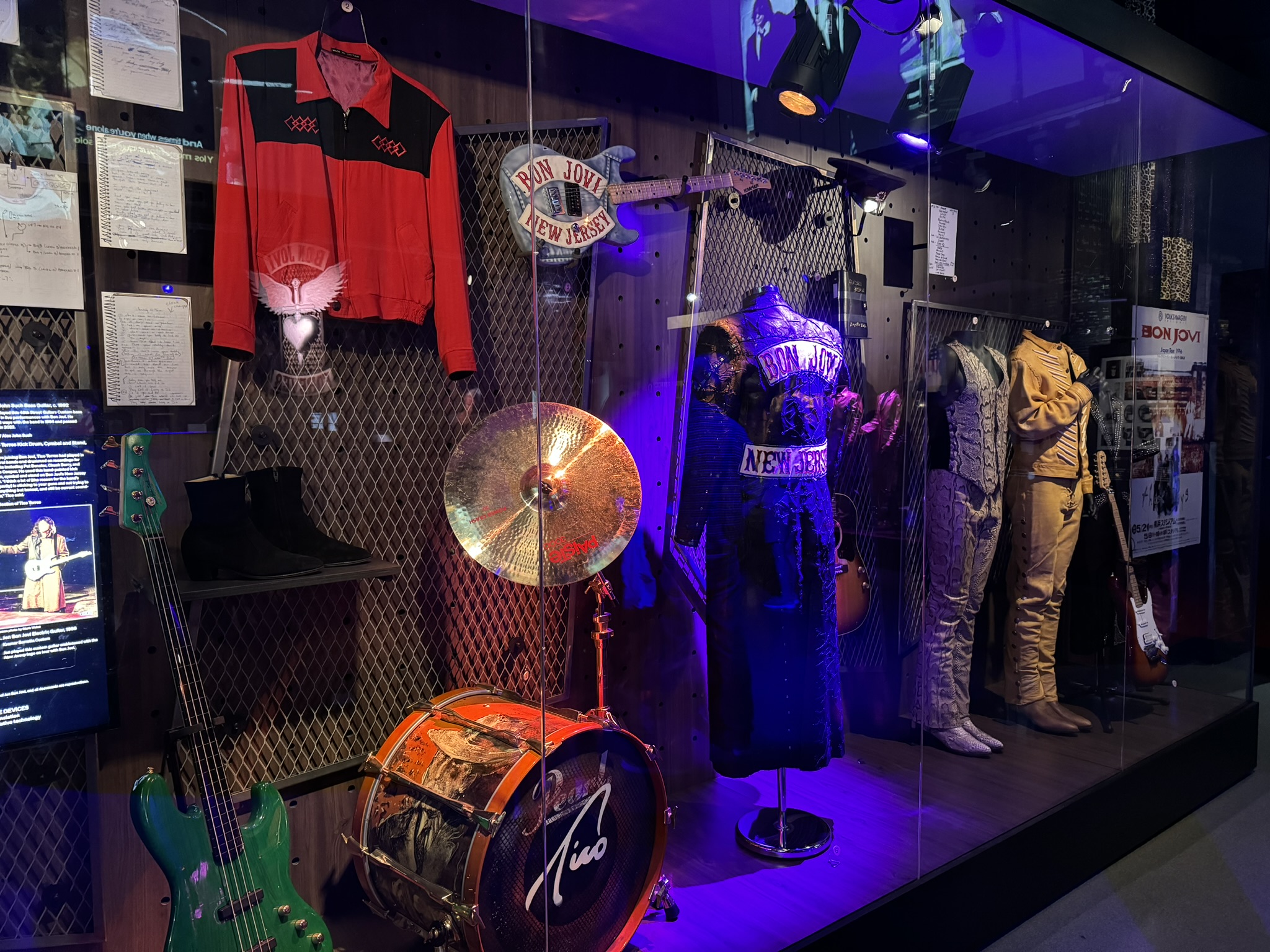
Rock & Roll Hall of Fame, Cleveland, OH

Organizations like the Rock & Roll Hall of Fame that establish themselves as authorities of a particular subject area all have one thing in common. They always stir up controversy, mostly about who or what is included, but more contentiously, excluded from their lists. This museum obviously recognizes this dilemma and even seeks to address it by allowing visitors to submit names of performers or bands they think should be inducted into the Hall of Fame. Many writers over the years have discussed this topic, and some of them have challenged the Hall of Fame on its choices of inductees through the decades. One of the most ironic exclusions is Huey Lewis and the News, the band that had a major hit with “The Heart of Rock & Roll,” which actually mentions Cleveland at the very end of the song!

Rock & Roll Hall of Fame, Cleveland, OH

I certainly had my share of questions come to mind as we strolled through each level of the museum. I was disappointed to see how much more space and almost reverential attention was given to Elvis Presley on one wall, while on the opposite wall a smaller display featured Chuck Berry, often considered the Father of Rock & Roll. I think those two positions should have been swapped. One of my favorite wall displays was for Jimi Hendrix, probably the greatest guitarist in rock history. I was baffled to learn that bands with place names such as Chicago were inducted fairly late in the game and that the bands Kansas and Boston still haven’t made it. At the same time, I was delighted to see so much attention given to Wanda Jackson, an Oklahoma native who got her start on ABC Television’s “Ozark Jubilee” broadcast out of Springfield, Missouri from 1955 to 1960. She later became known as the Queen of Rockabilly, a title she still holds to this day. As of this post date, she is still with us.

Rock & Roll Hall of Fame, Cleveland, OH

We were able to pack a lot in just two full days while still having some down time walking along the shore of Lake Erie, enjoying some great meals and drinks, and exploring the public spaces on the water around the Hall of Fame. On top of all that, we were lucky enough to catch Hootie and the Blowfish back together again for a national tour. Oh, and their opening acts were Edwin McClain and Collective Soul. For people who love rock music, it just doesn’t get much better than our quick trip to Cleveland.

Hootie and the Blowfish at Blossom Music Center (Ohio)

Work Optional in Arizona

My wife and I are at a point in our careers where we are mostly working because we want to and not out of absolute necessity. We have not reached the age to be eligible for full social security and Medicare, but we’re close. Yes, continuing to work makes sense given how the average life span of Americans has increased for our generation. We all must consider how long we will depend on social security, pensions, retirement savings, investments, and other assets. However, we want to spend fewer hours in the office and more time with each other involved in activities that are rewarding, fulfilling, and fun! So, we have pulled back to part time status and consulting gigs as a way to make this happen. A term we heard a few years back that adequately describes this stage in our lives is “work optional.” We like it.

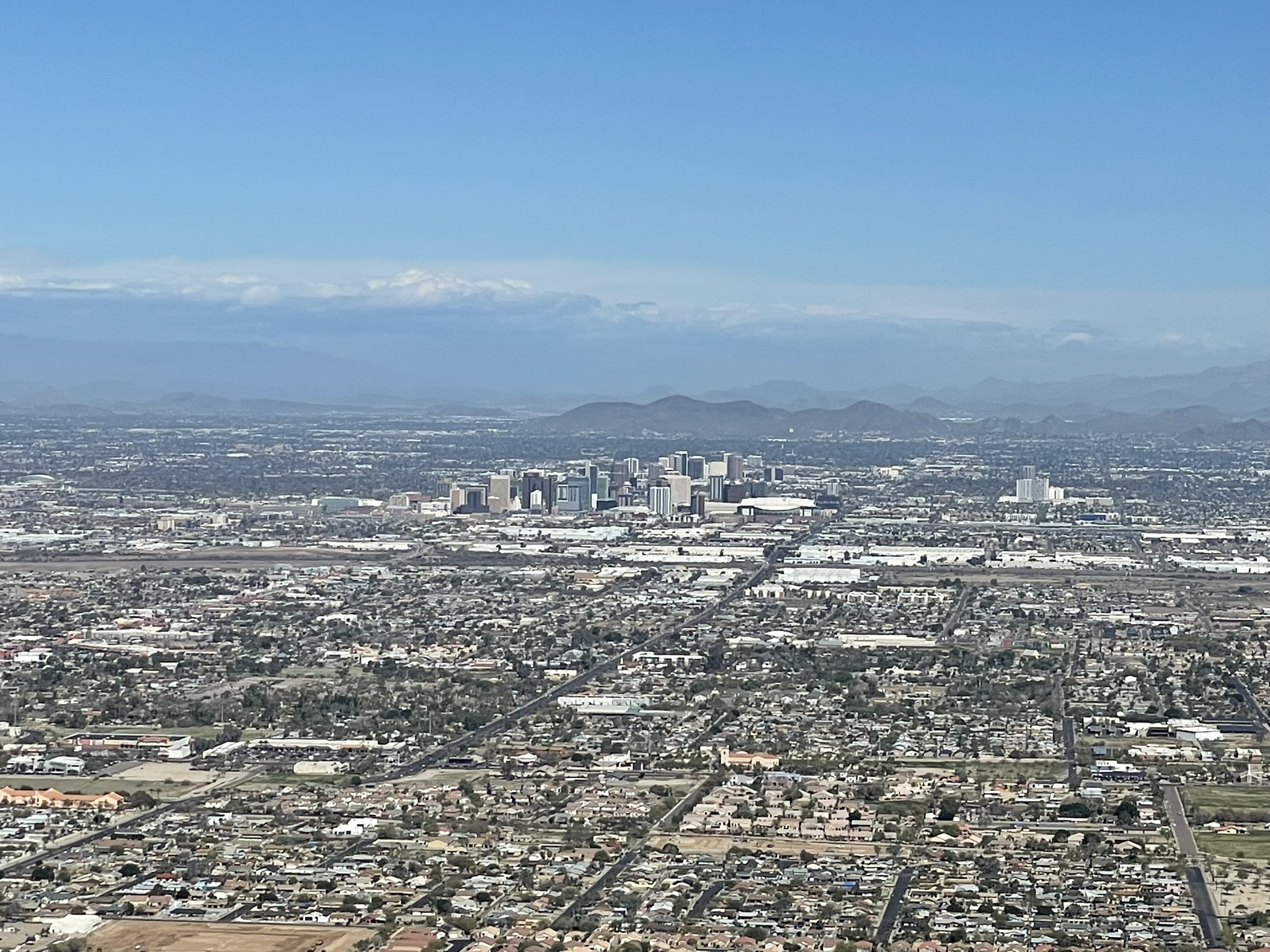
View of Phoenix, AZ, from South Mountain

I have written in previous posts about several of our trips to Arizona, specifically the Phoenix area, which is where my wife lived for nineteen years of her adult life. She built relationships there that she has maintained over the years, and now, I consider her friends in Arizona my friends as well. They certainly make me feel welcome and embrace me as a life partner to someone they obviously adore. As we made our way through the last quarter of our professional lives, we often dreamed about spending several weeks a year in Arizona, a place that still feels like home to my wife and one that has enchanted me since the first time I felt that soft desert air and radiant sunshine. Starting this year, we took the plunge. We loaded up the car and drove 1,253 miles from our home in Springfield, Missouri to Phoenix, stopping for overnight stays in Amarillo, Texas and Gallup, New Mexico. It was a comfortable pace, and driving allowed us to see the countryside as we made our way through Oklahoma, the Texas Panhandle, New Mexico, and into Arizona. We also made good use of the hours together in the car planning future trips and dreaming about how our days might look once we fully retire.

Camelback Mountain, Phoenix, AZ
Trails at Dreamy Draw Park, Phoenix, AZ

We intentionally designed this first extended stay in Arizona to be a time of relaxation and restoration, but we ended up fitting in some great side trips and fun excursions around the greater Phoenix area. The location of the house we rented was convenient and close to shopping, restaurants, grocery stores, and hiking trails in the city (and there are plenty). The house was within a few blocks of the base of Camelback Mountain, one of the most recognizable landmarks in the Phoenix valley. We found some fine restaurants, not so much high-end but such good food. We scoped out several different venues that support live music and host open mic nights, and I played at three of those locations. It was a blast. Of course, we entertained ourselves with reading, going to movies, walking, and just being together. Most importantly, we were able to spend quality time with close friends and their families, some of whom we saw several times while we were there. We even went to a youth community theater production with close friends whose daughter was working backstage – it was wonderful.

The following photos illustrate some of the highlights of our time in Arizona this year. We have trips planned to several different locations, domestic and foreign, over the next eighteen months, and we look forward to many more extended vacations in Arizona in the years ahead.

Annexus Pro-Am Phoenix Open in Scottsdale, AZ
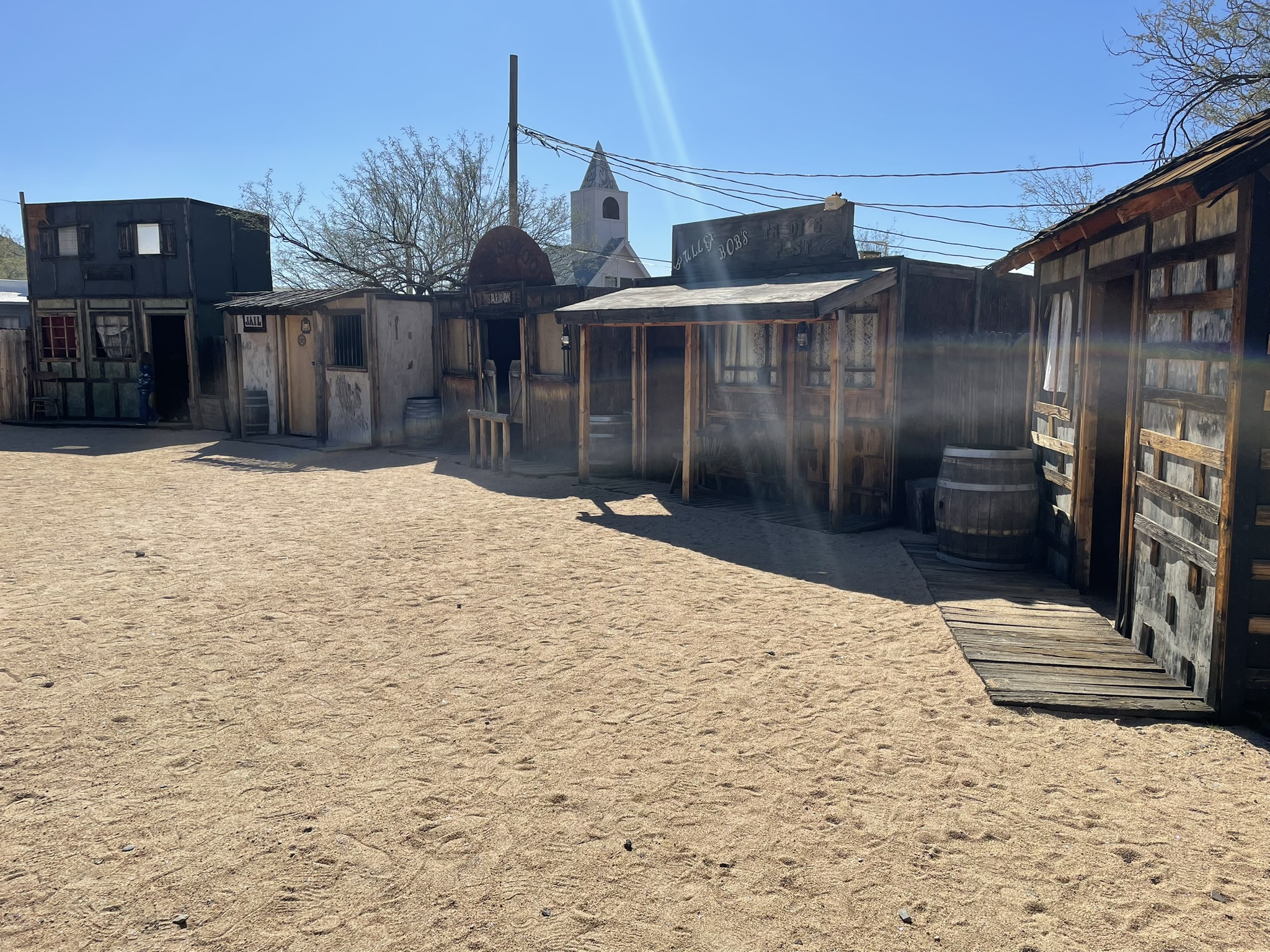
Frontier Town at Cave Creek, AZ
Musical Instrument Museum, Phoenix, AZ
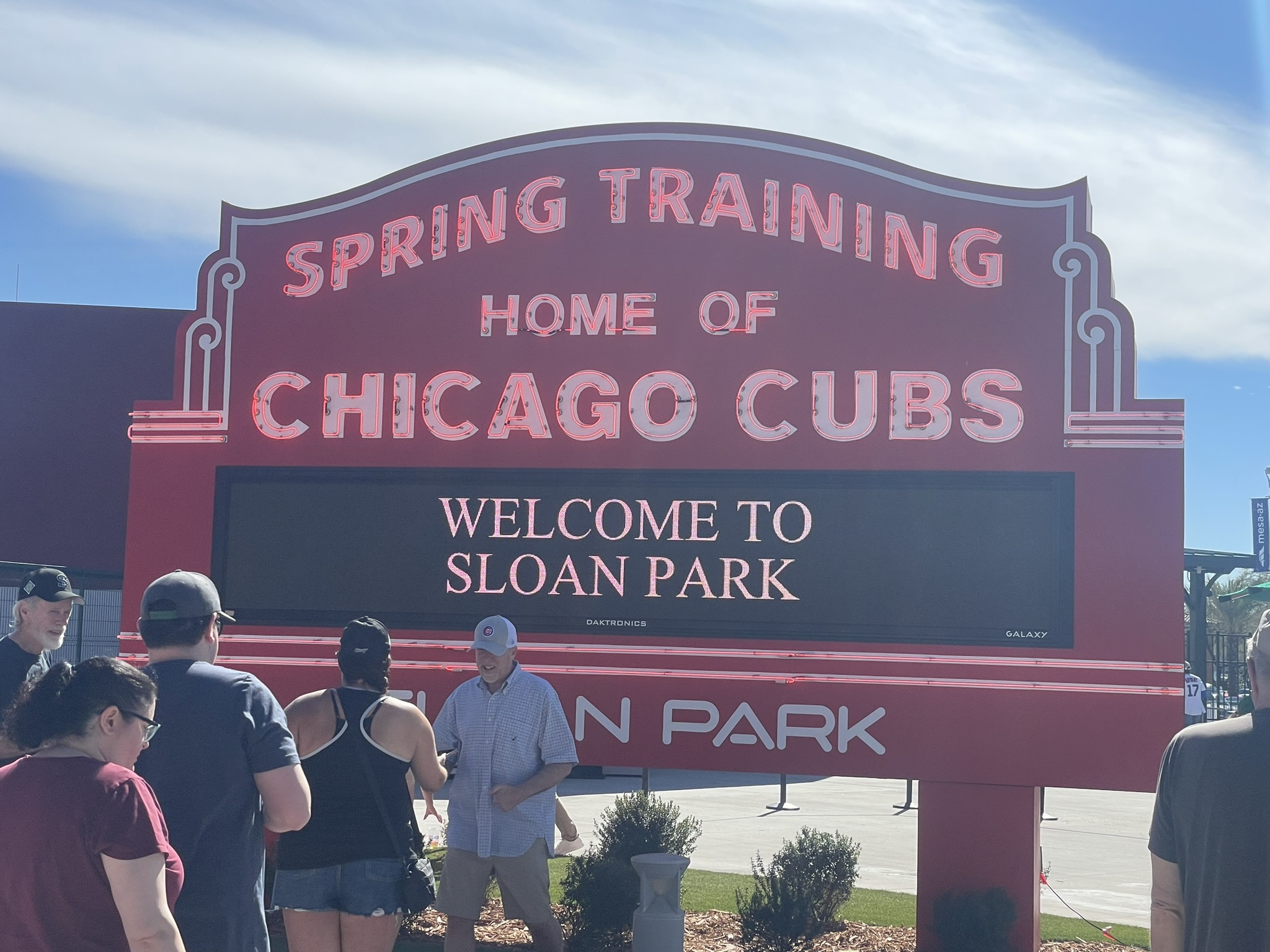
Chicago Cubs Spring Training at Sloan Park in Mesa, AZ
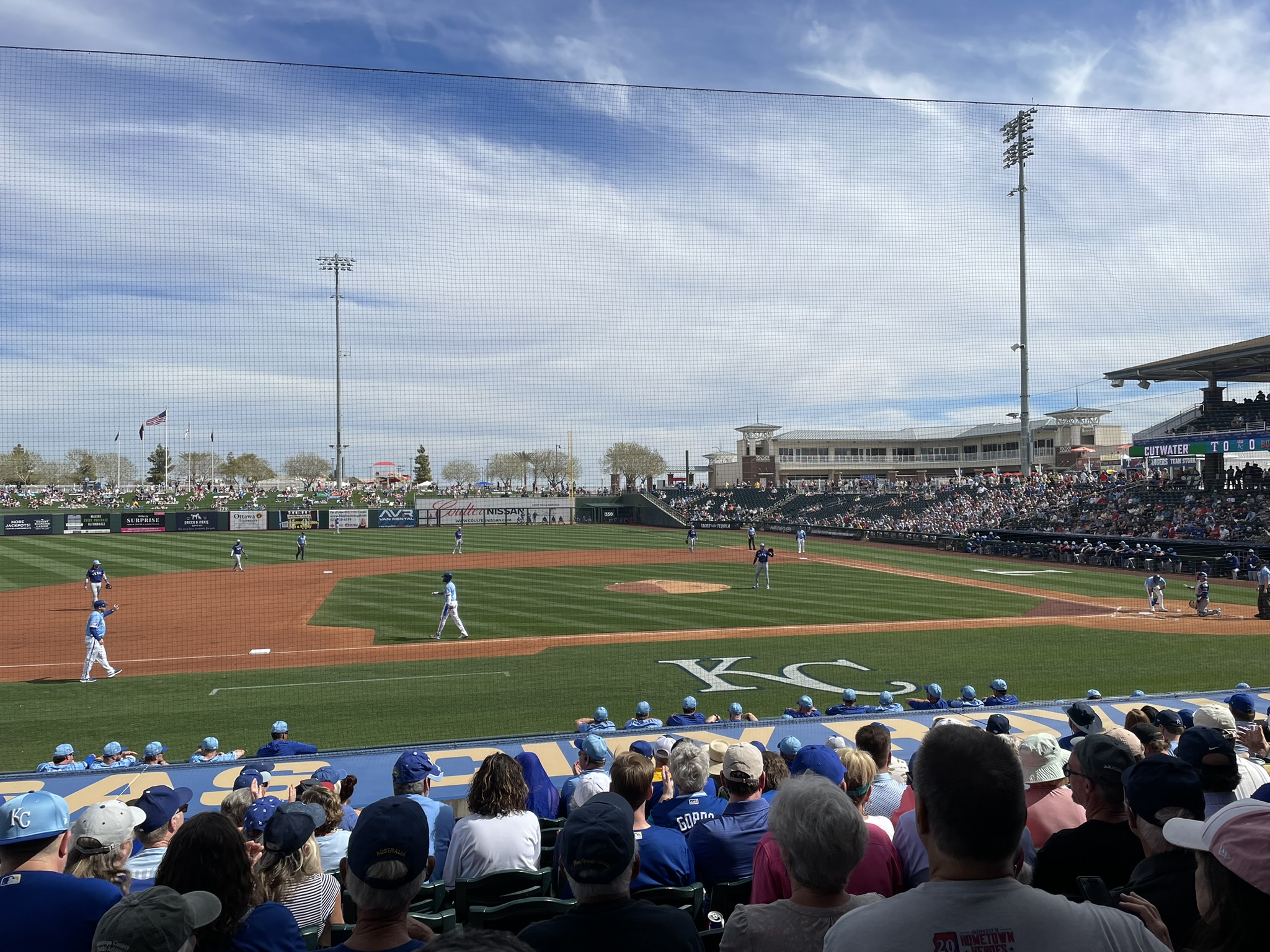
Kansas City Royals Spring Training in Surprise, AZ
Cattle ranch near Prescott, AZ

Reconsidering the Gulf Coast

On several occasions I have written about my strong attraction to the coast, how it grounds me and is so good for my soul. My first love in this regard was the Atlantic along the coasts of Florida, Georgia, and the Carolinas, simply because I was raised in the Southeast. Places such as Myrtle Beach, Isle of Palms, Hilton Head, Tybee Island, St. Simons, Jekyll, Sapelo Island, Amelia Island, St. Augustine, Ormond, and Daytona are all popular vacation destinations. I have fond memories from summer and early fall trips to all these locations, from within the last few years and going all the way back to my childhood.

In the last decade or so I have had several opportunities to visit the west coast in San Diego, Huntington Beach, Los Angeles, Laguna Beach, Carmel-by-the-Sea, San Francisco, and multiple locations in northern Oregon. It’s a completely different experience from the Atlantic, but no less enjoyable and with some spectacular landscape features you don’t see in Florida or Georgia.

Growing up, my family sometimes went to beaches along the Gulf Coast, and I even went there with friends in college, places such as Panama City Beach and Clearwater. However, I never found the Gulf Coast beaches as attractive as the Atlantic ones. The waves were usually much smaller, and the beaches were not as wide, both of which were important because I typically spent my days as a child and a young man either body surfing in the breakers or baking my skin on the sand. The atmosphere was probably thicker and provided more protection back in the day, and my skin was much more resilient to the sun’s rays. I tanned well and rarely burned much. Those days are over, even for this generation’s youngsters.

Living in the great state of Missouri now, a quick trip to the Gulf is much more manageable, even when flying. We have short direct flights that get us close to multiple Gulf beaches. We tried out Galveston in Texas a few years back, and I was pleasantly surprised how great it was experiencing the beach from the deck chairs at the house we rented with family and friends. Come to think of it, when we took a pre-Christmas holiday trip to Jamaica in 2015, we spent very little time out on the beach but certainly feasted on the views from the expansive balcony of our hotel room.

One place I had never seen was the stretch of the Gulf known as the Emerald Coast that lies west of Panama City and covers about 100 miles of seashore featuring destinations such as Navarre Beach, Fort Walton Beach, Destin, and Miramar Beach. My wife and I were in Destin for a memorial service in February of 2023, and while we were there, we took a few walks out on the beaches. The contrast of the brilliant white sand against the blue-green water makes for a breathtaking vista that goes on forever. It is magnificent.

Miramar Beach, FL
Miramar Beach, FL

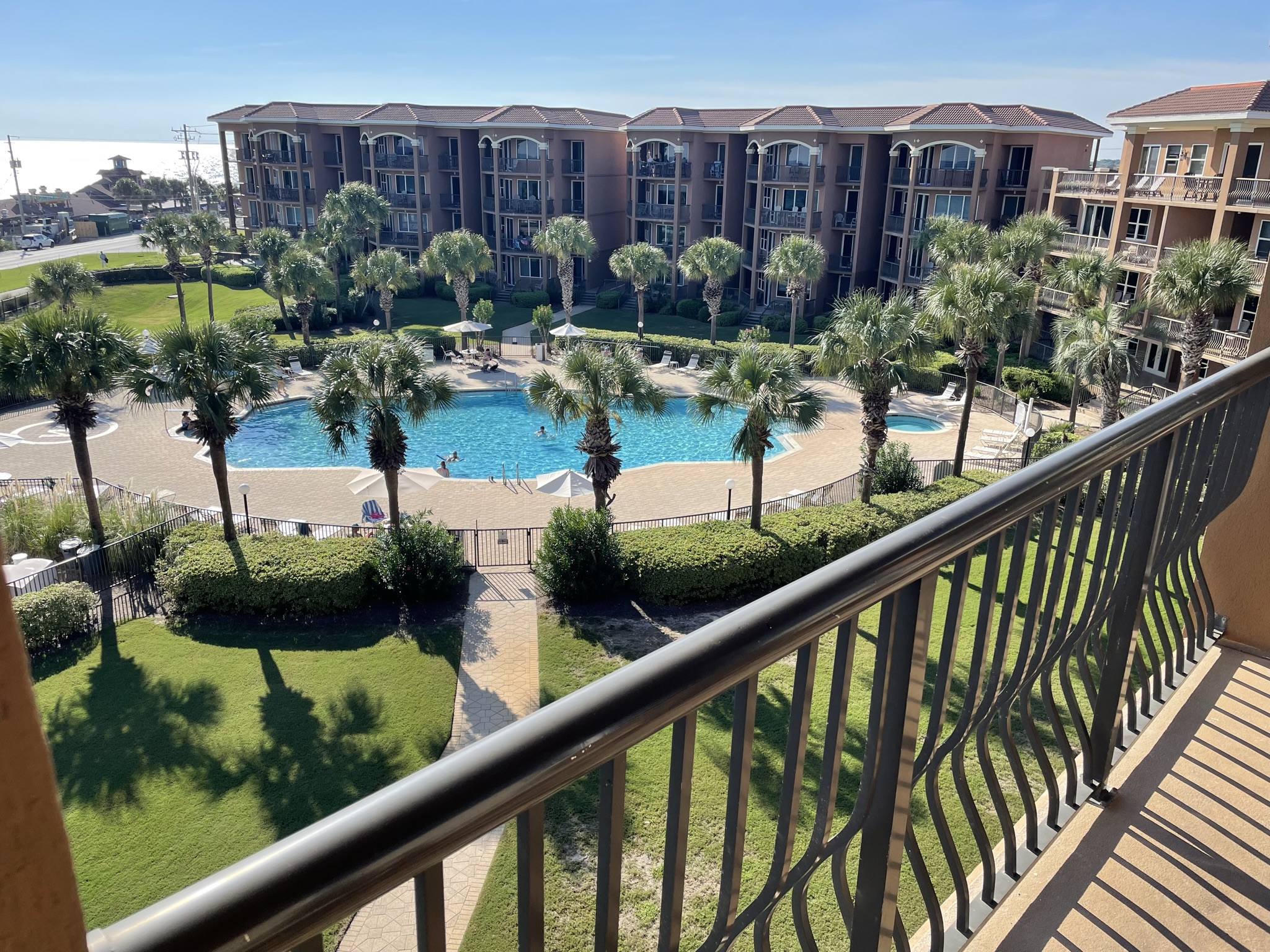
When I planned a solo trip for September this year, I decided to give the Emerald Coast a try. My wife, who also graciously serves as our ever-resourceful travel planner, was kind enough to book my flight, rent a car for me, and reserve a fourth-floor condo unit at a lovely complex just across the road from the beach called the Mediterranea. It was conveniently located to restaurants, bars, coffee shops, and retailers, many within walking distance. It was a perfect getaway. I was able to take long strolls on the white sand and on paved walkways just across the street. Although I didn’t take advantage of it, the pool was beautiful and added to the overall aesthetic. The view from the balcony was easy on my eyes whenever I looked up from the book I spent so much time reading while smelling the salty air and feeling the constant breeze on my skin.

Mediterranea at Miramar Beach, FL

It’s a good idea to break away from traditions and time-worn habits to explore other possibilities, especially when traveling. We have discovered all kinds of unexpected adventures and curiosities by going in new directions. I am certain we will return to the Emerald Coast, but there are so many other beaches to see, trails to walk, and sights to behold. As we approach the “work optional” stage of our lives, we plan to spend a whole lot more time doing just that.

Mediterranea at Miramar Beach, FL

Springfield, Illinois: The Land of Lincoln

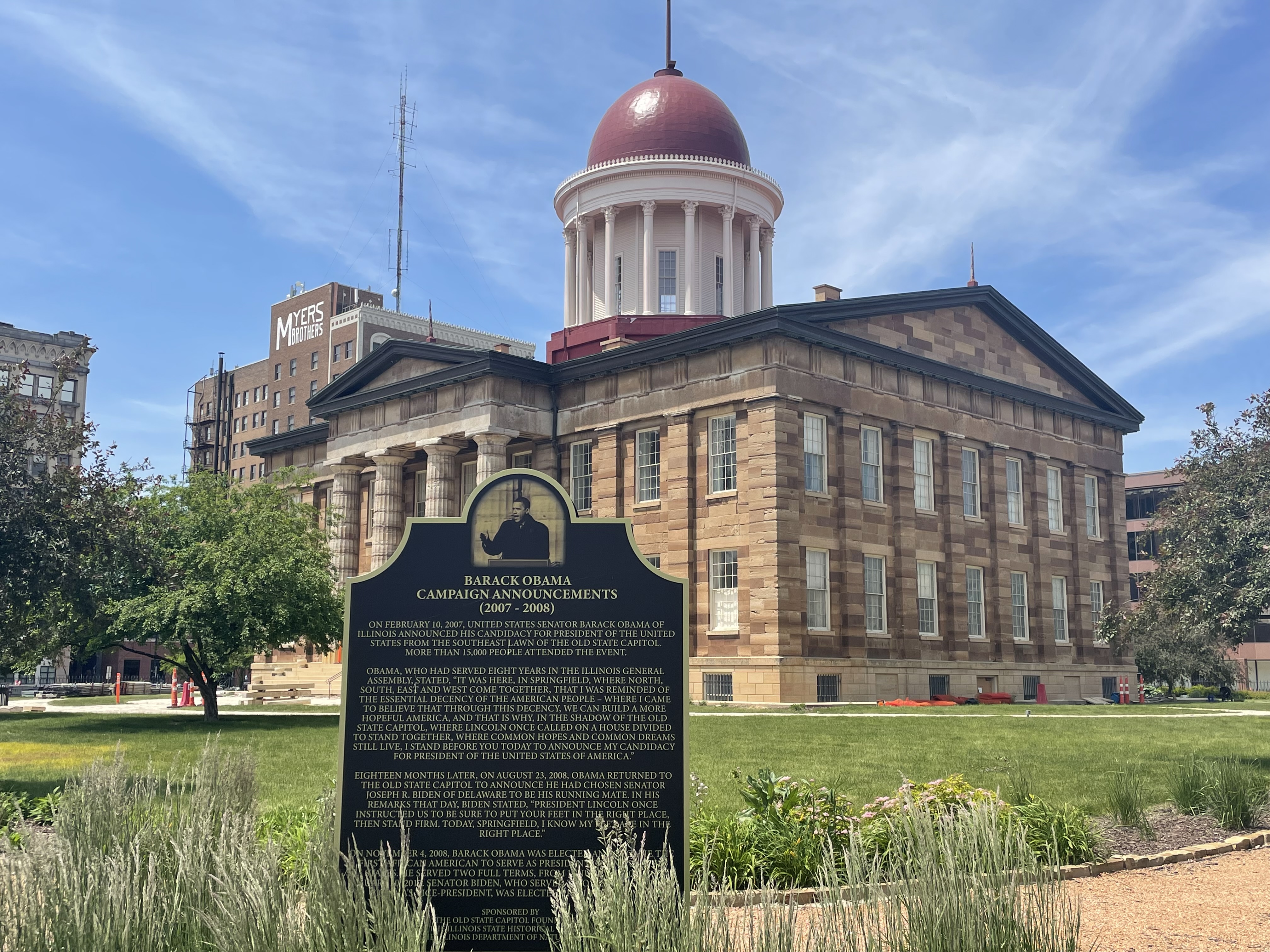
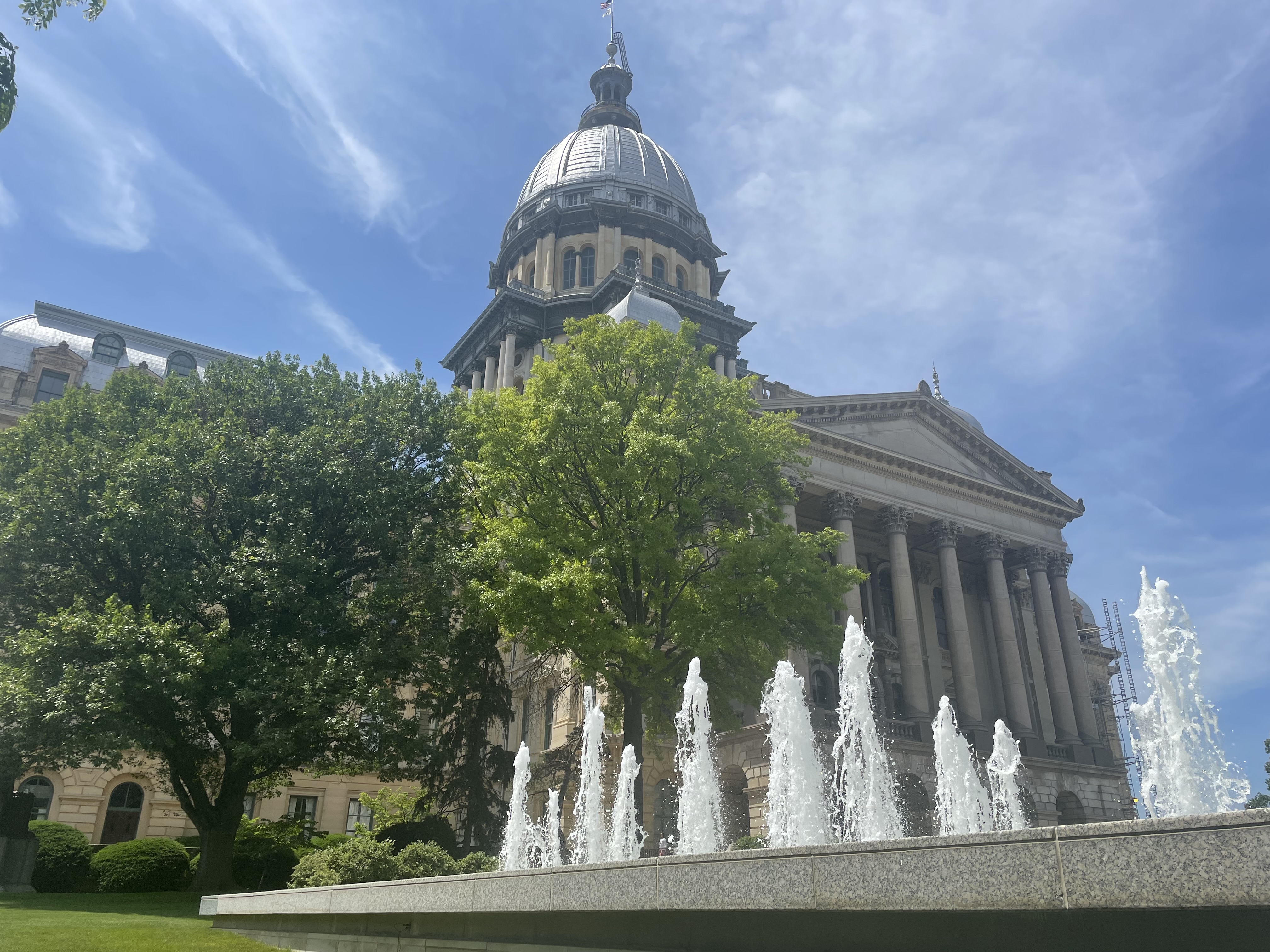
My wife and I spent a weekend in Springfield, Illinois, over the 2023 Memorial Day weekend. This town of just over 113,000 people may be the smallest state capital I have ever visited. I wouldn’t describe it as spectacular, but it does have a certain charm. There are several good restaurants and pubs downtown, and the hotel where we stayed was comfortable, clean, and convenient. The architecture of the state government buildings is impressive, especially the restored Old State Capitol that served as the state house from 1840 to 1876. On February 10, 2007, Barack Obama announced his candidacy for President of the United States on the southeast lawn of the building. The new State Capitol was completed in 1888, although the legislature began meeting in the building a decade earlier while it was under construction. Designed in the shape of a Greek cross, the capitol features a magnificent dome that carries the structure to a greater height than the U.S. Capitol in Washington, D.C.

Old State Capitol, Springfield, Illinois
New State Capitol, Springfield, Illinois

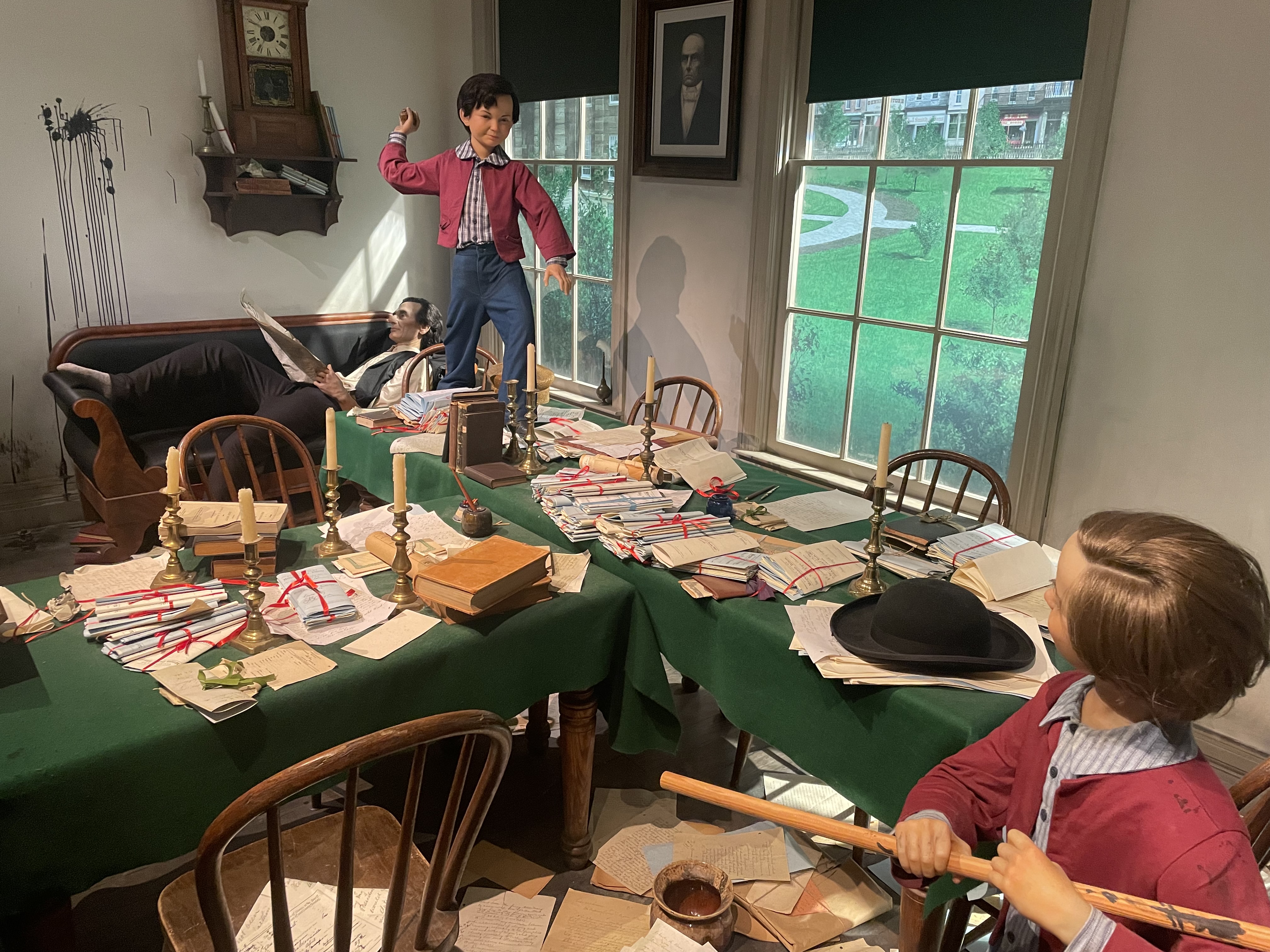
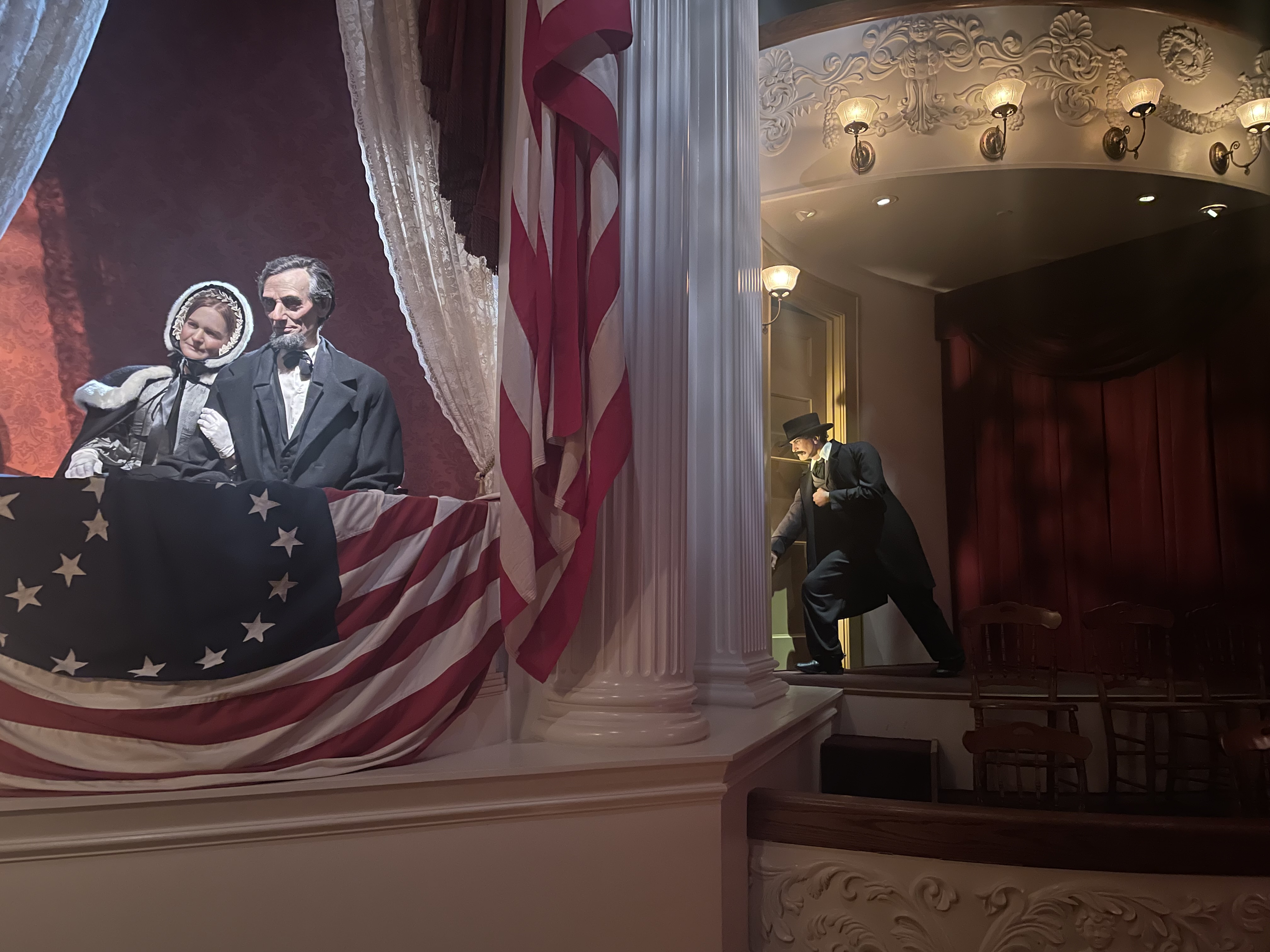
The major tourist draw for Springfield is a collection of attractions associated with the town’s most famous citizen, President Abraham Lincoln, who practiced law and started a family here. The Lincolns resided in the city from 1837 to 1847, the year Lincoln was elected to the U.S. House of Representatives. Though his most memorable years were spent in the nation’s capital, he built his legal and political career in Springfield and was buried there after his assassination in 1865. The Abraham Lincoln Presidential Library and Museum in Springfield is a first-class destination for people of all ages interested in history, presidents, or politics. The museum’s interactive exhibits and video presentations are joined by lifelike replicas of Lincoln, his family, and his associates to tell the story of the president’s early childhood in Kentucky and follow his path to the White House and on to his tragic death.

Abraham Lincoln Presidential Library and Museum, Springfield, Illinois

We also took a stroll around the Lincoln Home National Historic Site in Springfield, which is made up of a restored and/or replicated section of the town dating back to the 1840s and includes the actual house where Abraham and Mary Todd Lincoln raised their family. There are exhibits about the Lincolns and their neighbors in several of the other homes and buildings at the site, and visitors can book tours of the Lincoln home too. There is an interpretive center filled with information about the 16th President and what life was life in Springfield in the mid-19th century.

Lincoln Home National Historic Site, Springfield, Illinois

The Lincoln Tomb and War Memorials State Historic Site is also located in Springfield in Oak Ridge Cemetery. It is a massive granite structure crowned with a towering obelisk. Tours of the tomb are self-guided, and we were lucky enough to be the only people inside during our visit. The hallway leading back to the actual tombs of Lincoln and his family is filled with bronze statues of the President, including a miniature replica of the Lincoln Memorial Monument at the National Mall in Washington, D.C. It is a solemn place worthy of such a celebrated and significant leader of the nation. It is a humbling experience to see it in person.

Lincoln's Tomb, Springfield, Illinois
Lincoln’s Tomb, Springfield, Illinois
Lincoln's Tomb, Springfield, Illinois
Lincoln’s Tomb, Springfield, Illinois

Not Roughing It at Mount Magazine State Park

The Ozarks is one of those regions of the country that is diverse and interesting enough to be a tourism gold mine. From the bright lights and music of Branson, Missouri, to the gentle flowing current of the Buffalo River in Arkansas, there is something for just about everyone. Although there are no large cities in the Ozarks, there are towns with a few city amenities, like the restaurants, shopping, museums, and entertainment spots available in Springfield, Missouri and Fayetteville and Bentonville, Arkansas. On the other hand, Ozarks visitors can head off grid and commune with nature at any number of conservation areas, state parks, national parks and forests, national rivers, and wilderness regions.

Mount Magazine State Park, Arkansas

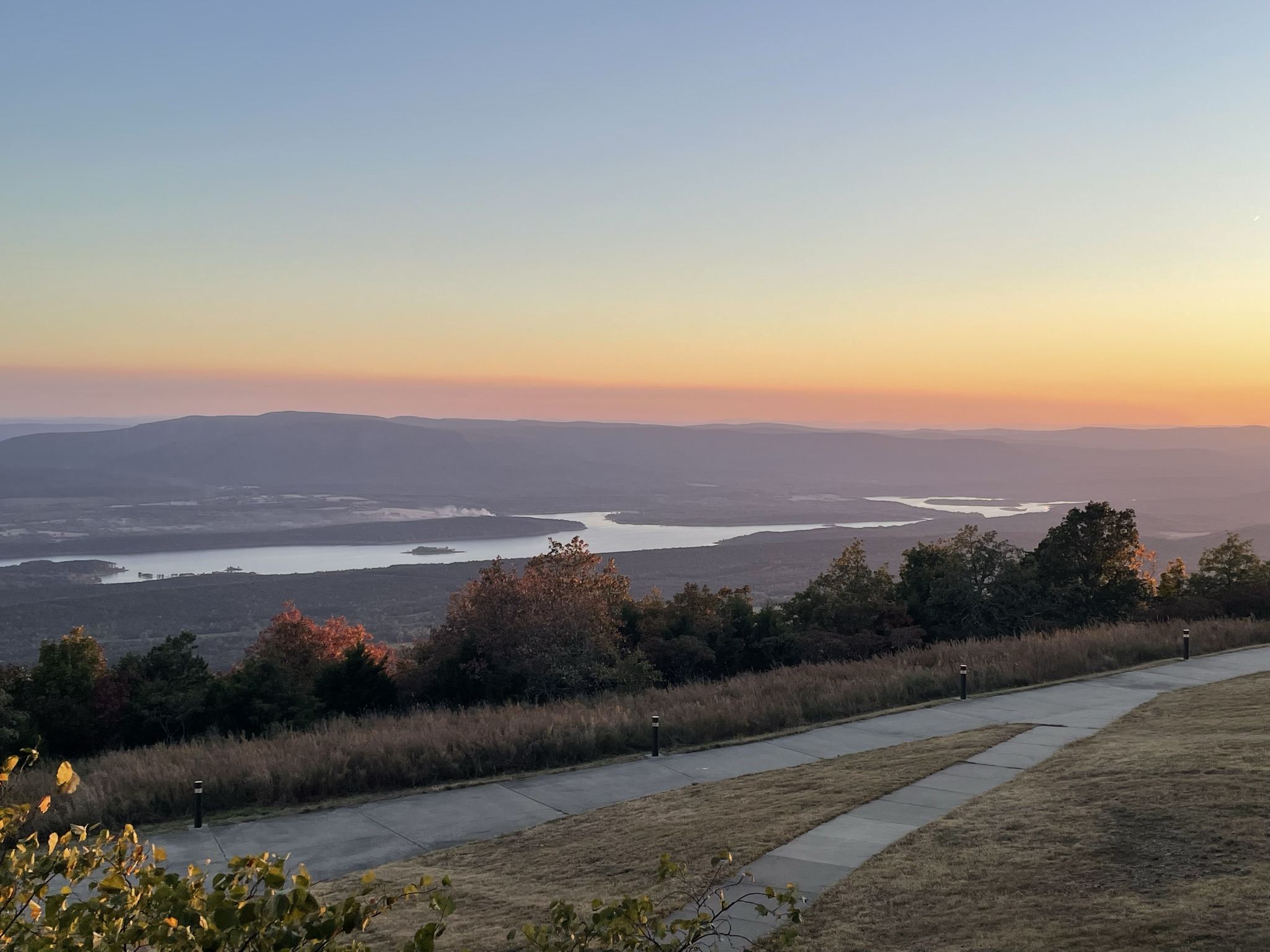
Between those opposite ends of the destination scale, there are a few spots that offer a nice blend of the outdoors with the comforts of the built environment. One of those is the Lodge at Mount Magazine State Park near Paris, Arkansas. Located just below the crest of the highest peak in the state (2,753 feet), the lodge is situated on Mount Magazine’s south bluff overlooking the expansive Petit Jean River Valley and Blue Mountain Lake. Because this ridge is so high above the valley floor, the park includes a launch area for hang gliders within walking distance of the lodge. Other activities to enjoy include mountain biking, horseback riding, backpacking, and ATV riding. The park visitor’s center is within walking distance of the lodge on one of several nearby easily accessible nature trails.

The Lodge at Mount Magazine State Park, Arkansas

The term “lodge” may be a bit misleading to potential vacationers to the site. Other than the rural setting, the exposed pine log beams, the nature-themed art, and the natural rock accents, the lodge has many of the comforts of a resort. The rooms are well appointed, many of which have a whirlpool spa. The indoor pool is spacious, and there is a fitness center and a game room too. There are multiple seating areas with large glass panels looking out over the valley. The dining room and bar are a real cut above what most guests would associate with a state park. Accommodations range from individual rooms and suites in the main lodge to cabins of various sizes flanking the building on either side, all overlooking the valley. Each cabin has a fully equipped kitchen, fireplace, and covered deck with an outdoor hot tub. The lodge also houses a conference center.

The Lodge at Mount Magazine State Park, Arkansas

What attracted me most about the lodge and prompted me to book a room for my wife and me in the fall of 2022 was the view. It is magnificent. We spent many hours on the balcony of our lodge room looking out at that incredible vista. The pleasant surprise was how nice the whole facility was. The service was great. The food was quite delicious and plentiful considering the price and the somewhat rustic setting, with buffets offered for most meals, although ordering from a small menu was an option. The park is in a remote part of the Ozark-St. Francis National Forests, but there are small towns only thirty minutes away. It’s a great place for the family that enjoys nature but doesn’t want to sleep in a tent or camper, although the park has plenty of campsites. The lodge and cabins are also perfect for a romantic getaway, and we are always ready for that kind of excursion.

The Lodge at Mount Magazine State Park, Arkansas

San Diego’s Balboa Park

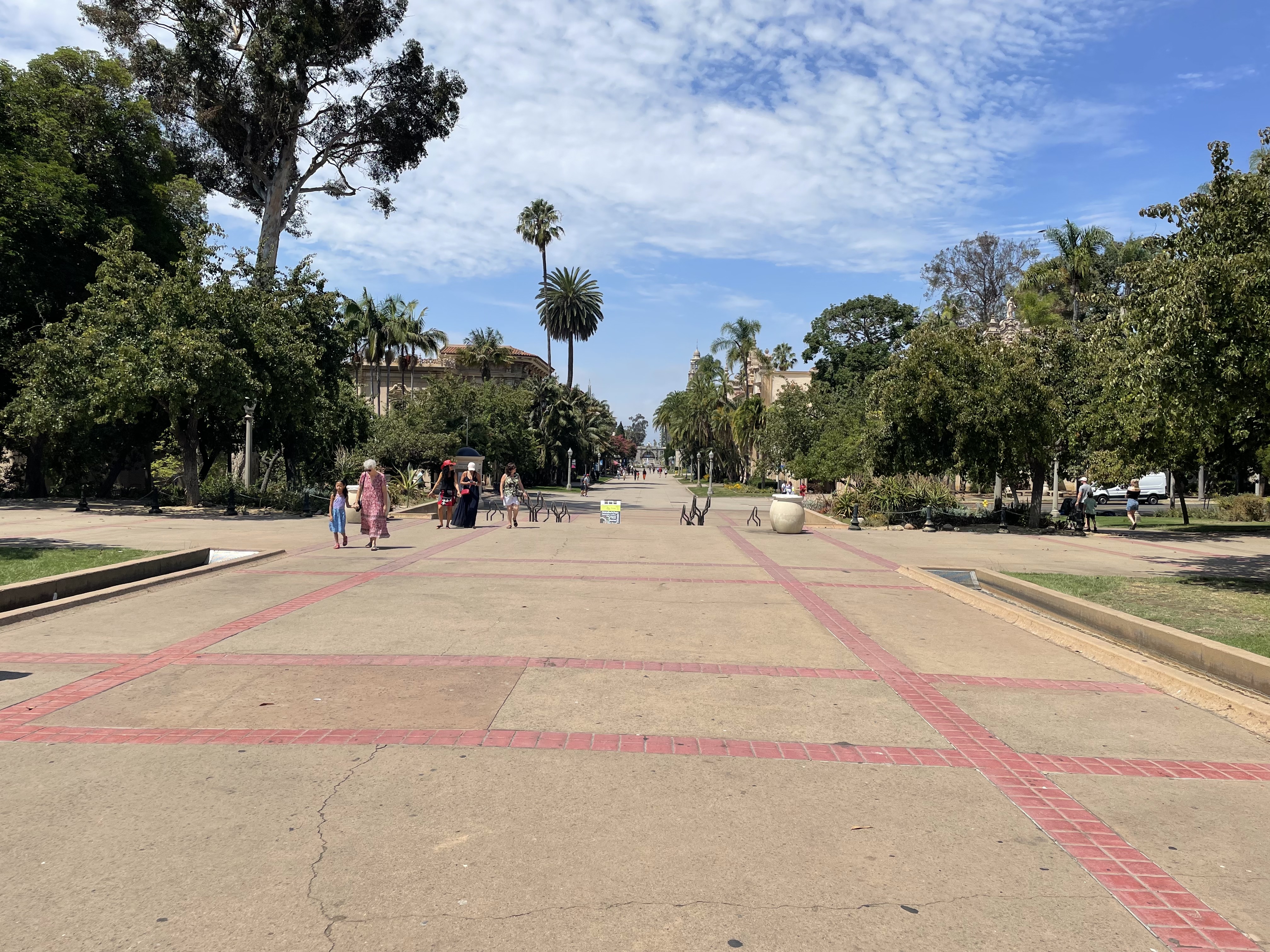
During our vacation in 2022 to San Diego, my wife and I spent a morning strolling around Balboa Park. Named for the Spanish-born explorer and perhaps the first European to witness the Pacific Ocean, this 1,200-acre site has a long, rich history going back to 1868 when San Diego’s leaders set aside the scrappy undeveloped area for public use. It didn’t really begin to take shape as a recognizable park until 1892 when a schoolteacher turned botanist and entrepreneur named Kate Sessions leased 32 acres of the property for her growing nursery’s propagation. She also agreed to plant trees annually in the park and in other public spaces around the city. The species included cypress, pine, oak, and eucalyptus. Some of the oldest specimens in the park today were part of the original plantings. She also introduced exotic plant species such as bird of paradise, Queen palm, and poinsettia. Her efforts eventually earned Sessions the honorary title “The Mother of Balboa Park.”

Balboa Park, San Diego, California

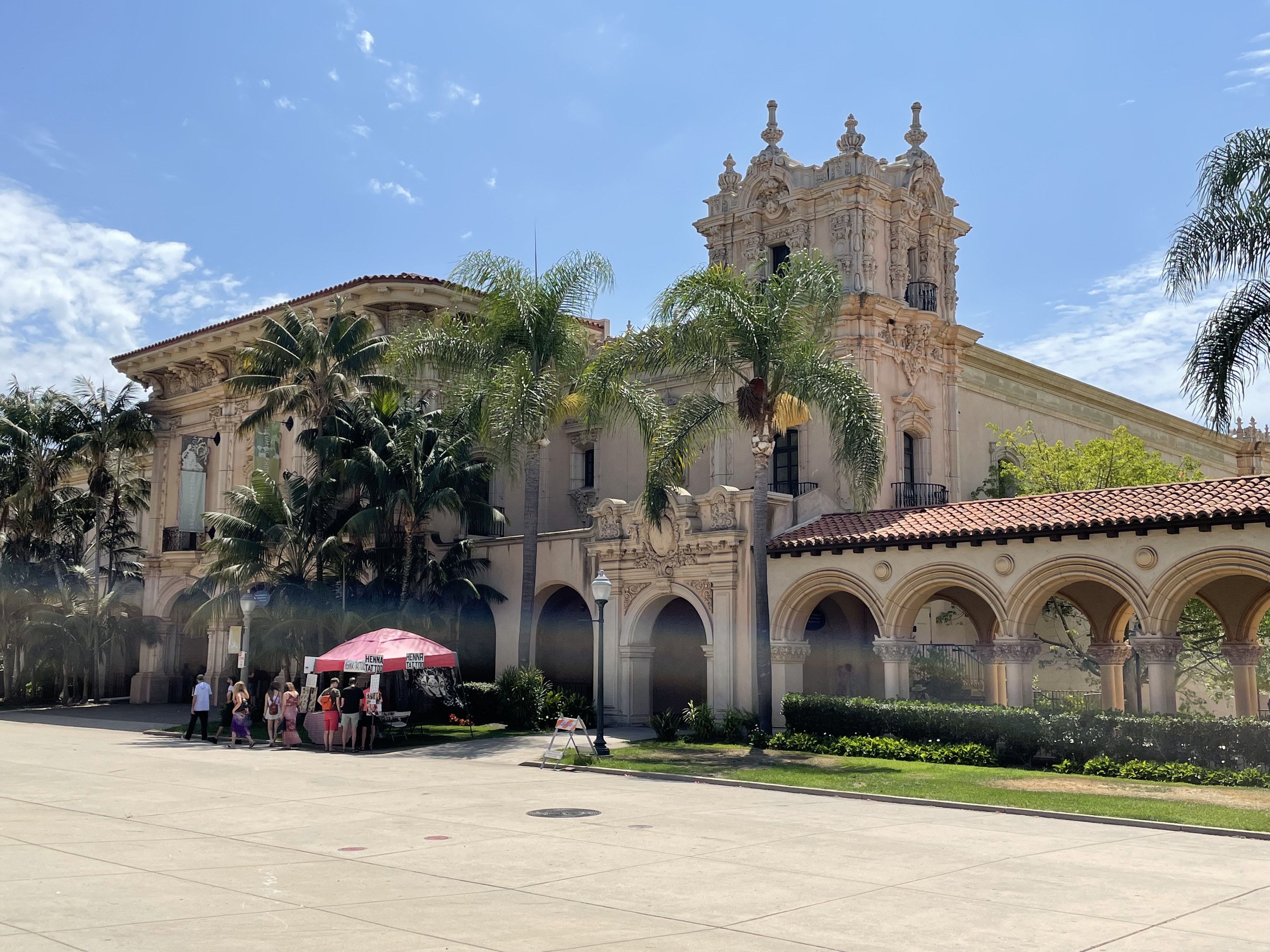
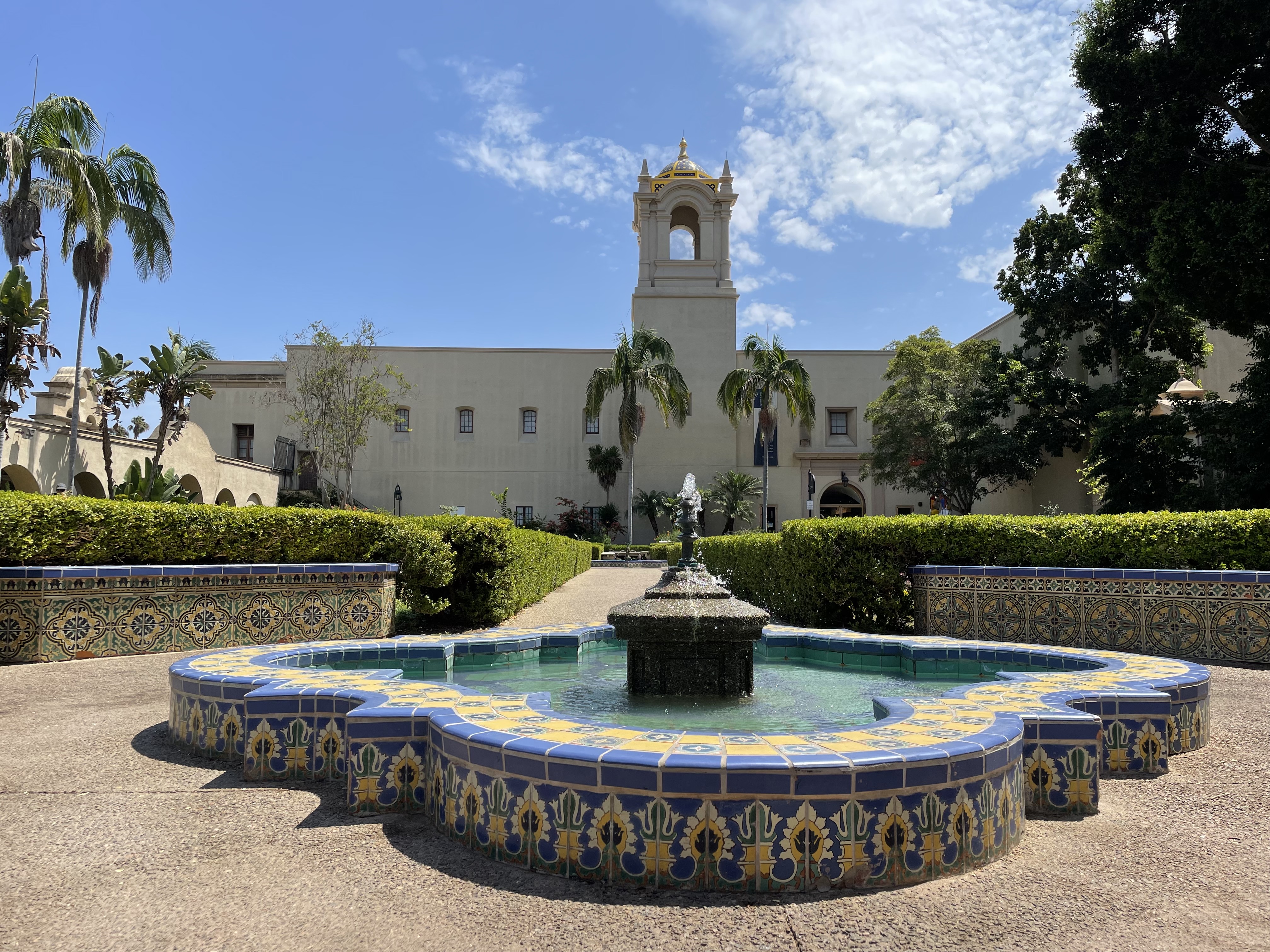
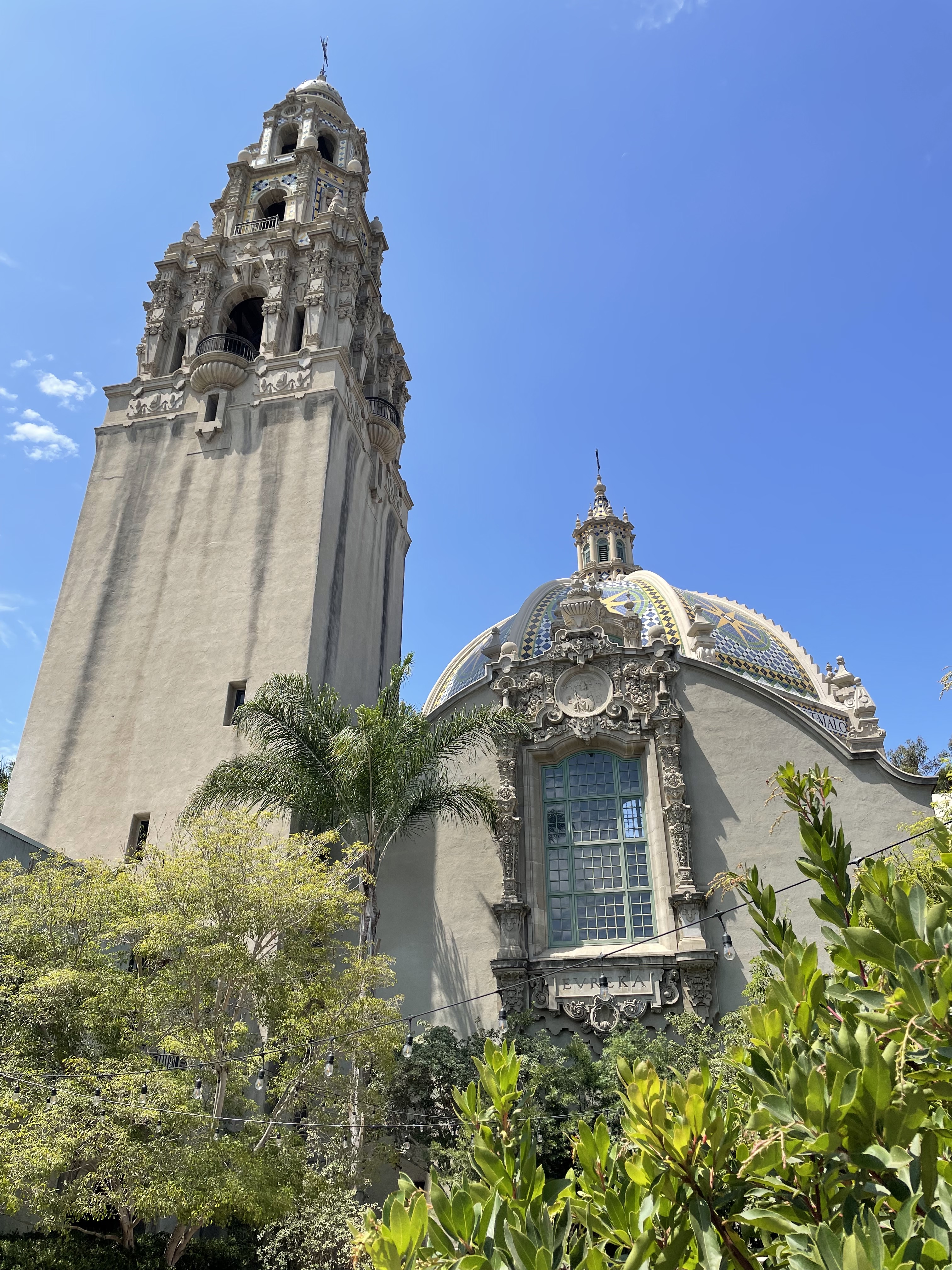
By the early 20th century, the City of San Diego had installed water systems, roads, and other infrastructural elements to Balboa Park. The origin of the elaborate Spanish Colonial architecture dates to 1915 when the park was selected as the site for the Panama-California Exposition. The Cabrillo Bridge and the buildings along El Prado date to this event, along with the Spreckels Organ Pavilion. More buildings were added for the California Pacific International Exposition of 1935-36, especially in the Southern Palisades area. These structures have a much more Southwestern look in the tradition of Pueblo Indian architecture and even Mayan designs.

Balboa Park, San Diego, California

After World War II, several of the main buildings were converted to museums and other cultural institutions. Today, visitors to the park can enjoy the San Diego History Center, San Diego Museum of Art, San Diego Natural History Museum, Fleet Science Center, Institute of Contemporary Art, Museum of Photographic Arts, Women’s Museum of California, Veterans Museum, WorldBeat Center, Museum of Us, San Diego Air and Space Museum, San Diego Mineral and Gem Society, San Diego Automotive Museum, San Diego Model Railroad Museum, Mingei International Museum, the Marston House (early 20th-century Arts & Crafts design), Comic-Con Museum, and Timken Museum of Art.

Balboa Park, San Diego, California

There are fountains and gardens throughout the park, along with the Japanese Friendship Garden (subject of an earlier post). There are restaurants and coffee shops. There are statues (especially in Sefton Plaza), the impressive California Tower, the Spanish Village Art Center, a beautiful carousel, and a miniature train. The park’s visitors center is the best place to start exploring the site. If we return to San Diego, I plan to devote more time to wandering through some of these museums. The Botanical Building and Lily Pond were undergoing major renovation work when we were there, so I definitely want to see those if we go back to Balboa Park, and I hope we do.

Balboa Park, San Diego, California

Taliesin West: Frank Lloyd Wright’s Desert Oasis

In 1909, famed American architect Frank Lloyd Wright began constructing a house on the brow of a hill near Spring Green, Wisconsin. He had grown up in the hills of the state and was inspired by the landscape. His mother was of Welsh descent, and he named the 800-acre estate Taliesin, which is a personal name rooted in Welsh mythology that translates to radiant or shining brow. This was not Wright’s first home, nor would it be his last. He had completed a small two-story residence in Oak Park, a suburb of Chicago, in 1889. Fire almost completely destroyed Taliesin in 1914 and again in 1925, but Wright rebuilt both times.

In the early 1930s, Wright and his third wife, Olgivanna, established an architectural apprentice program at his Wisconsin home called the Taliesin Fellowship, which provided students with an immersive experience that integrated design and construction with growing and preparing food and the study of the arts. The term the Wrights used was “organic architecture.” Wright would continue to make changes and additions to Taliesin over the years after the fires, including converting a chicken coop into a dormitory for his architectural apprentices!

Wright and his students needed seasonal respite from the harsh winters of Wisconsin and found one in 1934 when he rented space for the Fellowship in sunny Arizona. The change in climate was so welcoming that Wright decided to create a winter location for his school. He purchased property in the rugged Sonoran Desert at the base of the McDowell Mountains in Scottsdale, northeast of Phoenix, where he and his apprentices would construct Taliesin West. This winter camp would become a study in how to blend architecture into a stark landscape incorporating water, shade, foliage, and indigenous materials to create a desert oasis. Wright’s architectural school used both Taliesin locations depending upon the season, even after the master’s death in 1959 in Phoenix at the age of 91. Although the Wisconsin program at Taliesin East finally closed in 2020, the tradition continues to this day with the Frank Lloyd Wright School of Architecture in two locations in Arizona. Both Taliesin East and West are now historical sites open to the public, with guided or self-guided tours available.

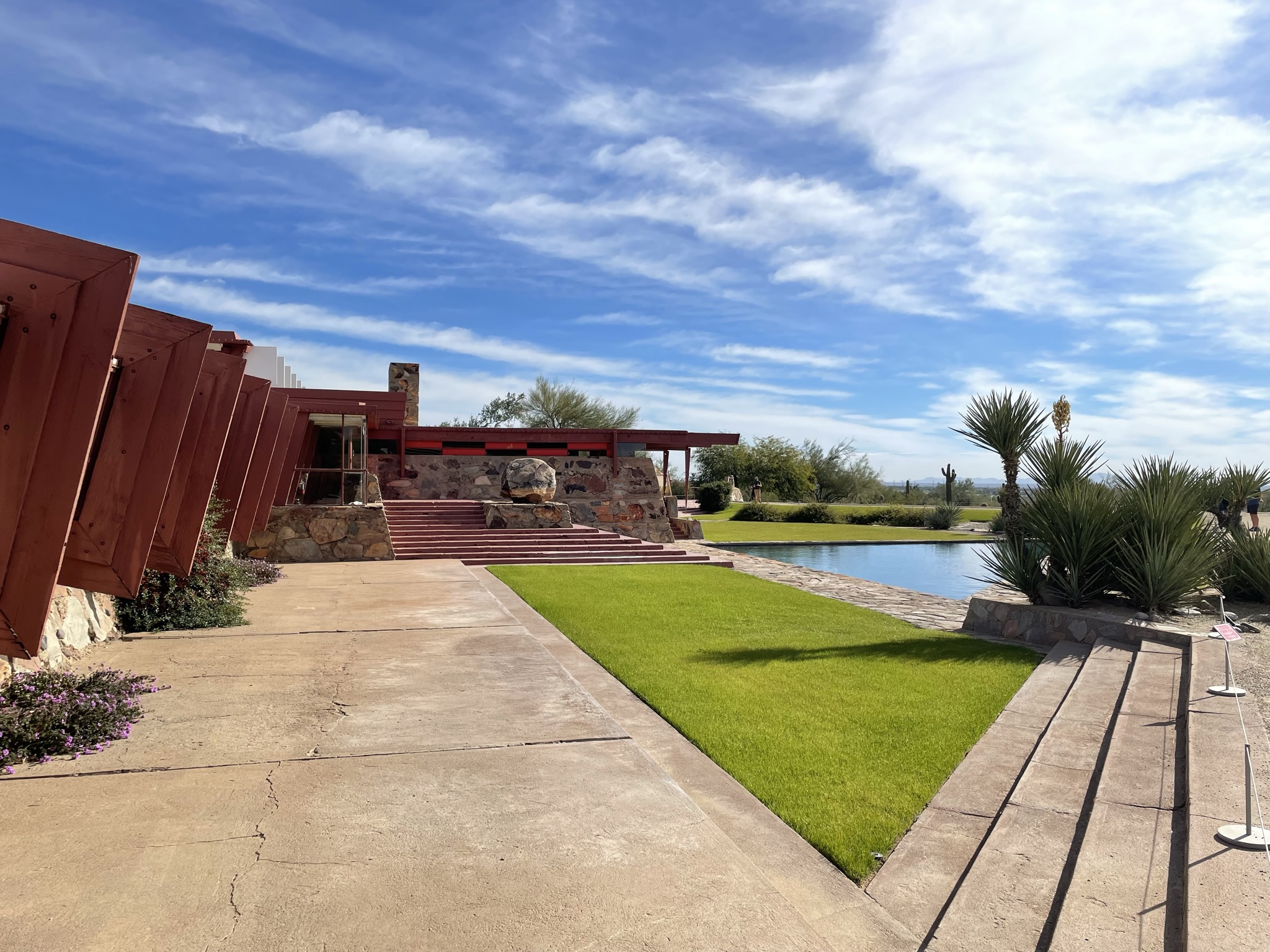
Taliesin West in Scottsdale, Arizona

During the week following Christmas in 2022, my wife and I returned to the Phoenix area for a vacation. It is one of our favorite destinations in the country and where we hope to spend considerable time during retirement. On this trip we visited Taliesin West, which was my first time seeing the site. We took a self-guided tour, using a mobile phone app with earplugs to listen to a virtual guide describe the structures and surrounding grounds as we walked through a series of numbered stations over the course of about an hour. The whole setup was quite slick – impressive and informative. Along with other visitors taking the same tour, we were able to stroll through the various rooms and outdoor spaces. It is understandable why Andrew Pielage decided to call his photographic exhibition of Wright’s work “Sacred Spaces,” showcasing how the architect skillfully designed structures that seem almost sanctified.

Taliesin West in Scottsdale, Arizona

Several design elements of Taliesin West stand out in my mind. A common theme throughout is the use of sharp angles for roof lines, steps, walkways, and water features. This collection of points is reminiscent of the McDowell Mountain peaks visible to the east of the property. The stone and plaster walls, interior and exterior, imitate the rocky outcroppings around Scottsdale and throughout the Phoenix valley. Red, orange, brown, and blue are dominant colors for painted surfaces and fabric, reflecting the palette of the Sonoran Desert floor and the skies above that remain clear most of the time. Although rare in the desert, water is present in the form of rivers, such as the Salt, Gila, and the Agua Fria in Phoenix. Also, the Sonoran Desert gets more rainfall than any other desert in North America. Wright and his apprentices included several modest water features at Taliesin West. Some people have speculated that Wright may have become paranoid after suffering through multiple devastating fires and wanted water nearby as a safeguard. In any case, the presence of water created a literal oasis at Taliesin West.

Taliesin West in Scottsdale, Arizona

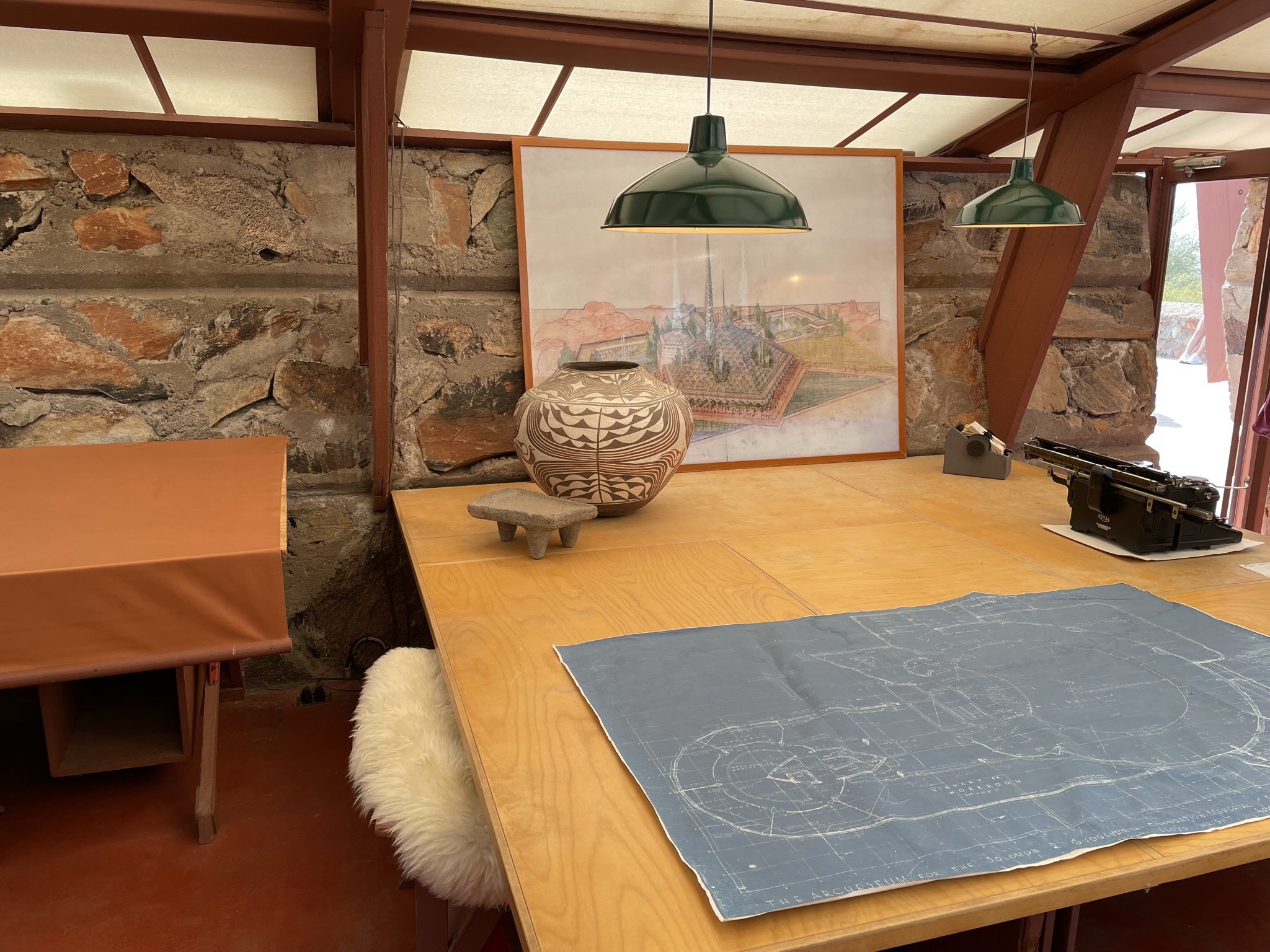
The Frank Lloyd Wright Foundation that owns and operates Taliesin West does a fine job of managing the site as a historically-preserved house museum. The rooms are presented in a fashion that makes them look as if Wright and his students have left for the summer but will return next winter. Spaces are appointed with original (or at least period) art pieces, artifacts, furniture, and furnishings. The story the curators are telling is as much about Wright’s apprentices and their accomplishments as it is about the master architect himself. There are various places where people could gather together, including a small theatre. There are at least three pianos in the buildings, implying how important music was to the general atmosphere the Wrights were producing. Toward the end of his life, Frank Lloyd Wright was hosting cocktail parties with Olgivanna at Taliesin West for select groups of people in the greater Phoenix area. What fascinating conversations must have occurred at such gatherings, no doubt dominated by the celebrity architect who had grown so fond of his sacred space in Arizona.

Taliesin West in Scottsdale, Arizona

San Diego’s Japanese Friendship Garden

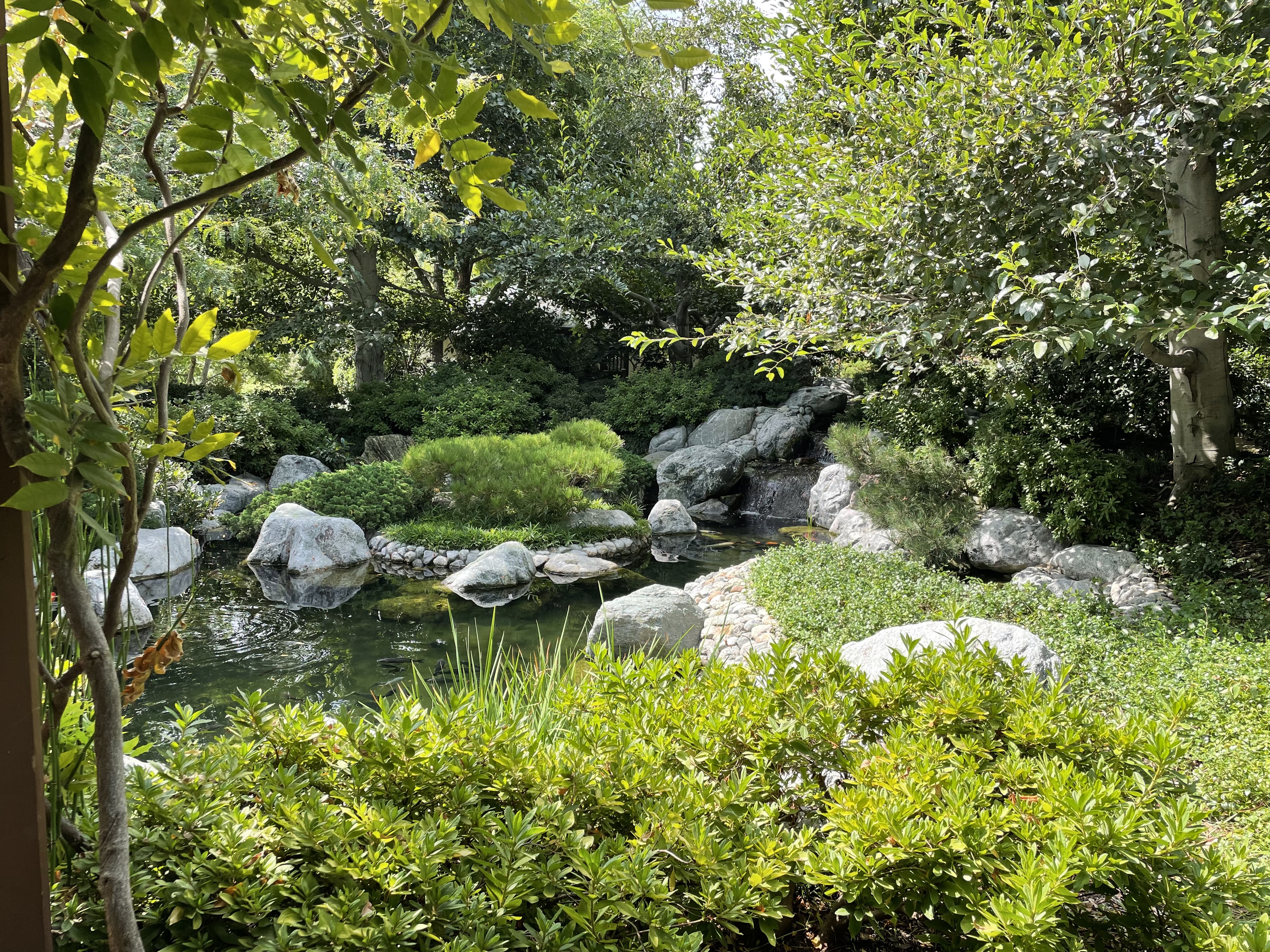
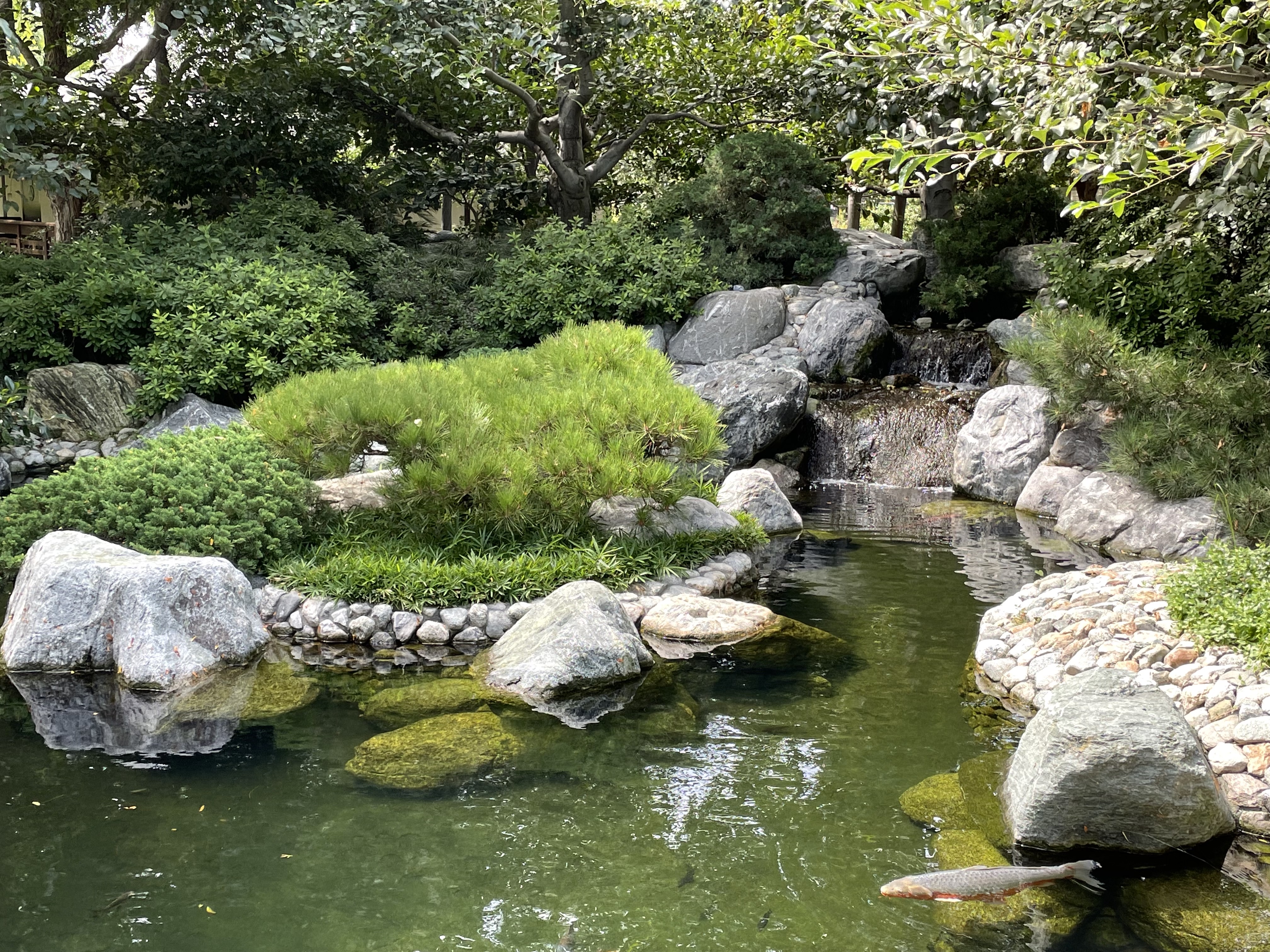
Japanese gardens are different from other gardens. They are characterized by simplicity and minimalism, designed to encourage reflection and meditation. They raise landscape architecture to a fine art form, creating harmony of several key elements in a natural setting: stone (from gigantic boulders to pea-size river rock), sculpture, plants, shrubs, trees, paths, and perhaps most important, water. Running water, cascading falls, and shaded pools with large koi fish are almost always included. On the botanical side, there are usually plenty of evergreens, but typically in a wide variety of shades and textures depending upon the garden’s geographic location. Although there are several different types of Japanese gardens based on terrain and purpose, most are composed of the above-mentioned features.

Japanese Friendship Garden, San Diego

My wife and I have visited many different public and private gardens over the years, from coast to coast in America and a few in Europe too. We happen to have a Japanese garden where we live in Springfield, Missouri. We enjoyed a stroll through the Japanese Friendship Garden in Phoenix, Arizona several years ago. In August 2022, we were on a vacation in San Diego, so of course, we specifically sought out the Japanese Friendship Garden there, which is one of the most famous in the country.

Japanese Friendship Garden, San Diego

Like other Japanese Friendship Garden cities, San Diego has a sister city, Yokohama, in Japan. The partnership was established in 1957 and was one of the first sister cities on the west coast. The Japanese Friendship Garden in San Diego opened in 1991 and has expanded over the years to a size of twelve acres. Among the garden’s many features are a cherry tree grove, a large section of azaleas and camelias, a water feature that mimics the San Diego watershed, and a beautiful koi pond. There is a bonsai exhibit and places for rotating exhibits of art. It really is one of the finest attractions we saw in San Diego.

Japanese Friendship Garden, San Diego

Oceanfront at Laguna Beach, California

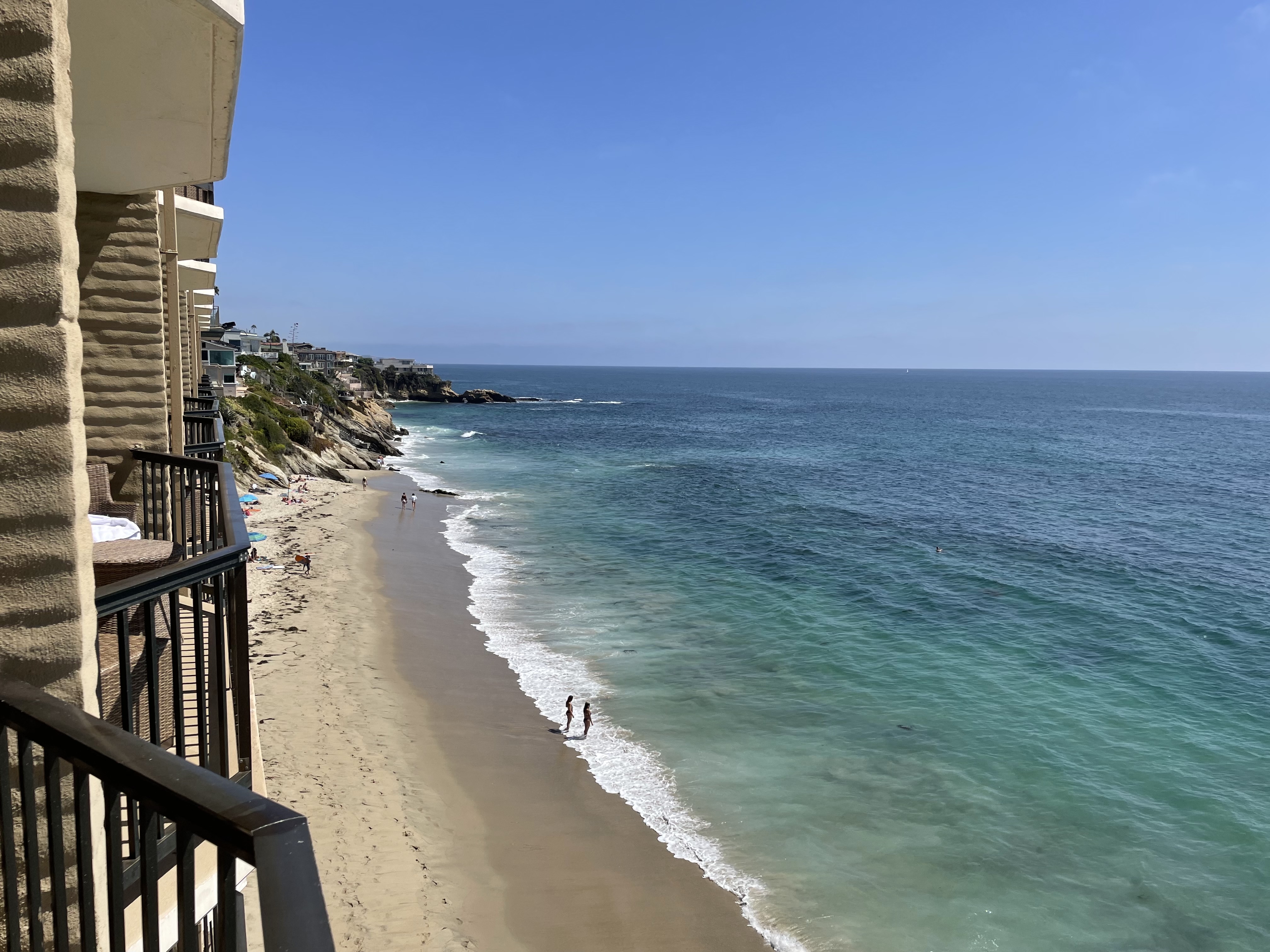
My wife and I try to get to the beach at least once a year. In the past, most of our coastal visits have been to the Atlantic side of Florida; however, we have occasionally made it to other surfside destinations in Georgia, South Carolina, Texas, Oregon, and California. For the summer of 2022, we decided to spend a few nights at Laguna Beach as part of a trip to San Diego and Joshua Tree National Park. We booked two nights at Surf and Sand Resort because it looked like a really nice place where we could get an oceanfront room with a balcony, something that has become an absolute must for us.

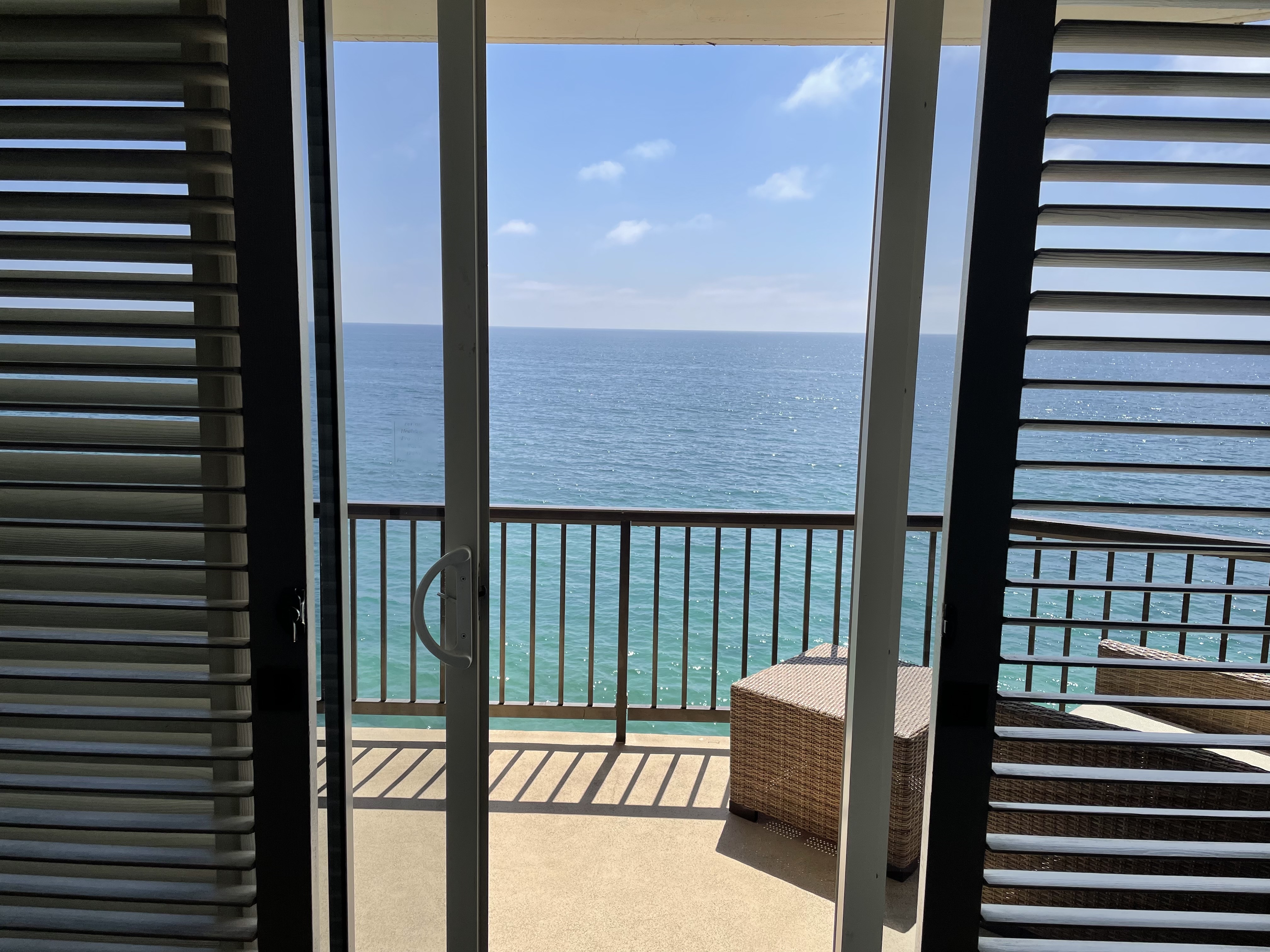
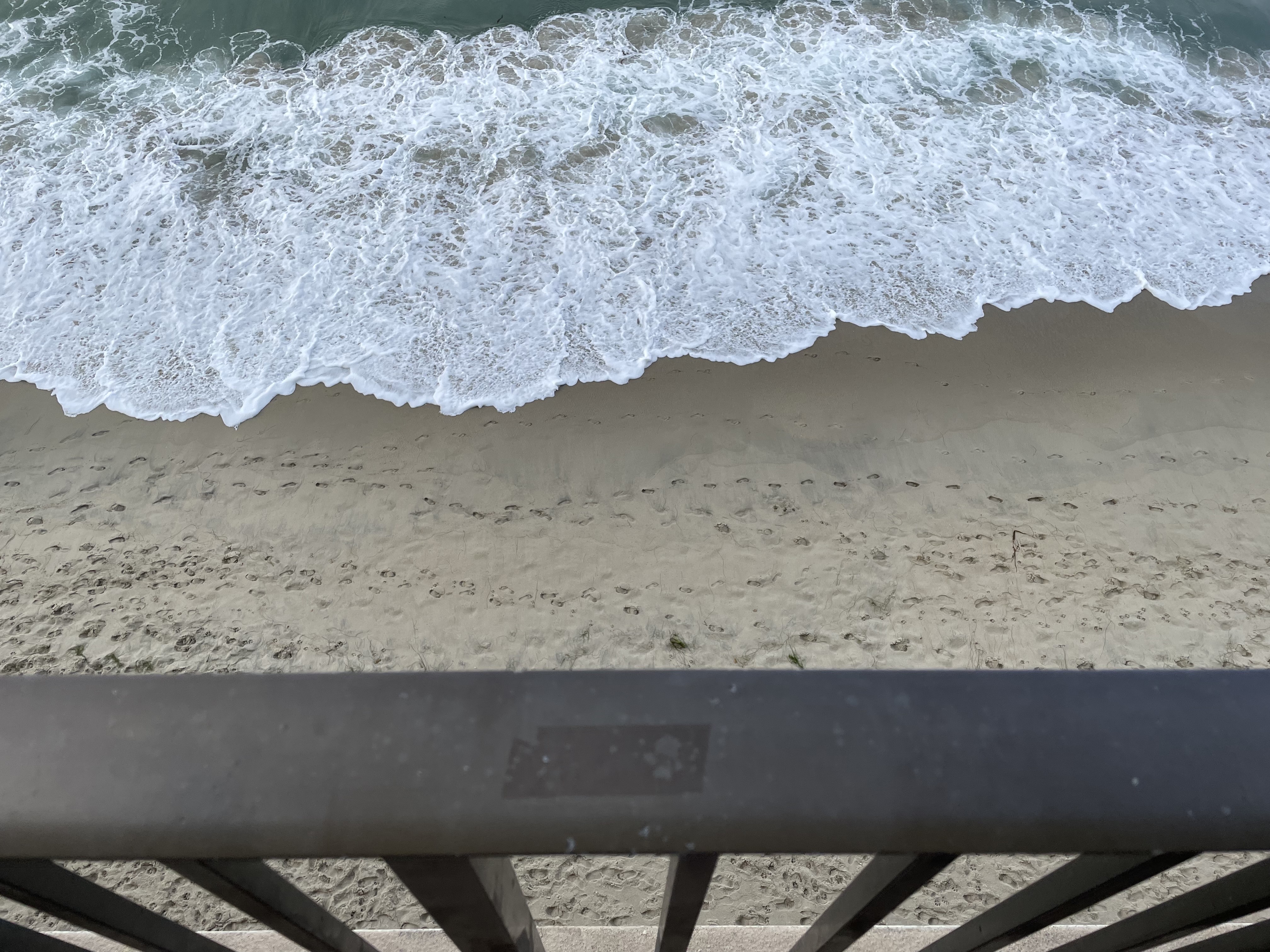
We have learned the hard way the difference between oceanfront and ocean “view” when it comes to beach accommodations. Ocean view only means that some fragment of sand and water will be in your field of vision when you are looking out from a window or balcony. If we want to sit outside our room and gaze at the beach, waves, and water (and we do), we book an oceanfront room. When Surf and Sand Resort promises you this type of room, they really come through in a big way. Our room was on the fourth floor, and it was so close to the ocean that when we were looking out the sliding-glass door from inside, we couldn’t even see the resort’s namesake: surf and sand. The view was more like looking out of the cabin of a cruise ship on the high seas!

Laguna Beach, California

On our first night, we ate dinner at the resort’s restaurant at a table located on a terrace within a few yards of the breakers. The sounds, smells, and feel of the breeze on our skin all combined to make dinner something more than just a meal. The next morning we walked a few blocks to a charming breakfast spot that served the regular fare, along with some specialty dishes and incredibly delicious fresh fruit. For lunch we dined outside at a nearby Mexican restaurant that specialized in providing way more food than we could eat, but it was fantastic. Later that day we took a walk on the beach, which is bordered north and south by massive rocky ledges that jet out into the ocean, both of which were visible from our balcony. That evening we walked again a few blocks to a dinner spot that was on a deck right at the beach, offering stunning views of the sun sinking toward the flat line of the horizon.

Laguna Beach, California
Laguna Beach, California at sunset

Yes, we did spend a lot of time eating, but we also relished hours relaxing with books and magazines on our balcony. We took naps in the room. We sat for long stretches on the balcony just watching the magnificent Pacific Ocean and the various ships, boats, jet skis, and surfers that crossed our field of vision. The room was comfortable even though it was not equipped with air conditioning. We really didn’t need it. We kept our sliding glass door open the entire time we were there, day and night, listening to the crashing surf. I never saw an insect – not one. That would never happen on the Atlantic coast. Laguna Beach is truly a gem and worth the splurge. I hope we can go back sometime.

An Alien Landscape: Joshua Tree National Park

There is a bizarre and surreal place at the intersection of the Mojave and Colorado Deserts in Southern California that was several million years in the making. It was worth the wait. With massive rock formations rising up from the flat desert floor, Joshua Tree National Park is like a geological museum that is slightly larger than Rhode Island. It is hard to imagine that these stone towers, created from magma rising from deep below the surface and eventually hardening as it cooled, are what is left behind from millions of years of soil erosion. Boulders the size of boxcars are miraculously balanced on top of each other, like rock piles left behind by the children of gods.

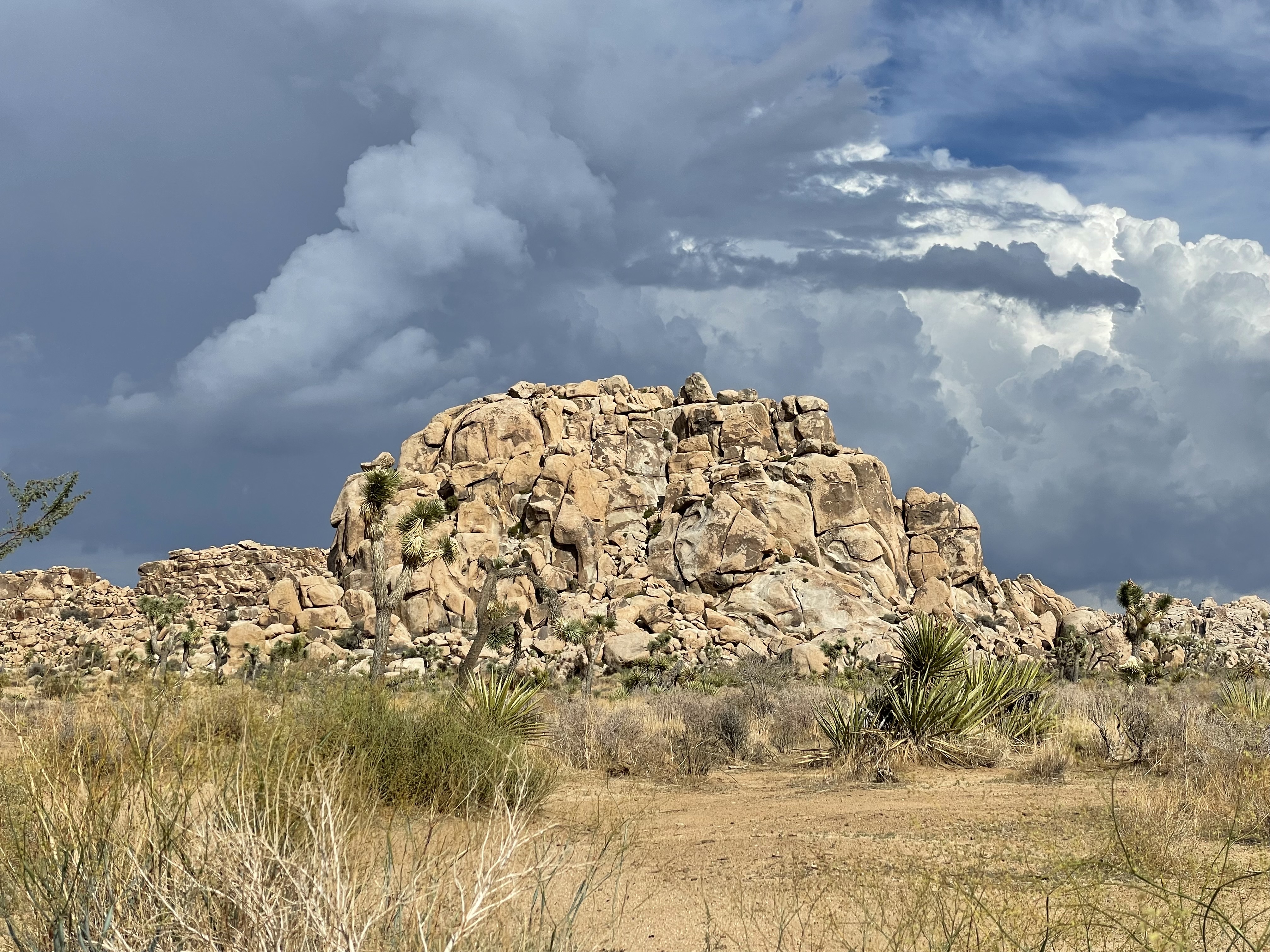
Rock pile at Joshua Tree National Park

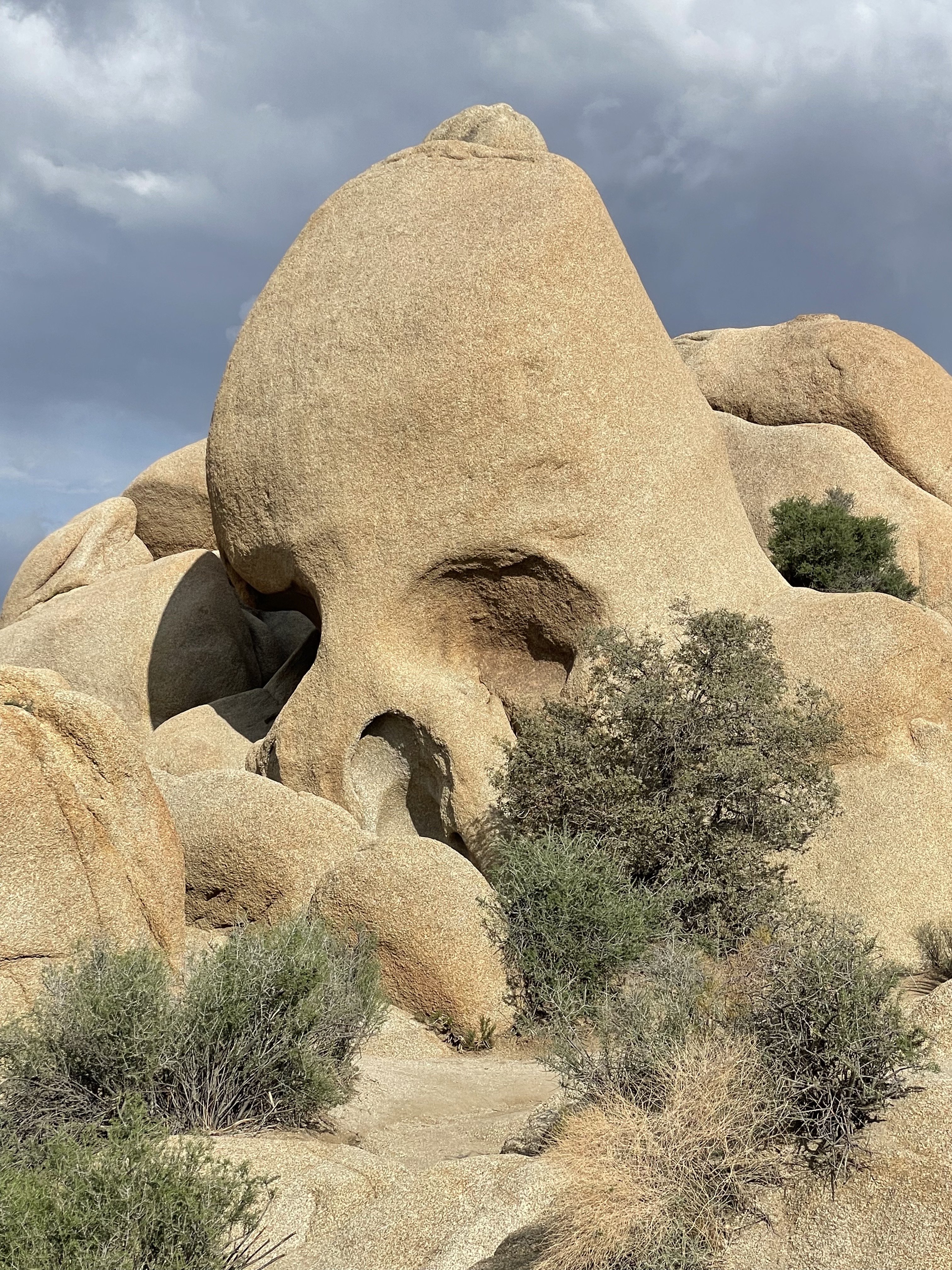
There are also large masses of rounded granite that have been altered and even sculpted by rain, wind, ice, chemical reactions, plant roots, and other forces to form fantastic shapes and configurations. Set against the backdrop of nearby mountain ranges and surrounded by the desert floor, these structures are truly impressive. Throw in a developing thunderstorm billowing above (yes, it does rain in the desert) and you have all the makings of a classic Thomas Cole masterpiece.

Rock formation at Joshua Tree National Park
Skull Rock at Joshua Tree National Park

Then there is the namesake of the park, the Joshua Tree, which would fit perfectly into the backdrop of almost any picture book by Dr. Seuss or on the cover of a paperback book about planets on the other side of the galaxy. Belonging to the same family of Agave plants native to tropical South America, Joshua Trees are a type of Yucca, which we often associate with the short, dark green spiky plants of the tropics and deserts. Joshua Trees have an almost whimsical character, proving yet again that nature has a sense of humor. The plant takes on many different shapes and sizes, as if taking its cue from the rocks around it. Joshua Trees have a rather limited range within the deserts of California, Nevada, Utah, and Arizona.

A Joshua Tree at Joshua Tree National Park

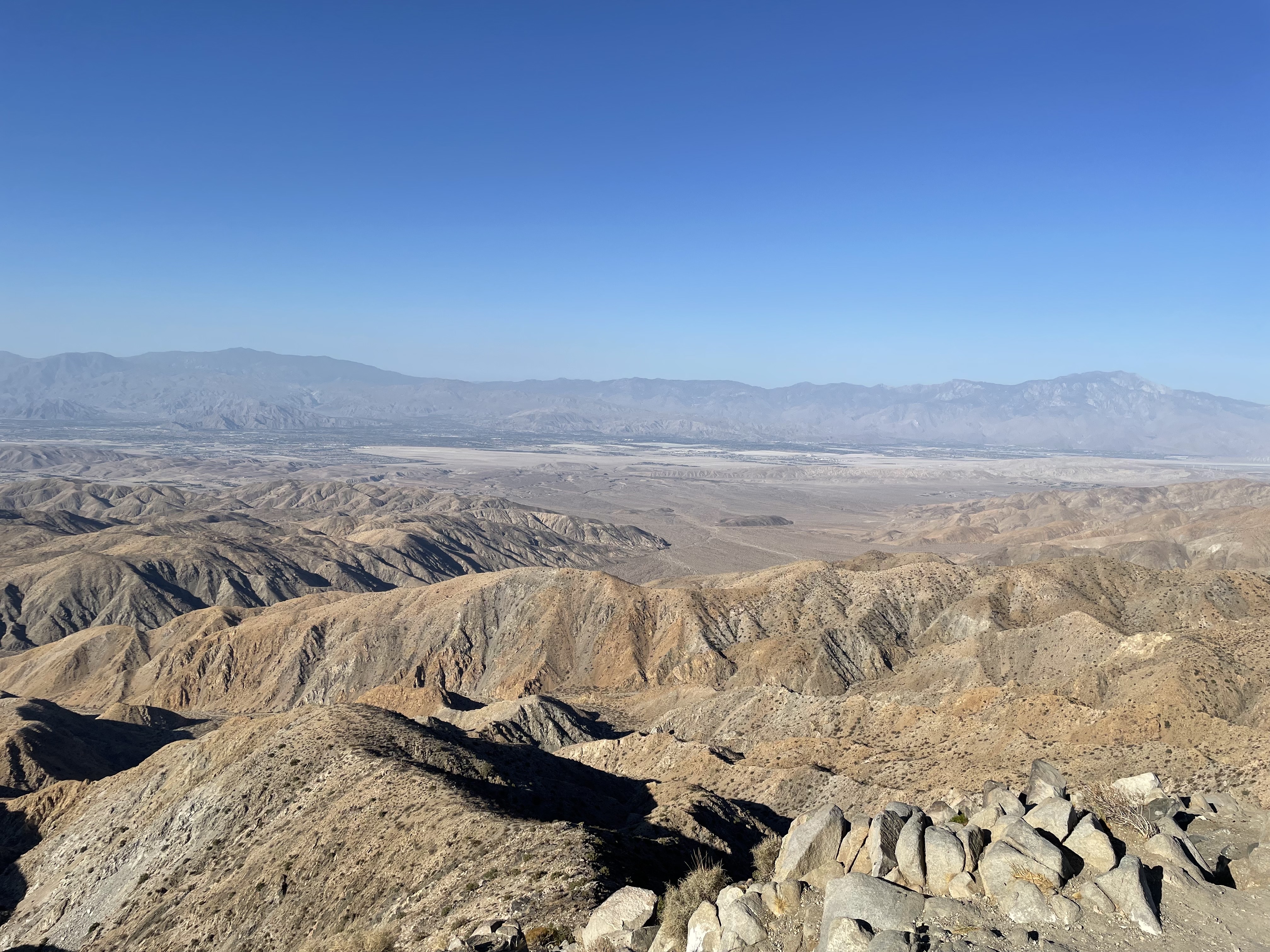
There are several places in this wonderful park where visitors can get breathtaking panoramic views of mountain ranges and valleys that stretch out for miles. At just the right position and vantage point, the scene is reminiscent of something out of a science fiction movie. At the very least, these vistas could serve as inspiration for visual art depicting imaginary worlds. Joshua Tree National Park is one of those natural wonders of the United States that is somehow liminal, neither here nor there, but somewhere between.

Keys View at Joshua Tree National Park