On several occasions I have written about my strong attraction to the coast, how it grounds me and is so good for my soul. My first love in this regard was the Atlantic along the coasts of Florida, Georgia, and the Carolinas, simply because I was raised in the Southeast. Places such as Myrtle Beach, Isle of Palms, Hilton Head, Tybee Island, St. Simons, Jekyll, Sapelo Island, Amelia Island, St. Augustine, Ormond, and Daytona are all popular vacation destinations. I have fond memories from summer and early fall trips to all these locations, from within the last few years and going all the way back to my childhood.
In the last decade or so I have had several opportunities to visit the west coast in San Diego, Huntington Beach, Los Angeles, Laguna Beach, Carmel-by-the-Sea, San Francisco, and multiple locations in northern Oregon. It’s a completely different experience from the Atlantic, but no less enjoyable and with some spectacular landscape features you don’t see in Florida or Georgia.
Growing up, my family sometimes went to beaches along the Gulf Coast, and I even went there with friends in college, places such as Panama City Beach and Clearwater. However, I never found the Gulf Coast beaches as attractive as the Atlantic ones. The waves were usually much smaller, and the beaches were not as wide, both of which were important because I typically spent my days as a child and a young man either body surfing in the breakers or baking my skin on the sand. The atmosphere was probably thicker and provided more protection back in the day, and my skin was much more resilient to the sun’s rays. I tanned well and rarely burned much. Those days are over, even for this generation’s youngsters.
Living in the great state of Missouri now, a quick trip to the Gulf is much more manageable, even when flying. We have short direct flights that get us close to multiple Gulf beaches. We tried out Galveston in Texas a few years back, and I was pleasantly surprised how great it was experiencing the beach from the deck chairs at the house we rented with family and friends. Come to think of it, when we took a pre-Christmas holiday trip to Jamaica in 2015, we spent very little time out on the beach but certainly feasted on the views from the expansive balcony of our hotel room.
One place I had never seen was the stretch of the Gulf known as the Emerald Coast that lies west of Panama City and covers about 100 miles of seashore featuring destinations such as Navarre Beach, Fort Walton Beach, Destin, and Miramar Beach. My wife and I were in Destin for a memorial service in February of 2023, and while we were there, we took a few walks out on the beaches. The contrast of the brilliant white sand against the blue-green water makes for a breathtaking vista that goes on forever. It is magnificent.
Miramar Beach, FL
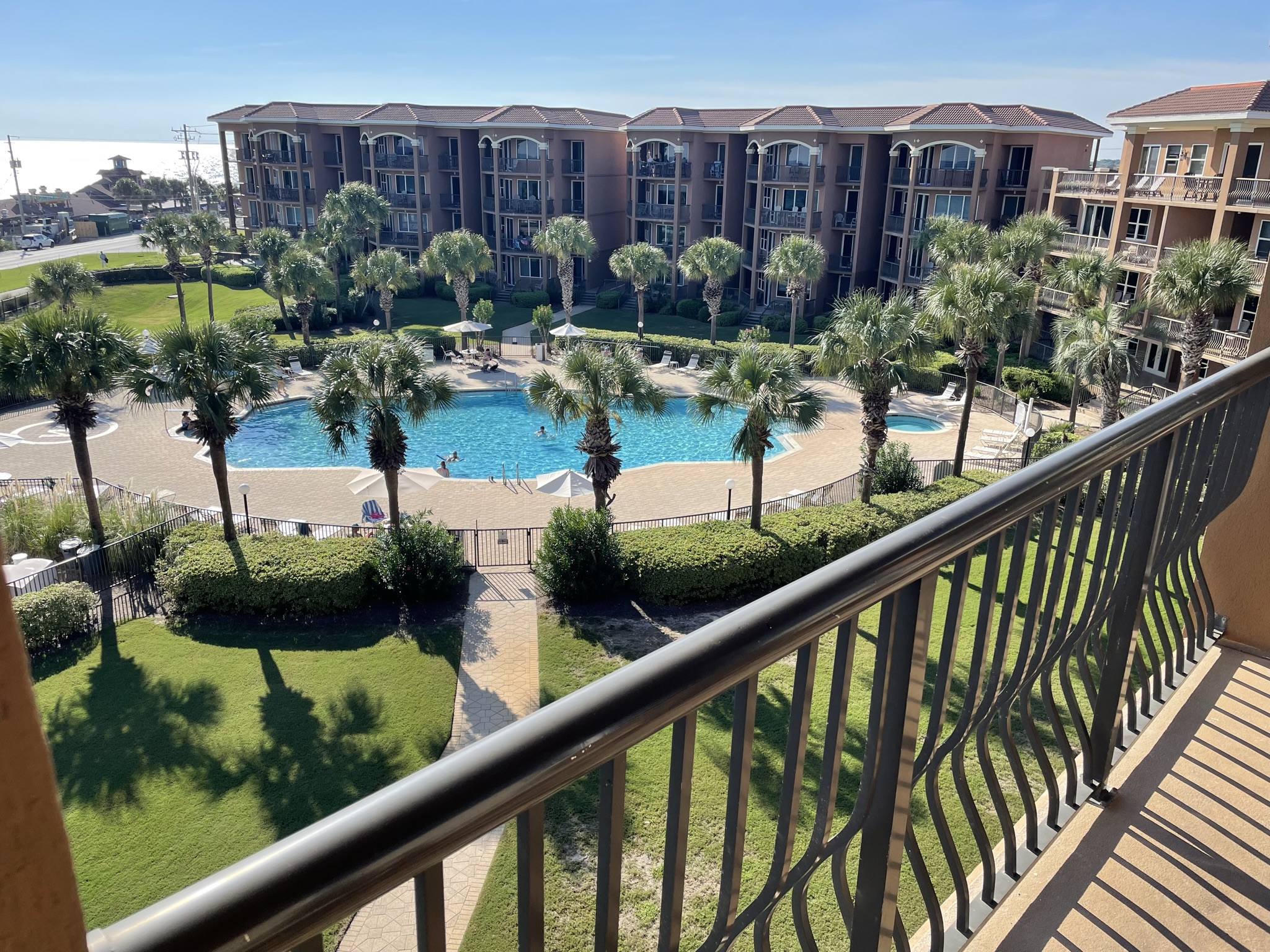
When I planned a solo trip for September this year, I decided to give the Emerald Coast a try. My wife, who also graciously serves as our ever-resourceful travel planner, was kind enough to book my flight, rent a car for me, and reserve a fourth-floor condo unit at a lovely complex just across the road from the beach called the Mediterranea. It was conveniently located to restaurants, bars, coffee shops, and retailers, many within walking distance. It was a perfect getaway. I was able to take long strolls on the white sand and on paved walkways just across the street. Although I didn’t take advantage of it, the pool was beautiful and added to the overall aesthetic. The view from the balcony was easy on my eyes whenever I looked up from the book I spent so much time reading while smelling the salty air and feeling the constant breeze on my skin.
Mediterranea at Miramar Beach, FL
It’s a good idea to break away from traditions and time-worn habits to explore other possibilities, especially when traveling. We have discovered all kinds of unexpected adventures and curiosities by going in new directions. I am certain we will return to the Emerald Coast, but there are so many other beaches to see, trails to walk, and sights to behold. As we approach the “work optional” stage of our lives, we plan to spend a whole lot more time doing just that.
In November, 2019, I posted about a malady that I have dealt with for twenty years called Mal de Debarquement Syndrome or MDDS. When I first recognized the symptoms, there wasn’t much information widely available about MDDS. There was plenty of published research about travel sickness, post-travel imbalance, jet lag, dizziness, vertigo, and migraines, but it failed to address the specific facets of this strange phenomenon. It wasn’t until 2015 that I even discovered there was a name for it.
In 2021, I experienced my first spontaneous episode of MDDS, meaning that it was not precipitated by air or sea travel. Instead of lasting a couple of weeks like all my other previous bouts, this time it went on for four months. My primary care physician suggested a diuretic, but I wasn’t convinced that an excess of salt and water in my body was the real problem. I scheduled a videonystagmography (VNG) test but wasn’t able to get in until after my symptoms began to subside. The test was negative. Another spontaneous episode occurred in mid-April of 2023 and lasted off and on through mid-July. My next step is to get a referral to a neurologist, and now I have a book to prepare me for my appointment with such a physician.
One of the leading specialists in studying and treating MDDS is Shin C. Beh, M.D., who practices out of his own facility, the Beh Center, in Frisco, Texas. Dr. Beh wrote a book that came out in early 2023 titled Disembark: Overcoming Mal de Debarquement Syndrome. I was lucky enough to discover it because someone posted an announcement of it on a social media MDDS support group page. This is a self published book, probably even a print-on-demand title, but future editions should be picked up by a major press because it really is well written and so informative.
Disembark by Shin C. Beh
Dr. Beh covers just about every aspect of MDDS that I can imagine, given how the research into this syndrome is young and evolving rapidly. He covers the symptoms and diagnosis of MDDS, along with several hypotheses of the underlying causes. I’m sure in the coming years the author will revise this information, and other authors likely will cover new ground as the research expands. The bulk of this book covers the various approaches to treatment that he and other practitioners have developed to help sufferers of MDDS deal with their symptoms. He makes it clear there is no cure, but he offers treatments ranging from natural remedies to an array of chemicals, most of which are formulated to treat other vestibular disorders, depression, anxiety, seizures, and migraines.
Vestibular migraines are actually Dr. Beh’s speciality, so he arrives at the study of MDDS through that gateway. His first book was about vestibular migraines. There are some obvious similarities between the two maladies, so the treatments overlap too. In addition to medications, he also suggests lifestyle pathways to diminish symptoms, including what to avoid and how to actively fight the symptoms through diet, exercise, sleep patterns, prayer/meditation, work habits, and environment control.
I made copious notes in the margins of my copy and intend to keep it as the first, I hope, in a collection of reference guides to MDDS. I also sent an email in gratitude for the book and the supporting research to the Beh Center. I received an answer thanking me for my message within a few hours, which was impressive. Again, there is no cure for MDDS, but this book goes a long way toward helping sufferers deal with this debilitating syndrome and giving hope to those who must live with it.
I had the privilege of being directly involved in the planning and implementation of the 2023 Smithsonian Folklife Festival, an annual event that takes place on the National Mall in Washington, DC. With a history going back over fifty years, the festival is usually scheduled over a ten-day period roughly encompassing the last week in June and the first week of July. It is produced by the Smithsonian’s Center for Folklife and Cultural Heritage and honors living cultural traditions while celebrating those who practice and sustain them. One of the programs selected for the 2023 festival was focused on the Ozarks, a region of the U.S. that is centered in southern Missouri and northwest Arkansas but also includes small portions of northeast Oklahoma, southeast Kansas, and extreme southwest Illinois.
Smithsonian Folklife Festival 2023
I began working in 2019 for Missouri State University Libraries on a part time basis, assisting with projects sponsored by the Ozarks Studies Institute, an initiative of the Libraries. A fortunate turn of events led to the Smithsonian partnering with the Libraries for the Ozarks program of the 2023 festival, with the Dean of Libraries serving as a curator. The Dean offered me a full-time position eighteen months prior to the event to serve as an associate director for the university’s participation in the festival.
The Dean and I teamed up with another part-time employee of the Libraries who has written two books about the Ozarks and has extensive cultural knowledge of the region. Our trio served as the core planning committee for the university to collaborate with the festival organizers from the Smithsonian. One of the first jobs we tackled was coming up with a name for the program. After considerable deliberation, we decided on “The Ozarks: Faces and Facets of a Region.” Our trio made numerous trips to visit with people and organizations throughout the region, in all five states, to spread the word and generate excitement about the festival. A small group of Ozarkers, including our planning trio, visited the National Mall in the summer of 2022 to get a clearer picture of how the event looks and works. We took two musical acts with us to perform as a preview of the 2023 Ozarks program.
Smithsonian Folklife Festival 2023
Over the course of a year, we worked with the Smithsonian staff to identify key stakeholders from the Ozarks who could assist with fundraising, program content, identifying other curators and participants, and overall planning of the festival. We had Zoom meetings almost every week for over a year to hammer out all the details, and several festival organizers from the Smithsonian visited the Ozarks multiple times to get a better sense of the region and to meet with our team.
Using artists from the Ozarks and from the DC area, the larger planning team came up with design features for the festival that would reflect the natural beauty of the region. We had to decide on color schemes, fonts for signage, layout of the festival grounds, daily schedules of events, and a whole host of other elements. In early 2023 we began meeting with the festival logistics staff to work on structural and mechanical requirements for the site. We also met with interns and volunteers who are brought on each year to help the Smithsonian with festival participants’ needs regarding transportation, lodging, meals, and a wide variety of other accommodations. By the time June arrived, there were over 150 people involved in either planning or implementation. It is a massive effort.
Smithsonian Folklife Festival 2023
The festival was open each day, June 29 through July 9 (with the exception of July 5), from 11:00 a.m. to 5:00 p.m., followed by evening concerts most nights running from around 6:30 to 8:00 p.m. The Ozarks program site was situated under the trees on the south side of the Mall, just east of 14th Street SW. On the opposite north side of the Mall was the other program for the 2023 festival, which was called “Creative Encounters: Living Religions in the U.S.” Each year the festival is open on Independence Day, where people gather by the hundreds of thousands along the corridors, paths, and grassy fields extending from the Potomac River all the way to the Capitol to await the spectacular fireworks display at dusk between the Lincoln and Washington Memorials. I don’t typically go out of my way to see firework displays, but the colorful explosions that serve as a backdrop for the imposing Washington Monument are mighty impressive.
Smithsonian Folklife Festival 2023
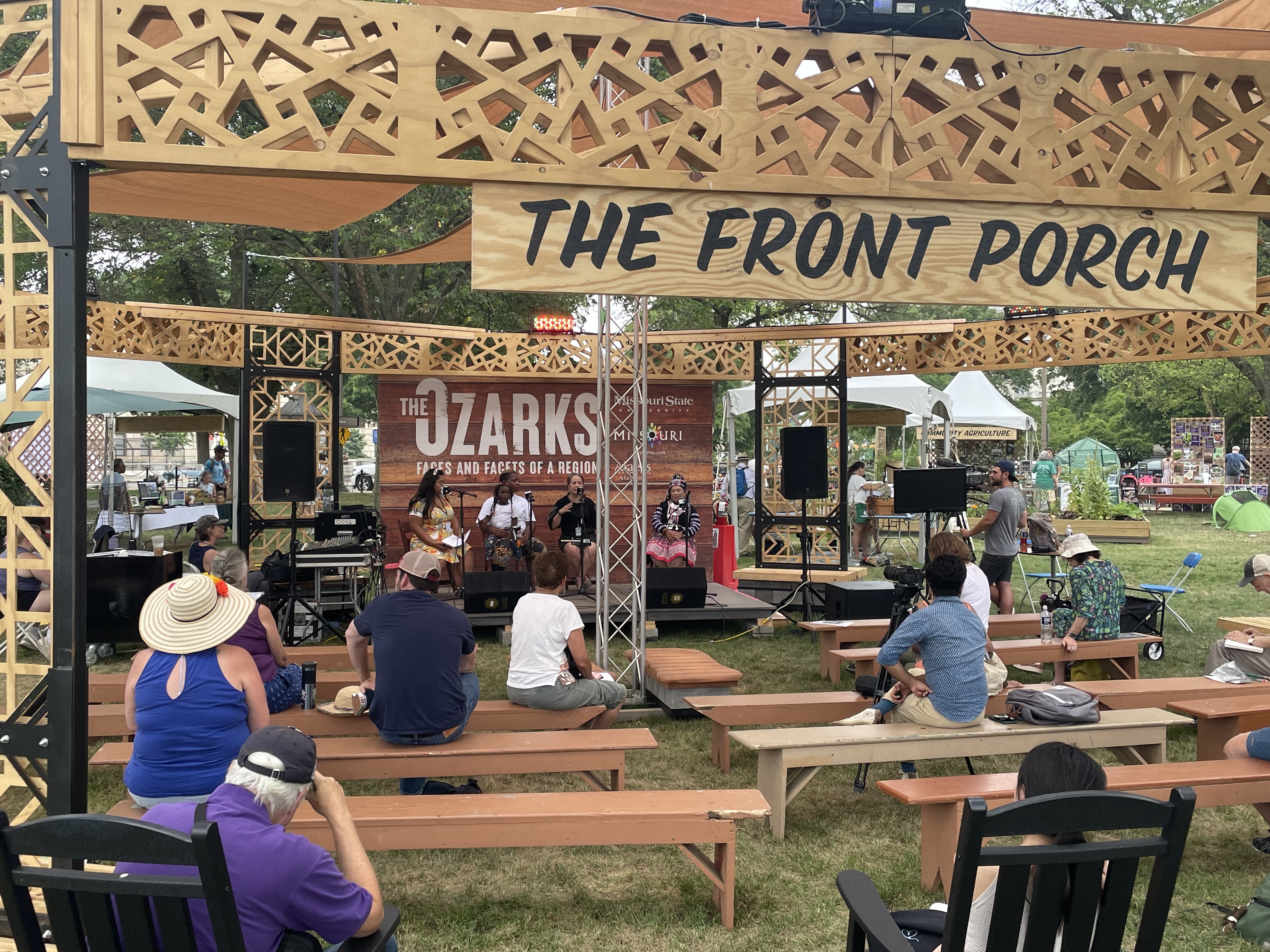
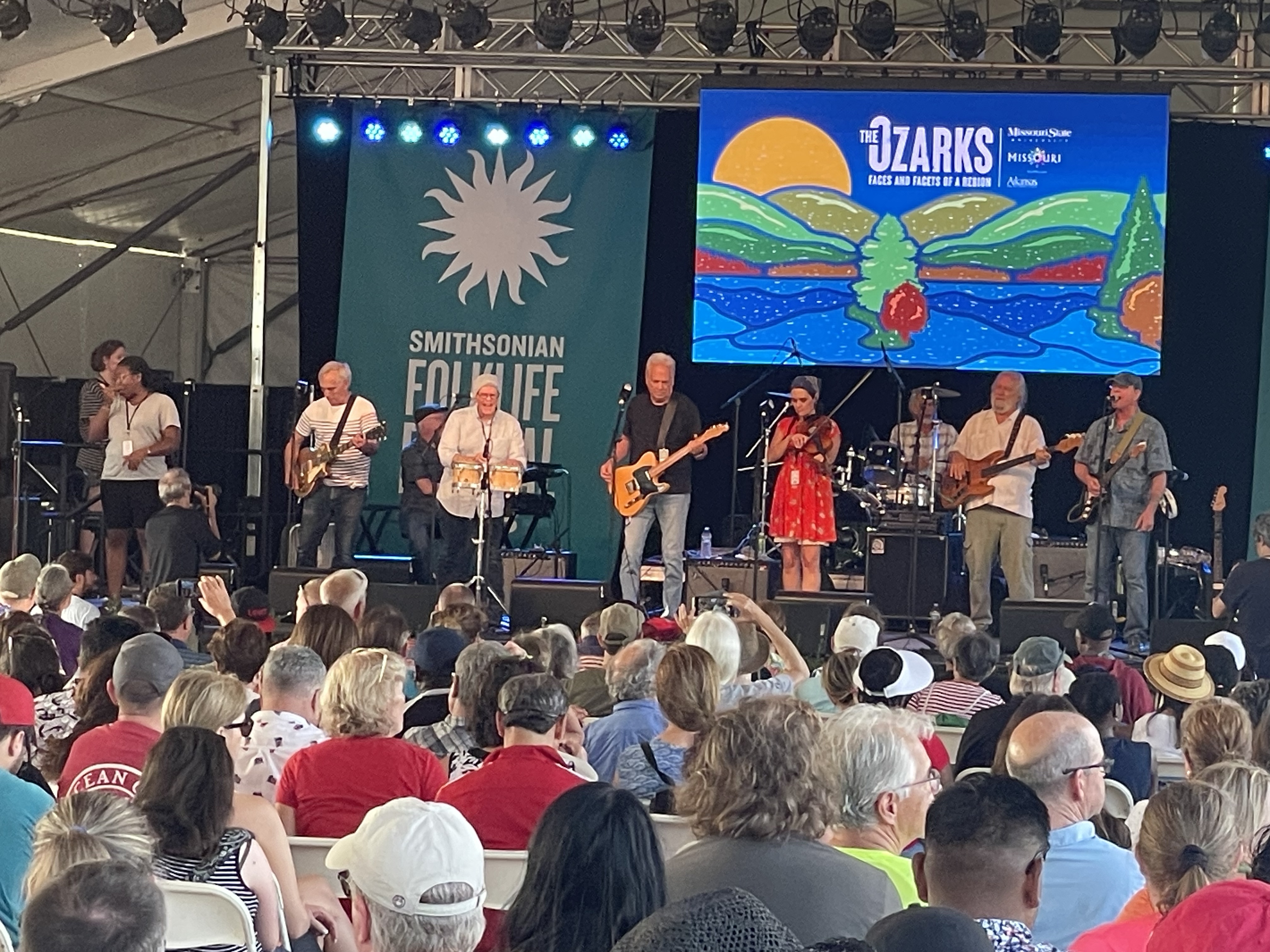
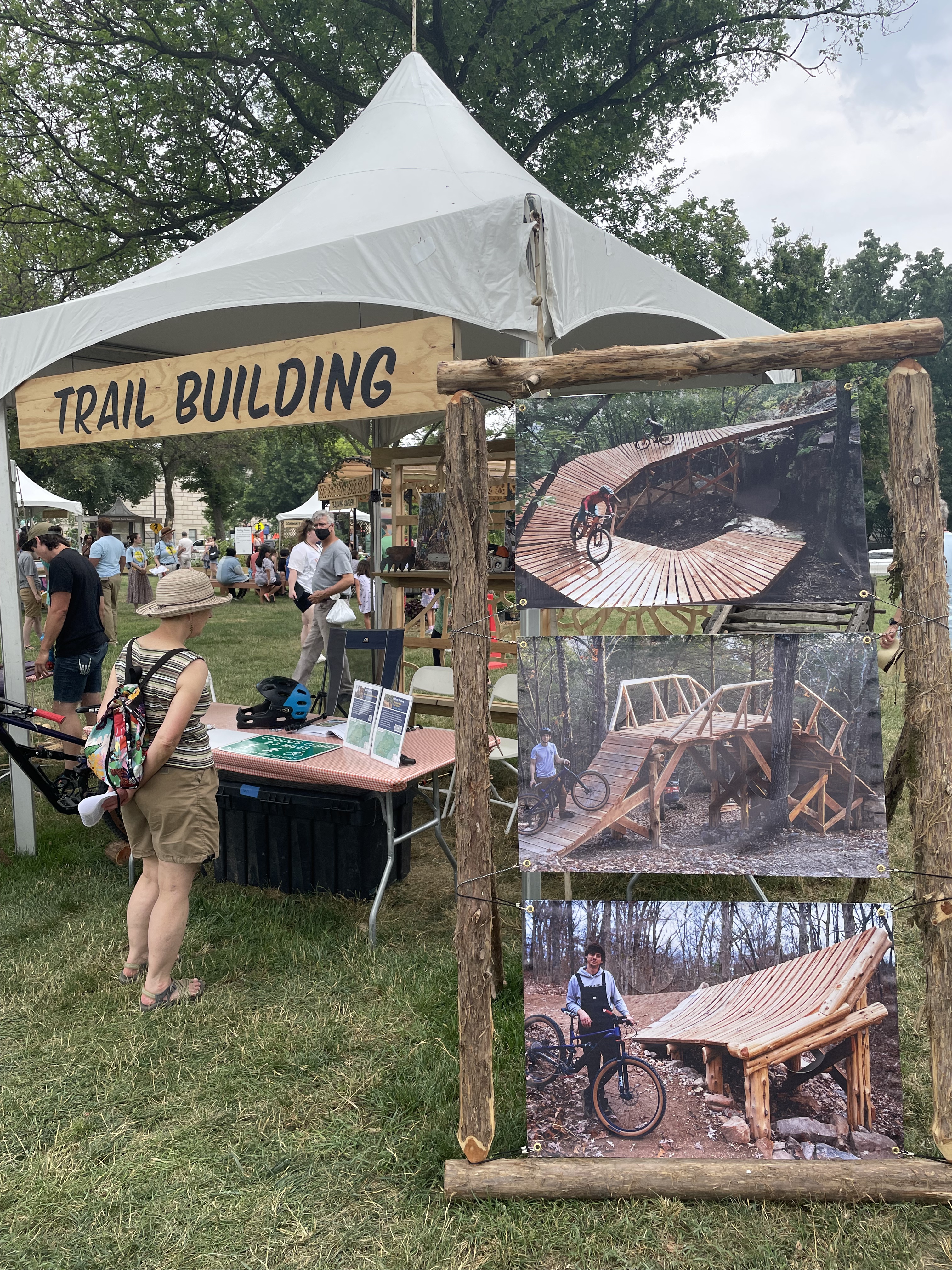
The Ozarks program was divided into four major themes: celebrations and gatherings; stories, sounds, and show business; migrations, movements, and pathways; and connections to land and place. The site featured large-scale murals and a mountain-bike trail build, music jam sessions and performances, dance and plant-knowledge workshops, food and craft demonstrations, and curated discussions. The Ozarks program included multiple theaters. There was a theater for discussions and demonstrations of plant knowledge, one for cooking demonstrations, one called the “Pickin’ Porch” mostly for music during the day, and one called “The Front Porch” for panel discussions. Both festival programs shared a large main stage out in the middle of the Mall that was reserved for musical workshops and performances during the day and for the larger evening concerts.
Smithsonian Folklife Festival 2023Smithsonian Folklife Festival 2023
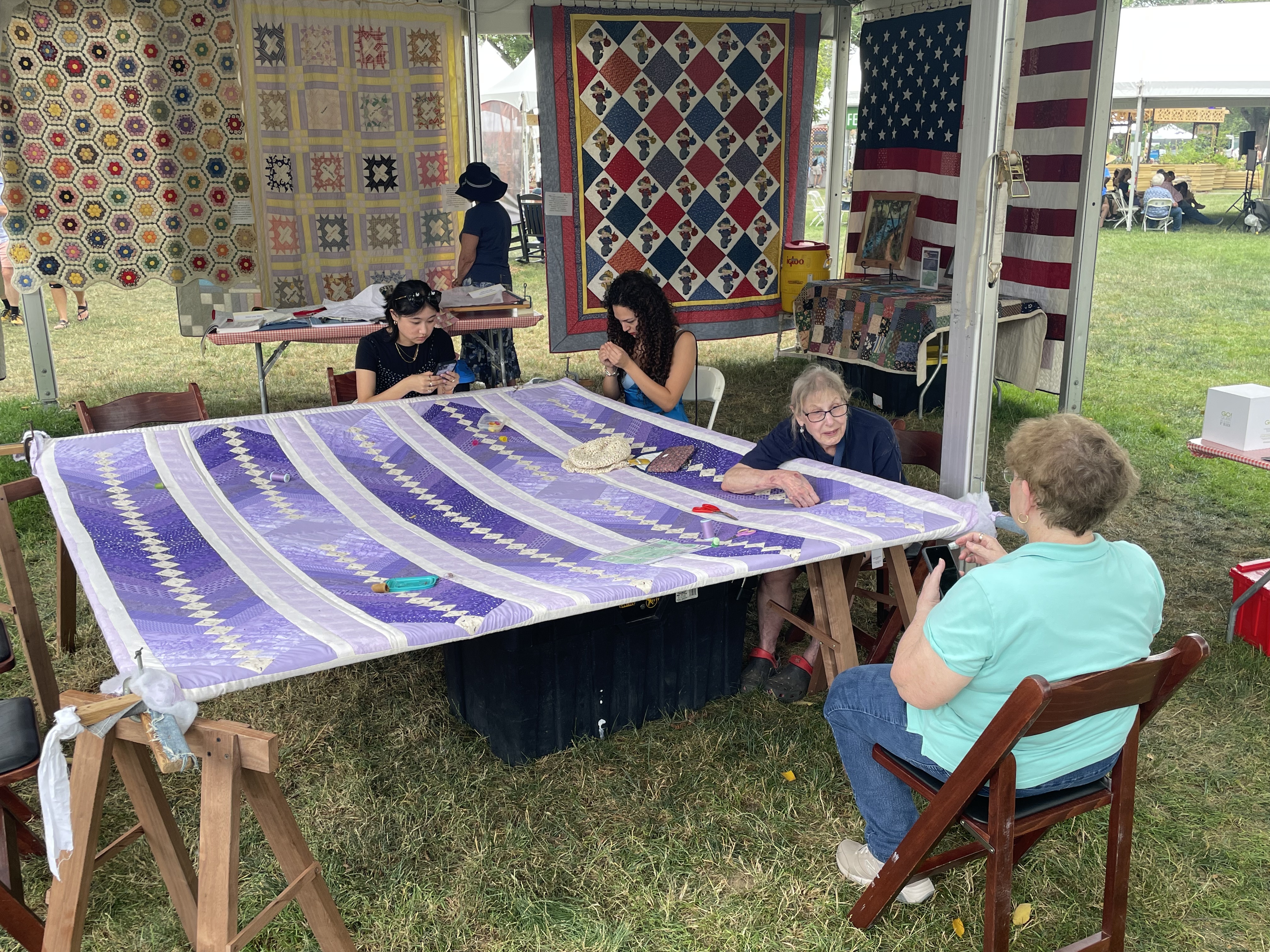
The Ozarks program brought close to 60 musicians to the festival, which is a clear indication of how important musical traditions are to the culture of the region. There were at least eleven different ensembles of varying sizes, along with many individual musicians, specializing in several different genres including Native American music, traditional old time music, bluegrass, folk, country, gospel, and contemporary. Foodways, plant knowledge, arts, crafts, and storytelling were demonstrated by white Ozarkers but also by many other ethnic groups that call the Ozarks home, including Native Americans, African Americans, people of Hispanic and Latino heritage, Marshallese, Hmong, Khmer, and Syrian. Contrary to much of its history over the last 200 years, some of the “faces and facets” of the Ozarks show remarkable diversity in race, ethnicity, and culture.
Smithsonian Folklife Festival 2023Smithsonian Folklife Festival 2023
The largest and most recognizable musical group that the Ozarks program sponsored played on the main stage for the July 4 evening concert. The Ozark Mountain Daredevils is a band that originated out of Springfield, Missouri, in 1972. The group had several hits in their early years including “Jackie Blue” and “If You Want to Get to Heaven.” The band has evolved over the decades, losing and replacing band members and even going into a type of semi-retirement in the early 21st century. In recent years the Daredevils have enjoyed a bit of a resurgence, appearing on the Grand Ole Opry in Nashville on two occasions in 2023. They put on a hell of a show for the DC festival and for hundreds of people within earshot of the main stage that evening.
Ozark Mountain Daredevils
My primary job during the days of the festival was to occupy the Missouri State University Libraries table set up near the main entrance of the Ozarks program. With the help of one of our student workers, I was selling several books about the Ozarks and answering questions about the festival program and the region in general. I was surprised by how many festival visitors told us they were either from the Ozarks, had lived in the Ozarks, or had fond memories of visiting the region. Many of these folks have lived and worked in the DC area for years, and they were so happy to see the Ozarks featured on the National Mall. We could definitely detect a sense of pride in their voices when they talked about their connection to the region.
Smithsonian Folklife Festival 2023
Perhaps the most enjoyable connection I made during the time of the festival was with the two guys representing mountain biking, one of the fastest-growing forms of recreation in the Ozarks, especially in northwest Arkansas and Missouri. Seth Gebel is a young entrepreneur who owns Backyard Trail Builds. He goes out into the forest armed with only hand tools and cuts down cedar trees, trimming them out to create bridges, ramps, and runs for biking trails. He designed and built a short, curved and banked track at the entrance to the Ozarks site at the festival. Dave Schulz works within a nonprofit organization to help community leaders in revitalizing their towns by developing bicycle-focused public parks and sustainable trail systems, preserving natural environments while drawing tourism from around the world. Both of these guys gave daily riding demonstrations on the track that Seth built for the festival.
Smithsonian Folklife Festival 2023
The most magical moment for me came on the final evening of the festival in the dining room of the host hotel. A group of Ukranian vocalists from the Creative Encounters program stood up and began singing a traditional folk song in their native tongue. They were followed by several other individuals and groups from both programs, standing to sing and inviting others in the room to participate through responsive chanting, vocalizations, and clapping. As I witnessed what happened, I recognized that this festival offers us a snapshot of the best of humanity, the wonders we are capable of producing when we embrace our differences and come together to learn from each other.
The reason I can get away with such a derogatory title for this post is because I am a librarian, or at least I am by training, and for much of my career, by practice as well. Over the last few years, I have picked up several books, both fiction and nonfiction, that feature libraries or librarians as the primary subject. Here is an annotated list of these books, which I highly recommend to librarians, library patrons, or bibliophiles in general. Enjoy!
Library stacks
Nonfiction
The Library: A Fragile History by Andrew Pettigrew
In this dense and comprehensive history of libraries, the author also tells the story of the evolution of the book: its creation, distribution, preservation, and impact on civilization. He devotes considerable time discussing how private collections were the norm for libraries during most of recorded history and that public access is a relatively new phenomenon.
The fragile part of the history is illustrated by the many threats to books and the libraries that contain them, from natural disasters to warfare, from censorship to reduced support by private and government sources. The book begins and ends with perhaps the most famous library of the ancient world at Alexandria, which in some ways serves as a model for all libraries that followed. Written language is one of the hallmarks that separates our species from all the rest; therefore, the institutions that serve as repositories of written language must be considered as instrumental in documenting and preserving that distinction.
One of the more interesting takeaways from this book is how, at least until the modern era, fiction was held with such little regard by the literate elite of western society (and this book focuses on libraries of western civilization). Novels were even considered a corruptive force, especially as they were in such demand by women as a form of escape from the drudgery of living in subservience to their husbands, taking care of children, and maintaining the home.
The author contemplates the impact the digital age will have on books, which could be perceived as another threat to the library. It is reassuring that he observes how radio, movies, television, and computers may have competed for the attention of readers, but books and libraries continue to survive and at times even thrive in the age of mass media.
Overdue: Reckoning with the Public Library by Amanda Oliver
Public libraries and the services they provide usually reflect the communities where they are located. The public library where I was the director was medium sized in a county of about 43,000. We had our share of quirky folks, unruly adolescents, crusty curmudgeons, and houseless citizens among the day-to-day users who came in regularly to check out books or bring their children to story time. Also, our town had the state’s mental institution, which had been decentralized in the 1960s resulting in plenty of mentally ill people in government subsidized houses, or sometimes, just wandering the streets. As expected, many of them found their way to the library.
My public library was probably typical for a rural community in central Georgia — plenty of challenges but nothing too much out of the ordinary. By contrast, Amanda Oliver spent several years working in a public library in one of the toughest trenches a government employee can work: Washington DC. If there is a common thread running through her book, it is a sense of conflict the author feels about knowing how desperate many of her patrons were for help just to survive and trying to preserve her own mental health and physical safety while trying to assist them with their needs. She bemoans the fact that this country is woefully unable to take care of the poor and mentally ill, who have to rely on help wherever they can find it.
By their very nature, public libraries are places of refuge for the marginalized, and librarians are first responders, sometimes in the most literal sense. Oliver shares stories of having to administer first aid and other medical procedures for people with addiction and a whole host of health problems. She calls into question the role of the public library in a society that has abandoned those who are at most risk from economic insecurity and mental illness, including those with violent tendencies. She offers some chilling reports about librarians who have been injured or killed by crazed individuals who come through their doors. She reports how installing security equipment and hiring public safety personnel have become top priorities in many public libraries around the country.
On the bright side, it is clear that Oliver believes strongly in the mission of the public library to provide information services, very broadly defined, and to assist patrons with needs that have little or nothing to do with reading. In spite of how difficult her job was, she stayed committed to directing people to information, resources, and agencies they needed, sometimes just to survive. She effectively offers her readers a healthy, though not copious, collection of statistics to drive home her points. Perhaps the most encouraging stat of all for me was that the number of public libraries in America is greater than the number of Starbucks. We must be doing something right here.
The World’s Strongest Librarian by Josh Hanagarne
Hanagarne managed to write the funniest and the saddest book in this category at the same time. It is sad because the author has struggled so many years with a disorder that is so misunderstood and at times terribly debilitating. It is funny because Hanagarne manages to find humor even in the worst circumstances. His comic timing is quite good, with prose that reminds me so much of David Sedaris. Hanagarne makes his father sound remarkably similar to the way Sedaris makes his father sound. They both come off as crusty, no-nonsense guys who were forever trying to toughen up their children to face the “real world.”
Hanagarne’s memoir doesn’t focus nearly as much attention on his work as a librarian as it does his upbringing in a Mormon family facing the embarrassing and humiliating symptoms of Tourette Syndrome, which he personified by giving it a name – Misty (as in Miss T). His determination and tenacity in wrestling with his condition is inspiring. He never gave up. On the contrary, he often pushed himself into situations that anyone else with Tourette Syndrome would avoid, like choosing a profession that is traditionally associated with being quiet. And then he continued to bust open stereotypes by being a librarian AND a fitness enthusiast. It is not surprising that Hanagarne has found fitness regimens to be among the most successful tools in battling Tourettes.
From a confused childhood to the discovery and love of reading, from the awkwardness of making friends and dating to pushing through as a high school athlete, from pulling away from the faith of his parents to finding happiness in marriage and being a father, Hanagarne’s story is touching, heart wrenching, fascinating, and funny. And his use of Dewey Decimal System call numbers and subject headings as chapter leads is brilliant. Josh Hanagarne is a remarkable human being.
The Library Book by Susan Orlean
The author cleverly uses the Los Angeles Central Library fire in 1986 as her main hub to explore the history and culture of libraries. Her focus is generally on the Los Angeles system, but throughout the book she takes a few side roads to include libraries, past and present, in other locations in this country and around the world. Her deep appreciation of this ancient institution is abundantly evident throughout the book. She manages to take what so many people would consider a deadly boring topic and make it intriguing, fascinating even. Although at times the chapters read more like separate essays, some of which could easily stand alone, Orlean manages to make them flow together and connect as she unravels the mysteries surrounding the disaster in L.A. However, the real reason the book is a bestseller is because Orlean is such a good writer. The Library Book is a wonderful combination of biography, history, mystery, and investigative reporting.
I Was a Stripper Librarian by Kristy Cooper
Okay, yes, the title is titillating, the cover looks just a tad risque, and this is a self-published book. But, let’s immediately set aside our bibliographic elitism, decide we are NOT going to judge a book by its cover, and take an honest look at this memoir from someone who worked in two professions that, at least on the surface, seem like polar opposites. Kristy Cooper argues that being a stripper and a librarian are not nearly as different than most of us would think, and she provides enough examples to be convincing. Admittedly, this book cannot be taken as seriously as some of the other titles in this list — the authors are not trying to do the same thing here.
I suspect most Americans would be surprised to learn how many women and men enter the sex industry, as the author labels it (although stripping seems to stretch the definition to my way of thinking), in order to make ends meet or to get out of debt, especially student loans. A simple Google search on the topic brings up numerous TV spots and articles posted over the last few years about young folks who pay their way through college by stripping. Cooper is unapologetic about her decision to do the same — it was simply pragmatic. She tried other more conventional jobs, but none paid as well for the amount of time and labor required.
This book is well-written and interesting. Cooper does not come across as some bubble-headed babe trying to impress us with her lap-dancing talents, although some of the stories she shares are fascinating, troubling, and at times hilarious. Her vocabulary is impressive. Her writing style is rather simple and straightforward, but it works fine for this type of book. She assures her readers that there are plenty of people in the adult entertainment industry who are extremely intelligent, some of whom have advanced degrees like she does. Although she is no longer in the industry, she certainly advocates for it. She is also a remarkable champion for the library profession and has even established a nonprofit organization to facilitate her philanthropic work, especially for librarians.
Ultimately, readers will either approve or disapprove of Cooper’s dual occupational choice, but no one can deny that she made it work for her circumstances. She implies that stripping never made her feel dirty or immoral, but I have to wonder if the objectification factor eventually did a number on her. The best example, and perhaps the saddest to me, was when she was considering whether or not to get implants because her breasts were smaller than that of the average female strippers with whom she worked. Even though some of her male customers recommended she leave them alone, she knew that a bigger chest in a topless bar translated to more income. At one point she decided that her breasts were not really a part of her body as much as they were a commodity or resource for her craft. As true as that may be, I hated to hear it.
Fiction
The Midnight Library by Matt Haig
I read this book for an online book club I helped moderate for the university where I work, but I was intrigued by it when I first saw it reviewed in the New York Times Book Review. My honest assessment of this novel is that it is entertaining, but it still has more of a juvenile style to it, probably because Haig has written several books for children. The subject matter and language are clearly for an adult audience, but the plot and rhythm still feel more like a fairy tale to me, perhaps like a C. S. Lewis children’s novel.
The premise of The Midnight Library is very similar to the film “It’s a Wonderful Life.” The name of the town in the timeless holiday classic film is Bedford Falls; Nora’s album is called Pottersville; a character in the novel has the last name Bailey. (The author tweeted about this to a fan.) If we give too much thought to the mechanics behind the story – the impossible challenges presented by being inserted into the middle of an unfamiliar life – the novel doesn’t exactly “work” so well. I had to employ a type of dissociation to make it through.
Nora and Hugo discuss Schrödinger’s cat, the popular thought experiment that illustrates an apparent paradox of quantum superposition – alternate possibilities happening simultaneously. Is there a deeper meaning that Haig is trying to get at with this novel or is it just supposed to be an entertaining read? Is this a story that explores the concept of quantum mechanics and string theory? At any rate, Haig’s novel prompts readers to think (or rethink) how different their lives might have been had they made different choices along the way.
I am surprised at how much attention it received from major review sources, but then again, Haig is a journalist too, so there could be some professional courtesy going on as well. Haig does a good job of pulling the reader into the story. Most of us can imagine ourselves in Nora’s shoes and are compelled to speculate what decisions we would make given the circumstances.
The Personal Librarian by Marie Benedict and Victoria Christopher Murray
This may not be a great novel, but it is a good story based on the life of a real person. Belle da Costa Greene was J. P. Morgan’s personal librarian, an amazing African-American woman who was forced to hide her true identity and pass as white in order to succeed at an incredibly important job. Using biographies, personal papers, and secondary sources, the authors attempt to recreate the life and accomplishments of Greene, complete with her romantic relationships, her hardships, her family life, her savvy business dealings, and the struggles she faced through it all in keeping such a huge secret. In the category of historical fiction, this novel ranks among the best I have read.
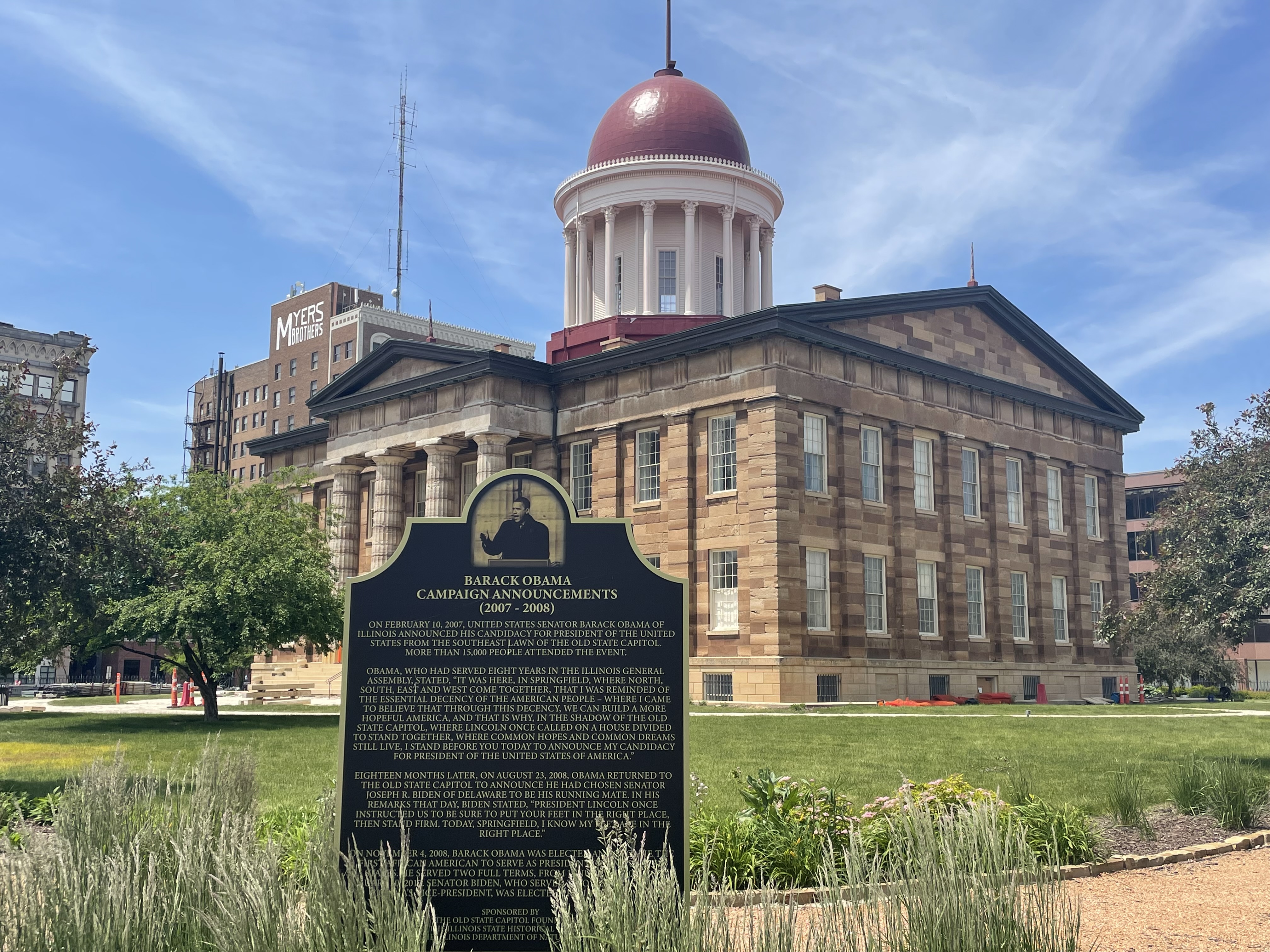
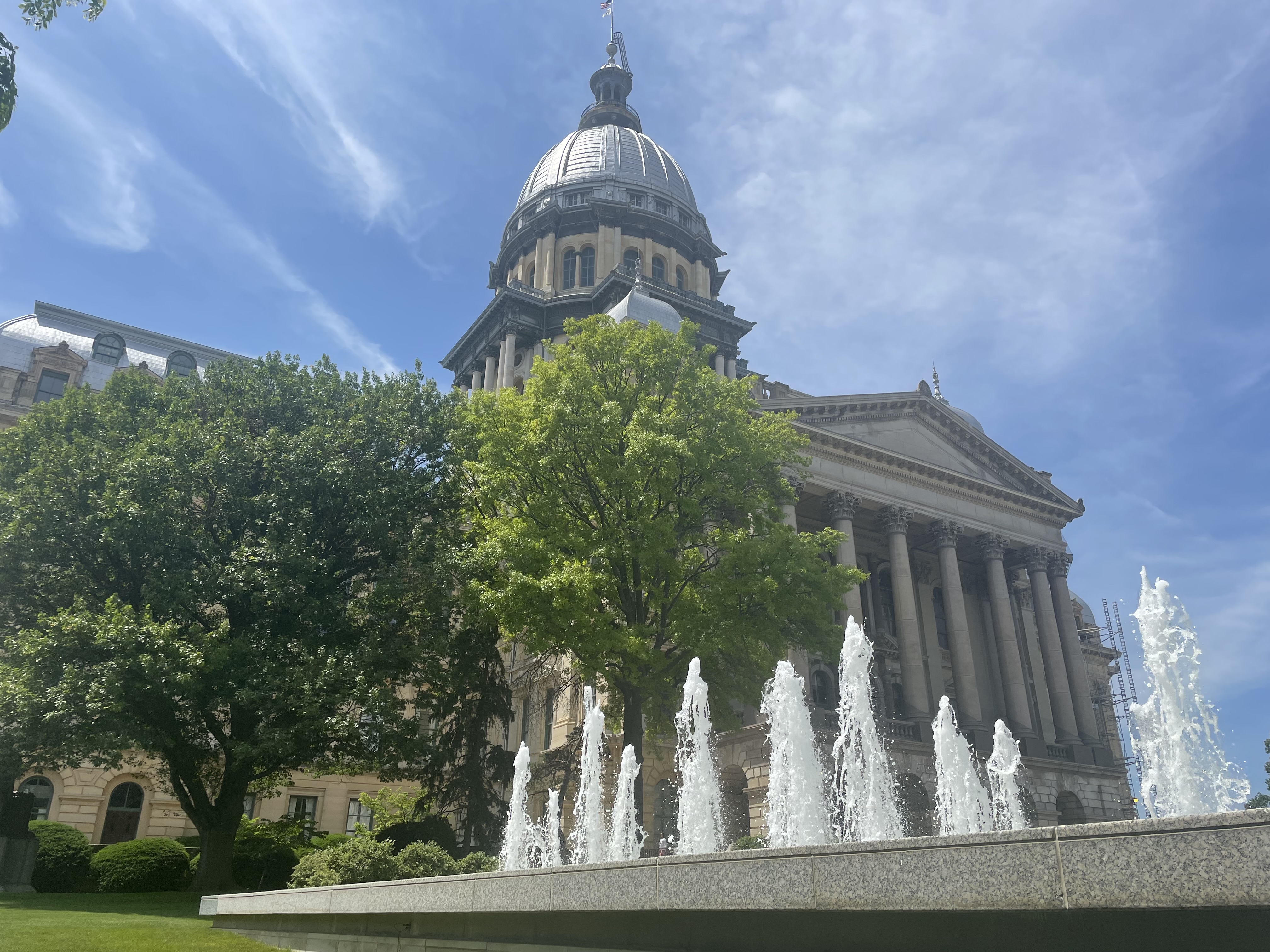
My wife and I spent a weekend in Springfield, Illinois, over the 2023 Memorial Day weekend. This town of just over 113,000 people may be the smallest state capital I have ever visited. I wouldn’t describe it as spectacular, but it does have a certain charm. There are several good restaurants and pubs downtown, and the hotel where we stayed was comfortable, clean, and convenient. The architecture of the state government buildings is impressive, especially the restored Old State Capitol that served as the state house from 1840 to 1876. On February 10, 2007, Barack Obama announced his candidacy for President of the United States on the southeast lawn of the building. The new State Capitol was completed in 1888, although the legislature began meeting in the building a decade earlier while it was under construction. Designed in the shape of a Greek cross, the capitol features a magnificent dome that carries the structure to a greater height than the U.S. Capitol in Washington, D.C.
Old State Capitol, Springfield, IllinoisNew State Capitol, Springfield, Illinois
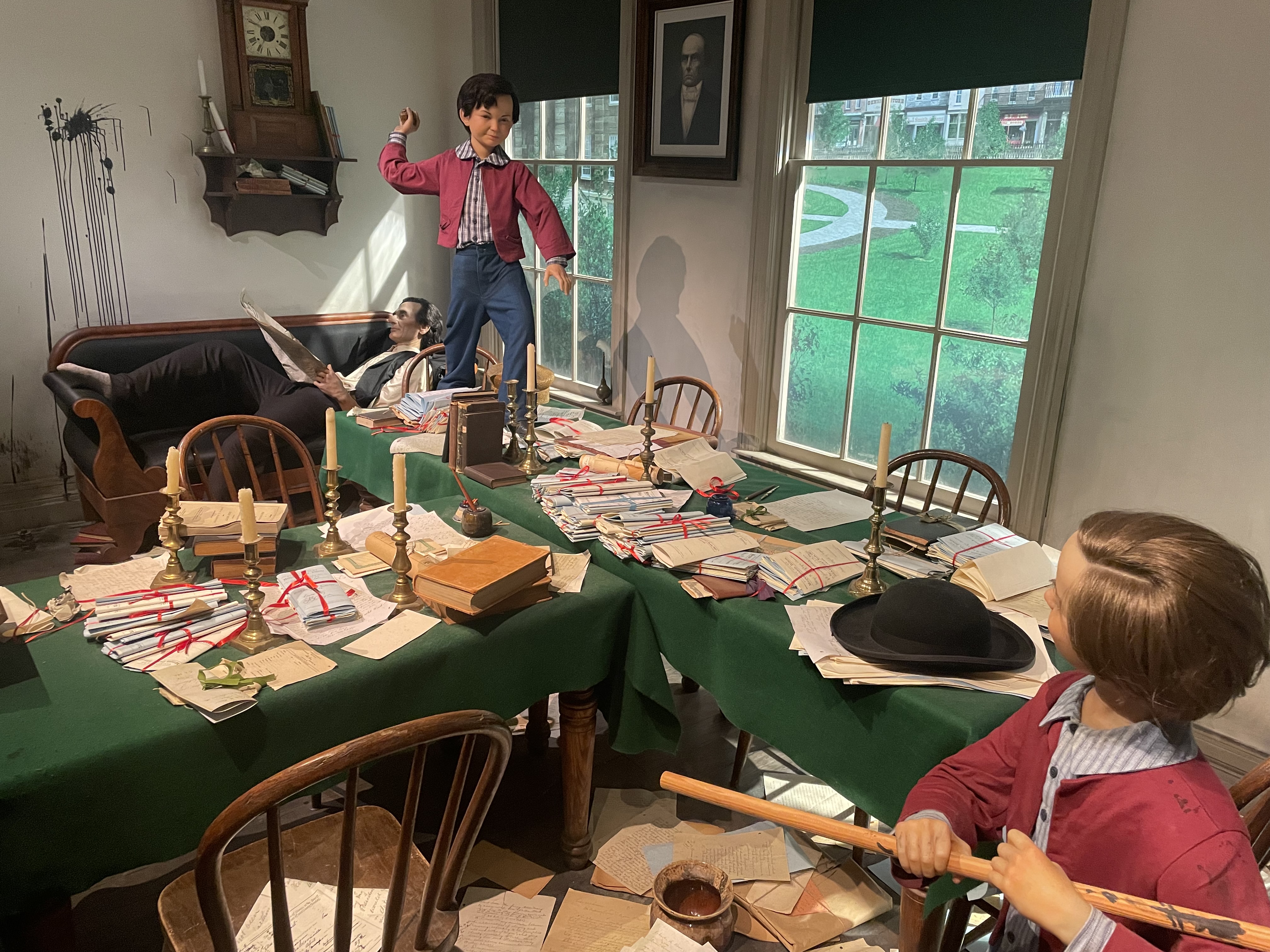
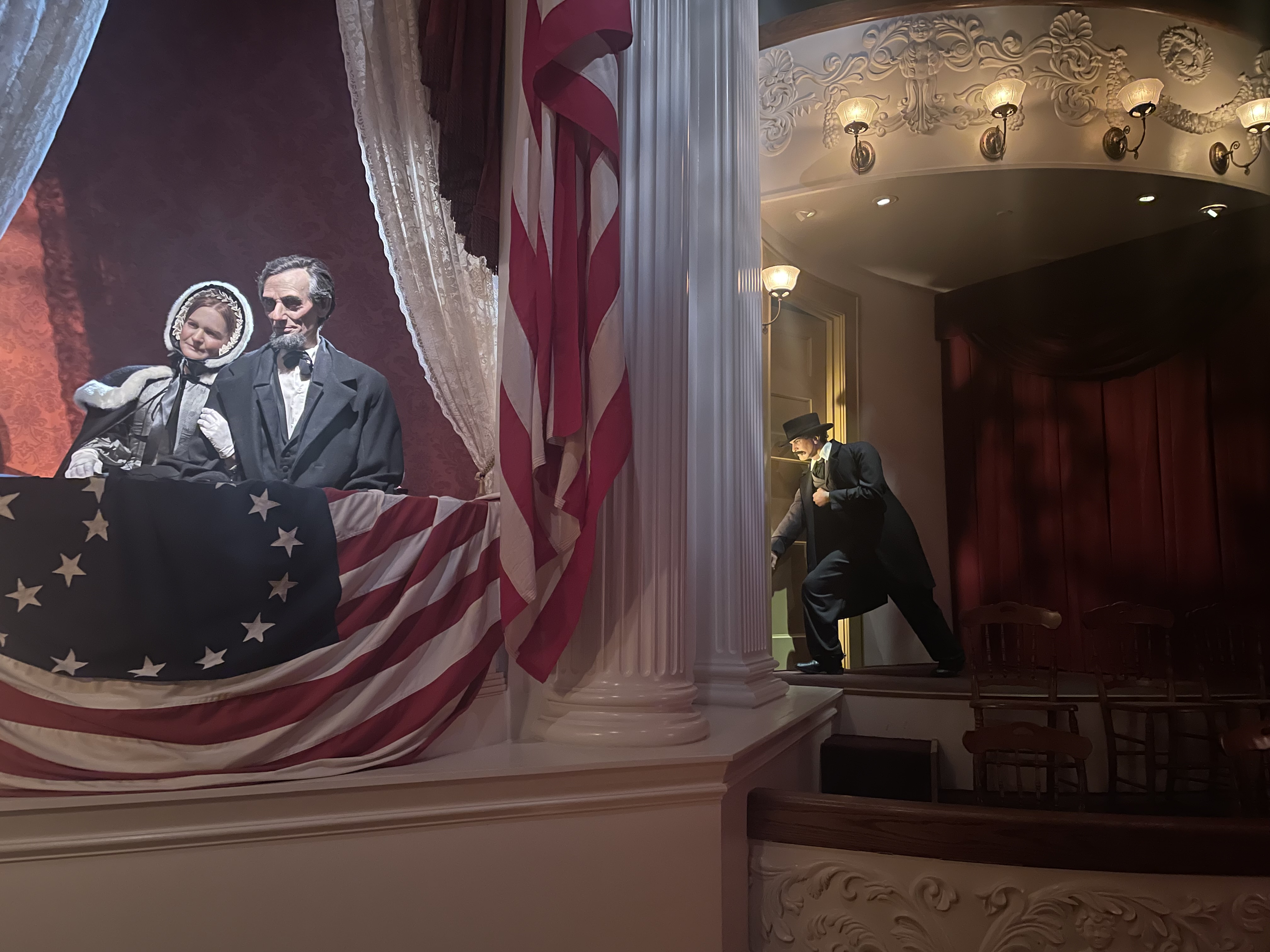
The major tourist draw for Springfield is a collection of attractions associated with the town’s most famous citizen, President Abraham Lincoln, who practiced law and started a family here. The Lincolns resided in the city from 1837 to 1847, the year Lincoln was elected to the U.S. House of Representatives. Though his most memorable years were spent in the nation’s capital, he built his legal and political career in Springfield and was buried there after his assassination in 1865. The Abraham Lincoln Presidential Library and Museum in Springfield is a first-class destination for people of all ages interested in history, presidents, or politics. The museum’s interactive exhibits and video presentations are joined by lifelike replicas of Lincoln, his family, and his associates to tell the story of the president’s early childhood in Kentucky and follow his path to the White House and on to his tragic death.
Abraham Lincoln Presidential Library and Museum, Springfield, IllinoisAbraham Lincoln Presidential Library and Museum, Springfield, IllinoisAbraham Lincoln Presidential Library and Museum, Springfield, Illinois
We also took a stroll around the Lincoln Home National Historic Site in Springfield, which is made up of a restored and/or replicated section of the town dating back to the 1840s and includes the actual house where Abraham and Mary Todd Lincoln raised their family. There are exhibits about the Lincolns and their neighbors in several of the other homes and buildings at the site, and visitors can book tours of the Lincoln home too. There is an interpretive center filled with information about the 16th President and what life was life in Springfield in the mid-19th century.
Lincoln Home National Historic Site, Springfield, Illinois
The Lincoln Tomb and War Memorials State Historic Site is also located in Springfield in Oak Ridge Cemetery. It is a massive granite structure crowned with a towering obelisk. Tours of the tomb are self-guided, and we were lucky enough to be the only people inside during our visit. The hallway leading back to the actual tombs of Lincoln and his family is filled with bronze statues of the President, including a miniature replica of the Lincoln Memorial Monument at the National Mall in Washington, D.C. It is a solemn place worthy of such a celebrated and significant leader of the nation. It is a humbling experience to see it in person.
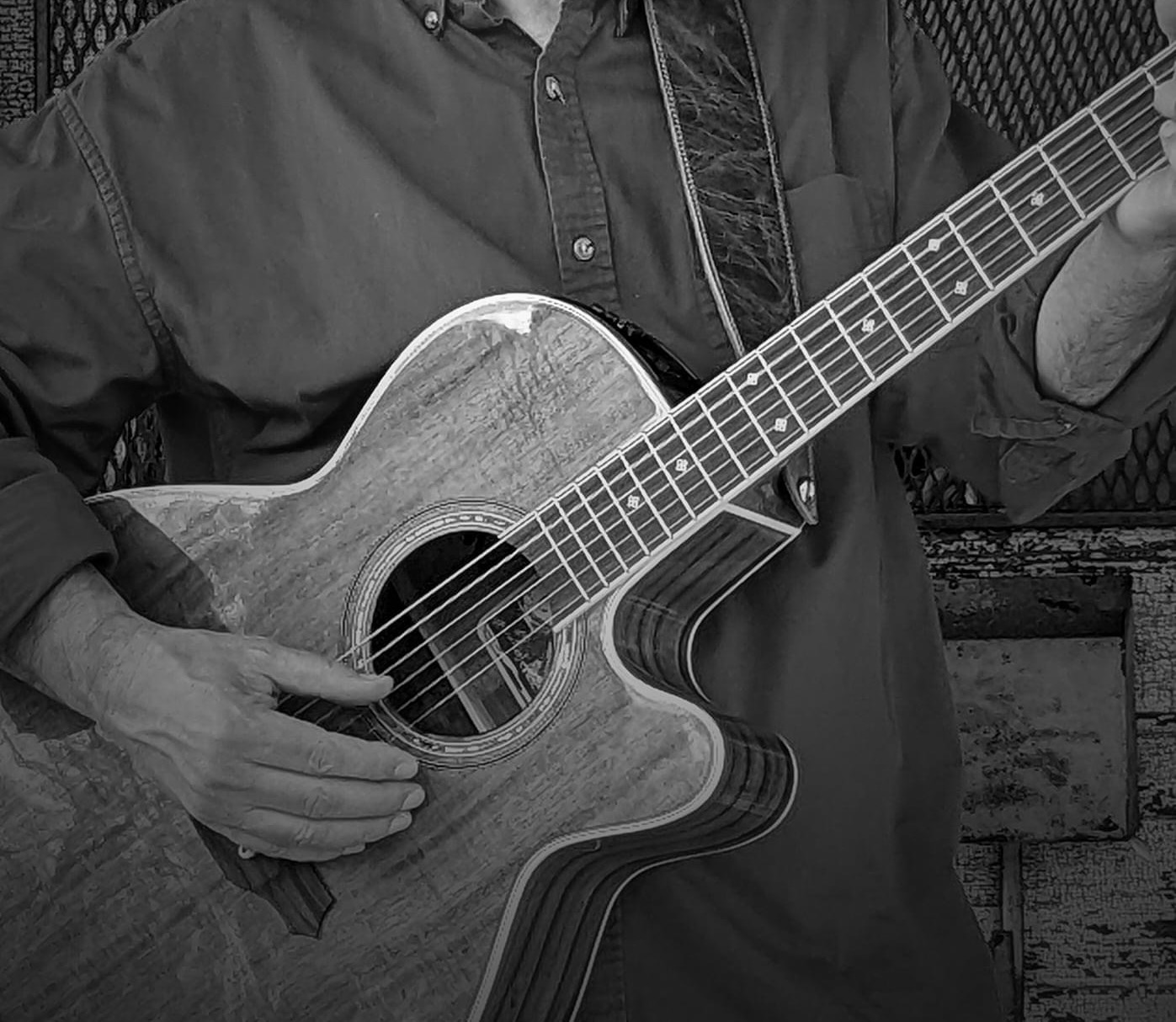
When my wife and I moved to Springfield, Missouri, in late 2018, I had no idea how vibrant the music community would be in this town of 200,000+ people in the heart of the Ozarks region. Within a few months, I was participating at a weekly open mic night jam where musicians, singers, and songwriters gathered to perform a wide variety of music, which was mostly classic rock, country, pop, and the occasional folk tune. As we became more immersed into the community through work and social activities, I learned this part of the country has an incredible musical legacy going all the way back to the early 19th century when immigrants began to settle in southwest Missouri and northwest Arkansas, bringing with them musical traditions from southern Appalachia rooted primarily in Scotland and Ireland. Old time music jams, or house parties, lasting all night sprang up throughout the hills and hollers featuring various stringed instruments like fiddles, mandolins, banjos, upright bass fiddles, and guitars. Weekly old time and/or Bluegrass music jams still exist today in the rural Ozarks in places like McClurg, Missouri, and Mountain View, Arkansas.
Microphone
The regional music scene gained national attention in the 1950s with the “Ozark Jubilee,” a live, nationally broadcast country-western variety show on ABC Television originating from the Jewell Theater in downtown Springfield from 1955 through 1960. Many country music stars began or advanced their careers by appearing on the Jubilee including Porter Wagoner, Patsy Cline, Brenda Lee, Johnny Cash, and the Philharmonics. The Ozarks Studies Institute of the Missouri State University Libraries is in the process of locating and digitizing episodes of the Jubilee and making them available to the public on YouTube, a project with which I have been directly involved. The playlist is at https://www.youtube.com/playlist?list=PLjcjShg6ypA54TjijKG6ty9WpPDxkn-Xw
“Ozark Jubilee”
Many people in the Springfield area argue that the “Ozark Jubilee” opened the door for another major movement in the entertainment industry centered about forty miles south in the little hill town of Branson, Missouri. Just as the Jubilee was going off the air in 1960, the Herschend family was building a 19th-century-style Ozarks theme park just west of Branson they would call Silver Dollar City. One of the major attractions of the park was live music, mostly consisting of traditional fiddle or square dance tunes but also Bluegrass. As country music rose in popularity across the nation, a few entrepreneurial musical families saw an opportunity to open theaters for country music variety shows along Highway 76, the hilly, curvy road that connects downtown Branson to Silver Dollar City. With the theaters came restaurants, hotels, shops, and other attractions. By the 1980s, some of the aging country music stars of Nashville, and even some of the younger ones, began either playing shows along the strip or opening up their own theaters. Over the next two decades, Branson exploded into a tourism mecca offering family-friendly entertainment centered around country music, with a whole lot of white Protestantism and patriotism thrown in for good measure.
Springfield, Missouri (www.springfieldmo.org)
The Branson boon began to wane as the 20th century ended, although Highway 76 is still filled with a multitude of tourist attractions and theaters and all the trappings that accompany them. Fortunately, nearby Springfield continued to be a music town, although it never aspired to be like Branson. Many people here maintain, and I would agree, that the Springfield music scene is more authentic, with only minimal interest in attracting tourists. We have certainly seen our share of that authenticity. The first band we heard in Springfield was on New Year’s Eve 2018 at Moon City Pub on Commercial Street, which was also the location of the weekly open mic night I would begin attending. The name of the band was Mood Ring Circus, an ensemble of four twenty-something guys who were gifted musicians, singers, and songwriters performing their original, hard-driving tunes. We were blown away. As it turned out, the lead singer for the band was also the host of the aforementioned open mic night. His name is Justin Larkin. The pub closed down during COVID, and the owners sold it; however, Justin has continued to host open mic jams at several locations around town.
We have become good friends with Justin and his family. He has produced and recorded me performing several of my own original songs and a few covers in his garage studio. He plays multiple instruments on the recordings and sings harmony parts. This year we are working on a song we wrote together titled “Miles of Time,” which is an absolute rush for me. Justin is about the only person I know personally who makes his living performing music. He plays mostly in southwest Missouri but occasionally tours through the western states playing in clubs, breweries, and restaurants. He is immensely talented as a musician, vocalist, and songwriter. His music is streaming on multiple platforms, and he has his own website at https://justinlarkinmusic.com/
The second musical group we heard was a married couple, Shannon Stine and Natalie Wlodarczyk, two women who call themselves The Shandies. They both play guitar and sing, performing mostly in southwest Missouri. The Shandies are wonderful songwriters, musicians, and vocalists. They have a dedicated page on Spotify. Their shows are a nice mix of their own music and eclectic selections of mostly soft Americana tunes from the last fifty years. The third performer we heard was a solo act, a guy named Dallas Jones. Equally talented on the guitar and the keyboard, Dallas has a voice that could have come straight out of Nashville. He is also a multi-generation cattle farmer. It has been a pleasure getting to know him over the past few years. The genres of music we are drawn to are similar, which include pop, soft rock, and country from the last fifty of so years. Although I am older than Dallas by a couple of decades, we both cut our musical teeth on the folksy tunes of John Denver. Dallas did me the great honor of playing and singing with me for a set at one of my gigs in town early in 2023. Dallas also has a dedicated page on Spotify.
One of the performers I met and befriended at various open mic sessions in town is a guy named Brian Pitts. He’s only a few years younger than I am, so we grew up listening to a lot of the same kind of music, mostly rock and pop music from the late 1970s and into the ‘80s. Brian was the front man in a touring band back in the ‘80s but fell out of performing for about 30 years to raise a family and build a career. He has a great voice and is an accomplished drummer. During the COVID pandemic, Brian really concentrated on learning how to play the guitar well enough to accompany himself singing. His efforts paid off, and we began to harmonize with one another during our respective open mic sets. People began to compliment us on how tight our harmonies were, so we decided to work up a few sets and put together a duet vocal show, with Brian on guitar and me swapping back and forth with guitar and keys. He came up with the clever name, “Openly Gray.” Brian is really striking while the iron is hot. He has joined several different acts: an Eagles tribute band, a Yacht Rock band, and a Hall & Oates tribute band. His vocals are excellent for these genres.
There are far too many solo and group performers in the Springfield area for me to include in this post, but here are a few more. I am only including people here who perform regularly. All of these people have either their own websites or pages on online musical platforms and/or social media.
Joe Dillstrom and his band, The Paper Moons – a multitalented solo musician, vocalist, and songwriter who also performs with a group playing soft jazzy and romantic classics.
Molly Healey – a looping violinist, cellist, guitarist, pianist, and singer-songwriter who tours with the Ozark Mountain Daredevils, the most famous band to come out of Springfield; she often serves as a recording session musician for soloists and ensembles in the Ozarks; she also has a regular Sunday evening gig with Dallas Jones in town.
Red Light Runner – one of the best cover bands in Springfield, featuring the powerful vocals of Drew Beine and the phenomenal guitar skills of Steven Sparks, who also plays in multiple bands, including Mood Ring Circus mentioned above.
Paul Thomlinson and Innuendo – another incredible cover band in town; Paul is a killer guitarist and vocalist who is a front man for the Eagles tribute and the Yacht Rock bands that Brian sings with, plus he is the other half of the Hall & Oates tribute band with Brian; Paul is also an intelligent, all-around great person.
Devlin Pierce and the Song – Devlin is a fine songwriter and guitarist with one of the most powerful voices around.
David Hoover – an Ozarker at heart who channels James Taylor and Jim Croce like no one I’ve ever heard; David is one of the best acoustic guitar players in the area.
Trent Prewitt – in his early twenties with his eyes on the prize of becoming a hit in Nashville; Trent has a wide-range country voice and is comfortable on both guitar and pedal steel; he is a songwriter and also plays occasionally with a few local bands.
Michael Evens – a sweetheart of a guy with the voice of an angel; Michael plays multiple instruments and has been a big part of the open mic scene behind the curtain in several locations in Springfield.
Don “DR” Randolph – at last, someone older than I am! DR has been playing and singing music with multiple bands in the area for decades; he is one hell of a bass player and a mainstay in the jam band of mostly older rock and country players that hosts an open mic session on Monday nights in town.
Rory Joyce – I cannot end this post without mentioning the man who hosted one of the open mic jams in town; he inspired and encouraged many of the amateurs in the area and was quite an accomplished musician and vocalist; sadly, Rory died in 2022, but his legacy lives on at the open mic night he started and built in Springfield.
The old woman in charge receives a call on the infernal cell phone she needs but curses daily from the only person in town worthy of her friendship. “Someone told me your mule is out of her pen.”
A concerned resident whose property backs up to the boundary of the farm’s north hayfield has seen the wayward beast grazing in his backyard. “We thought she’d want to know where it is.”
The upsetting news comes late on this August day, but if she follows the well-worn tractor path, perhaps she will find her beloved companion in time. “It’s dangerous for her to be out there after dark.”
Leaving her spirited dog at home, she sets out alone, locking the gates behind her when she arrives just as the sun punches holes through the line of trees. “You’ll follow me back to your pasture if you see my car.”
Past the farmhouse, the utility shed, and the cow barn, she steers through limbs heavy with green leaves reaching out and down, gently swaying as if to woo her. “A good car is just what I need to help find my lost girl.”
She drives along the perimeter of the large rolling hayfield but sees only a small gathering of whitetail deer grazing obliviously near the protection of the pine forest. “Have you headed into the woods looking for water?”
She notices a small clearing at the field’s northeast corner, a red-clay trail sloping down into darkness and just wide enough for her vehicle to clear the towering trunks. “Poachers with their four-wheelers trespassing again.”
Gripping the wheel tightly, she creeps and descends deeper now as dusk races toward her, distorting her sense of distance and filling her with an inconceivable revelation. “Is it really possible that I have made a mistake here?”
She is startled when the front of her car drops suddenly and jolts her so violently that her glasses fall to the floor, filling her field of vision with hazy, undistinguishable shapes. “I should just go in reverse and back to where I started.”
She leans forward, and her fingers crawl over the floorboard until she finds the glasses, slightly bent now at an odd angle and no longer fitting properly over her cloudy eyes. “Can you see the lights, girl? It’s time to go back home.”
The car won’t budge because the front wheels are buried to the axle in a large trench caused by heavy rains, and vulnerability wraps around her like a large blanket. “I can call my man to bring his tractor and pull me out.”
The reality of her predicament rushes in when she sees that her phone shows no cell signal at all out here so far from the highway, and she is alone in the darkness. “The horn will only attract strangers, if they even hear it.”
She turns off the car’s engine, fully reclining her seat and closing her eyes to settle in for the night with one final thought occupying her mind as the headlights cut off. “I have nothing to fear because, after all, this is my place.”
She falls into fitful sleep infested with startling dreams and unfamiliar noises of nocturnal creatures that wander like restless spirits around her stranded chariot. “I hope you found a safe place to rest tonight, sweet girl.”
An orange ball of fire on the horizon shoots soft beams between the conifers and the dense morning fog, piercing the windshield to bathe her face in warm light. “If I start walking due east, I should find my way out.”
Grabbing her cane, she carefully exits the useless car, then follows the sun and struggles up the hill until she hears traffic and finally reaches the busy highway. “I need to rest a bit and then decide what to do next.”
The salesman smoking outside at the used car lot across the highway can’t quite believe his eyes as he sees what looks like a mythical creature emerging from the trees. “Who is that and where in hell did she come from?”
The Ozarks is one of those regions of the country that is diverse and interesting enough to be a tourism gold mine. From the bright lights and music of Branson, Missouri, to the gentle flowing current of the Buffalo River in Arkansas, there is something for just about everyone. Although there are no large cities in the Ozarks, there are towns with a few city amenities, like the restaurants, shopping, museums, and entertainment spots available in Springfield, Missouri and Fayetteville and Bentonville, Arkansas. On the other hand, Ozarks visitors can head off grid and commune with nature at any number of conservation areas, state parks, national parks and forests, national rivers, and wilderness regions.
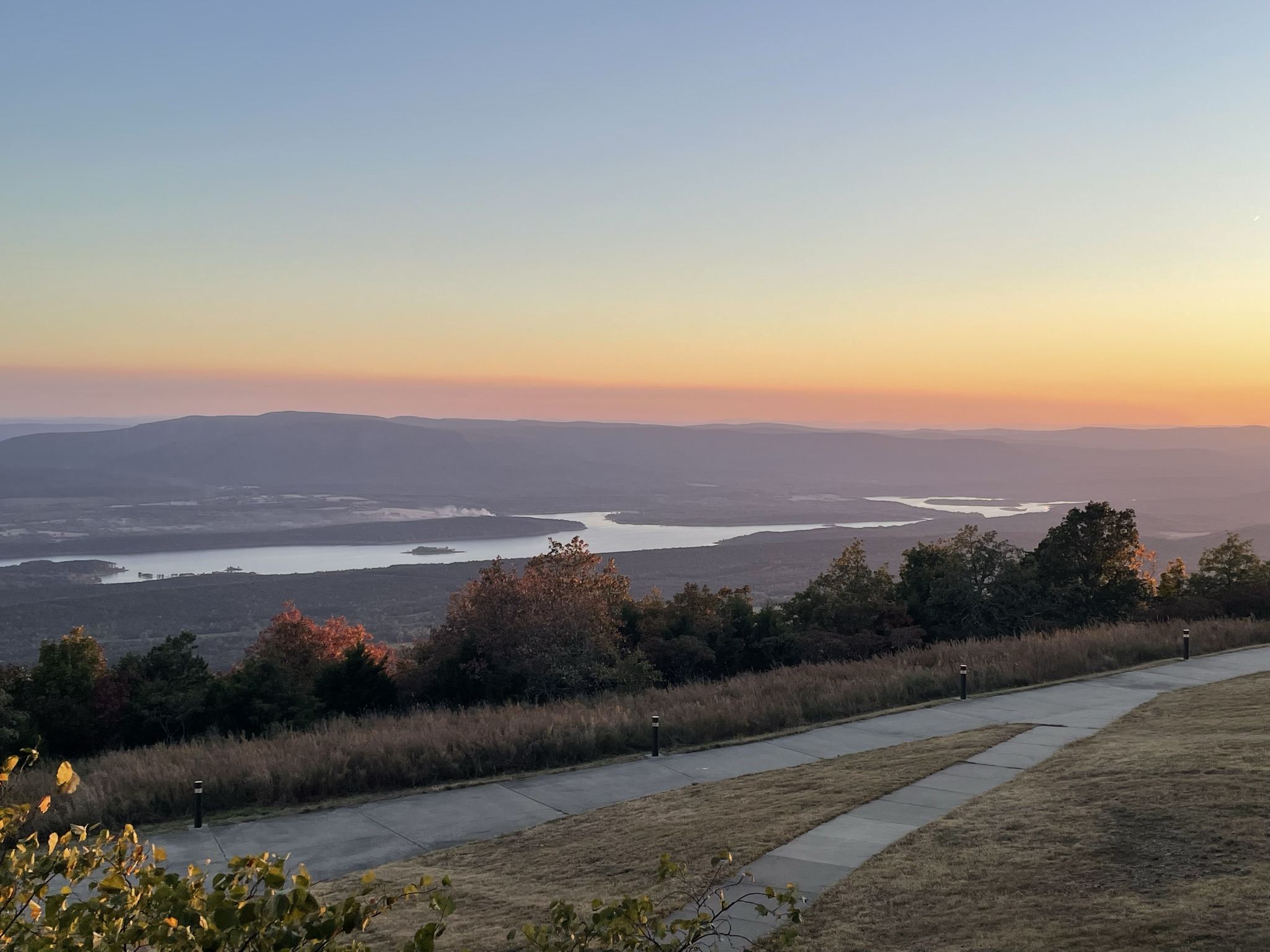
Mount Magazine State Park, Arkansas
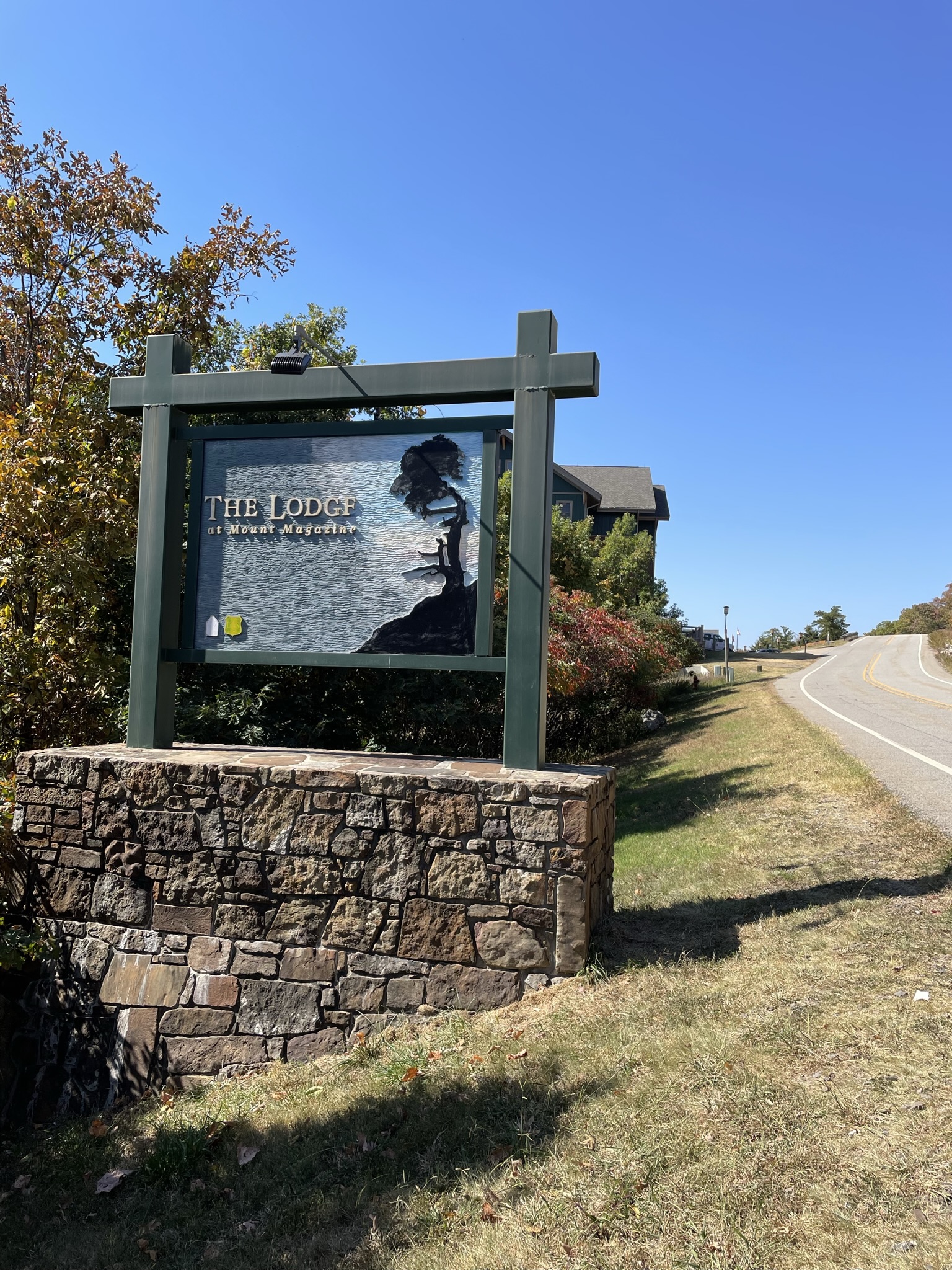
Between those opposite ends of the destination scale, there are a few spots that offer a nice blend of the outdoors with the comforts of the built environment. One of those is the Lodge at Mount Magazine State Park near Paris, Arkansas. Located just below the crest of the highest peak in the state (2,753 feet), the lodge is situated on Mount Magazine’s south bluff overlooking the expansive Petit Jean River Valley and Blue Mountain Lake. Because this ridge is so high above the valley floor, the park includes a launch area for hang gliders within walking distance of the lodge. Other activities to enjoy include mountain biking, horseback riding, backpacking, and ATV riding. The park visitor’s center is within walking distance of the lodge on one of several nearby easily accessible nature trails.
The Lodge at Mount Magazine State Park, ArkansasThe Lodge at Mount Magazine State Park, Arkansas
The term “lodge” may be a bit misleading to potential vacationers to the site. Other than the rural setting, the exposed pine log beams, the nature-themed art, and the natural rock accents, the lodge has many of the comforts of a resort. The rooms are well appointed, many of which have a whirlpool spa. The indoor pool is spacious, and there is a fitness center and a game room too. There are multiple seating areas with large glass panels looking out over the valley. The dining room and bar are a real cut above what most guests would associate with a state park. Accommodations range from individual rooms and suites in the main lodge to cabins of various sizes flanking the building on either side, all overlooking the valley. Each cabin has a fully equipped kitchen, fireplace, and covered deck with an outdoor hot tub. The lodge also houses a conference center.
The Lodge at Mount Magazine State Park, Arkansas
What attracted me most about the lodge and prompted me to book a room for my wife and me in the fall of 2022 was the view. It is magnificent. We spent many hours on the balcony of our lodge room looking out at that incredible vista. The pleasant surprise was how nice the whole facility was. The service was great. The food was quite delicious and plentiful considering the price and the somewhat rustic setting, with buffets offered for most meals, although ordering from a small menu was an option. The park is in a remote part of the Ozark-St. Francis National Forests, but there are small towns only thirty minutes away. It’s a great place for the family that enjoys nature but doesn’t want to sleep in a tent or camper, although the park has plenty of campsites. The lodge and cabins are also perfect for a romantic getaway, and we are always ready for that kind of excursion.
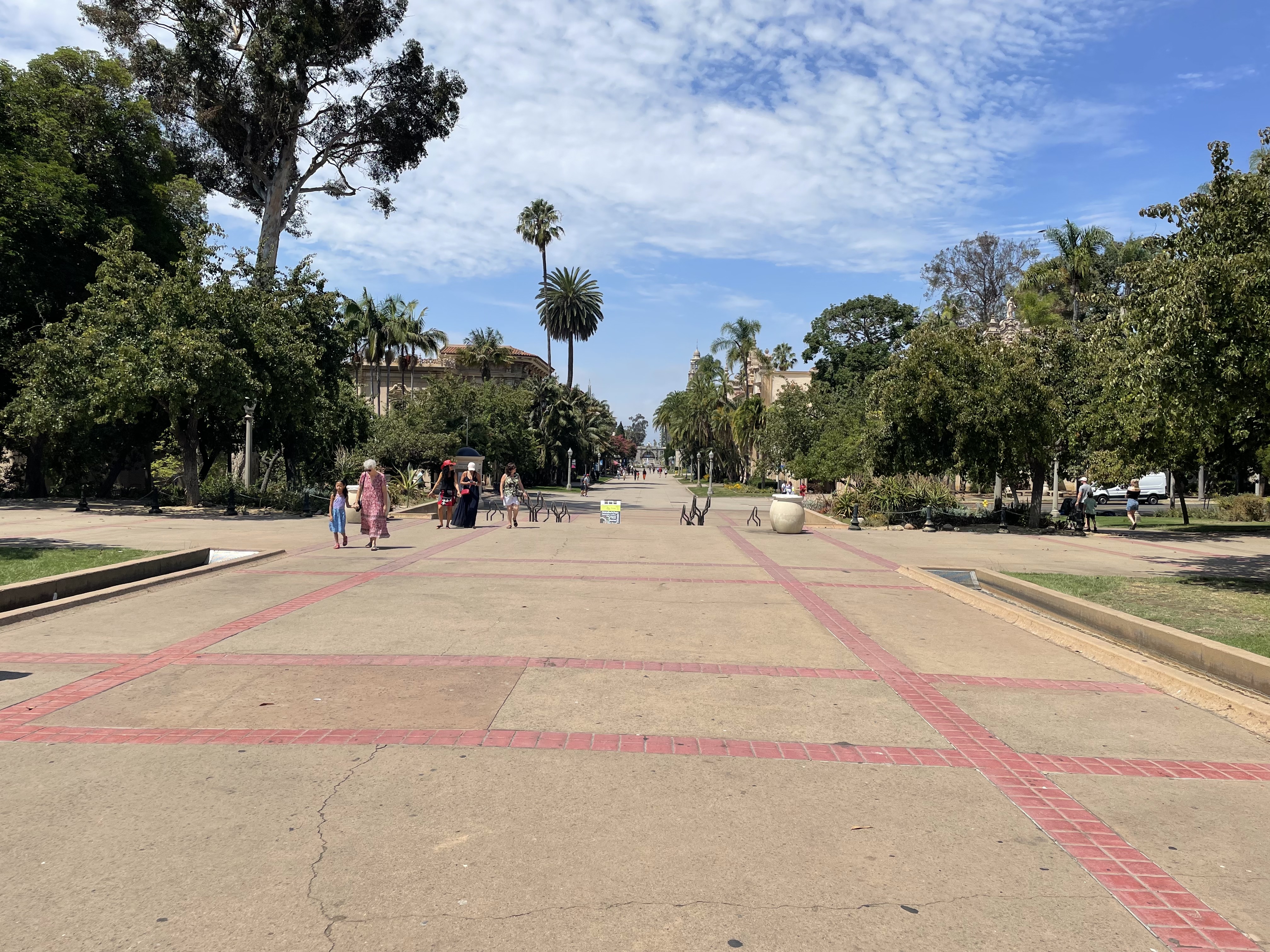
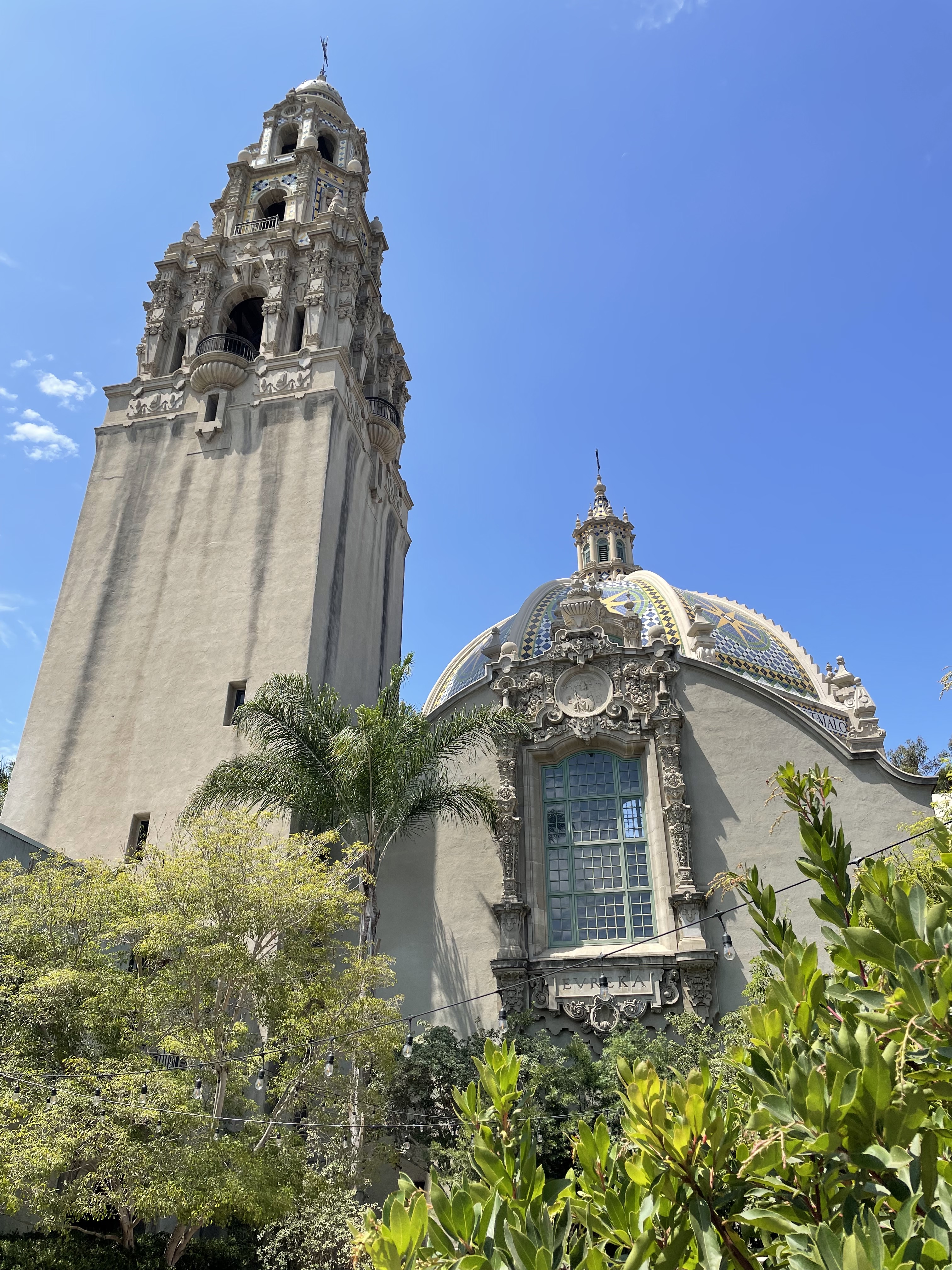
During our vacation in 2022 to San Diego, my wife and I spent a morning strolling around Balboa Park. Named for the Spanish-born explorer and perhaps the first European to witness the Pacific Ocean, this 1,200-acre site has a long, rich history going back to 1868 when San Diego’s leaders set aside the scrappy undeveloped area for public use. It didn’t really begin to take shape as a recognizable park until 1892 when a schoolteacher turned botanist and entrepreneur named Kate Sessions leased 32 acres of the property for her growing nursery’s propagation. She also agreed to plant trees annually in the park and in other public spaces around the city. The species included cypress, pine, oak, and eucalyptus. Some of the oldest specimens in the park today were part of the original plantings. She also introduced exotic plant species such as bird of paradise, Queen palm, and poinsettia. Her efforts eventually earned Sessions the honorary title “The Mother of Balboa Park.”
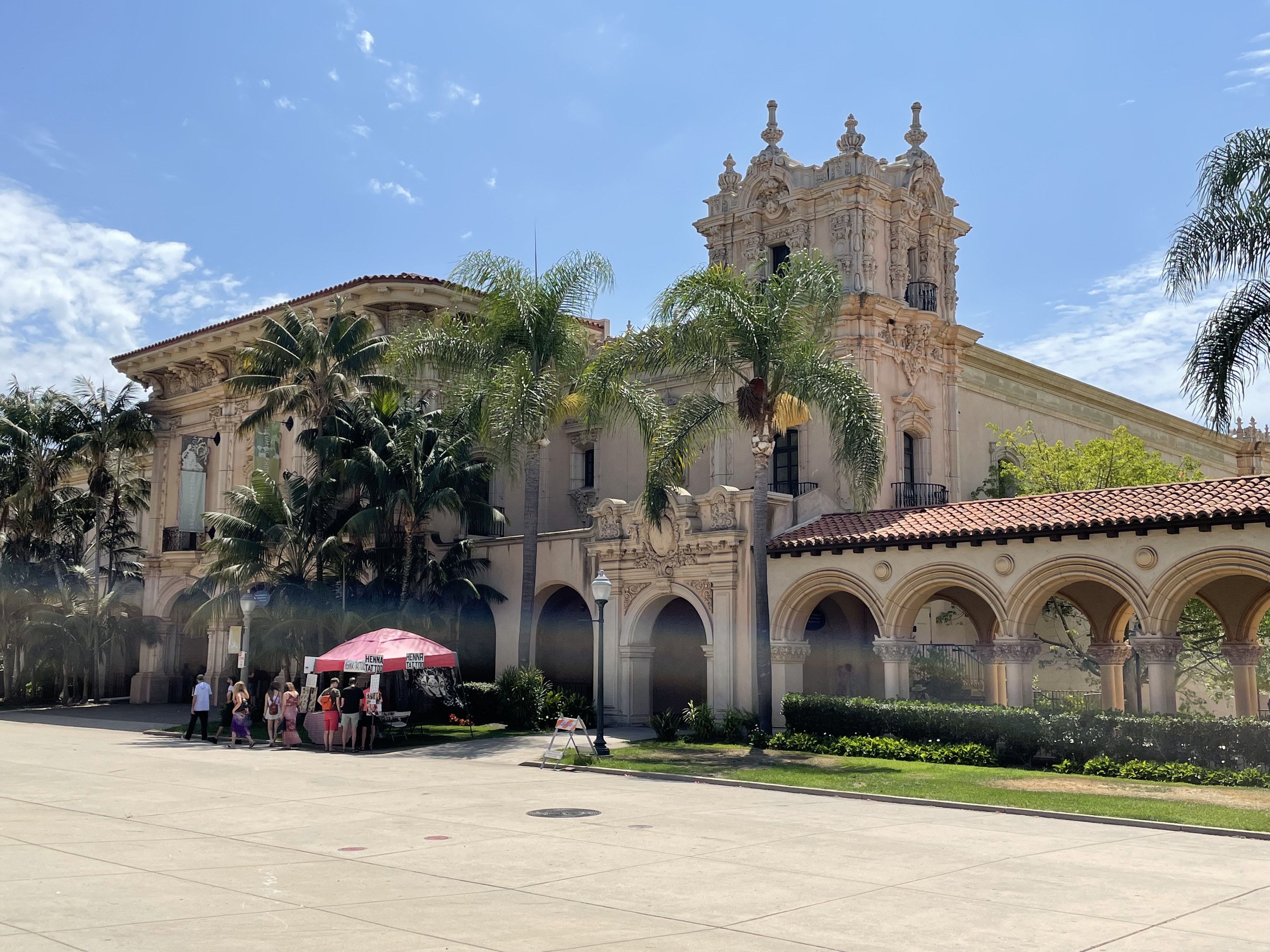
Balboa Park, San Diego, California
By the early 20th century, the City of San Diego had installed water systems, roads, and other infrastructural elements to Balboa Park. The origin of the elaborate Spanish Colonial architecture dates to 1915 when the park was selected as the site for the Panama-California Exposition. The Cabrillo Bridge and the buildings along El Prado date to this event, along with the Spreckels Organ Pavilion. More buildings were added for the California Pacific International Exposition of 1935-36, especially in the Southern Palisades area. These structures have a much more Southwestern look in the tradition of Pueblo Indian architecture and even Mayan designs.
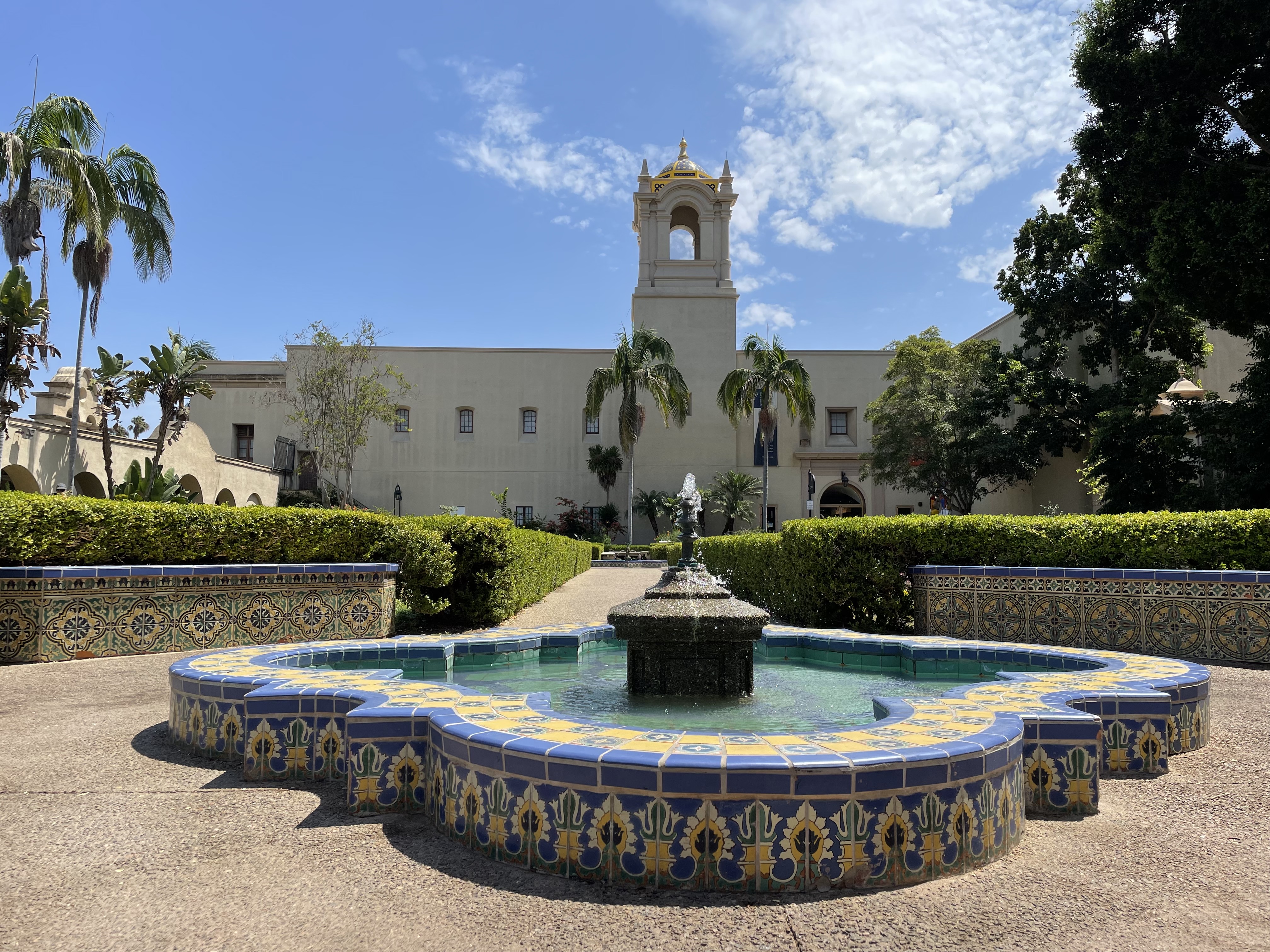
Balboa Park, San Diego, California
After World War II, several of the main buildings were converted to museums and other cultural institutions. Today, visitors to the park can enjoy the San Diego History Center, San Diego Museum of Art, San Diego Natural History Museum, Fleet Science Center, Institute of Contemporary Art, Museum of Photographic Arts, Women’s Museum of California, Veterans Museum, WorldBeat Center, Museum of Us, San Diego Air and Space Museum, San Diego Mineral and Gem Society, San Diego Automotive Museum, San Diego Model Railroad Museum, Mingei International Museum, the Marston House (early 20th-century Arts & Crafts design), Comic-Con Museum, and Timken Museum of Art.
Balboa Park, San Diego, California
There are fountains and gardens throughout the park, along with the Japanese Friendship Garden (subject of an earlier post). There are restaurants and coffee shops. There are statues (especially in Sefton Plaza), the impressive California Tower, the Spanish Village Art Center, a beautiful carousel, and a miniature train. The park’s visitors center is the best place to start exploring the site. If we return to San Diego, I plan to devote more time to wandering through some of these museums. The Botanical Building and Lily Pond were undergoing major renovation work when we were there, so I definitely want to see those if we go back to Balboa Park, and I hope we do.
Balboa Park, San Diego, CaliforniaBalboa Park, San Diego, CaliforniaBalboa Park, San Diego, CaliforniaBalboa Park, San Diego, California
In 1909, famed American architect Frank Lloyd Wright began constructing a house on the brow of a hill near Spring Green, Wisconsin. He had grown up in the hills of the state and was inspired by the landscape. His mother was of Welsh descent, and he named the 800-acre estate Taliesin, which is a personal name rooted in Welsh mythology that translates to radiant or shining brow. This was not Wright’s first home, nor would it be his last. He had completed a small two-story residence in Oak Park, a suburb of Chicago, in 1889. Fire almost completely destroyed Taliesin in 1914 and again in 1925, but Wright rebuilt both times.
In the early 1930s, Wright and his third wife, Olgivanna, established an architectural apprentice program at his Wisconsin home called the Taliesin Fellowship, which provided students with an immersive experience that integrated design and construction with growing and preparing food and the study of the arts. The term the Wrights used was “organic architecture.” Wright would continue to make changes and additions to Taliesin over the years after the fires, including converting a chicken coop into a dormitory for his architectural apprentices!
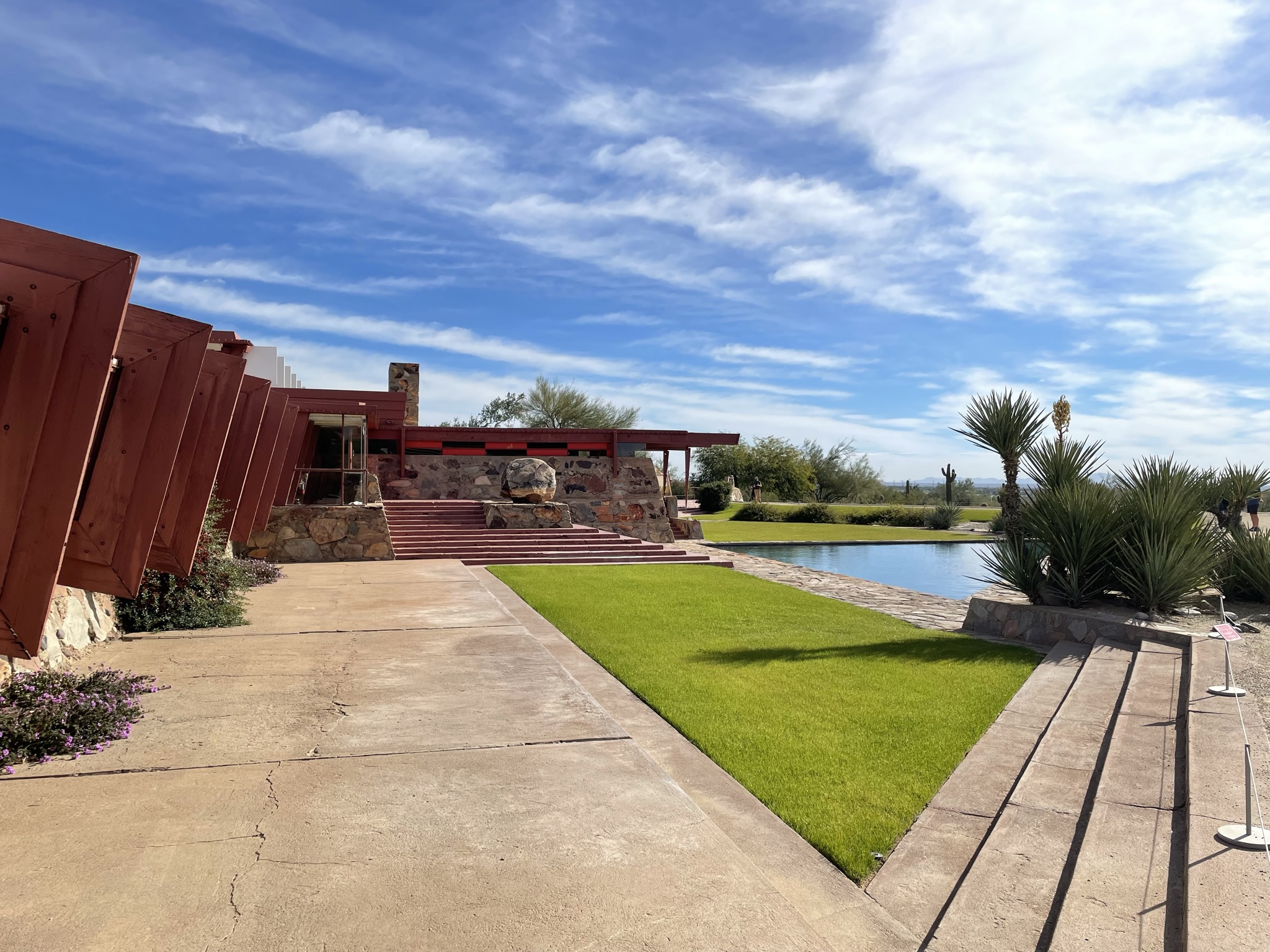
Wright and his students needed seasonal respite from the harsh winters of Wisconsin and found one in 1934 when he rented space for the Fellowship in sunny Arizona. The change in climate was so welcoming that Wright decided to create a winter location for his school. He purchased property in the rugged Sonoran Desert at the base of the McDowell Mountains in Scottsdale, northeast of Phoenix, where he and his apprentices would construct Taliesin West. This winter camp would become a study in how to blend architecture into a stark landscape incorporating water, shade, foliage, and indigenous materials to create a desert oasis. Wright’s architectural school used both Taliesin locations depending upon the season, even after the master’s death in 1959 in Phoenix at the age of 91. Although the Wisconsin program at Taliesin East finally closed in 2020, the tradition continues to this day with the Frank Lloyd Wright School of Architecture in two locations in Arizona. Both Taliesin East and West are now historical sites open to the public, with guided or self-guided tours available.
Taliesin West in Scottsdale, Arizona
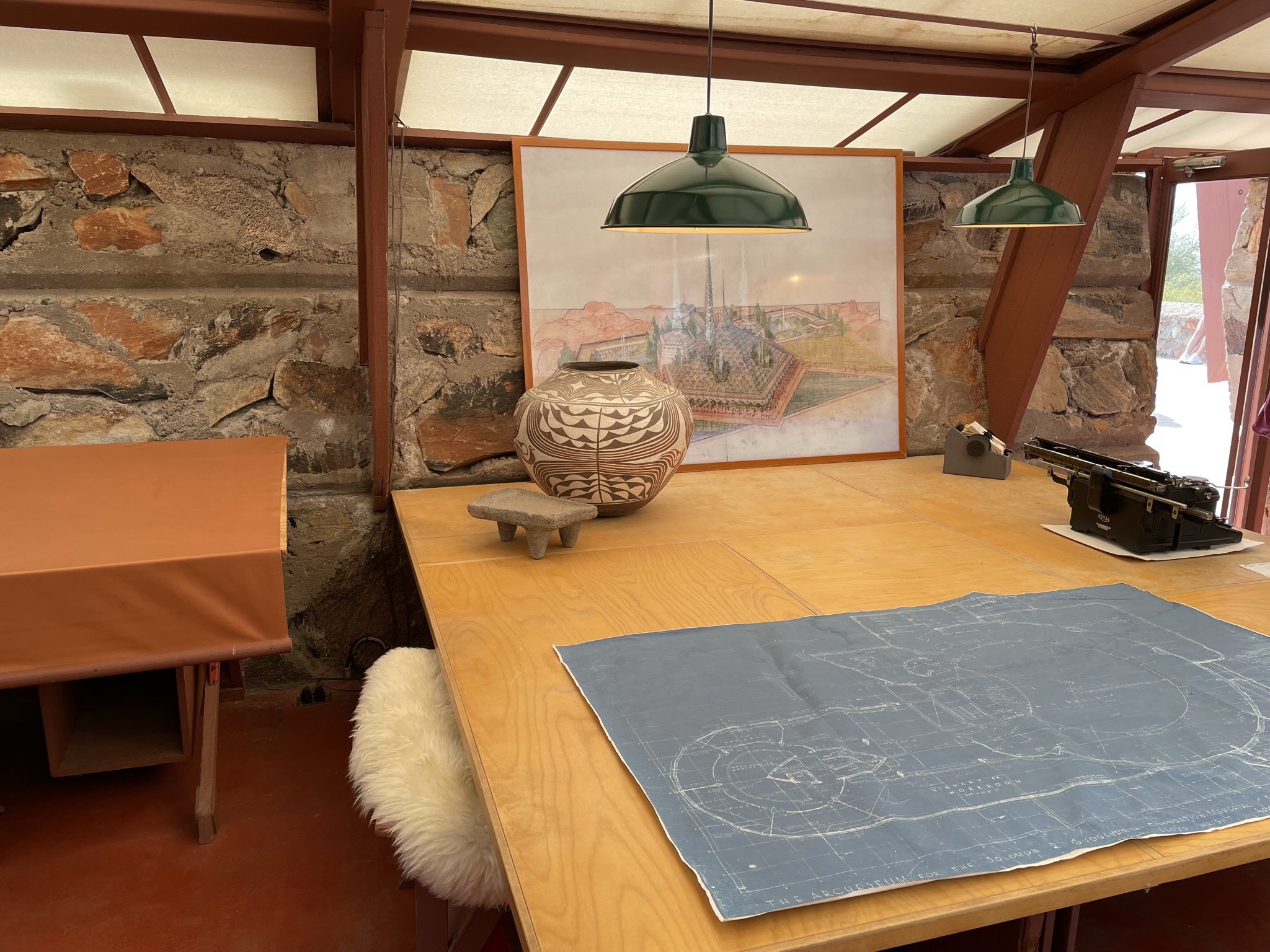
During the week following Christmas in 2022, my wife and I returned to the Phoenix area for a vacation. It is one of our favorite destinations in the country and where we hope to spend considerable time during retirement. On this trip we visited Taliesin West, which was my first time seeing the site. We took a self-guided tour, using a mobile phone app with earplugs to listen to a virtual guide describe the structures and surrounding grounds as we walked through a series of numbered stations over the course of about an hour. The whole setup was quite slick – impressive and informative. Along with other visitors taking the same tour, we were able to stroll through the various rooms and outdoor spaces. It is understandable why Andrew Pielage decided to call his photographic exhibition of Wright’s work “Sacred Spaces,” showcasing how the architect skillfully designed structures that seem almost sanctified.
Taliesin West in Scottsdale, Arizona
Several design elements of Taliesin West stand out in my mind. A common theme throughout is the use of sharp angles for roof lines, steps, walkways, and water features. This collection of points is reminiscent of the McDowell Mountain peaks visible to the east of the property. The stone and plaster walls, interior and exterior, imitate the rocky outcroppings around Scottsdale and throughout the Phoenix valley. Red, orange, brown, and blue are dominant colors for painted surfaces and fabric, reflecting the palette of the Sonoran Desert floor and the skies above that remain clear most of the time. Although rare in the desert, water is present in the form of rivers, such as the Salt, Gila, and the Agua Fria in Phoenix. Also, the Sonoran Desert gets more rainfall than any other desert in North America. Wright and his apprentices included several modest water features at Taliesin West. Some people have speculated that Wright may have become paranoid after suffering through multiple devastating fires and wanted water nearby as a safeguard. In any case, the presence of water created a literal oasis at Taliesin West.
Taliesin West in Scottsdale, ArizonaTaliesin West in Scottsdale, Arizona
The Frank Lloyd Wright Foundation that owns and operates Taliesin West does a fine job of managing the site as a historically-preserved house museum. The rooms are presented in a fashion that makes them look as if Wright and his students have left for the summer but will return next winter. Spaces are appointed with original (or at least period) art pieces, artifacts, furniture, and furnishings. The story the curators are telling is as much about Wright’s apprentices and their accomplishments as it is about the master architect himself. There are various places where people could gather together, including a small theatre. There are at least three pianos in the buildings, implying how important music was to the general atmosphere the Wrights were producing. Toward the end of his life, Frank Lloyd Wright was hosting cocktail parties with Olgivanna at Taliesin West for select groups of people in the greater Phoenix area. What fascinating conversations must have occurred at such gatherings, no doubt dominated by the celebrity architect who had grown so fond of his sacred space in Arizona.
Taliesin West in Scottsdale, ArizonaTaliesin West in Scottsdale, Arizona























 If You Want My Opinion