

Macon, Georgia: My Hometown

Because of its central location in the state, the city of Macon is often called the Heart of Georgia. It is also known as the Cherry Blossom Capital of the World because there are more than 300,000 ornamental cherry trees growing there, which serve as the centerpiece for the annual Cherry Blossom Festival held in the city. Some consider it the birthplace of Southern Rock music because it was the home of the Allman Brothers Band and Capricorn Records, although I’m sure Jacksonville, Florida could make a strong counter argument as the hometown of Lynyrd Skynyrd.
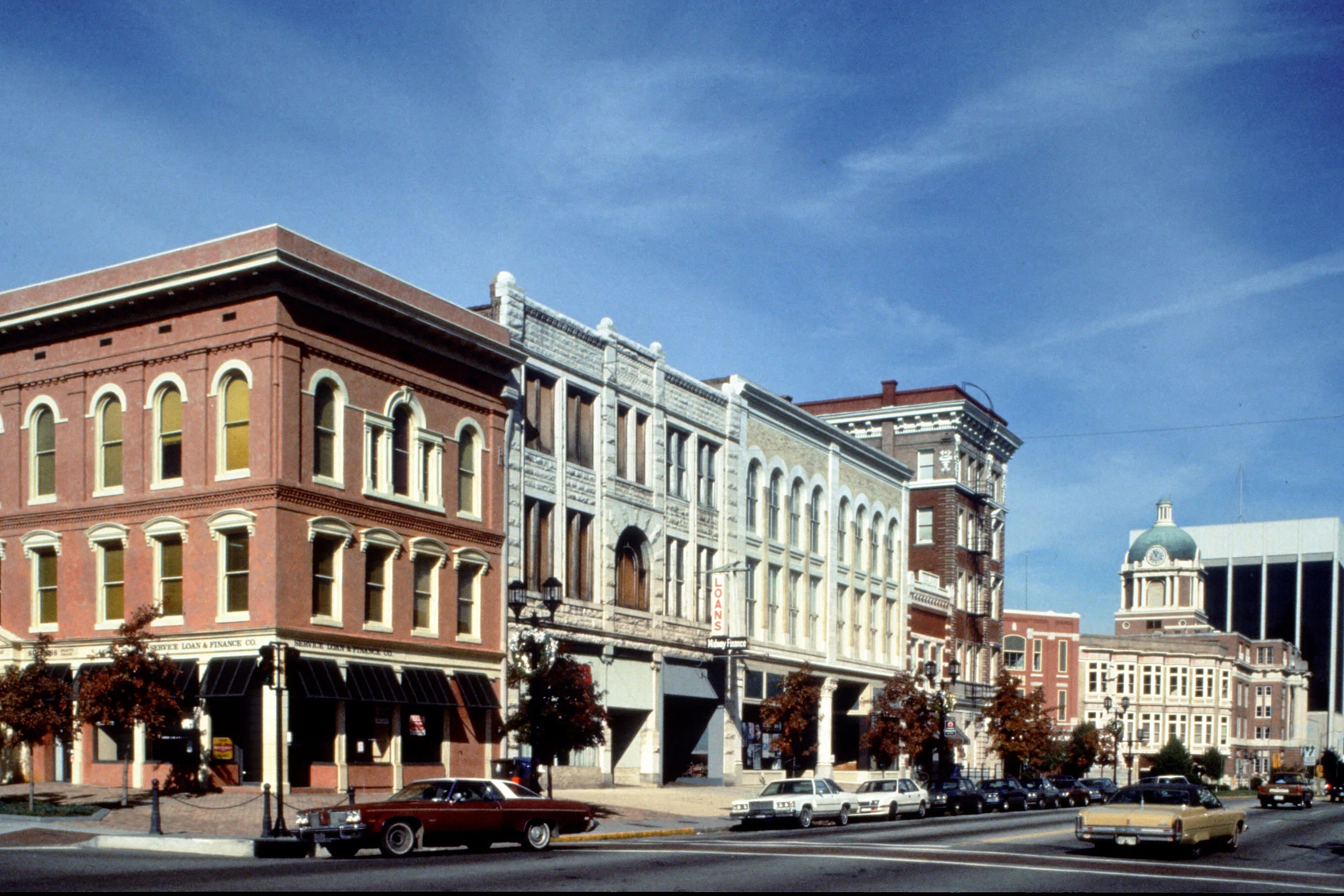
Macon, Georgia (downtown, as I remember it)

I was born in Macon in 1960 and lived the first 21 years of my life there at home with my parents, both of whom had roots in Bibb County where Macon is the seat of government. I attended school and junior college while I lived there. My family and our close relatives were members of a Southern Baptist church in Macon, a strong denomination in central Georgia. My first jobs were at Winn Dixie and then Piggly Wiggly grocery stores on Napier Avenue in town.

Macon is where I learned how to play the guitar and began playing the piano. Near our house on the west side of town, I rode my bike everywhere, played with neighborhood kids, and spent too-short summers swimming and enjoying a whole host of other outdoor activities. I had cousins nearby, and we spent plenty of time at each other’s houses. I bought my first car in Macon, which gave me a real taste of independence and allowed me to take girls out and discover early romance.

Macon, Georgia - Cherry trees in bloom
Macon, Georgia – Cherry trees in bloom

Bibb County’s population was about 143,000 when I was growing up, so Macon was large enough to support robust retail centers, manufacturing, several hospitals, a shopping mall, a few museums, live performance theatres, and a multi-purpose arena. Mercer University and Wesleyan College were founded there in the early 19th century. Macon College was a two-year institution when I attended in the late 1970s but later became a four-year school. Macon was enough of a city when I came along to serve as a hub for central Georgia, bringing in labor and money from several surrounding rural communities.

The county’s population hasn’t grown much, with only about 158,000 according to the latest census records. Throughout my lifetime Macon has remained in the shadows of its ever-expanding sister 85 miles to the north, the sprawling metropolis of Atlanta. During my lifetime, Macon probably peaked in the 1990s, long after I had moved away. On the rare occasions I visit Macon these days, it looks a bit worn around the edges. Between 2011 and 2014 Macon lost two of its museums: the Georgia Music Hall of Fame and the Georgia Children’s Museum. There have been some efforts to revitalize the downtown area in recent years, and the north and northwest parts of town are still where most of the wealth is concentrated. However, many of the old neighborhoods I remember show signs of age and not enough care and attention. Violent crime escalated in the mid-1990s and has spiked several times since then, causing Macon to rank in the top ten most violent cities in the state. So it goes.

Regardless of its current status, I have fond memories of my formative years and becoming a young adult Macon. There was always such a rich music tradition in the city. It served as a springboard for people like James Brown, Little Richard, and Otis Redding. In addition to producing the Allman Brothers Band, Capricorn Records helped launch groups like the Marshall Tucker Band and Wet Willie. By the time I came around, Grant’s Lounge, the Capitol Theatre, and the Douglass Theatre were already legendary music venues hosting national acts of rock, R&B, jazz, and blues music.

Allman Brothers Big House Museum

Looking back, it seems that the Macon of the 1960s up through the 1980s was a city that appreciated its past while also looking to the future for inspiration, innovation, and vitality. There were still a few streets downtown paved with brick, but I-75 ran through the middle of the city. There were historic house museums listed as national landmarks but also multi-story hotels and office buildings. The ancient Indian mounds at Ocmulgee National Monument were well maintained and fully accessible, but there were also numerous public parks scattered around the city providing recreation and relaxation. The Macon Peaches was a minor league baseball franchise that lasted from 1923 to 1982, serving as affiliates for the Cincinnati Reds, Chicago Cubs, and Philadelphia Phillies.
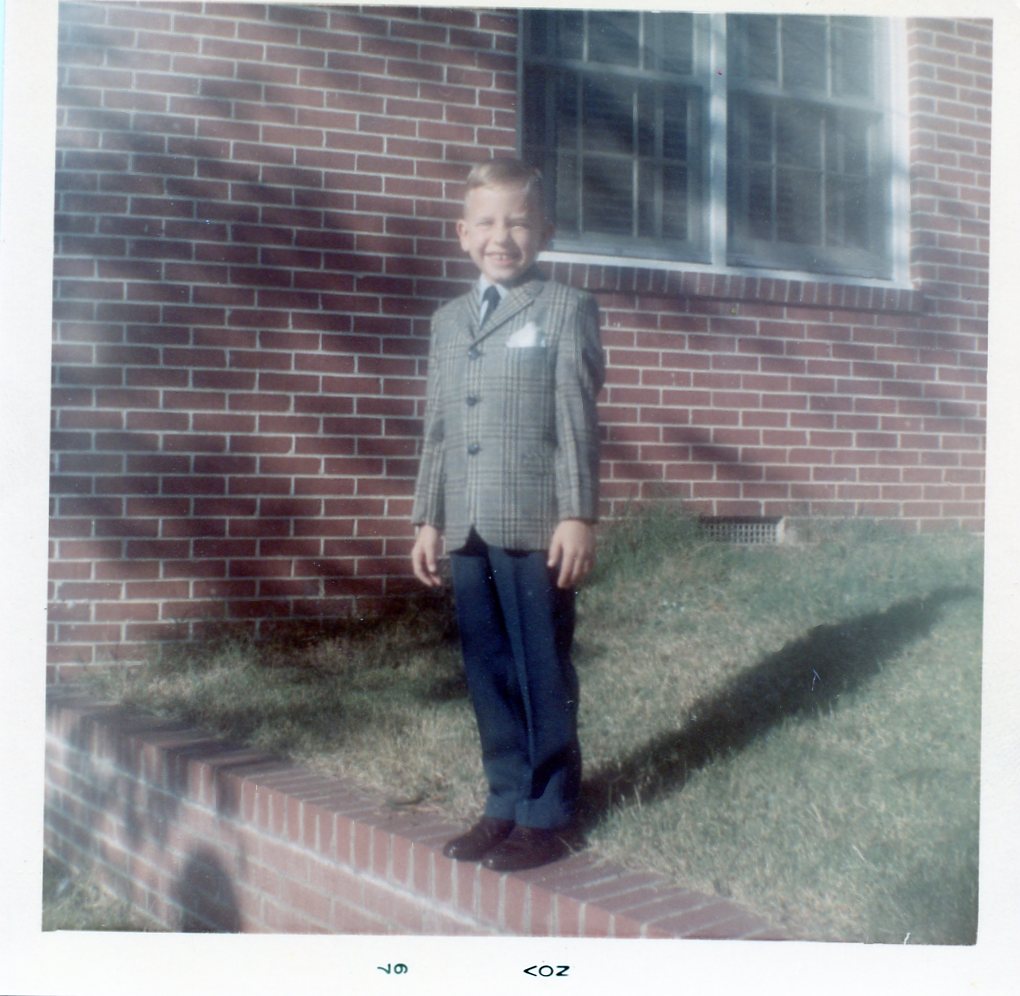
Macon, Georgia - The author all dressed up at home in November, 1967
Macon, Georgia – The author all dressed up at home in November, 1967

During my time there, Macon was big enough to offer individuals and families a healthy slice of the American dream. At the same time, the city wasn’t so large that I ever felt lost in it or frustrated by crowds, traffic, or other pains of urban life. As my circle of friends grew from my neighborhood and church to my schools and work, I was comfortable forging my early path toward grownupness. If I could have changed anything about Macon, it would have been the weather. I have never lived in a place as hot or humid as middle Georgia in July and August. It’s like swimming through air. Otherwise, my hometown was a solid location to plant my feet and move forward.

(Visit the New Georgia Encyclopedia for more information and images of Macon, Georgia.)

If You Want the Best Fruit, You Gotta Climb Some Trees

I have written in previous posts about the fond memories I have of my maternal grandmother, who lived with us and was instrumental in raising my sister and me while both of our parents worked outside the home. She was a faithful Southern Baptist with hardcore Biblical beliefs that could tame the hounds of hell, not to mention her only grandson out of five grandchildren. At the same time, she had an almost raunchy sense of humor. Flatulence could easily be summoned at just the right moment to break the wind of monotony.

My grandmother had a sister who lived in our town in middle Georgia. They adored each other and shared many lovable and peculiar characteristics. My grandmother didn’t drive, but her sister did. They were ever mobile, always ready for trips to the grocery store, the mall, church events, the farmer’s market, or the countryside to see relatives who had remained outside the city limits where the family’s roots were firmly planted. They both carried oversized, patent leather purses (think an inexpensive version of the Queen Mother’s favorite accessory) that could carry a week’s provisions while also functioning as a weapon that would give even a Central Park mugger pause. Middle Georgia can be miserably hot and humid in the summer, almost necessitating short pants; however, these were two ladies who clearly had not abandoned the practice of wearing hosiery to cover bare legs. They compromised by pairing their shorts with low-heal pumps and knee-high hose – ever fashion-conscious.

The matriarchal sisters were proud masters of the kitchen and faced the challenge of every major meal with the skill and determination of a battlefield commander. It started with the shopping. They didn’t have to give too much thought about what to put in the grocery cart – that would be referred to as a “buggy” in the native tongue of Georgia – because there wasn’t a lot of money to spend, and we generally rotated through a menu of about 5-6 major courses. They procured the staples from the only grocery store in town worthy of their discriminating patronage: Piggly Wiggly. They supplemented the store’s imported produce with indigenous fruits and vegetables from the town’s sizeable farmer’s market, where shoppers could find all the home-grown favorites such as corn, peas, beans, tomatoes, collards, turnips, and of course, sweet onions that are still the pride and economic bedrock of a south Georgia village called Vidalia.

Like all good commanding officers, the sisters would gather the troops, or in this case family members, to assist in the initial steps of the culinary campaign: shucking corn, snapping beans, hulling peas and butter beans, etc. At our house, my mother and sister were quite adept at these essential tasks. I am several years younger than my sister, and although I occasionally attempted to work on the peas and beans, if for no other reason than to be included, I was extremely slow and lost interest quickly. My grandmother took care of the most complicated and dangerous preparatory chores, such as wielding a sharp butcher knife to split the ears of corn on the cob, shear off the kernels, and magically mix them with ingredients to create the best creamed corn I have ever tasted. By the time she finished, her glasses and a good portion of her face and gray hair were speckled with little pasty globs of mutilated corn. She took no prisoners.

Many young boys approaching adolescence from my generation spent considerable time outdoors riding their bikes, playing in the yard, and finding ways to burn off energy. I was a skinny, short kid with long fingers and toes, shaded by the “shadow of forgotten ancestors” with all due credit to the late Carl Sagan. Summoning my recessive hominid genes, I was comfortable climbing small trees. It was fun. In our back yard, we had a small grove of plum and pear trees, and the ripened fruits of summer provided another incentive to defy gravity among the limbs and leaves.

With their keen awareness of all available resources and opportunities, my grandmother and great aunt wasted no time putting my arboreal dexterity to practical use. They both loved peaches. My great aunt had the telltale yellow-orange peach stain permanently emblazoned on the front of practically every blouse she owned. My father was unsuccessful in cultivating this fruit tree in our yard. The grocery store, roadside stands, and the farmer’s market had plenty of peaches available, but the freshest and sweetest ones were still attached to trees and ripened to perfection in several large orchards just a few miles away in the surrounding counties. When I was coming along, Georgia truly lived up to its nickname as the Peach State. Visitors to the peach farms could get the greatest value and the best fruit by picking their own.

Always on the lookout for a bargain, the savvy sisters drafted me to “help” them pick a bushel of peaches at one of the farms. We lit out for the territory in my great aunt’s Chrysler sedan. All the windows were rolled down to welcome in the thick, steamy air typical of a summer in Georgia. Wearing stringy cutoff jeans, my legs stuck to the vinyl back seat like chewing gum on hot pavement. We arrived at the farm wasting no time, marching toward the orchard with the singular mission of finding the most delectable peaches in the southeast. When the ladies identified just the right tree, its branches encumbered with fruit almost to the breaking point, they dropped their peck baskets to the ground and turned their sweet, smiling faces toward me.

“Son, if we point to the ones we want, can you get up in there alright and pick them?” My great aunt almost always called me “son.” Peach trees in a mature orchard are typically 8-12 feet tall, but they are trimmed and trained to have four or five major branches off the trunk a few feet from the ground. These branches project outward and upward from the trunk and support the many smaller branches that bear the fruit each season. So, you can climb into the cradle of the large feeder branches without too much difficulty, but then you must reach from that position to pick the fruit, which can get a bit precarious. Even a scrawny kid weighing 90 pounds soaked in summer sweat could easily snap a tree branch laboring under several pounds of peaches. Doing so would not only cause damage to the tree and ruin a peck of peaches, but it would likely send the tree climber crashing to the ground with scratches and bruises or a punctured eye.

“Sure,” I said with foolish enthusiasm induced by my pre-teen confidence. I vaguely remember taking my shoes off to improve my footing. Again, I embraced my primate taxonomy. I weaseled my way between the feeder branches, and carefully stepped up into the tree’s cradle. The analogy of “low hanging fruit” was not in my lexicon in the early 1970s, but even if it had been, the sisters would have promptly dismissed any suggestion of the kind. They had already set their sights on loftier specimens. After surveying the entire canopy, they began pointing at succulent globes just beyond my reach. Through unnatural contortions and absurd acrobatics that had been unnecessary for any of my previous adventures, I was reasonably successful in satisfying their quest for a bountiful bushel of goodness while managing to escape serious injury or banishment from the property.

My grandmother must have been pleased enough with my aerial harvesting abilities. More than once she sent me scampering up our trees at home to procure what she judged to be the best pears for making preserves that our family and relatives savored throughout the year. If the nuclear holocaust we all feared during those years had materialized, I would be forever grateful to my grandmother and her sister for preparing me to survive in the new stone age as a hunter-gatherer. They loved me more than I could have imagined. They were the sweetest Georgia peaches of all.

Summers Past

Some families have favorite places that they go each year for vacation. I suspect this is still a trend as it was in the 1960s and 70s when my family vacationed almost every summer in Daytona Beach, Florida. It was a magical place with so much to see and do — almost like an extended amusement park with the main attraction being the incredibly popular beach.  I learned how to swim in Daytona; how to body surf, throw a Frisbee, play miniature golf, and so much more. Some of the happiest times I remember with my family growing up were spent there.  


It’s no surprise that going back as an adult, with my own children, was a completely different experience.  The carefree hours on the beach were replaced with keeping constant watch on children to make sure they were still in sight in the breakers or on the sand.  Sleeping late was replaced by getting up early enough to watch the sun rise over the ocean horizon — a spiritual and peaceful moment.  Begging for money for snacks on the beach gave way to worrying about how I was to pay the inevitable credit card bill that would all-too-quickly follow the one week of family fun.

Now that my sons are adults (or almost), my visits to the beach are different yet again.  The commercial overload of the Boardwalk and Highway A1A are not quite as appealing as they once were.  My wife and I live farther away from the coast now than I ever have lived before.  I need time at the beach occasionally for my sanity, so I get there as often as I can.  I am sure that I will get back to Daytona at some point in the near future, and I want to take my wife with me because she has never been.  I have to wonder if some small portion of the magic from my childhood will still be there.