
A Writer By Any Other Name

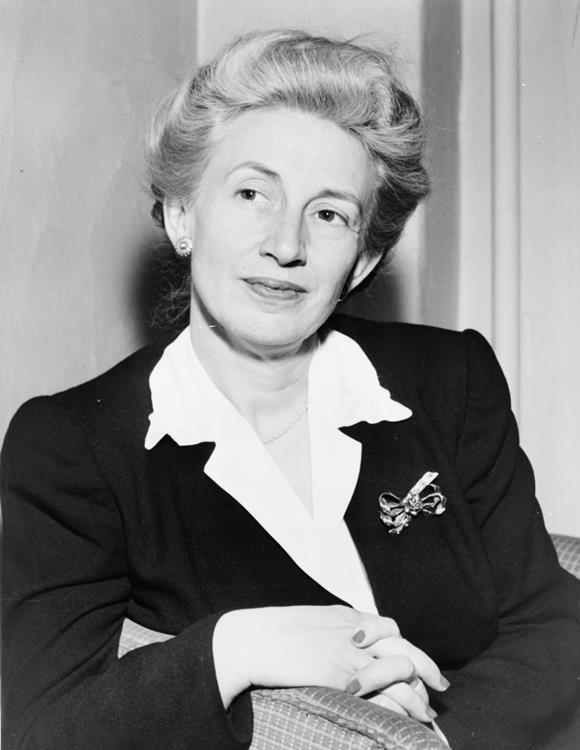
One of the most gifted short story writers of the 20th century has a name that is rather unusual, although as a tribute to her talent, it is not as uncommon as it was during her lifetime.  There is a growing population of women, most under the age of thirty I would imagine, with the first name Flannery.  Those who are familiar with the life of the famous Georgia writer know that “Flannery” was a family surname and her middle name.  Her full name was Mary Flannery O’Connor.  However, when she went away to graduate school and eventually enrolled in the Writers’ Workshop at the University of Iowa, she decided to drop her first name and began signing all her work simply as “Flannery.”   Further, she requested that friends, relatives, and even her own mother refrain from calling her Mary Flannery, the double-name style that was so typical of women in the early to mid-20th century in the American South.  From that point on, she would be Flannery O’Connor.

It is impossible to know how much thought or even strategy went into Flannery O’Connor’s decision to abandon her first name.  Considering that she was raised a devout Roman Catholic and was a dutiful daughter of the Church, it would not have been a choice made lightly or carelessly.  Indeed, someone so committed to the faith would need a very good reason to drop the name of the mother of Christ, especially considering that she was adopting a much more masculine forename or Christian name — the irony is obvious.  Her mother, Regina Cline O’Connor, resisted for a while but finally gave in to her daughter’s demands.  Years later, O’Connor claimed that she made the name change primarily for the sake of her career as a writer.  She explained to friends that no one would want to read anything written by someone named Mary O’Connor, which to her sounded like the name of an Irish wash woman.

On second thought, readers of O’Connor know that she was incredibly deliberate in her craft as a writer.  By the time O’Connor hands us a story, there is not a single word or mark of punctuation left on the page that doesn’t need to be there.  Those steel blue eyes served as windows into a brilliant mind with a razor-sharp wit.  Flannery O’Connor had wanted to be a writer from a very early age.  As a child, she wrote stories, illustrated them, bound them with yarn, and made multiple copies of them to distribute to friends and family.  She was absolutely fascinated by the whole process of both writing and publishing, which later translated to a keen understanding of writing as a profession.

I am convinced that when O’Connor began writing in Iowa in the mid-1940s, she also started to envision herself as a successful author.  Knowing that she would soon be sending manuscripts off to prospective agents and publishers, she no doubt understood her disadvantage of being a female who wanted to be taken seriously in a male-dominated profession.  To avoid having her manuscripts ignored or trashed immediately, she needed for editors to think they were reading the work of a man, and a name like Flannery gave her that edge.  Certainly the content of her fiction would not have given her gender away!  The strategy worked.  Letters she received from editors in response to her early submissions were addressed “Dear Mr. O’Connor.”  One early editor, upon learning O’Connor’s identity, still doubted that the stories were written by a woman at all.

Beyond the androgyny factor, a name like Flannery O’Connor gave the writer another distinct advantage, one that is often fabricated now by entertainers from a multitude of genres.  Having an unusual name goes a long way toward establishing memorable identity.  After all, how many writers do you know named Twain?  Poe?  Steinbeck?  Faulkner?  Of course, those are last names, and isn’t it amazing how often readers don’t refer to O’Connor by her more common last name, but by her iconic first name?  Fast forward to the age of pop culture.  It isn’t difficult to remember names like Cher, Sting, Madonna, Eminem, T-Pain, or Beyonce.  Who needs a last name?  Atypical works, and it works well.

Flannery O’Connor died at the young age of 39 from complications of lupus, the disease that had taken her father’s life when she was only 15.  Her mother outlived her by about 30 years.  I don’t know if O’Connor chose the wording for her tombstone or not.  Perhaps Regina O’Connor had the last word with her only child this time.  Maybe the inscription was dictated by the custom of the Church, the community, or family tradition. Whatever the case may be, O’Connor is laid to rest with her full name restored as a memorial to a literary genius.  Those of us who admire her work will always respect her wishes and remember her as Flannery O’Connor.  A writer by any other name is, well, someone else entirely.

Flannery O'Connor's grave
Flannery O’Connor’s grave

A Passing Literary Glance

The Georgia Writers’ Association held its 1955 annual meeting in Atlanta in early December.  On this occasion the Association honored Lillian Smith (social justice advocate and author of the controversial works Strange Fruit, Killers of the Dream, and The Journey) as the winner of the Georgia Writers’ Award for the best book of nonfiction with the most literary value written by a Georgian in 1954.  She felt the award was overdue but was proud at any rate that the Association exhibited the courage to recognize her importance as an artist.  Smith was terribly amused by the annual meeting – a sentiment I can almost imagine would have been shared by another Georgia writer named Flannery O’Connor who was also in attendance.

Lillian Smith
Lillian Smith

Lillian Smith was not invited to speak at the award ceremony; however, after meeting her and talking with her, the organizers decided to ask her to give an impromptu speech the next day, which she did.  Afterwards, an elderly woman in the audience came up to compliment the writer on how sweet and well-bred she was, exclaiming that Lillian Smith must have had the best intentions in the world, regardless of what she may have written in her books.  On the previous day, Flannery O’Connor delivered a luncheon address to this convention titled “Some Problems of the Southern Writer.”  Lillian Smith was at the luncheon, and this is what she had to say about O’Connor’s presentation:

Flannery’s talk was one of the funniest things I ever listened to.  Do you know – I don’t believe she had the vaguest notion how she shocked the crowd.  She told em off; told Georgia off; told the South off; told would-be writers off. . . . The stuffed shirts and the would-be writers (the place was full of them) began listening smilingly because they had heard she was “literary” and “talented” and nothing she wrote threatened anybody, certainly not on the conscious levels of their life.  But after about two paragraphs they realized that a nice little snake was sinking her fangs deep into their complacency and they began to look at each other and shake their coiffured heads and whisper, “Well . . . .what do you know . . .”
(all quotations from How Am I To Be Heard: Letters of Lillian Smith, edited by Margaret Rose Gladney; The University of North Carolina Press, Chapel Hill, 1993)

Smith mentioned O’Connor’s presentation in a letter to her editor at Viking Press, Denver Lindley, who also served as an editor for Flannery O’Connor.  There was a tone of bitterness, if not irritation, when Smith wrote that “these young writers can now say things out loud without any realization, actually, of how one or two of us down in the South opened the way for them.”

As far as I know, this was the only time that Lillian Smith and Flannery O’Connor were in the same room together, although they lived only 150 miles apart.  O’Connor confided to her friend Cecil Dawkins that, although she considered Lillian Smith to be a nice person, O’Connor was not impressed with Smith’s writing.  In a letter dated December 2, 1955, to Lon and Fanny Cheney, Flannery O’Connor stated that, at the Association meeting, Lillian Smith invited her for a visit to her home, but O’Connor declined.  In her essay titled “Flannery O’Connor and Lillian Smith: A Missed Opportunity,” published in the 2007 issue of the Flannery O’Connor Review, Virginia Wray observes that O’Connor’s brief remarks about her fellow Georgia writer in this letter carry with them a tone of sarcastic dismissal.  I know those who have studied O’Connor’s life are shocked by this revelation!  It’s no secret that O’Connor reserved some of her most acidic comments for other writers, especially those close to home.  O’Connor’s comments about Smith were rather tame by comparison.

Lillian Smith would go on to publish several more books, fiction and nonfiction, and numerous articles and essays on social justice and racial equality.  The last book published before her death came out in 1964, the year that Flannery O’Connor died; however, she continued to contribute to periodicals and newspapers until her own death on September 28, 1966.  One of the pieces Lillian Smith wrote for publication the year before she died was a book review for the Chicago Tribune.  The title of the review was “With a Wry Smile Hovering Over All.”  As fate would have it, Lillian Smith would get the proverbial last word in this evaluation of Flannery O’Connor’s second collection of short stories, Everything That Rises Must Converge.  It is worth noting that Smith and O’Connor had both developed an admiration for Teilhard de Chardin, although Smith claimed that, in the title story of the collection, O’Connor had twisted the Jesuit priest’s “profound and poetic vision into something small enough for her to smile at wryly.”  With regard to the other stories in the collection, Smith perceived that the author’s point of view lacked compassion and empathy, which should make us all wonder if she read O’Connor’s first collection of short stories.  Still, Lillian Smith considered O’Connor to be a highly gifted writer and described the title story as a masterpiece, where every line counts, every word.  No fan of O’Connor’s work could disagree with that assessment.

Opportunity of a Lifetime

As I have indicated before, I began my career as a librarian in a medium-sized public library in a small county of around 42,000 people.  As is typical in small communities, there were plenty of personal interconnections.  When I graduated with an MA in History in 1985 from a state college in this same county, I started work shelving and cataloging books in the public library.  With the encouragement, patience, and generous assistance from the library director, I and another worker in the library commuted to Emory University twice a week for two years to complete our Masters degrees in Librarianship (MLn).  I served as a reference librarian for most of my fifteen years there, but when the director left during my twelfth year, I was offered the position.  I served as the library’s director for three years.

One morning, during the spring of my last year, the husband of our children’s librarian walked into my office to say he had a proposition for me.  His wife was serving in this position at the library before I began there.  Her husband was a local attorney.  I knew them both very well — we attended social events and my first wife and I had even house-sat for them and had taken care of their two children for a weekend.  As it happened, he was the lawyer for the estate of a major American writer, who also was (and still is) one of my favorite authors: Flannery O’Connor.  She had lived a good portion of her life in this town where her family had deep roots going back to the early 19th century.  She spent the last thirteen years of her life at the family’s farm, called Andalusia, located on the north end of town.

foc_eberhart_photo
Flannery O’Connor
His clients were two sisters who were also first cousins of O’Connor.  Flannery O’Connor died in 1964, but her mother, Regina, lived until 1995.  As executors of Regina O’Connor’s estate, these two women were also in charge of Flannery O’Connor’s literary estate, which was primarily administered through a trust that had been established by Regina O’Connor’s will.  As co-executors and co-trustees, one of their responsibilities was to establish a non-profit foundation to maintain Andalusia as a proper memorial to O’Connor and also to perpetuate her legacy as a writer.  They needed someone to help establish this organization.  They also needed someone to work with a sizable archive of personal papers, correspondence, writings, photographs, memorabilia, and artifacts belonging to Flannery O’Connor.  The archive needed to be organized, cataloged, and properly stored for preservation purposes.  The co-executors asked the lawyer to find someone who might be interested and capable of doing both of these tasks.  He came to my office in the library that spring day, explained the proposition from the estate, and asked me if I would consider taking the job as an independent consultant working for the co-executors.  I accepted, which changed almost everything for me.

I will no doubt dedicate several future posts recounting my experiences as a consultant and then later the director of the Flannery O’Connor-Andalusia Foundation that I assisted in establishing.  I was there for thirteen years — as long as Flannery O’Connor lived there.  That was long enough, or arguably, a bit too long.  While I can look back and think about plenty of mistakes I made and how I should have made different decisions, I don’t have any real regrets.  With a BA in English, an MA in History, and an MLn, I don’t think I could have been any better suited for the job with regard to my education and training.  I had the help of some talented and dedicated mentors, board members, volunteers, colleagues, and for a few years, a trusted co-worker and friend.  What I can state with absolute certainty is that this path that departed from my expected trajectory led me to some of the richest experiences I have ever had and offered me opportunities that other people with my education and training will, sadly, never enjoy.  I am humbly grateful, and hope that Flannery O’Connor would be pleased with the work we accomplished at Andalusia.