

A Physically Fit Retirement

In his remarkable book, Badass Retirement, author Robert Pagliarini includes a chapter titled “Upgrade Health.” His message is simple for people who want to escape average retirement: think and act like an athlete. He posits that professional athletes “invest their time and energy into improving their performance.” They work hard at it to avoid injury, recover quickly if they do get hurt, and achieve the highest possible energy and stamina for years, even decades. He stresses that retirees should have these exact same goals – and I agree one hundred percent.

My wife and I are now in our second year of retirement, and one of our top priorities since we left employment is to get in better physical shape and maintain a healthier lifestyle than we did during our working years. We are paying closer attention to what we eat and drink (well, better than we once did). We are also wearing the right kind of clothes and shoes for our new lifestyle. We are paying more attention to our bodies and making sure we get the medical care we need. We believe in the value of vaccinations and medication.

Perhaps the most significant change in retirement related to our health is our increased focus on physical fitness. Much of our time is now discretionary, and we are devoting more of it to a variety of exercise options including weight training, cardio activity, Pilates, walking, and hiking. We both have trainers we work out with at least once a week. We have pickleball paddles and hope to learn how to play this game that has swept across America and is attracting all ages, not just seniors.
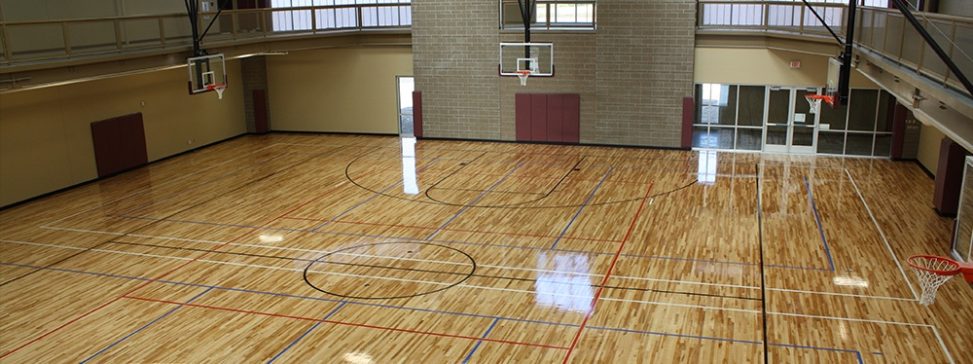
Dan Kinney Family Center, Springfield, MO

We are fortunate to live in a community that offers ample opportunities for indoor and outdoor recreational activities. Our city and county have an excellent trail system for walking, hiking, and biking. Some of the trails connect to surrounding towns. We have a nature conservation area, a botanical garden, a historical landmark park, and several outdoor green spaces with hiking trails, paved walkways, creeks, and ponds.
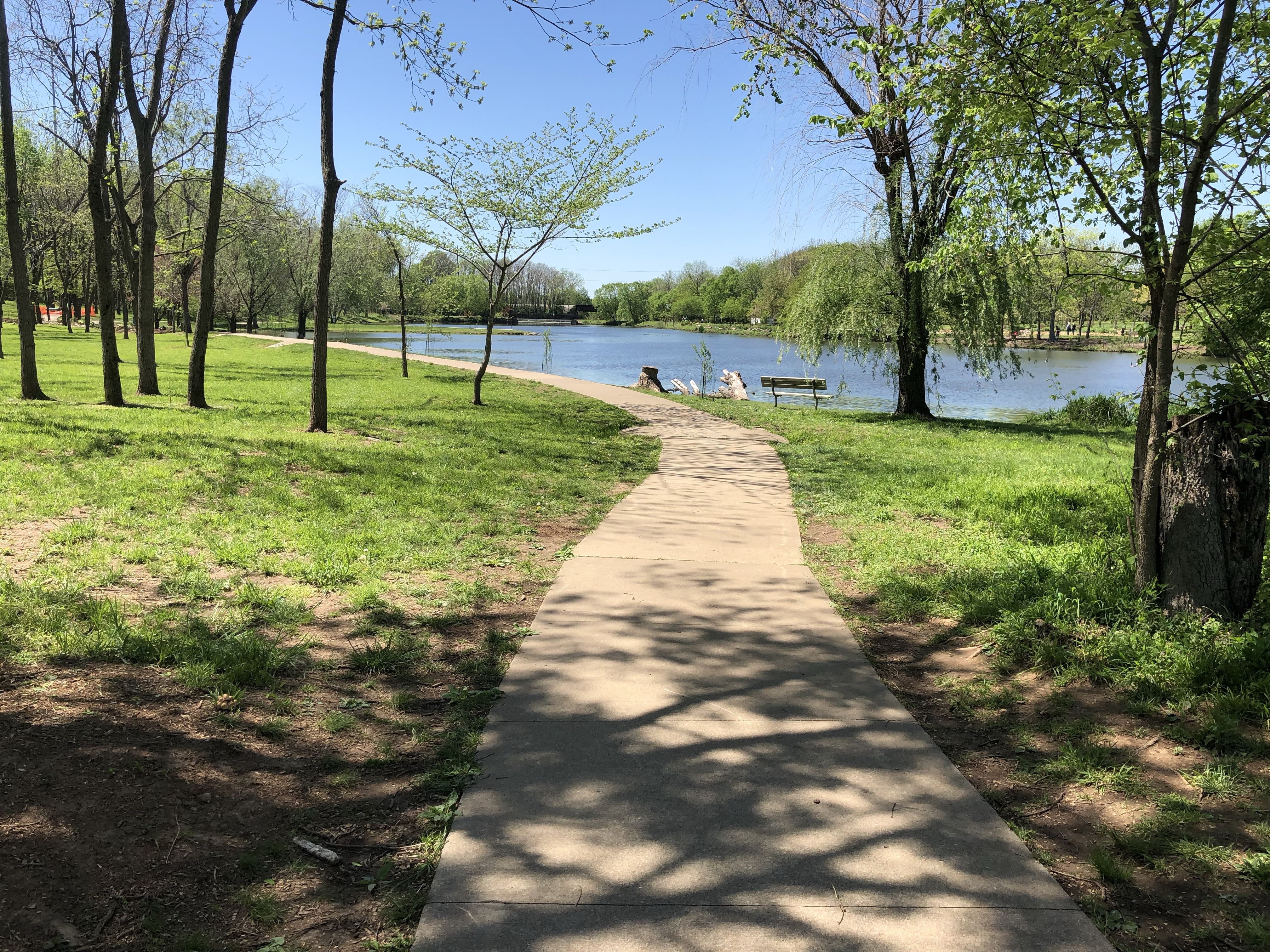
Springfield (MO) Botanical Center

Because we are both over age 60, we get an extra benefit through our local park board in the form of a deep discount on membership at their fitness centers. We can reach the one closest to our house in about ten minutes. This family center has a multi-use court for pickleball, basketball, volleyball, children’s inflatable bounce houses, and group exercise programs like SilverSneakers. There is a walking track on the second floor that circles the court. There is an outdoor paved walking track too. The center is equipped with a wide variety of dumbbells, weight machines, treadmills, bikes, ellipticals, stair steppers, and much more. The center also has meeting space and separate rooms for small classes and individual training.

We are making a concerted effort to exercise several times a week, with two days of weights, at least one day of cardio, and 2-3 days of alternate activity like walking or Pilates. We live in a subdivision that is great for walking. If possible, we also try to include exercise as part of our daily routine when we travel, taking advantage of hotel and condo fitness rooms or just walking nearby trails or in neighborhoods. We look for public gardens, arboretums, and greenways for walking too. When we are away from home for extended periods of time, we purchase a temporary membership at a fitness center so we can maintain our weight and cardio routines.
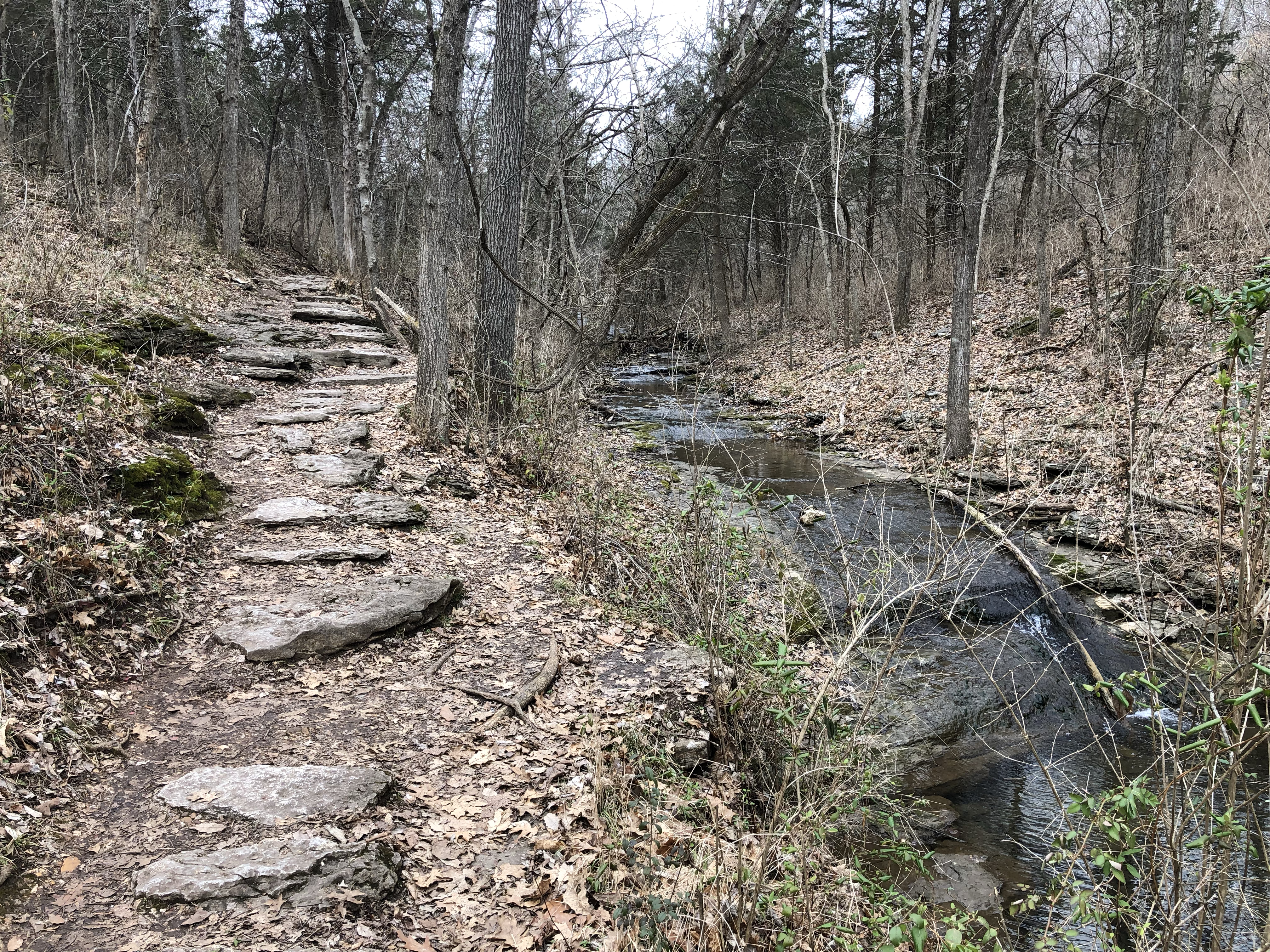
Springfield (MO) Conservation Center

Hiking has always been a favorite activity for both of us, even before we met and got married. I have written about our hiking adventures a few times in this blog. When we travel, we look for fun and scenic places to hike. Phoenix, the Sonoran Desert, San Francisco, Lake Erie, Joshua Tree National Park, Yosemite, Mount Hood, and various locations in the Ozarks and Appalachia are just a few places we have hiked. We have walked or hiked in temperatures from 13 to 90 degrees Fahrenheit, in light rain and sunshine, and in all four seasons.

Sometimes it’s not easy to get motivated, but we know we need to keep moving, strengthen our core, develop and maintain muscle tone, protect our bones, keep our hearts healthy, and improve our balance. Robert Pagliarini makes a valid point to keep in mind in his badass book on retirement. “The most important asset you have is your health, but knowing what to do when it comes to nutrition, supplements, and fitness feels like a moving target for a good reason. If there is one area that changes more than any other, it’s health.” Medical professionals agree that exercise is essential to staying healthy, and we intend on staying as healthy as possible as we age. After all, we’ve got places to go, people to see, things to do!

Mal de Débarquement Syndrome – Update

In November, 2019, I posted about a malady that I have dealt with for twenty years called Mal de Debarquement Syndrome or MDDS. When I first recognized the symptoms, there wasn’t much information widely available about MDDS. There was plenty of published research about travel sickness, post-travel imbalance, jet lag, dizziness, vertigo, and migraines, but it failed to address the specific facets of this strange phenomenon. It wasn’t until 2015 that I even discovered there was a name for it.

In 2021, I experienced my first spontaneous episode of MDDS, meaning that it was not precipitated by air or sea travel. Instead of lasting a couple of weeks like all my other previous bouts, this time it went on for four months. My primary care physician suggested a diuretic, but I wasn’t convinced that an excess of salt and water in my body was the real problem. I scheduled a videonystagmography (VNG) test but wasn’t able to get in until after my symptoms began to subside. The test was negative. Another spontaneous episode occurred in mid-April of 2023 and lasted off and on through mid-July. My next step is to get a referral to a neurologist, and now I have a book to prepare me for my appointment with such a physician.

One of the leading specialists in studying and treating MDDS is Shin C. Beh, M.D., who practices out of his own facility, the Beh Center, in Frisco, Texas. Dr. Beh wrote a book that came out in early 2023 titled Disembark: Overcoming Mal de Debarquement Syndrome. I was lucky enough to discover it because someone posted an announcement of it on a social media MDDS support group page. This is a self published book, probably even a print-on-demand title, but future editions should be picked up by a major press because it really is well written and so informative.

Disembark by Shin C. Beh

Dr. Beh covers just about every aspect of MDDS that I can imagine, given how the research into this syndrome is young and evolving rapidly. He covers the symptoms and diagnosis of MDDS, along with several hypotheses of the underlying causes. I’m sure in the coming years the author will revise this information, and other authors likely will cover new ground as the research expands. The bulk of this book covers the various approaches to treatment that he and other practitioners have developed to help sufferers of MDDS deal with their symptoms. He makes it clear there is no cure, but he offers treatments ranging from natural remedies to an array of chemicals, most of which are formulated to treat other vestibular disorders, depression, anxiety, seizures, and migraines.

Vestibular migraines are actually Dr. Beh’s speciality, so he arrives at the study of MDDS through that gateway. His first book was about vestibular migraines. There are some obvious similarities between the two maladies, so the treatments overlap too. In addition to medications, he also suggests lifestyle pathways to diminish symptoms, including what to avoid and how to actively fight the symptoms through diet, exercise, sleep patterns, prayer/meditation, work habits, and environment control.

I made copious notes in the margins of my copy and intend to keep it as the first, I hope, in a collection of reference guides to MDDS. I also sent an email in gratitude for the book and the supporting research to the Beh Center. I received an answer thanking me for my message within a few hours, which was impressive. Again, there is no cure for MDDS, but this book goes a long way toward helping sufferers deal with this debilitating syndrome and giving hope to those who must live with it.

Mal de Débarquement Syndrome

When my sons were in elementary and middle school, their mother and I took them on a Disney cruise, along with a group of other families we were close to from our church. We set sail from a port on the east coast of Florida, spent several days out in the Caribbean, made a few land calls, then returned to shore and headed back home. I resisted taking any seasickness medication when we boarded, thinking I could get adjusted to being on the ship; however, after 24 hours I caved and wore a patch that most everyone else was using to absorb medication into my system. This was our first cruise, and for me, the last. For about 2-3 weeks following our wonderful vacation at sea, I had a terrible time getting back my “land legs,” a phrase that refers to the ability to adjust one’s sense of balance and motion to walking on land after a sea journey or flight.

It was hard to describe the sensation when I finally went to my family doctor seeking a remedy. My symptoms didn’t match those described by people suffering with vertigo, a horrible sense of spinning that my poor mother suffered with for years before her death, resulting in some pretty serious falls and injuries. I never felt as if I might fall, nor was I dealing with nausea. It was more like a subtle but constant feeling in my head that I was gently rocking forward and backward, up and down, simultaneously – almost matching the feeling I have always had when riding in a speedy elevator. The side effects included a dull headache and difficulty concentrating, especially while staring at a computer monitor for hours at a time, which my job often required. Oddly enough, the sensations abated and even temporarily vanished while I was driving or riding in a car.

My doctor told me the symptoms would likely fade away soon, but he prescribed medicine to combat the dizziness. Under certain conditions, I can get drowsy taking ibuprofen. Give me an antihistamine, decongestant, cough syrup, or muscle relaxer, and I will almost be comatose within the hour. I could not function during the day while taking the medicine my doctor prescribed, and I didn’t have any problem sleeping at night. So, I pushed through until, slowly and gradually, the symptoms finally disappeared. No one on that cruise got a better value than I did – they were at sea for four nights. I was on that damned boat for over three weeks!

As a result of my unpleasant experience, I decided to forgo cruises in the future and stick with other modes of transportation – cars, trains, and planes. In 2009, I was invited to give a presentation on Flannery O’Connor at a conference in Rome, Italy. My wife and I had been married one year and were lucky enough to spend our first anniversary in the Eternal City. (After all, they said “Take her some place nice.”) I expected to deal with jetlag, given the six-hour difference in time zones between our home in Georgia and Italy. However, my jetlag soon morphed into the post-cruise symptoms I remember all too well from the Disney excursion. Not good news.

Since 2009, I have dealt with this issue multiple times after flying, but not on every occasion and not with the same severity. For instance, I had a miserable few days after landing in Salt Lake City in the summer of 2015, but I had little or no problems following our flight to and from Paris in 2016. Late in 2015 I began taking a regimen of Dramamine, beginning three nights before my flight and continuing until three nights after my return home. I combined the medicine with the use of rubber ear plugs designed to reduce pressure changes at high altitudes. This approach seemed to work for a while, but then a few times it didn’t. In a state of increased desperation, I did what all savvy Americans do when faced with a medical challenge. I consulted my close friend and physician, Dr. Google. Through considerable determination and more-than-usual side paths, my Internet searches ultimately led me to a malady that I had never of before.

Most websites and articles I uncovered in 2015 were describing something labeled Disembarkment Syndrome, although it is now most often identified by the French term, Mal de Débarquement Syndrome, translated “illness of disembarkation.” Fortunately, my research led me to an occupational therapist named Gaye Cronin working out of an ear clinic in Atlanta less than two hours from our home in north Georgia. She had considerable experience in vestibular physical therapy and was familiar with cases of Mal de Débarquement Syndrome. She ran me through a battery of tests, checking my eyes, ears, balance, and coordination. In addition to a prescription for meds to take before and after flying, she also gave me a series exercises designed to train my eyes and ears to adjust to the conditions of flying.

I can’t say that Cronin’s solution has eliminated my symptoms every time I fly, but the situation has improved considerably. I am also more aware of what will trigger problems, such as reading or looking at mobile devices or getting up and walking around during flight. My best chance of avoiding the syndrome’s ill effects is to stay as still as possible during flight with my head facing straight. As annoying as this problem is, it hasn’t ever reached the point where I am unwilling to fly, especially considering that I only do so a few times a year. I probably couldn’t accept a job that required me to fly regularly, but my wife and I like to travel domestically and internationally. I am willing to endure the occasional week or two of post-travel discomfort in order to keep traveling.

I am quite fortunate in that my discomfort always abates after one or two weeks. Sadly, there are people whose symptoms stay with them for weeks, months, and even years. As of now, there is no known cure for this malady; however, there is ongoing research and plenty of information available about Mal de Débarquement Syndrome. I am pleased that there is a Foundation that promotes international awareness of and research on the syndrome. I encourage anyone who suffers from this problem to check out their website.


You Can’t Run Away from a Bad Diet

For years my wife has been telling me that, while she knows we need to exercise for our health and well-being, exercise won’t help her shed the pounds she wants to lose (she doesn’t have that much to shed truly).  I have always resisted her on this point, thinking that burning off calories with vigorous exercise has to eventually result in weight loss.  While that still may be true with a sensible diet, the fact remains that exercise without cutting back portions and watching the amount of calories and fat we take in will not result in any serious weight loss.  Such are the findings of a team of British cardiologists in a recent study, which they explain in an editorial in the British Journal of Sports Medicine.  In essence, they are claiming that even though regular exercise reduces the risk of developing a number of health issues such as heart disease, dementia, some cancers, and type 2 diabetes, it doesn’t promote weight loss.

Once again, my wife is smarter than I.  This information that she knew and that I was slightly skeptical about is even more troubling for her than it is for me because she also knows that, as we both age, her metabolism as a woman slows down at a much faster rate than mine does as a man.  This means that I can take in more calories than she, and with everything else being equal, my weight remains stable.  No, it certainly isn’t fair and is another example of how women get the shaft from nature.  I’m not so concerned about how my wife’s body looks (well, yes it does matter, but it isn’t my main concern), but I do want her to be healthy and well as we march toward retirement in the next ten years.  I am convinced that avoiding obesity is essential in achieving that goal, for both of us.  Beyond that extreme though, I hope we can both eat well, exercise regularly, and maintain our fitness as we age so we can enjoy that retirement by traveling around and exploring, relatively free of pain and with as much physical flexibility and stability as possible.