The Music Scene in Springfield, Missouri

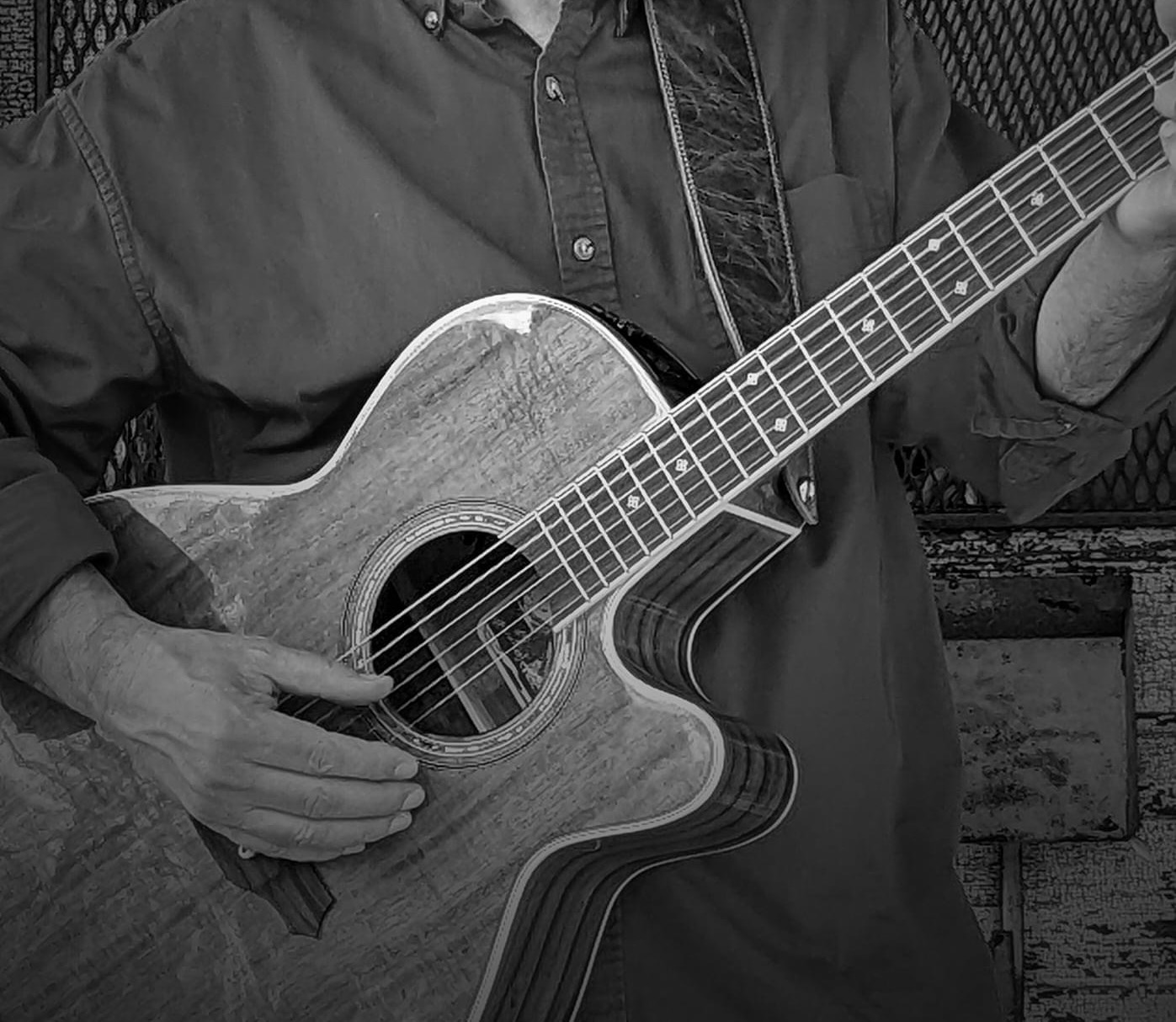
Strumming a guitar
Strumming a guitar

When my wife and I moved to Springfield, Missouri, in late 2018, I had no idea how vibrant the music community would be in this town of 200,000+ people in the heart of the Ozarks region. Within a few months, I was participating at a weekly open mic night jam where musicians, singers, and songwriters gathered to perform a wide variety of music, which was mostly classic rock, country, pop, and the occasional folk tune. As we became more immersed into the community through work and social activities, I learned this part of the country has an incredible musical legacy going all the way back to the early 19th century when immigrants began to settle in southwest Missouri and northwest Arkansas, bringing with them musical traditions from southern Appalachia rooted primarily in Scotland and Ireland. Old time music jams, or house parties, lasting all night sprang up throughout the hills and hollers featuring various stringed instruments like fiddles, mandolins, banjos, upright bass fiddles, and guitars. Weekly old time and/or Bluegrass music jams still exist today in the rural Ozarks in places like McClurg, Missouri, and Mountain View, Arkansas.

Microphone
Microphone

The regional music scene gained national attention in the 1950s with the “Ozark Jubilee,” a live, nationally broadcast country-western variety show on ABC Television originating from the Jewell Theater in downtown Springfield from 1955 through 1960. Many country music stars began or advanced their careers by appearing on the Jubilee including Porter Wagoner, Patsy Cline, Brenda Lee, Johnny Cash, and the Philharmonics. The Ozarks Studies Institute of the Missouri State University Libraries is in the process of locating and digitizing episodes of the Jubilee and making them available to the public on YouTube, a project with which I have been directly involved. The playlist is at https://www.youtube.com/playlist?list=PLjcjShg6ypA54TjijKG6ty9WpPDxkn-Xw

"Ozark Jubilee"
“Ozark Jubilee”

Many people in the Springfield area argue that the “Ozark Jubilee” opened the door for another major movement in the entertainment industry centered about forty miles south in the little hill town of Branson, Missouri. Just as the Jubilee was going off the air in 1960, the Herschend family was building a 19th-century-style Ozarks theme park just west of Branson they would call Silver Dollar City. One of the major attractions of the park was live music, mostly consisting of traditional fiddle or square dance tunes but also Bluegrass. As country music rose in popularity across the nation, a few entrepreneurial musical families saw an opportunity to open theaters for country music variety shows along Highway 76, the hilly, curvy road that connects downtown Branson to Silver Dollar City. With the theaters came restaurants, hotels, shops, and other attractions. By the 1980s, some of the aging country music stars of Nashville, and even some of the younger ones, began either playing shows along the strip or opening up their own theaters. Over the next two decades, Branson exploded into a tourism mecca offering family-friendly entertainment centered around country music, with a whole lot of white Protestantism and patriotism thrown in for good measure.
Springfield, Missouri (www.springfieldmo.org)

The Branson boon began to wane as the 20th century ended, although Highway 76 is still filled with a multitude of tourist attractions and theaters and all the trappings that accompany them. Fortunately, nearby Springfield continued to be a music town, although it never aspired to be like Branson. Many people here maintain, and I would agree, that the Springfield music scene is more authentic, with only minimal interest in attracting tourists. We have certainly seen our share of that authenticity. The first band we heard in Springfield was on New Year’s Eve 2018 at Moon City Pub on Commercial Street, which was also the location of the weekly open mic night I would begin attending. The name of the band was Mood Ring Circus, an ensemble of four twenty-something guys who were gifted musicians, singers, and songwriters performing their original, hard-driving tunes. We were blown away. As it turned out, the lead singer for the band was also the host of the aforementioned open mic night. His name is Justin Larkin. The pub closed down during COVID, and the owners sold it; however, Justin has continued to host open mic jams at several locations around town.

We have become good friends with Justin and his family. He has produced and recorded me performing several of my own original songs and a few covers in his garage studio. He plays multiple instruments on the recordings and sings harmony parts. This year we are working on a song we wrote together titled “Miles of Time,” which is an absolute rush for me. Justin is about the only person I know personally who makes his living performing music. He plays mostly in southwest Missouri but occasionally tours through the western states playing in clubs, breweries, and restaurants. He is immensely talented as a musician, vocalist, and songwriter. His music is streaming on multiple platforms, and he has his own website at https://justinlarkinmusic.com/

The second musical group we heard was a married couple, Shannon Stine and Natalie Wlodarczyk, two women who call themselves The Shandies. They both play guitar and sing, performing mostly in southwest Missouri. The Shandies are wonderful songwriters, musicians, and vocalists. They have a dedicated page on Spotify. Their shows are a nice mix of their own music and eclectic selections of mostly soft Americana tunes from the last fifty years. The third performer we heard was a solo act, a guy named Dallas Jones. Equally talented on the guitar and the keyboard, Dallas has a voice that could have come straight out of Nashville. He is also a multi-generation cattle farmer. It has been a pleasure getting to know him over the past few years. The genres of music we are drawn to are similar, which include pop, soft rock, and country from the last fifty of so years. Although I am older than Dallas by a couple of decades, we both cut our musical teeth on the folksy tunes of John Denver. Dallas did me the great honor of playing and singing with me for a set at one of my gigs in town early in 2023. Dallas also has a dedicated page on Spotify.

One of the performers I met and befriended at various open mic sessions in town is a guy named Brian Pitts. He’s only a few years younger than I am, so we grew up listening to a lot of the same kind of music, mostly rock and pop music from the late 1970s and into the ‘80s. Brian was the front man in a touring band back in the ‘80s but fell out of performing for about 30 years to raise a family and build a career. He has a great voice and is an accomplished drummer. During the COVID pandemic, Brian really concentrated on learning how to play the guitar well enough to accompany himself singing. His efforts paid off, and we began to harmonize with one another during our respective open mic sets. People began to compliment us on how tight our harmonies were, so we decided to work up a few sets and put together a duet vocal show, with Brian on guitar and me swapping back and forth with guitar and keys. He came up with the clever name, “Openly Gray.” Brian is really striking while the iron is hot. He has joined several different acts: an Eagles tribute band, a Yacht Rock band, and a Hall & Oates tribute band. His vocals are excellent for these genres.

There are far too many solo and group performers in the Springfield area for me to include in this post, but here are a few more. I am only including people here who perform regularly. All of these people have either their own websites or pages on online musical platforms and/or social media.

Joe Dillstrom and his band, The Paper Moons – a multitalented solo musician, vocalist, and songwriter who also performs with a group playing soft jazzy and romantic classics.

Molly Healey – a looping violinist, cellist, guitarist, pianist, and singer-songwriter who tours with the Ozark Mountain Daredevils, the most famous band to come out of Springfield; she often serves as a recording session musician for soloists and ensembles in the Ozarks; she also has a regular Sunday evening gig with Dallas Jones in town.

Red Light Runner – one of the best cover bands in Springfield, featuring the powerful vocals of Drew Beine and the phenomenal guitar skills of Steven Sparks, who also plays in multiple bands, including Mood Ring Circus mentioned above.

Paul Thomlinson and Innuendo – another incredible cover band in town; Paul is a killer guitarist and vocalist who is a front man for the Eagles tribute and the Yacht Rock bands that Brian sings with, plus he is the other half of the Hall & Oates tribute band with Brian; Paul is also an intelligent, all-around great person.

Devlin Pierce and the Song – Devlin is a fine songwriter and guitarist with one of the most powerful voices around.

David Hoover – an Ozarker at heart who channels James Taylor and Jim Croce like no one I’ve ever heard; David is one of the best acoustic guitar players in the area.

Trent Prewitt – in his early twenties with his eyes on the prize of becoming a hit in Nashville; Trent has a wide-range country voice and is comfortable on both guitar and pedal steel; he is a songwriter and also plays occasionally with a few local bands.

Michael Evens – a sweetheart of a guy with the voice of an angel; Michael plays multiple instruments and has been a big part of the open mic scene behind the curtain in several locations in Springfield.

Don “DR” Randolph – at last, someone older than I am! DR has been playing and singing music with multiple bands in the area for decades; he is one hell of a bass player and a mainstay in the jam band of mostly older rock and country players that hosts an open mic session on Monday nights in town.

Rory Joyce – I cannot end this post without mentioning the man who hosted one of the open mic jams in town; he inspired and encouraged many of the amateurs in the area and was quite an accomplished musician and vocalist; sadly, Rory died in 2022, but his legacy lives on at the open mic night he started and built in Springfield.

A Musical Tribute to Flannery O’Connor

During the early stages of the COVID pandemic in 2020, I wrote a pop song as a tribute to Flannery O’Connor’s brilliant short story, “A Good Man Is Hard to Find.” Those who know me best will not be surprised that I would do such a thing. She is my favorite author, and I think she was a comic genius – far ahead of her time.

If Flannery O’Connor and Cormac McCarthy had a love child delivered by Neil Young, I can imagine this is what it would sound like when the baby cried. The title of the song is “I Just Don’t Fit.” I decided on a western-style tune to give it some distance from O’Connor’s South, but the darkness is still there.  It’s probably enough to turn Bruce Springsteen’s stomach, but it’s the best I can do with what I have.

Here is a link to a YouTube recording of the song. The lyrics are printed below.
https://youtu.be/8zkRxEC4_Fk

Me – vocals, lyrics, music, and acoustic guitar
Justin Larkin – harmony vocals, electric guitar, bass, drums, mixing, and recording. (Lyrics and performance copyrighted 2021; all rights reserved)

Here’s to clean spectacles and parrot-print shirts.

“I Just Don’t Fit”

(Verse 1)
My father called me a different breed, and I guess that’s what I am
I must have done a mighty evil deed that even Jesus can’t comprehend
You think that if I pray
You can walk away
But everything’s out of balance now with too many debts we can’t pay

(Chorus)
Something must be missing ‘cause I just don’t fit
No reconciliation so I shoot from the hip
If you’re looking for a good man you might as well quit
Something must be missing ‘cause I just don’t fit

(Verse 2)
I’ve tried my hand at so many things, and I’ve seen my share of pain
You’re gonna need more than common blood if you want to wash away that stain
Can’t accept the fall
Until you lose it all
The undertaker never gets a tip; the remittance is always too small

(Chorus)
Something must be missing ‘cause I just don’t fit
No reconciliation so I shoot from the hip
If you’re looking for a good man you might as well quit
Something must be missing ‘cause I just don’t fit
No, I just don’t fit

(Instrumental verse solo)

(Chorus)
Something must be missing ‘cause I just don’t fit
No reconciliation so I shoot from the hip
If you’re looking for a good man you might as well quit
Something must be missing ‘cause I just don’t . . .

(Final Chorus)
Something must be missing ‘cause I just don’t fit
No reconciliation so I shoot from the hip
I can walk away and leave you bleeding in the ditch
Something must be missing ‘cause I just don’t fit
No, I just don’t fit

New Orleans: A City With A Soul

Why do we visit cities when we travel? Are we looking for specific attractions? Does the history of the place intrigue us? Does the city host unique activities or events? All these features and more make certain cities special destinations. The most memorable ones I have visited fit this description, but the ones that stand out have something else that is less tangible but even more appealing. They have a soul. Perhaps there are more appropriate words to express this quality, but I believe most people know it when they experience it. For me, the city that best embodies this kind of magic is New Orleans.

Vegas has its casinos; L.A. has its tinsel; New York has its skyscrapers; well, you get the idea. Admittedly, the sites of New Orleans are not necessarily distinguishable from those of other major cities in the U.S. There is the National World War II Museum, the famed Garden District, the Louisiana State Museum, the Mississippi River, the Audubon Aquarium of the Americas, the Audubon Zoo, and the Mercedes-Benz Superdome. These attractions are fine, but the rich history, the clash of cultures, the musical heritage, the religious undercurrent, the culinary delights, and old-world architecture all come together to breathe life into New Orleans.

Canal Street
Canal Street

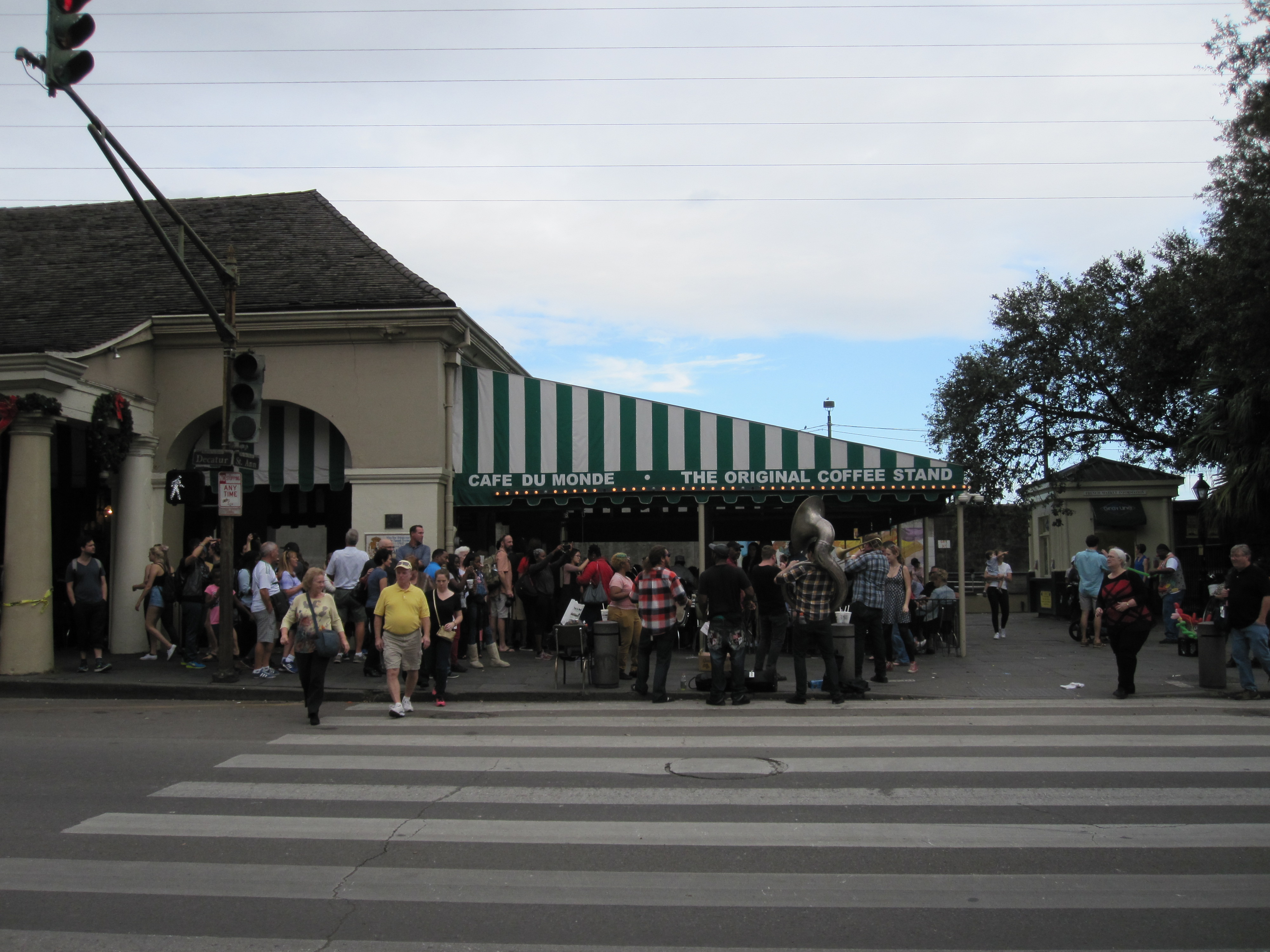
New Orleans certainly has a soul, but it also has a heart: the French Quarter. Dating from the early 18th century, this neighborhood is one of the oldest in the city. It is famous for its fine restaurants, charming hotels, the French Market, quirky antique stores, and of course, the bars. It is an area steeped in tradition, and millions of visitors to the city each year can’t resist taking advantage of opportunities like a late-night run for mouthwatering, powdery beignets and coffee served at Café Du Monde, an establishment dating back to 1862!

Café Du Monde
Café Du Monde

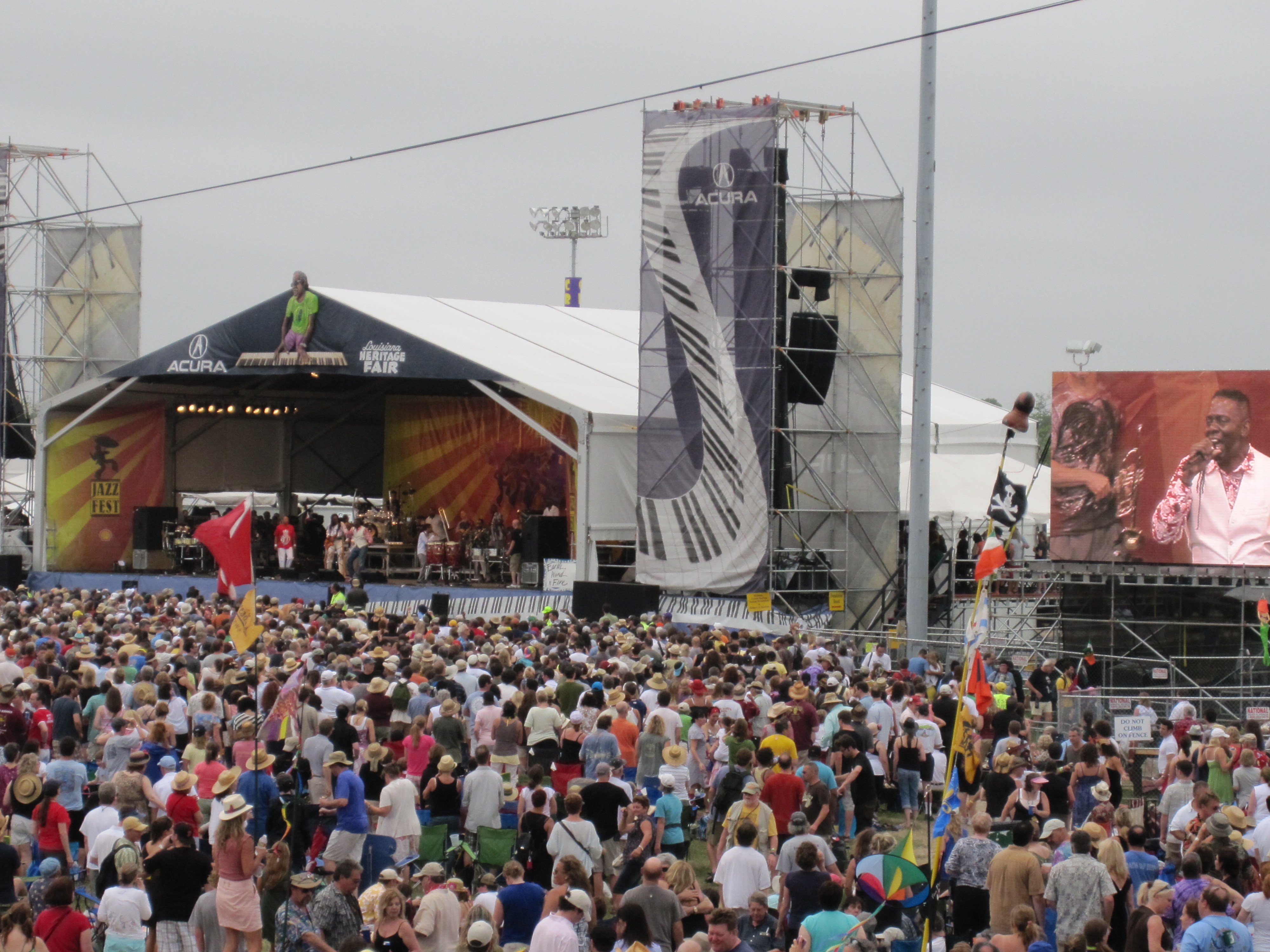
The heart of New Orleans has a sound, and it is music. As is true with most large cities, almost all musical genres are represented here, from full symphonic to alternative rock and country. However, it is jazz that people from around the world most associate with New Orleans. Although its roots come out of Africa and some areas of Europe, jazz as a formal style was born in New Orleans in the early 20th century. Perhaps the best-known jazz spot in New Orleans is Fritzel’s European Jazz Club, hosting live traditional performances every night of the week. We took my older son to New Orleans in 2010 to see one of his favorite bands, Pearl Jam, perform at an annual weekend festival that offers a wide variety of musical forms but pays tribute to the city’s original creation. The event is officially called New Orleans Jazz and Heritage Festival, but most folks know it as JazzFest.

JazzFest 2010
JazzFest 2010

What keeps the heart of New Orleans beating? Anybody who has ever been there knows, without a doubt, it is Bourbon Street. The street is not named for the whiskey, as many people assume, but for the French royal family ruling at the time this district was established, decades before the birth of America as a nation. Perhaps the most familiar street in the country, this thoroughfare extends thirteen blocks from Canal Street to Esplanade Avenue and is lined with bars, music halls, boutique hotels, restaurants, souvenir shops, and a menagerie of street performers, artists, musicians, and bohemians. Just about anything goes – if you can’t find it here, you won’t find it anywhere.

Bourbon Street
Bourbon Street

Our sons are grown men now, but we still look for opportunities to all get together whenever possible, especially near the holidays at the end of the year. In 2016, we decided to splurge and enjoy a nontraditional Thanksgiving away from home. We chose New Orleans for the occasion, and it was fabulous. We stayed at Hotel Chateau Lemoyne, a historic property one block off Bourbon operated by Holiday Inn that had its own little jazz bar. What a treat! We had Thanksgiving lunch at Red Fish Grill, which was transformed into a magnificent buffet with various “stations” located throughout the restaurant – the food was amazing. We took in several of the sites near and around the French Quarter mentioned earlier, including a cocktail at the Carousel Bar at Hotel Monteleone. Mostly, we spent our time meandering down Bourbon Street, “drinking” in the atmosphere of the places, and listening to the heartbeat of this wonderful city.

Carousel Bar at Hotel Monteleone


Confessions of a Lazy Musician

Music has been a central part of my life for as long as I can remember. My mother’s extended family members were faithful Southern Baptists, for whom music was the primary expression of worship and praise. I was raised in this environment and at an early age was encouraged to sing frequently, not only in church, but for elderly relatives on their sick beds, at occasional family gatherings, and during Christmas holidays. As a pre-adolescent, I became increasingly impressed with older teens who performed in church, especially those who played musical instruments. My older sister had taken several years of piano lessons, and we had an old upright in our dining room that she used for rehearsing. I was frequently scolded for “banging” on the piano.

In the early 1970s at around the age of eleven, I expressed interest in learning how to play the guitar, so my parents bought a starter instrument for me and located a teacher. My instructor was an old guy who loved folk music and wanted me to start with the basics by playing simple songs note by note. I was impatient, which in retrospect was unfortunate because this was my one chance to learn how to read music. Instead, I jumped ahead in my music books and began learning how to play open chords — the easiest ones such as C, D, G, Em, and Am. In a short time, I began picking out songs that were popular during that time from pop and folk singers, especially John Denver. I started out as an amateur musician at just the right time. Many of the songs that I loved during those years could be played well enough with 3-5 chords. I took guitar lessons for less than a year.

My primary incentive in learning to play the guitar was to accompany myself to sing the songs that my friends and I were listening to on the radio. The more I played, the better my hearing became adapted for learning songs; therefore, I never went back to trying to read a musical score. I expanded my open chord portfolio, but I was not willing to push through the pain of playing bar chords, which continues to limit me as a guitarist to this day. Soon I was given opportunities to play and sing in church. By the time I reached the 10th grade, I was playing well enough to accompany choral groups at school and sing in talent contests.  My sister and I, along with one of our female cousins, formed a trio and played at nearby churches and for community groups. I was nervous playing in front of crowds, but I became better at listening to songs and reproducing them well enough for the average, uncritical audience. It was great fun, and it was a way for a short kid with not much athletic ability to find acceptance, approval, and even admiration from peers and adults.

Like most amateur musicians and singers from my generation, I also tried my hand at writing songs. My earliest influences were church music and pop/folk performers, so I began writing songs that I could sing and play for worship services and just for my own fulfillment. Some of them were good enough that I continued to sing them into adulthood. Others were absolutely horrible, and they are now thankfully forgotten. I have had the opportunity to perform original songs many times over the last thirty years, and my audiences have been quite gracious and accepting of my efforts. I continue even now to write songs, one of which I copyrighted and featured in this blog.

Sometime during my early college years, I began discovering chords on the piano. At the small community college I attended in the late 1970s, there were no restrictions on the use of the pianos in the practice rooms in the Department of Music. I would often head over in the late afternoons, when most faculty and almost all students were gone, and spend an hour or more discovering the triad configuration of the major chords and a few of the minors. By the time I had finished my undergraduate degree, I had memorized all the major and minor chords, along with sharps and flats. I had learned how to make numerous augmented and diminished chords, the major and minor 7ths, and suspended chords.

Also, my ear was better allowing me to determine the, and I stress this adjective, necessary chords to reproduce melodies on the guitar, but even more proficiently on the piano. I was playing chords on the keyboard that I was never able to master on the guitar. Solely from a mechanical standpoint, the piano is easier for me to play, and I have always taken the path of least resistance as a musician. Soon, I was singing and accompanying myself almost exclusively on the piano for church services, and then several times a year at weddings. If I listened to a song and worked at it for a while, I could learn to play it well enough to accompany myself or someone else to sing it. In other words, I was faking it sufficiently for most audiences and the people who were either inviting me or paying me to perform.

In my early forties, a friend of mine invited me to come to band rehearsal with him. He played bass for a 5-member local band covering classic rock, Southern rock, and some easy-listening music. As it turned out, they were considering bringing in a sixth member to serve as a front man. He knew I had a fairly good singing voice because he had heard me perform at a wedding. I started practicing with them regularly, and within a few months, I was singing for them. Up to this time, their drummer was the lead singer, and he continued to sing about half of our set lists for the next ten years I was with the band. It was a good arrangement. The musicians in this group were all far more accomplished than I was, but occasionally I did play acoustic and even keyboards on a few of the songs I sang for the band. Playing in that band was such a rush and fulfilled a deep desire to perform the music that I loved so much. I will always be thankful for the opportunity.

Howard baby grand piano

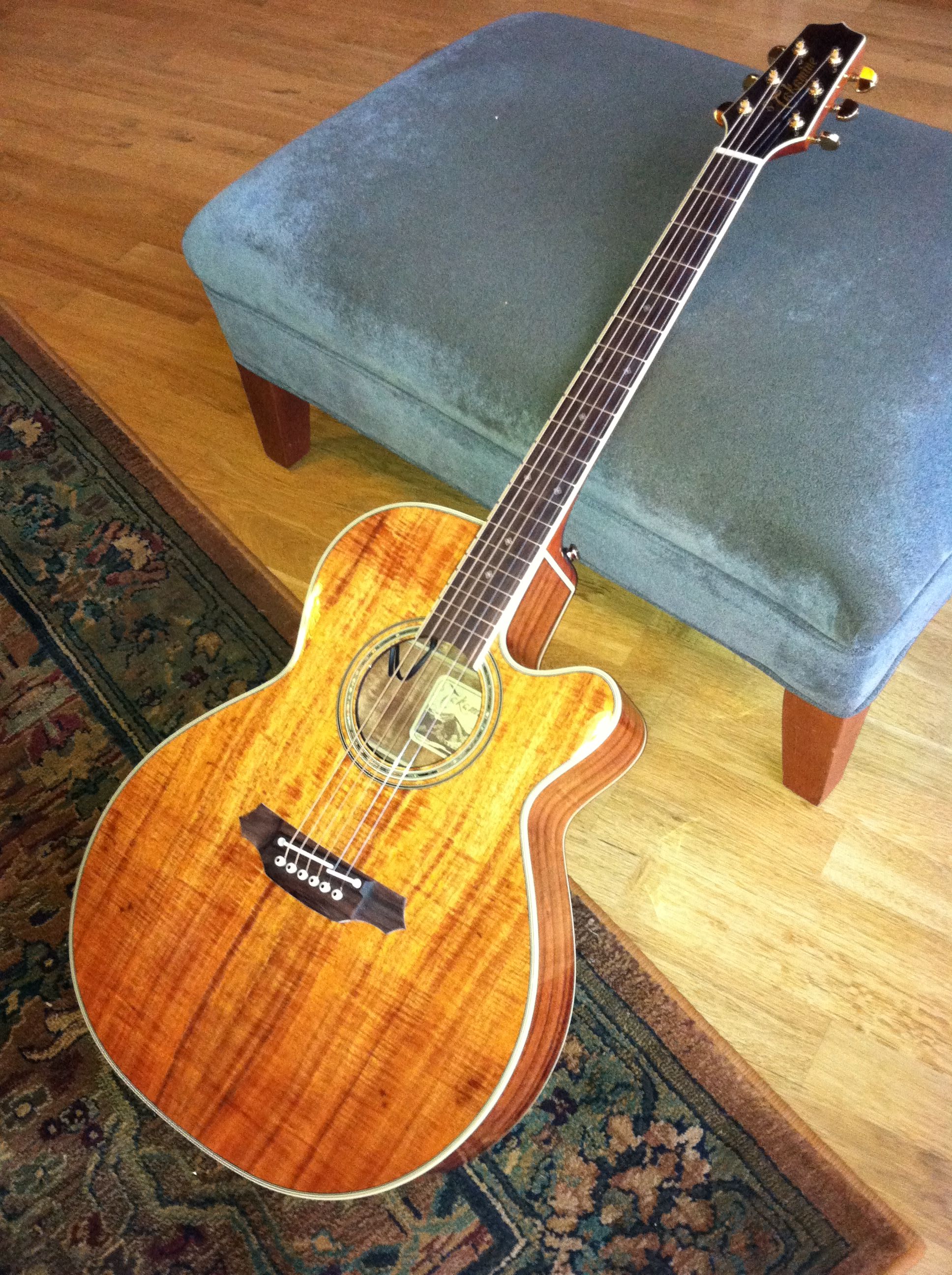
I am also extremely grateful to my wife, who always encourages me and goes out of her way to convince me and others that I am not a lazy musician. Of course, I know better, but I love her to the moon and back for the confidence she gives me and the praise she pours on me every time I play music. She has also facilitated my musical endeavors in direct and significant ways through amazing gifts: a baby grand piano she bought for me ten years ago and a Takamine guitar as an anniversary present in 2012. The Howard baby grand is a beautiful instrument intended for someone with talent and skill that far exceed my own, but I am astounded at how my playing has improved on this piano. I hear sounds and find melodic movements that I never sensed on other keyboards. It may not be magic, but I also can’t explain it, so it’s magic to me.

Takamine guitar
Takamine guitar


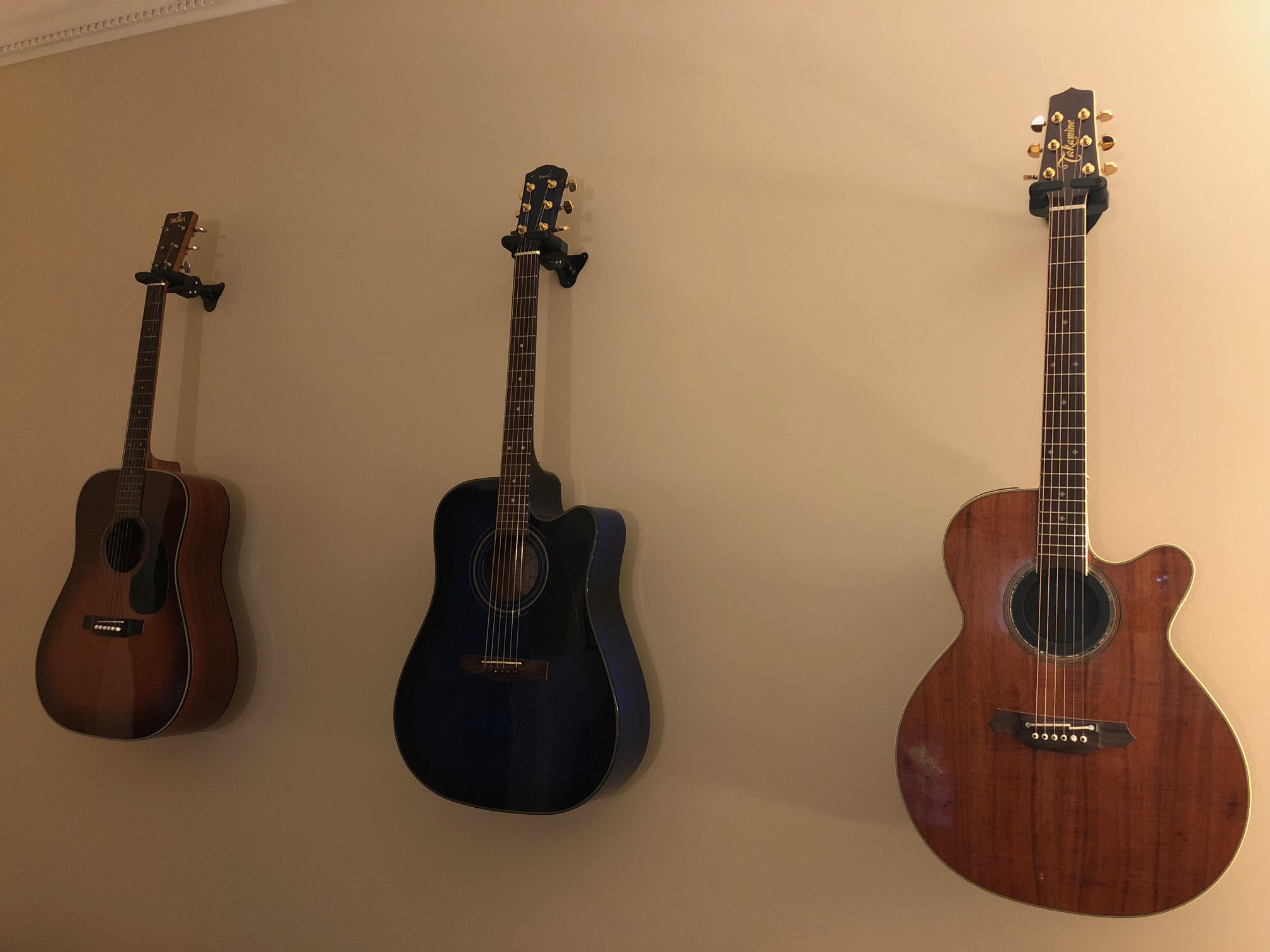
My guitars
My guitars

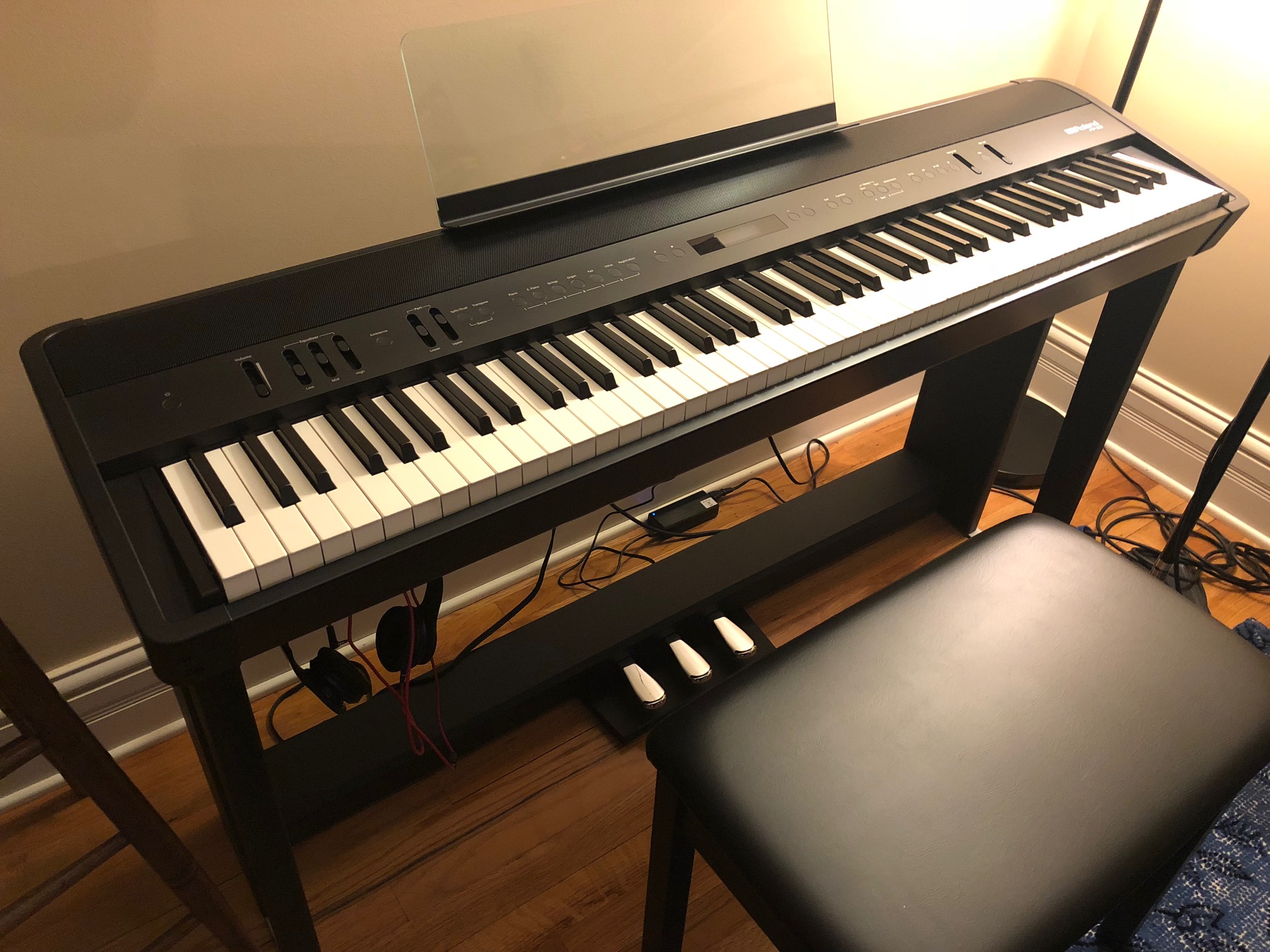
The Takamine is hands-down the finest guitar I have ever played. It is an acoustic with a pickup and electronic tuner. I had the pleasure of playing it during the last year I was with the band, and I still enjoy playing it on my own now. It is the fifth acoustic I have owned, including my first learner model and a Stella 12-string I had in high school. Currently, I have a wood-grain Yamaha that I have had since college, a Fender with a deep blue finish that I bought from one of my band mates, and the Takamine. I need to play much more than I do, but what can I say? I’m a lazy musician. The most recent addition to my collection of instruments is a Roland FP-90 keyboard that features real wooden hammer-action keys, multiple banks of sounds (pianos, strings, organs, synth sounds, etc.), four on-board speakers, and inputs for a mic and an amp. I had a smaller Yamaha keyboard that I bought while I was with the band, but this Roland is like a Rolls Royce by comparison.

My Roland FP-90 keyboard

I have spent much of my life attempting to entertain others at home, at church, at school, at work, and in restaurants and bars. I have sung and played for weddings, funerals, parties, dinners, meetings, and other occasions. Even when I was providing music at church, deep down it was my need to perform that inspired me as much or more than any religious conviction. I addressed this issue as honestly as possible in another blog post. Music has always been my most creative expression, and I am so thankful that I had some raw talent and the right people — family, friends, teachers — to encourage me at a young age. I only wish that I had taken the time and put forth the effort to learn to read music, which would have given me so many more opportunities to give people enjoyment. And, in the end, that is the reward for me of being an amateur performer.

When the Splurge Is Worth It

Most Americans are not wealthy, unless compared to the millions of people who live in less-developed countries around the world. Although there is a vast household income spectrum in this country, most of us have limits on our discretionary spending. We have to make choices, especially about our wants as opposed to our needs. Some folks are truly prudent and seek savings that other families pass up: driving small, fuel-efficient vehicles; eating at home or taking lunch to work; shopping around for insurance; or even selecting generic products over name brands. Americans are among the most consumer-driven individuals on the planet. We love our stuff! We crave gadgets, electronics, toys, and a whole host of disposable products. We will spend hard-earned money on the most useless objects to occupy the limited time we have away from our jobs. The latest obsession that comes to mind is the fidget spinner, ranging in price on the low end from $3 to $10, but going well over $400 for the designer models. Millions have been sold across the country in 2017 (and in other countries as well). What is the function of this incredible device? It spins. That’s it. Oh, and it is branded as a remedy for everything from boredom to Attention Deficit Disorder.

I have absolutely no issues with what people choose to buy with their money, as long as they are paying their own way and taking proper care of their dependents. I certainly do my part when it comes to blowing money on the absurd too. However, as I look back over the decades, I regret a few times that I didn’t make certain choices that would have afforded me with lifetime experiences and memories. One example that comes to mind was during the summer of 1984 when I was studying abroad in England. Pop music has been an important influence in shaping my world view since I was a child. Some of the lyricists and musicians from the 1970s had the effect on me that poets and painters have on others with more sophisticated taste than my own. I was and shall always be a huge fan of the music of Elton John and his long-time collaborator, Bernie Taupin. That summer in 1984, Elton John was on his “Breaking Hearts” tour and played a concert at Wembley Stadium in London. As a graduate student who depended on the sacrifices of my parents and the funds from two grants, I was on a tight budget. Still, I could have found a way to purchase a ticket, but I didn’t. There would be plenty of other opportunities to see Elton John in concert, especially in the states, but it would not have been the same. That chance came and went but left its mark on me.

Since that summer in 1984, I have made countless spending decisions — most were fairly routine but some were certainly significant. I am thankful to have more discretionary income now than I did as a graduate student! My wife and I love to travel, and even though some trips can get a bit pricey, I never regret the money we spend this way because of the incredible experiences we share during our journeys. In recent years, I have taken advantage of opportunities to attend concerts with family and friends because I never want to miss out like I did that summer so many years ago. My older son and I saw Bob Dylan a couple of years ago — who knows how much longer this musical icon will be around? We also saw Pearl Jam in the band’s hometown of Seattle a few years earlier. I understood about 2% of the lyrics that Eddie Vedder sang, which is absolutely irrelevant. My son is a huge fan of the band and the whole grunge movement, and I was so glad we could take the trip.

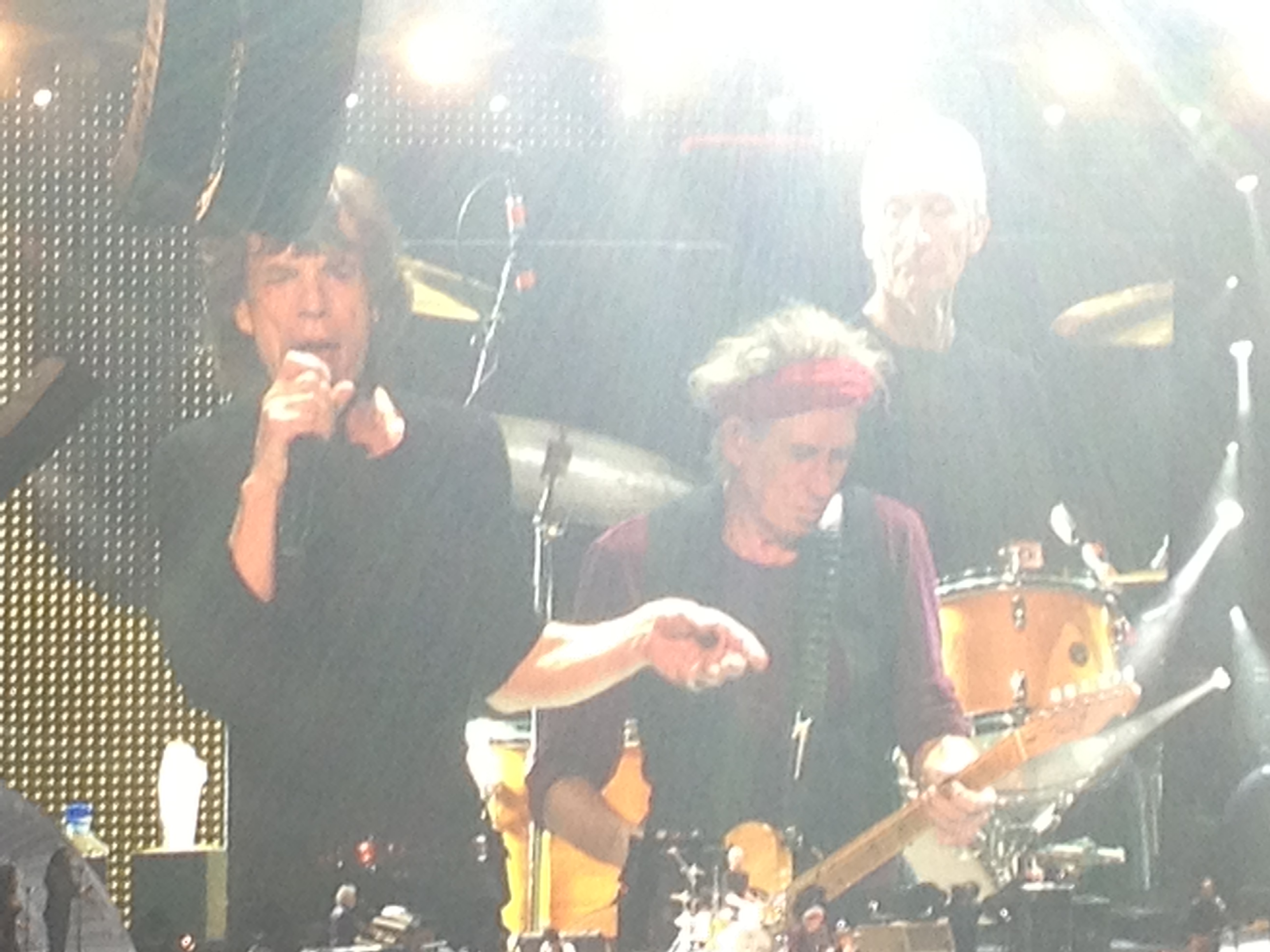
My wife tells a proverbial story from several years ago when she was stressing over the decision to spend extra money on a wonderful hotel for a trip we were planning to Rome. She asked the opinion of a good friend and mentor, who wisely said, “Five years from now you won’t remember how much you spent on the hotel, but the two of you will never forget the experience of staying at that place.” She was such a wise woman, and we followed her advice with absolutely no regrets. In that same spirit, we have attended several concerts in recent years and have seen some incredible shows, including Fleetwood Mac and Earth, Wind & Fire. In 2012, The Rolling Stones announced that they were coming to Newark, New Jersey and to New York City for a 50th anniversary limited tour. Thinking that the band might be announcing their retirement, we jumped at the opportunity to see them. We bought plane and hotel tickets and made it a long weekend in NYC, which was expensive. Do we remember how expensive now? No. Will we ever forget the moment Mick Jagger, Keith Richards, Ronnie Wood, and Charlie Watts walked out on that Prudential Center stage? Can’t imagine. Of course, we couldn’t have known then that the Stones would end up touring several cities in the U.S. the next year and are still making appearances around the world. Again, no regrets.

The Rolling Stones
The Rolling Stones, 2012

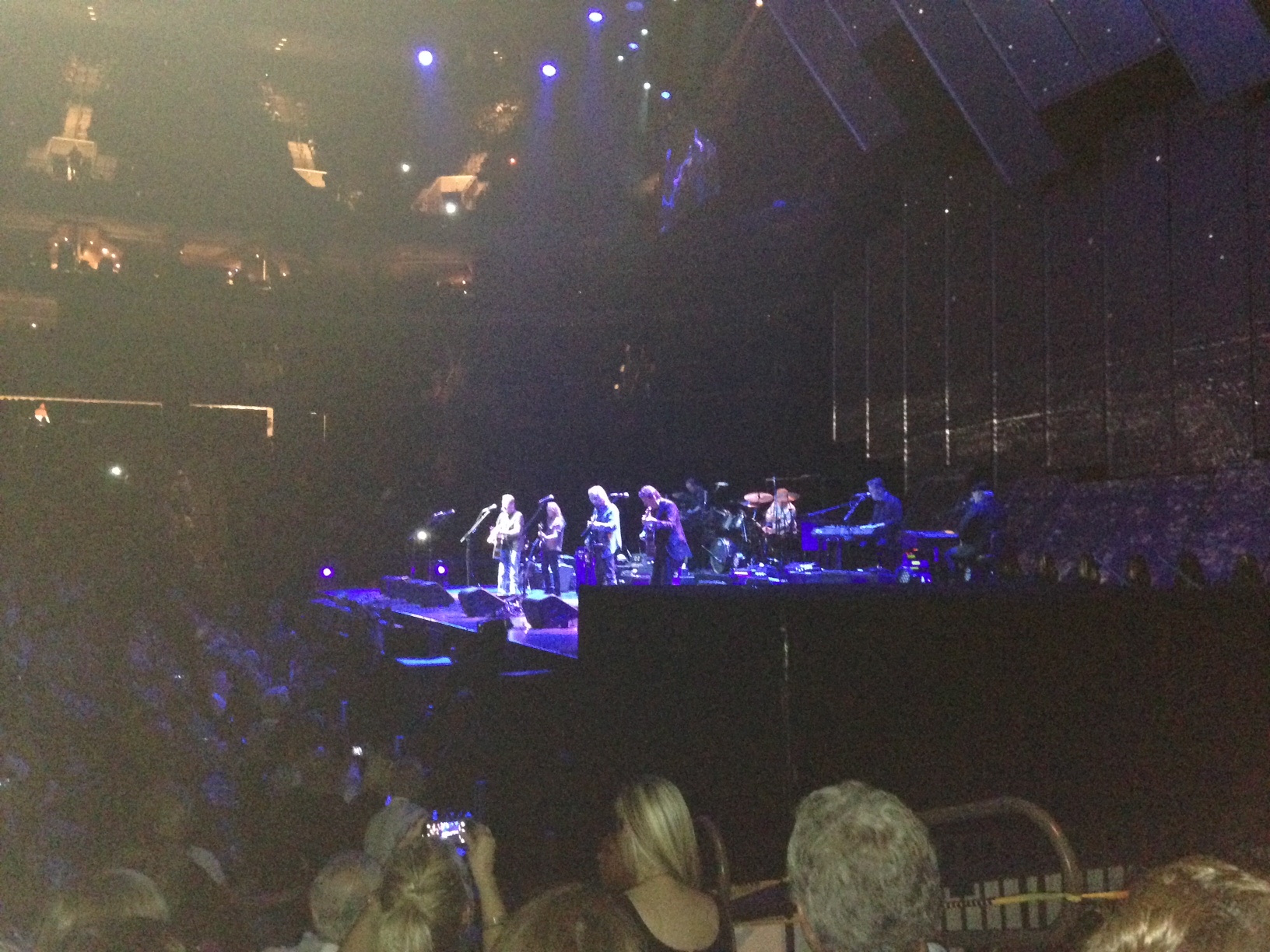
One more example should be enough to make my point here a tad more convincing. The Eagles are a band that helped define the music of our generation. They have a tumultuous history of substance abuse, infighting, breaking up, and reemerging from the ashes. They also created some of the most memorable music of the rock era. Their harmonies were close to perfect, their lyrics spellbinding, and their performances were almost legendary. They have won almost every major Grammy and at least five American Music Awards. They were inducted into the Rock and Roll Hall of Fame in 1996. When the band announced the “History of the Eagles” tour for 2013, we paid an additional fee to grab early tickets and the best seats we could afford. Their concert in Charlotte on November 15, 2013 was truly the best show I have ever seen. The vocals, instrumentation, stage presence, lighting, acoustics, and video production were just outstanding. As a reporter for the Charlotte Observer wrote, “The Eagles didn’t just give fans a typical concert Friday at Time Warner Cable Arena. It gave generations of fans a musical history lesson from its 1971 formation to its 1994 reunion.” As thrilled as we were at the end of that phenomenal evening, it would be just over two years later that we truly appreciated how fortunate we were to have been there. The news on January 18, 2016 of the unexpected death of Glenn Fry, the band’s front man and one of its founders, sent a shudder through the world of popular music. It also drove home to us the realization that, whenever possible, we need to take advantage of every one of those once-in-a-lifetime opportunities that comes along.

The Eagles
The Eagles, 2013


My first copyrighted song: “The One You Call”

As a life-long amateur musician and singer, I have been writing songs since I was a teenager. I wrote love songs when I was in high school. I tried to write a few songs that were more artistic in high school and college, but alas, I wasn’t a poet. Being raised in a Southern Baptist church and attending one for much of my adult life, my major contribution to worship was in music. I wrote songs that I could perform in church, which I did for about twenty years. I posted some thoughts about my experiences and my evolution with church music here.

I joined a mid-life crisis band when I was in my early forties, which afforded me plenty of opportunities to perform — only covers and never original material. One of the band members had a nice studio setup in the basement of his house, which is where the band practiced. When I approached him about helping me record an original song I had written, he went beyond just laying down tracks. He solicited help from some of his musician friends from other parts of the country, and they added bass and other instrumental accompaniment to my keyboards. He added acoustic guitar and electronic drums to complete the instrumental recording, and then we got together in his studio to add my vocals. The finished product is an amateur effort, but the instrumentation and the mix are really top rate for a home studio recording.

I regret that my voice is not quite professional quality. I have been told for decades by congregations, audiences, family, and friends that I should record my songs. They all mean well and I deeply appreciate their support, but I know the difference between the quality of my voice and what I hear in the entertainment business. I’m okay, but I’m not that good. However, I do think the original song that my band mate helped me with and recorded for me is marketable. I think it is as good as many of the country and pop songs played on radios all across the country. In the hands of the right people, and with the right voice, I believe it could be broadcast-worthy. Family and friends also strongly encouraged me to copyright the song. I procrastinated for several years, but I finally decided to submit the lyrics and the sound recording to the Library of Congress Copyright Office last year. This song is the first thing I have ever copyrighted.

A link to my recording of the song is available on YouTube here. I am singing all the vocals. The words and the music are written by me. The lyrics are printed below.

“The One You Call”

When the night gets cold
And you need someone who knows
Exactly how it feels
Someone who knows it’s real

I know you want to be strong
But you’ve been hurting for so long
You don’t have to take the fall
Let me be the one you call

I know your heart is broken ’cause I’ve been there before
You think you won’t survive it baby; can’t take this anymore

If you just want to cry
Don’t need a reason why
You don’t have to be alone
Just let me take you home

Now don’t you be afraid
What anyone may say
You don’t have to take the fall
Let me be the one you call

When will you see that I am so in love with you
Look deep into my eyes now baby; you know it’s true

If you just want to cry
Don’t need a reason why
You don’t have to be alone
Just let me take you home

In the middle of the night
Though you may not think it’s right
It won’t bother me at all
Let me be the one you call

Let me be the one you call

Worship Without Music

As stated previously in this blog, I was raised in a Southern Baptist Church (SBC).  Generally speaking, Southern Baptist worship, especially during the main service on Sunday mornings, could be described as a passive experience by the majority of people present, namely the congregation.  There are a couple of exceptions.  In recent decades, it has become popular to insert a time of greeting around the midway point of the service, which involves handshaking, hugging, some folks walking all around the sanctuary to apparently greet as many people as possible until forced by embarrassment to finally get back to their seat.  This practice is not limited to the Baptists either.  The only other part of a SBC service that encourages participation by everyone in the sanctuary is music, and for Baptists, music is a central part of worship.  SBCs give music a lot of space and time, from large pianos and organs for traditional worship services, to full-scale bands for “praise” services, and even small orchestras for the mega-churches.  They include several hymns for the congregation to join together singing.  SBCs also tend to employ full-time ministers of music, who typically are paid better than other support staff in most denominations with comparable-sized churches.  They typically have choirs for all age groups, along with an adult choir that practices weekly to present calls-to-worship, anthems, benedictions, etc.  Some churches even have special musical groups like hand-bell choirs, vocal or instrumental ensembles, and pop bands.

The format of worship in a SBC was certainly a suitable environment for my development with respect to the central role of music.  I was raised in a family that appreciated music, had some musical abilities, but above all encouraged musical skill and performance in my generation of youngsters.  My sister and I both took music lessons — she with the piano and I with the guitar.  I was brought up to sing church songs from a very early age, even before I can remember.  My earliest memory of singing was when my mother and grandmother took me out in the countryside to visit a bedridden relative of my grandmother (a sister or cousin, I’m not sure which), and I was instructed to sing a short song I had learned in Sunday School.  The song was titled “He’s Able.”  I still remember the words and the tune to this day:

He’s able, He’s able, I know He’s able
I know my Lord is able to carry me through
He healed the broken hearted, and he set the captive free
He made the lame to walk again, and He caused the blind to see
He’s able, He’s able, I know He’s able
I know my Lord is able to carry me through

As I became a teenager, my guitar skills developed enough that I could accompany myself singing, and could also play for youth group gatherings in my church.  My voice also matured to a fairly solid tenor, perhaps with a higher range than most guys my age.  I sang in choirs, performed at church functions (often with my sister and a cousin), and eventually reached what some would have considered the pinnacle of the music scene in a SBC — presenting “the special” during Sunday morning worship.  This song, typically a solo but sometimes a duet or trio, was usually placed in the service just before the pastor’s sermon.  For the 40+ years I was in a SBC, that part of the music service was always referred to by ministers and congregants as “the special” or “special music.”  Unfortunately, a label like that can encourage a certain sense of pride, if not arrogance, by the person offered such a place of distinction.

My love for music at an early age, combined with the ability to play the guitar (fair, but not very skilled) and a voice that my friends and family thought was pleasant, presented me with the opportunity to be a regular part of the special music rotation, almost always as a solo.  As I grew to adulthood, moved away from home, and started a family, I settled in another SBC where I continued with this practice.  I taught myself to play the piano and eventually began to accompany myself with that instrument.  It is with humility and perhaps some shame now that I look back on the decades of my musical contributions as a soloist because I realize that, all too often, I know what I was doing more than anything else was performing.  More than providing a meaningful worship experience for myself and the congregation, I was seeking to be an entertainer, to impress an audience, to attract their attention, to win their love.  So many people in SBCs will tell you that music is essential to their worship experience.  They will boast about their choir and exalt their music ministers.  But, they usually reserve their highest admiration for the people who perform special music, posting or sharing videos of them on their social media pages.  I enjoyed this kind of adulation all the time, and it was a rush.  My fellow church members were kind and gracious, and I have no doubt they were perfectly sincere when they told me how much a song I sang or wrote meant to them and enhanced their worship experience. I was touched by their encouragement, but what I craved was to amaze them.  Alas, I am vain.

After a divorce and a time of transitioning away from the Baptist church (I had left it theologically many years before), I met a beautiful Episcopalian.  And then I married her.  Everything changed, and for the better — much better.  I found a home in the Episcopal Church, with a theology that I could embrace without too much difficulty.  My wife introduced me to an early morning service at our small town church that she really liked because it was quiet, peaceful, reverent, and completely without music.  I had never been to such a service, and much to my surprise, I loved this style of worship.  After decades of being in churches where music was so central and where I was such a visible participant, it took me a while to understand why I was attracted to a service without music.  I think it is because I know that music was too often a distraction for me.  Instead of helping me get beyond myself to seek communion with the divine, it fed my ego and kept me in the foreground.  Performing caused me to focus on technique, style, quality, and even appearance.  It was way too much about me.

My wife and I have moved and are at another parish now.  They don’t have a service without music yet, although the priest has talked about introducing one.  There is resistance from the parish, which is to be expected.  I hope we can try it at some point. I will never stop loving music, and that includes church music.  And, I can certainly enjoy a worship service with music, even if I’m not at all familiar with so many of the songs from the Episcopal tradition.  In a way, that’s a good place to be.  It’s awfully hard to perform a song you don’t know very well.

The Legend of Bob Dylan

My older son and I recently saw Bob Dylan and his band in concert.  My son is quite the connoisseur of classic pop music going back to before he was born, and to some extent, before I was born.  Going to this show was what he requested for his birthday because he feels certain that there won’t be too many more chances to see Dylan live, and judging from how frail the aging rocker looked on stage, I would agree.  While 73 doesn’t seem so old when considering how many of his contemporaries are still touring extensively, Dylan doesn’t seem to “get around” with the same agility of guys like Mick Jagger or Paul McCartney.

Just before the show began, the house lights went out and the stage was dark.  A single member of his band came out in the dark, picked up a guitar, and started playing a gentle, folksy tune.  It was like being in church.  When the lights went up, the rest of the band was in place, wearing matching outfits.  I leaned over to my son and said, “How often do you see band members dressed alike?”  He replied, “I never have.”  They were definitely representing a different era, when rock-n-roll was reaching adolescence and getting more rebellious, but there was still a touch of class and style left over from the very early days of the bands that accompanied Buddy Holly and Elvis.


President Barack Obama presents Bob Dylan with a Medal of Freedom (May 29, 2012)

Most people don’t become legends during their lifetimes, nor do they become iconic.  Bob Dylan is an exception.  Some of his songs clearly define the rock-n-roll era, especially the elements in the genre that are most significant historically: protest, reflection, freedom, and change.  More than any other popular musician and songwriter from my generation that I can recall, Bob Dylan has proven over and over again that rock-n-roll was never just about the music, and certainly not about beautiful voices.  Hell, he never even tried to make pretty sounds with his voice, that is, on the occasions that he decided to sing instead of speak his songs.  But I would argue with anyone that his lyrics were some of the most powerful and moving of that generation.

At this particular show, Bob Dylan sang an incredible variety of music in a short time. He was probably on stage for less than two hours altogether, but during that time, we heard folk, blues, country, reggae, and rock.   He never picked up a guitar, but he played a miniature grand piano, and of course, the harmonica.  The instrumental variety from his band was impressive, including tunes using a violin and a huge string bass.  It was clear that he was playing what he wanted to play, not what the crowd expected or necessarily wanted.  He didn’t include “Like a Rolling Stone,” which no doubt irritated some of the audience.  But he did play “Tangled Up In Blues” and “Blowing In the Wind.”  Dylan performed that last song as his finale for the single encore he gave, and true to form, he used a variation so different from the original recorded version that I didn’t even recognize it until he was into the chorus.  I leaned over to my son and said, “I almost didn’t recognize this one, the way he’s playing it.”  Looking straight ahead to the stage, admiring the legend, my son replied, “He’s earned the right to do it anyway he wants.”  I couldn’t agree more.

Defining Art

Yes, I realize the title of this post is about as vague as it gets.  Nevertheless, how we define what is, and isn’t, art as a worldwide culture is something that puzzles me.  In America at least, so many of us seem to have no real criteria by which to judge if a work can be considered art — no standard.  I understand how subjective the appreciation of art is, and I suspect survival from generation to generation has played a major role in determining what has been defined as art throughout human history.  In my lifetime, Americans have become less and less prescribed in their definition of art, and to my way of thinking, this is an unfortunate trend.  We tend to use the terms “art” and “artist” to describe almost any form of creativity.  I am the first to admit that I don’t have a true appreciation for a great deal of modern art, which includes painting, sculpture, poetry, and a few other mediums.  Okay, those are perhaps my own shortcomings and limitations due to a lack of education or sensibility.  


What I’m referring to here, though, is how modern culture seems to lump all creativity into one huge basket, with very little discernment or discrimination.  We use the term “artist” so loosely.  We consider Leonardo da Vinci to be an artist, but we also use the same word to describe Thomas Kinkade.  Most people would recognize Beethoven as an artist, but we hear the same word used to describe Taylor Swift.  Really?  What happened to words like “entertainer?”  I play the guitar a little, the piano a bit more, and I sing well enough that people have paid me to do so at weddings, funerals, parties, etc.  I have even written a handful of songs that I think are pretty good.  Am I an artist?  I would be embarrassed if someone referred to me that way or called my creations art.  I am an amateur musician, singer, and composer.  There are plenty of people who have made a very good living doing the same thing, only a whole lot better than I do.  Are they artists?  Well, not in my mind.  I would call them professionals, and that goes for many of my musical idols.

I am not advocating that, as a culture, we have to have some kind of hard and fast rule to define art and identify artists.  But I would like to see a little more differentiation to show respect to those among us who have exceptional gifts of creativity — timeless, perhaps.  I suppose we all know that Michelangelo is actually a great artist or even a master, and that his work is not comparable to the images of Elvis we see painted on velvet canvases for sale at roadside stands.  Or do we?