A Republic in Peril

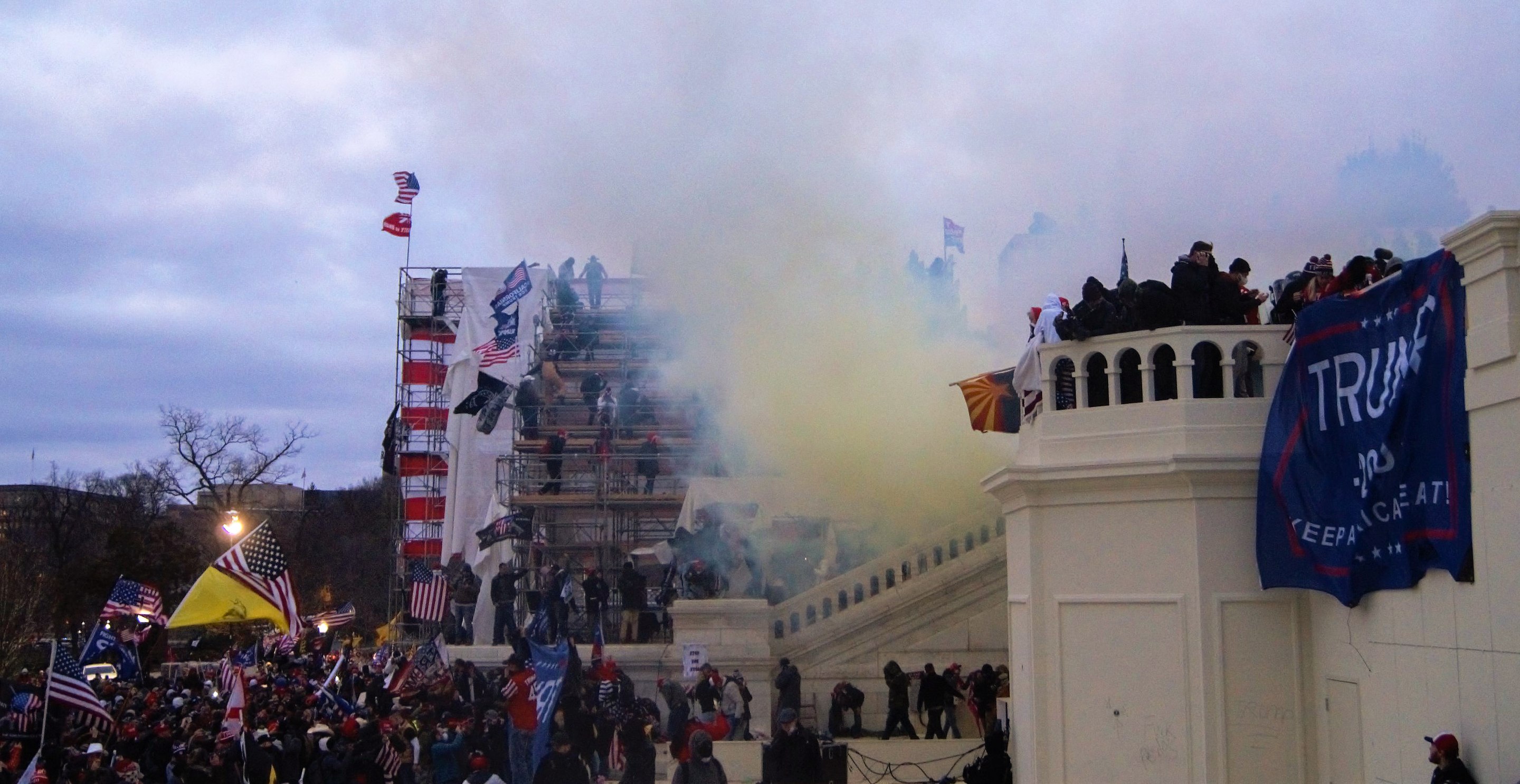
U.S. Capitol attack - January 6, 2021 (Wikipedia)
U.S. Capitol attack – January 6, 2021 (Wikipedia)

As I write this last blog post of 2023, a new year is only days away. Another Christmas has passed, along with the hopes and wishes every Christmas inspires. I am still hoping for something this year that I thought would never be on my wish list. I hope the American experiment doesn’t fail. I hope the Republic that was the vision of a group of enlightened thinkers almost 250 years ago doesn’t crumble. I hope the U.S. Constitution isn’t replaced with a less representative form of government. I hope the democratic principles that have guided this nation’s trajectory for so many generations aren’t cast aside, even if we have never honestly embraced or implemented them holistically. I hope we don’t give up on the dream of liberty and justice for all.

What concerns me most as we head into 2024, the year of our next presidential election, is the fact that a sizeable minority of our population no longer supports the concept of a limited, restrained government. Oh, they certainly say they do. In fact, they scream it. Some of them think the only function of government should be defense of the borders, so they have no respect for the legislative or judicial branches of government. They constantly espouse the virtue of state’s rights, but that’s only because they don’t believe the federal government has a role in governing the affairs of the population. When it comes down to it, many of them would be perfectly happy if they never heard from their state capitals again, especially in the form of a tax bill every year. Not only is all politics local for them, but just about everything else is too, and that’s the way they prefer it.

However, there is one branch of government that they have decided should be virtually untouchable: the executive branch. They want this branch to be untethered by legislators, judges, law enforcement, or even laws for that matter. They believe this branch should essentially be above the law. They think this branch should have the power and authority to do whatever it deems necessary for the nation to achieve greatness and superiority over all other nations. Most importantly, they want this type of omnipotence concentrated in the hands of one individual, the person they wish to see occupying the White House, and no one else. They are convinced that only one person is qualified for this totalitarian position. They earnestly believe this person has the skills, experience, knowledge, and determination to transform the country into what they want it to be. They just don’t quite understand that authoritarianism is not an example of small government. History has taught us that it is quite the opposite.

This minority of the population has been building, organizing, communicating, and planning for many years. The exact origin of the movement is debatable. It has mostly existed underground and on the fringes of society, and in modern times, it has taken advantage of the Internet, empowered especially through social media. Perhaps it has waxed and waned over most of U.S. history, sweeping across both sides of the political spectrum; however, in the 21st century it surfaced and became extremely vocal among the ultra-conservative right. The movement’s members were like a volatile collection of chemicals, just waiting for the right catalyst to come along and fully activate them.

By definition, a catalyst causes or magnifies a reaction without ever undergoing any permanent change itself. The catalyst in this case had been a larger-than-life personality in American society for decades. Born into wealth, he was groomed to be an entrepreneur, rising to celebrity status while building a commercial empire with the assistance of domestic and foreign credit and always grabbing the attention of mass media. He built relationships with some of the wealthiest and most powerful members of society in the U.S. and around the world. His business ethics and methods were often the target of scrutiny, if not serious accusation of wrongdoing, but his reptilian instinct served him well as he maneuvered through the legal system emerging mostly unscathed. His devoted fans have often admitted that he may not be eloquent, but he always speaks his mind and means what he says, which they really admire. Of course, when he said something that sounded dangerous or immoral, they were quick to backtrack and say that you can’t pay attention to what he says, just focus on what he does. Makes perfect sense.

The qualities and characteristics that made him most appealing to the movement were his apparent great wealth, his arrogance, his boastful nature, his dissatisfaction with the federal government, and his insistence that the nation was on the wrong path primarily because it could not protect its borders and because it repeatedly made bad deals with foreign powers that never put America first. Nevertheless, he promised that he, and he alone, could rescue the country. He would rid the nation’s capital of the corrupt bureaucrats and lobbyists, or “drain the swamp,” a phrase often used by Benito Mussolini as he rose to power in Italy in the 1920s. The catalyst would secure the southern border with Mexico by building a massive wall, promising to make the Mexican government pay for it. He would remove all government regulations and restrictions that hindered business pursuits and the accumulation of wealth. He wanted patriots to join him in the noble cause to Make America Great Again. The catalyst’s name was Donald J. Trump, who ran for President of the United States and was elected in 2016 with the help of this growing political and social movement.

History will judge how successful Trump’s administration was in fulfilling his promises to his base and to the population at large, but there is no real debate about what happened when he was defeated in his attempt to win a second term in office. He didn’t just claim that the election was stolen, which other candidates before him had done (including Hillary Clinton when she lost to Trump). He went much further. He used those claims to support his attempts to stay in office, even to the point of trying to overturn the election results. When Vice-President Mike Pence proceeded to certify the election on January 6, 2021, despite Trump’s demand that the process be halted, a subset of this movement’s members stormed the U.S. Capitol, a mob that had been encouraged by Trump. He publicly praised their efforts to interrupt the peaceful transfer of power from his administration to that of the newly elected President, Joe Biden.

Over 1,100 rioters who invaded and vandalized the Capitol (resulting in several deaths) from all fifty states were charged with a variety of crimes associated with the incident, and close to 400 people were sentenced to prison for their actions. Other indictments and lawsuits have been filed for alleged crimes involving attempts to overthrow the election, some committed by close associates of President Trump. His most loyal supporters still deny that Trump lost the election, including elected and appointed state officials, Republicans in Congress, lawyers, some of Trump’s former cabinet members, journalists, radio talk show personalities, and Fox News program hosts. Thus far, no evidence brought before any state or federal court that I’m aware of has offered conclusive proof of interference, tampering, or fraud sufficient to overthrow or reconsider the election results. And yet, millions of people across the country still believe that Trump actually won his bid for reelection.

Over the last twelve months as individuals began to solidify support for their candidacy for the Republican primary leading up to the next presidential election, it became abundantly clear that Donald Trump was going to be the frontrunner. Now at the end of the year, his numbers across a wide spectrum of polling organizations far exceed any other Republican hopeful. He has been noticeably absent at all Republican debates. He doesn’t need to be there. He is winning by a long shot. And just as he did leading up to the last election, he is pounding a clear message home to his base: if he doesn’t win this election in 2024, then the election will be fraudulent. To his loyal base, there will be only one conclusion if he doesn’t win. The election was stolen. They will accept no alternative outcome other than a victory for Donald Trump, a man who now faces numerous federal and state indictments for alleged crimes associated with the last election and attempts to overthrow it.

Here’s where it gets frightening. Trump’s base, the movement for which he served as a catalyst, has illustrated it is willing to resort to violence to achieve the agenda of overthrowing the government to give Donald Trump total control. They are also likely among the most heavily armed civilians in the country. Over the years, especially during his presidency, Trump demonstrated his admiration and respect for totalitarian leaders around the world, including Vladimir Putin in Russia, Kim Jong Un in North Korea, and Xi Jinping of China. He even committed the embarrassing diplomatic faux pas of saluting Kim Jong Un during an official meeting with the supreme leader. In a recent town hall session hosted by Sean Hannity of Fox News, Trump stated that he would be a dictator for one day once he was reelected. This type of authoritarian rhetoric has become more common for Trump, and his base seems perfectly happy with it. To my way of thinking, these folks are ravenous for a dictator, as long as his name is Donald J. Trump.

So, I am concerned about our Republic’s future. I dread the turbulent political landscape that lies ahead leading up to the 2024 election in November. I am troubled over the lack of conviction among Republican lawmakers who continue to feed into the conspiracies and lies about the last election. I am saddened that the handful of men and women in Congress who had the spine to stand up to Trump and the election deniers were publicly castigated by the former President and their own colleagues, then promptly voted out of office. Most of all, I am worried that no matter the outcome of the election, the system of law and order that distinguishes us as a nation may be threatened.
Springfield, Illinois: The Land of Lincoln

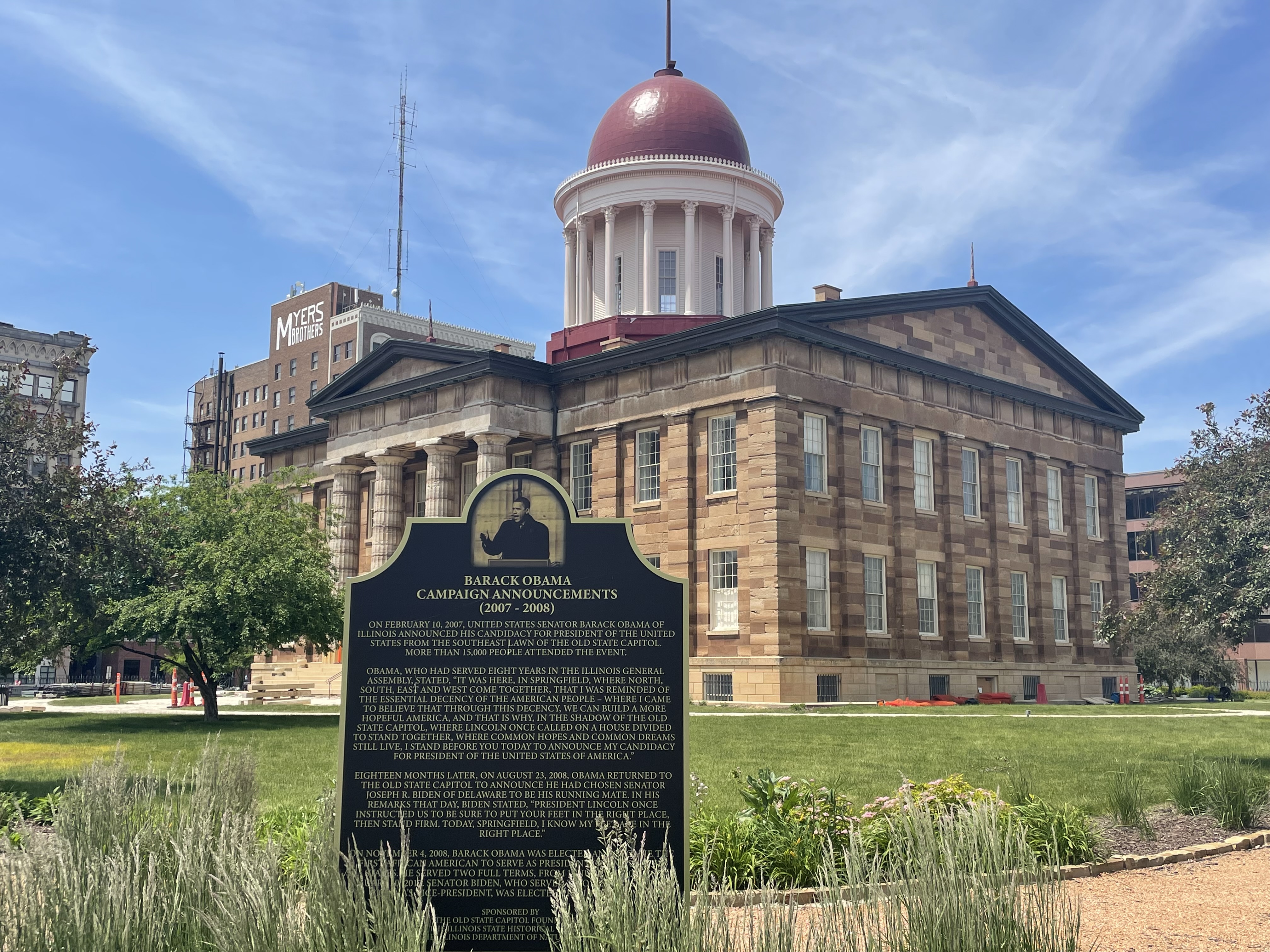
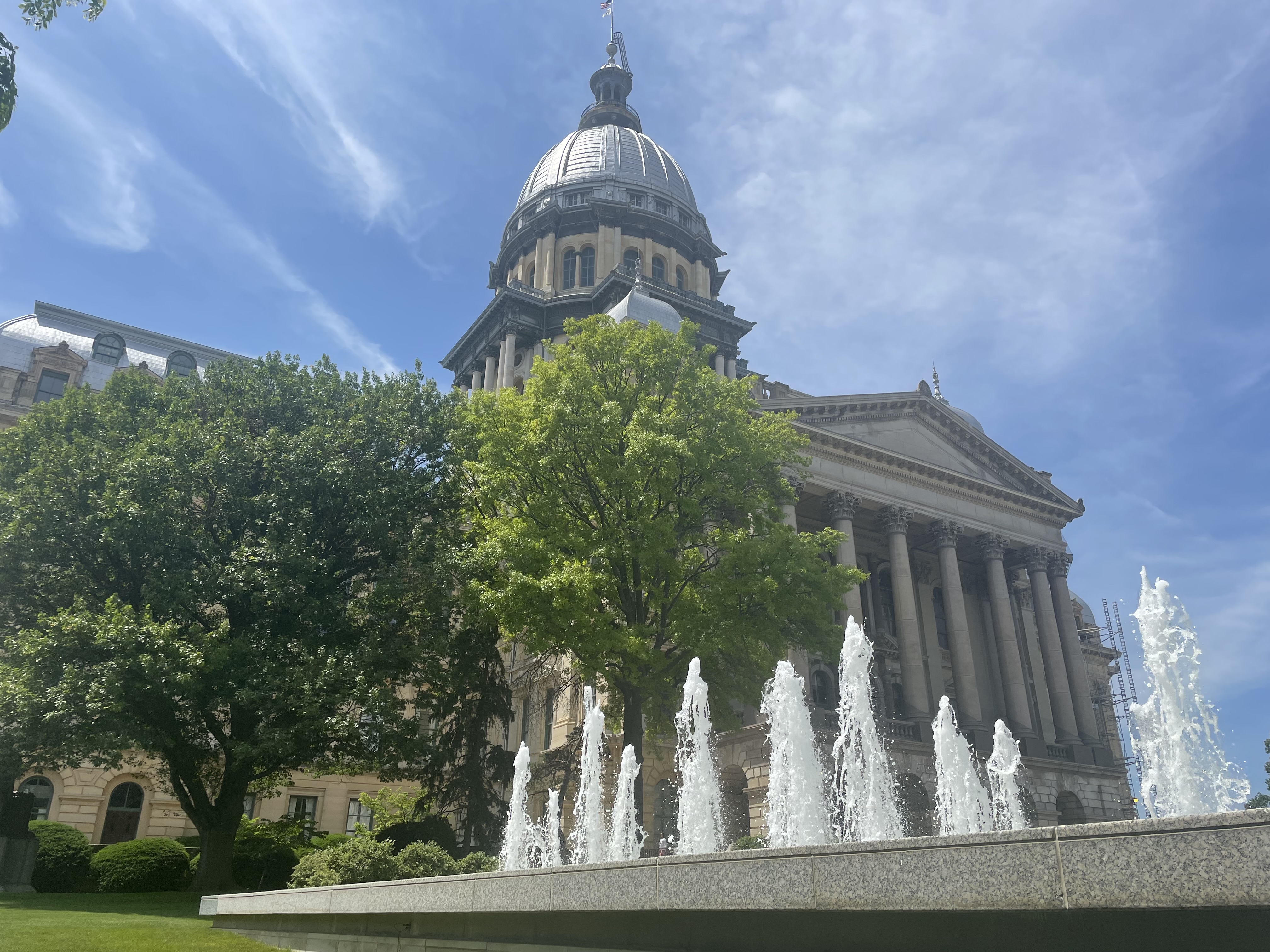
My wife and I spent a weekend in Springfield, Illinois, over the 2023 Memorial Day weekend. This town of just over 113,000 people may be the smallest state capital I have ever visited. I wouldn’t describe it as spectacular, but it does have a certain charm. There are several good restaurants and pubs downtown, and the hotel where we stayed was comfortable, clean, and convenient. The architecture of the state government buildings is impressive, especially the restored Old State Capitol that served as the state house from 1840 to 1876. On February 10, 2007, Barack Obama announced his candidacy for President of the United States on the southeast lawn of the building. The new State Capitol was completed in 1888, although the legislature began meeting in the building a decade earlier while it was under construction. Designed in the shape of a Greek cross, the capitol features a magnificent dome that carries the structure to a greater height than the U.S. Capitol in Washington, D.C.

Old State Capitol, Springfield, Illinois
New State Capitol, Springfield, Illinois

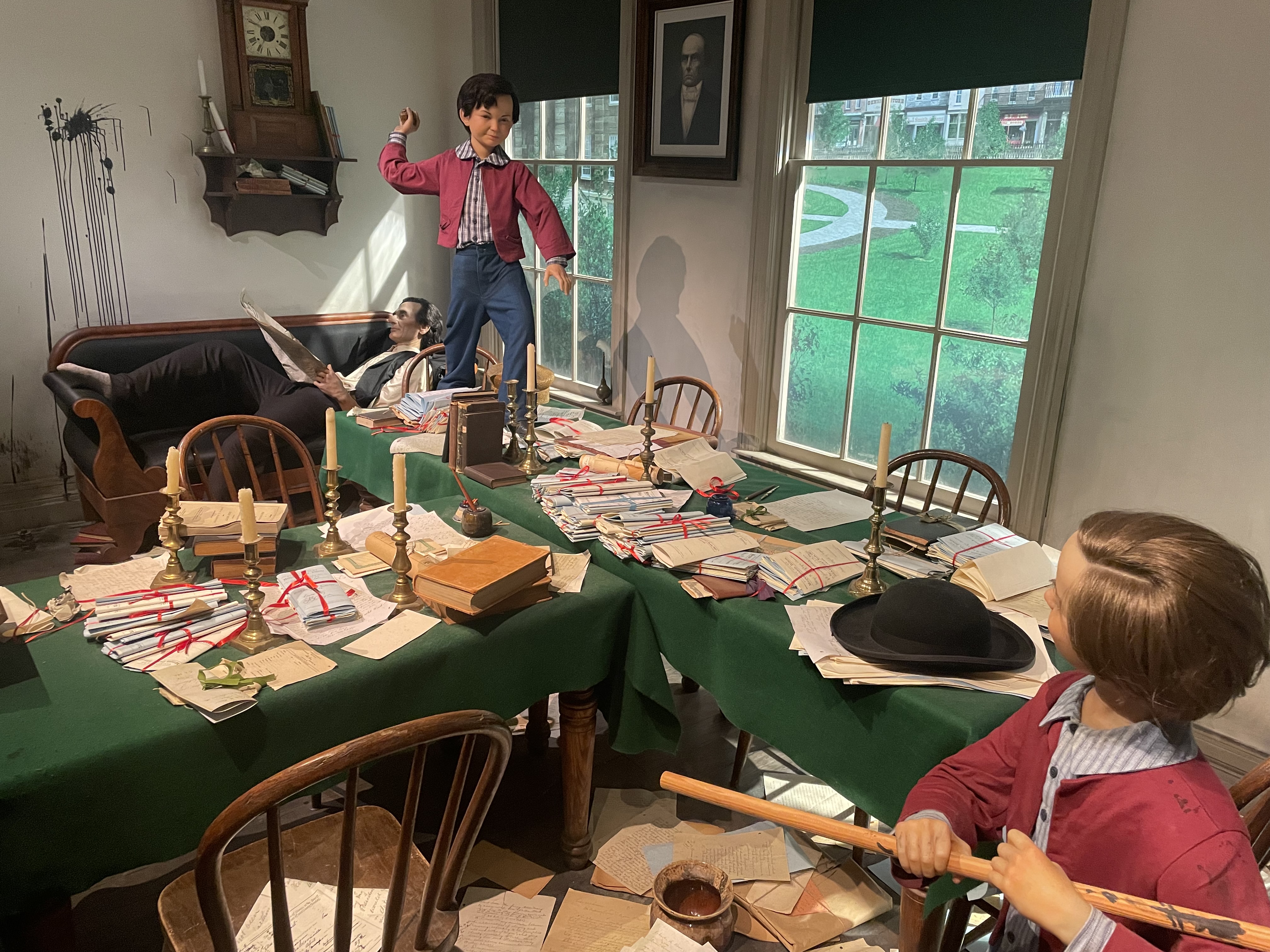
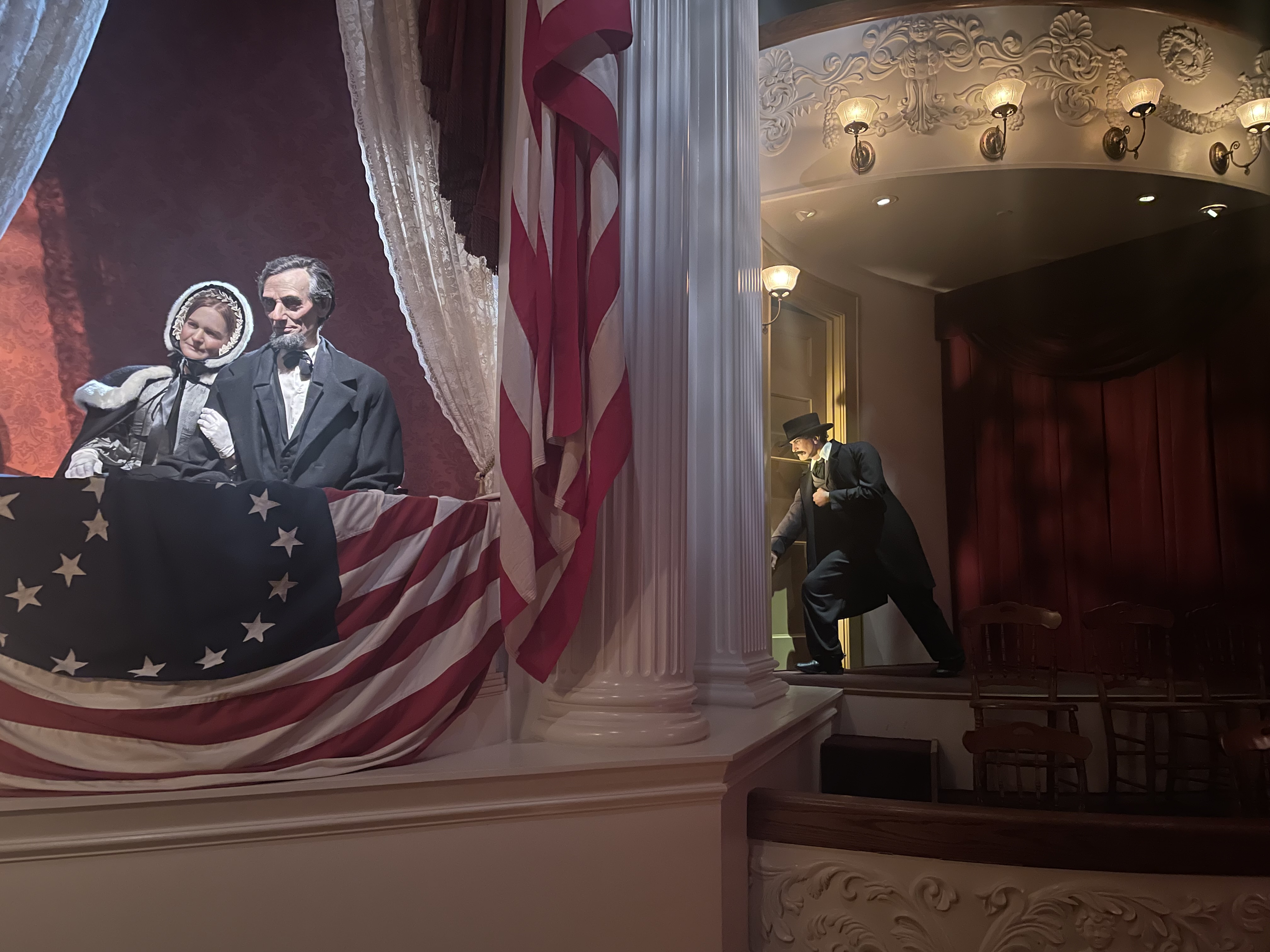
The major tourist draw for Springfield is a collection of attractions associated with the town’s most famous citizen, President Abraham Lincoln, who practiced law and started a family here. The Lincolns resided in the city from 1837 to 1847, the year Lincoln was elected to the U.S. House of Representatives. Though his most memorable years were spent in the nation’s capital, he built his legal and political career in Springfield and was buried there after his assassination in 1865. The Abraham Lincoln Presidential Library and Museum in Springfield is a first-class destination for people of all ages interested in history, presidents, or politics. The museum’s interactive exhibits and video presentations are joined by lifelike replicas of Lincoln, his family, and his associates to tell the story of the president’s early childhood in Kentucky and follow his path to the White House and on to his tragic death.

Abraham Lincoln Presidential Library and Museum, Springfield, Illinois

We also took a stroll around the Lincoln Home National Historic Site in Springfield, which is made up of a restored and/or replicated section of the town dating back to the 1840s and includes the actual house where Abraham and Mary Todd Lincoln raised their family. There are exhibits about the Lincolns and their neighbors in several of the other homes and buildings at the site, and visitors can book tours of the Lincoln home too. There is an interpretive center filled with information about the 16th President and what life was life in Springfield in the mid-19th century.

Lincoln Home National Historic Site, Springfield, Illinois

The Lincoln Tomb and War Memorials State Historic Site is also located in Springfield in Oak Ridge Cemetery. It is a massive granite structure crowned with a towering obelisk. Tours of the tomb are self-guided, and we were lucky enough to be the only people inside during our visit. The hallway leading back to the actual tombs of Lincoln and his family is filled with bronze statues of the President, including a miniature replica of the Lincoln Memorial Monument at the National Mall in Washington, D.C. It is a solemn place worthy of such a celebrated and significant leader of the nation. It is a humbling experience to see it in person.

Lincoln's Tomb, Springfield, Illinois
Lincoln’s Tomb, Springfield, Illinois
Lincoln's Tomb, Springfield, Illinois
Lincoln’s Tomb, Springfield, Illinois

Schooled by the President

My wife and I joined a group of people from our community to mark off another travel experience bucket list item. In this case, the distance from home was short enough for a road trip. We traveled through pines and vast farmland to the little village of Plains, Georgia, where we gathered with a couple of hundred other people before sunrise in anticipation of the big event: Sunday School at Maranatha Baptist Church. Okay, I haven’t attended Sunday School in over twelve years, and we could have easily found a class to attend much closer to home, but the teacher wouldn’t have been the 39th President of the United States.

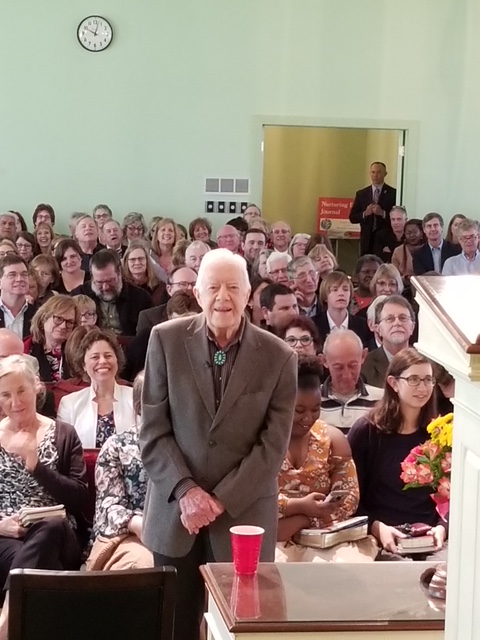
Jimmy Carter has been teaching Sunday School for most of his life, reportedly even during his presidency (1977-1981). However, in recent years his class at Maranatha Baptist Church has been drawing capacity crowds, especially after his diagnosis of brain cancer in 2015. This health scare may have interrupted his teaching, but it didn’t stop it. He teaches his class in the church’s sanctuary that seats about 350 people when filled to capacity, and there is an overflow adjacent room that seats 100 more people who watch  via video feed. The 93-year-old former Commander in Chief is still greeting anywhere from several dozen to a few hundred pilgrims multiple times throughout the year for a 45-minute session, although there are rumors that he will scale back if not completely stop teaching sometime this year (2018).

The charming little red-brick church is tucked in a pecan grove a couple of miles outside the center of Plains, a hamlet of less than 800 people where Jimmy Carter was born and raised and the place he and First Lady, Rosalynn, still call home. No part of the state defines “rural Georgia” better than its southwest section, and Plains is a bonafide representative. Maranatha Baptist Church looks like so many other little churches I have seen and visited during my life. The members are equally familiar: genuine, proud, polite, but above all in this case, fiercely respectful and protective of their world-famous congregant. Those who are charged with orchestrating this unusual ministry of the church do so with humility, humor, grace, and above all, efficiency.

The church’s website advises attendees to arrive no later than 6:00 a.m. in case the crowd is large. We arrive at ten after the hour. Entrance to the sanctuary is based on a simple numbering system. When we pull into the dirt driveway of the property, a friendly fellow welcomes us and hands us through the car window a slip of paper with a sequential number indicating what will later be our place in the lineup to file into the church. We are number 58 — obviously not quite as committed as 57 other sojourners, the earliest of which we later learn arrived at 4:00 a.m.

Like many activities that combine religious practice with celebrity status, the President’s Sunday School class attracts an eclectic assembly that writers like Chaucer would find fascinating, as do we. One notable example is the chap who arrives in a mint-condition Model-T, sporting the requisite hat/goggle combination and accompanied by an extraordinarily tall tabby cat that he walks among the pecan trees on a leash. We learn that he is just beginning a long journey across the country to visit various attractions, an adventure he will record in a travelogue — think Steinbeck’s Travels with Charley, the feline version.

On the Sundays the Carters are attending, the glaring distinction of this church is the early and abundant presence of law enforcement, which includes local sheriff deputies and at least six Secret Service agents, complete with bomb-sniffing dogs canvassing the exterior of the church building and weaving their way through the herd of vehicles parked under the trees behind the church. A member of our group observes what a misnomer “Secret Service” is to describe a team of people at a little country church dressed all in black with sunglasses and ear pieces, handguns clearly visible. Their service is no secret whatsoever. During the hour of worship that follows his class, President Carter sits in a pew next to one of the two center aisles (the Carters are indeed members at Maranatha). There are agents at the entrances to the building and one agent sitting directly behind him. Every time President Carter stands with the rest of the congregation, the agent stands and shifts his own position slightly out into the aisle just behind Carter’s left shoulder — an added measure of protection. Without a doubt, we are attending the safest worship service in the state that morning.

On the Sunday we attend, illness has descended upon a significant portion of the congregation, including Rosalynn Carter who is recovering from surgery in Atlanta. A few of the members are having to pull double duty. Jan is the fearless and funny woman, school teacher turned event coordinator, who lines everyone up outside and gets them ready to go through security and enter the church. She is joined by several other members inside who provide instructions for the Presidential encounter, all the dos and don’ts that are expected, including no applause for the President. We are reminded this is church, not a campaign rally. Jan also plays the piano later in the morning for the worship service. Shortly before the teacher enters the sanctuary, the recently-installed pastor, at the ripe age of 23, provides a Q&A about himself, his family, the church, and the Carters. Another woman who helps with the orientation before the President’s arrival identifies herself with the last name “Carter,” and someone in the audience asks if there is any relation. She replies, “Yes. Billy Carter was my father.” Later that morning, this jovial niece of the President returns to the podium to lead the singing — the music minister is out that day involved in a church-related activity out of town. They are a resourceful and flexible church family.

President Jimmy Carter


President Carter could not be more charming. We just barely make the cut to get in the sanctuary and are sitting in the choir loft behind him, but he graciously turns around to include us. He spends the first few minutes greeting everyone and asking, by sections of pews, “where are ya’ll from?” Place names are shouted out: Maine, Texas, Canada, Illinois, Kentucky, Colorado, and many others. We are amazed by the distance some of these folks have traveled to hear a great statesman with humble beginnings speak of a faith that has no doubt sustained him through trials that would crumble most of us.

Jimmy Carter is judged harshly these days by so many of our population who consider his presidency to be lackluster at best and a dismal failure at its worst. He faced insurmountable challenges and horrible crises while in office, and admittedly some of his decisions perhaps did not serve the country well. Many of his accomplishments in the White House are overlooked now, but he should always be remembered for brokering a peaceful resolution demonstrated by a handshake between a Jewish prime minister and a Muslim president that undoubtedly saved many, many lives in the Middle East and beyond. Also, no one denies his decades of post-Presidential humanitarian achievements with Habitat for Humanity, the Carter Center, monitoring elections around the world, and so much more. To my way of thinking, he is a remarkable testimony to the charity and love most often identified with Jesus, the one he calls Savior. In the end, his Sunday School lesson always comes back to that simple but profound profession of faith.