During our vacation in 2017 in Phoenix, Arizona, my wife requested I find some interesting sites in the area that intrigued me for us to explore one afternoon, along with our close friend who graciously hosted us in her home for the week. My love for waterfalls led me to pick out a few attractions that advertised that particular element, and we were pleasantly surprised at what we found in this sprawling desert city. My favorite was the Ro Ho En Japanese Friendship Garden located directly behind the Irish Cultural Center just north of Portland Avenue. The garden covers 3.5 acres and includes a tea garden and tea house. According to the garden’s website, “This tranquil and beautiful setting features more than 1,500 tons of hand-picked rock, stone footbridges, lanterns and more than 50 varieties of plants.”
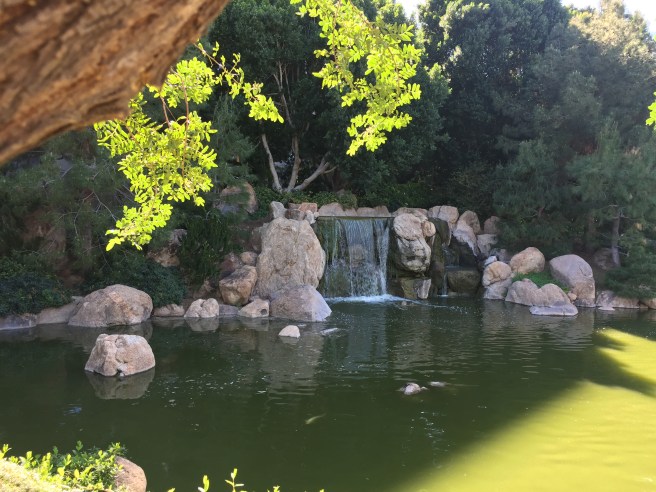
Pond at Japanese Friendship Garden in Phoenix, AZ
I have written about the value of public gardens before, and this one is definitely on my list of favorites. The idea for the garden began in 1987 by a delegation from Himeji, Japan. Phoenix and Himeji have been sister cities since 1976 and participate in business, governmental, cultural, and educational exchanges that promote international goodwill and understanding. The garden is the shared cultural vision of both cities. The construction of the garden was completed in 2000, and it was opened to the public in 2002. Neither my wife nor our friend, both long-time residents of Phoenix, knew anything about this little treasure. The visit was a treat for all three of us.
Waterfall at Japanese Friendship Garden in Phoenix, AZ
In addition to maintaining a beautiful, serene Japanese garden in the heart of the city, the nonprofit organization that operates the facility provides educational and artistic programs and events that continue to deepen East-West relationships and celebrate the rich history and culture of Japan. Authentic tea ceremonies for the public are held on the third Saturday of each month from October through June. The ceremonies are presented by Tanko Kai tea group, wearing beautiful kimonos in the Musoan tea house. Guests are met at the entry gate and conducted to the tea house by a docent who explains features in the tea garden and other interesting facts about the tea house itself.
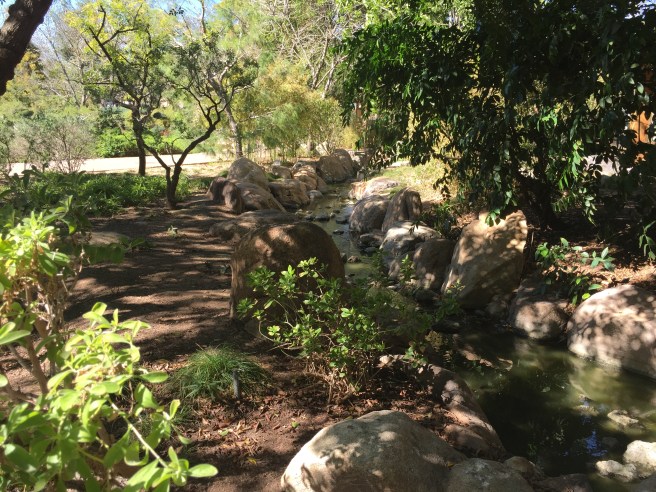
Stream at Japanese Friendship Garden in Phoenix, AZ
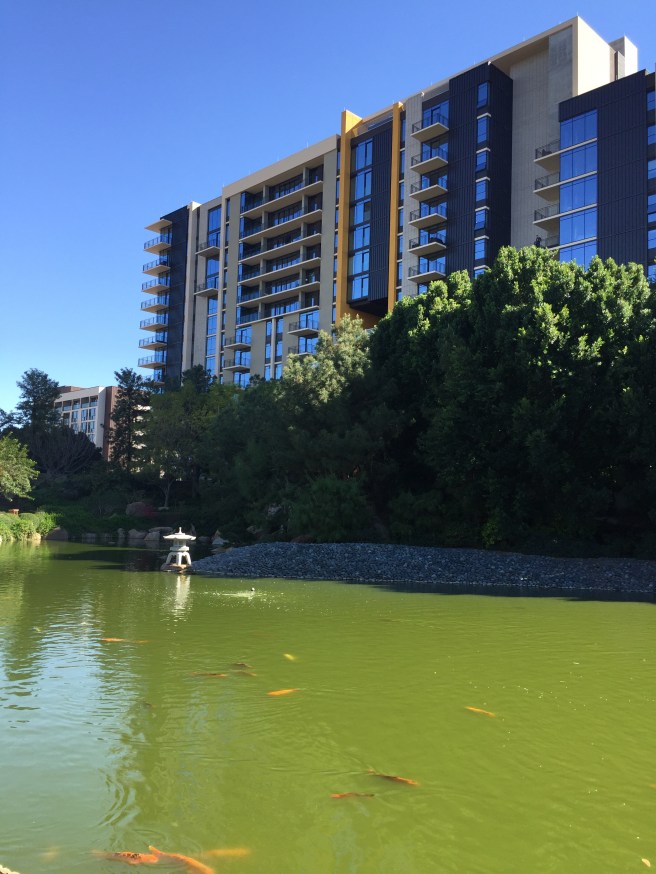
As we strolled around the pond, by the waterfall, and along the garden paths, I was reminded once again how the desert southwest is so often misrepresented as a barren region with little life and no real beauty. True, the Japanese Friendship Garden is an artificial oasis, but there are plenty of natural places just this lush and soothing located throughout Arizona and its neighboring states. The fortunate people who live in the apartment building next to the garden have one of the best views in the city: a luxuriant landscape below combined with desert mountain vistas in the distance. For all visitors to Phoenix, and even for those who call the city their home, I highly recommend a therapeutic retreat to the Japanese Friendship Garden.
Since we started traveling together around the time we married, my wife and I have unpacked our bags in a wide range of quarters. We have stayed in cabins, cottages, Air B&B houses, condos, and any number of hotel and motel rooms. We have even experienced the nightmare of getting “bumped” a couple of times. On one of these occasions we were in a rural area with very few options, so we wound up at a low-rent motor lodge where the price of the room was literally less than the cost of our dinner earlier that evening. There was a loud party in full swing behind the building, and as I discovered later, most of the participants were not paying customers of the establishment. We had to wear ear plugs just to get to sleep, and even so, I heard several guys two doors down as they were setting up their Hibachi grill outside their room at about midnight. Let’s just say the star rating system usually used to measure the quality of motels was not applicable here.
The aforementioned example notwithstanding, we have been quite lucky with our accommodations through the years. From time to time we have really splurged on the price of a room, and a few of those places have been especially luxurious. I have narrowed the list down to five, in no particular order, and highly recommend each one.
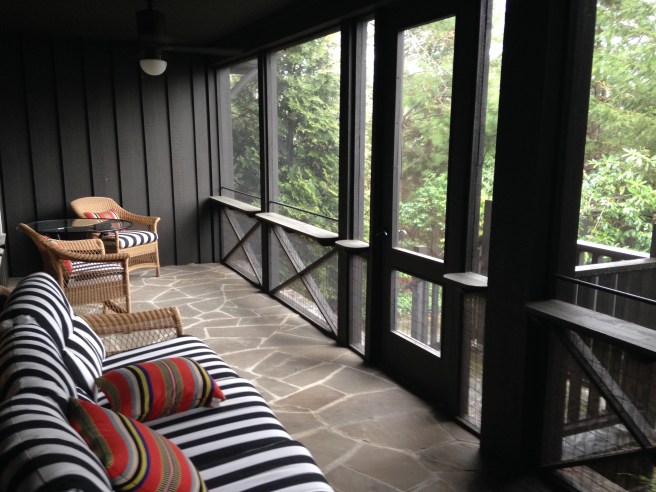
We selected Old Edward’s Inn for a wedding anniversary weekend and opted for one of their cottages with a comfortable bedroom, spacious living area with a gas fireplace, and a beautiful bathroom with heated floors. It rained off and on, but the screened porch was perfect for relaxing and reading while listening to the rainfall. We indulged in a couple’s massage at the spa, which is rated as one of the best in North America. It was our first massage together and was a highlight of the weekend. There are several restaurants in Highlands that are surprisingly good for this small remote town in the Blue Ridge Mountains.
Number 2: A casita on Canyon Road in Santa Fe, New Mexico
Our casita on Canyon Road in Santa Fe, NM
We spent the better part of a week in Santa Fe one summer in a grand casita with generous living spaces inside and a private outdoor courtyard with umbrellas, lounge chairs, gardens, and fire pits. The casita was within easy walking distance of dozens of art galleries and the charming downtown with museums, shops, restaurants, and other attractions. It was so invigorating to head out at sunrise for a brisk walk, explore the downtown area during the day, and relax by the fire under the stars at night.
I call our apartment in Paris by the name of the street where the building was located, two blocks from the Seine River in historic Le Marais district. It was actually a flat jointly owned by some folks in America and France. Accommodations in Europe are typically cramped with few if any indulgences, which is why we were so pleased to find this fourth-floor spot with a small but adequate kitchen, a respectable bathroom, and a combination sitting, dining, bedroom space with soft lighting and tasteful décor. We were able to keep the windows open to enjoy the cool air and the sounds from the sidewalk café directly below us. As in Santa Fe, we were within walking distance of the finest bistros and bakeries the city has to offer.
Due to my struggles with a malady called Mal de Debarquement Syndrome (post travel vertigo), I avoid cruise ships like gas station sushi. However, I love the concept of all-inclusive resorts. There are very few in the states at all, but they are abundant in the Caribbean. We found an adult-only version in Montego Bay, Jamaica that was magnificent. Our room had a large bathroom with a separate spa tub and shower. The bed was heavenly and looked directly out the sliding glass doors onto the large balcony, which featured cut-above-the-rest plush lounging furniture. The view from that perch of the expansive pool complex, swim-up bar, and the ocean was absolutely stunning.
Balcony view, Hyatt Zilara, Montego Bay, Jamaica
The Hyatt Zilara is located directly adjacent to the family resort, the Hyatt Ziva Rose Hall, and both places share bars, restaurants, shops, recreational facilities, and some beach activities. We enjoyed our share of good meals and creative cocktails (the dirty banana was a perennial favorite) while also spending hours just basking in the sun by the pool. One of the highlights of the trip was yet another couple’s massage, but this time in a white-curtained cabana on the beach, just a few yards from the crashing waves — bliss.
I know, the name conjures up visions of a roadside stucco-style row of rooms that are rented out by the hour. In reality, Tickle Pink Inn is rated as one of the top ten hotels for romance in the U.S. by TripAdvisor and voted one of the top 500 hotels in the world by Travel and Leisure magazine. Our room was easily the most luxurious place we have ever stayed, even if it was for only one night. We were greeted with a chilled bottle of champagne next to our grand four-post bed. Our room had a balcony with a breathtaking view of the Pacific and a wood-burning fireplace. Combined with one of the best dining experiences I have ever had in the village of Carmel, our stay at Tickle Pink Inn ranks as one of my all-time favorite travel memories.
My wife and I joined a group of people from our community to mark off another travel experience bucket list item. In this case, the distance from home was short enough for a road trip. We traveled through pines and vast farmland to the little village of Plains, Georgia, where we gathered with a couple of hundred other people before sunrise in anticipation of the big event: Sunday School at Maranatha Baptist Church. Okay, I haven’t attended Sunday School in over twelve years, and we could have easily found a class to attend much closer to home, but the teacher wouldn’t have been the 39th President of the United States.
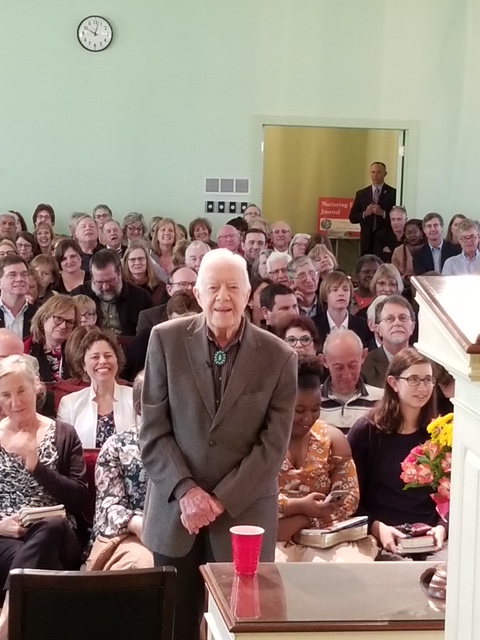
Jimmy Carter has been teaching Sunday School for most of his life, reportedly even during his presidency (1977-1981). However, in recent years his class at Maranatha Baptist Church has been drawing capacity crowds, especially after his diagnosis of brain cancer in 2015. This health scare may have interrupted his teaching, but it didn’t stop it. He teaches his class in the church’s sanctuary that seats about 350 people when filled to capacity, and there is an overflow adjacent room that seats 100 more people who watch via video feed. The 93-year-old former Commander in Chief is still greeting anywhere from several dozen to a few hundred pilgrims multiple times throughout the year for a 45-minute session, although there are rumors that he will scale back if not completely stop teaching sometime this year (2018).
The charming little red-brick church is tucked in a pecan grove a couple of miles outside the center of Plains, a hamlet of less than 800 people where Jimmy Carter was born and raised and the place he and First Lady, Rosalynn, still call home. No part of the state defines “rural Georgia” better than its southwest section, and Plains is a bonafide representative. Maranatha Baptist Church looks like so many other little churches I have seen and visited during my life. The members are equally familiar: genuine, proud, polite, but above all in this case, fiercely respectful and protective of their world-famous congregant. Those who are charged with orchestrating this unusual ministry of the church do so with humility, humor, grace, and above all, efficiency.
The church’s website advises attendees to arrive no later than 6:00 a.m. in case the crowd is large. We arrive at ten after the hour. Entrance to the sanctuary is based on a simple numbering system. When we pull into the dirt driveway of the property, a friendly fellow welcomes us and hands us through the car window a slip of paper with a sequential number indicating what will later be our place in the lineup to file into the church. We are number 58 — obviously not quite as committed as 57 other sojourners, the earliest of which we later learn arrived at 4:00 a.m.
Like many activities that combine religious practice with celebrity status, the President’s Sunday School class attracts an eclectic assembly that writers like Chaucer would find fascinating, as do we. One notable example is the chap who arrives in a mint-condition Model-T, sporting the requisite hat/goggle combination and accompanied by an extraordinarily tall tabby cat that he walks among the pecan trees on a leash. We learn that he is just beginning a long journey across the country to visit various attractions, an adventure he will record in a travelogue — think Steinbeck’s Travels with Charley, the feline version.
On the Sundays the Carters are attending, the glaring distinction of this church is the early and abundant presence of law enforcement, which includes local sheriff deputies and at least six Secret Service agents, complete with bomb-sniffing dogs canvassing the exterior of the church building and weaving their way through the herd of vehicles parked under the trees behind the church. A member of our group observes what a misnomer “Secret Service” is to describe a team of people at a little country church dressed all in black with sunglasses and ear pieces, handguns clearly visible. Their service is no secret whatsoever. During the hour of worship that follows his class, President Carter sits in a pew next to one of the two center aisles (the Carters are indeed members at Maranatha). There are agents at the entrances to the building and one agent sitting directly behind him. Every time President Carter stands with the rest of the congregation, the agent stands and shifts his own position slightly out into the aisle just behind Carter’s left shoulder — an added measure of protection. Without a doubt, we are attending the safest worship service in the state that morning.
On the Sunday we attend, illness has descended upon a significant portion of the congregation, including Rosalynn Carter who is recovering from surgery in Atlanta. A few of the members are having to pull double duty. Jan is the fearless and funny woman, school teacher turned event coordinator, who lines everyone up outside and gets them ready to go through security and enter the church. She is joined by several other members inside who provide instructions for the Presidential encounter, all the dos and don’ts that are expected, including no applause for the President. We are reminded this is church, not a campaign rally. Jan also plays the piano later in the morning for the worship service. Shortly before the teacher enters the sanctuary, the recently-installed pastor, at the ripe age of 23, provides a Q&A about himself, his family, the church, and the Carters. Another woman who helps with the orientation before the President’s arrival identifies herself with the last name “Carter,” and someone in the audience asks if there is any relation. She replies, “Yes. Billy Carter was my father.” Later that morning, this jovial niece of the President returns to the podium to lead the singing — the music minister is out that day involved in a church-related activity out of town. They are a resourceful and flexible church family.
President Jimmy Carter
President Carter could not be more charming. We just barely make the cut to get in the sanctuary and are sitting in the choir loft behind him, but he graciously turns around to include us. He spends the first few minutes greeting everyone and asking, by sections of pews, “where are ya’ll from?” Place names are shouted out: Maine, Texas, Canada, Illinois, Kentucky, Colorado, and many others. We are amazed by the distance some of these folks have traveled to hear a great statesman with humble beginnings speak of a faith that has no doubt sustained him through trials that would crumble most of us.
Jimmy Carter is judged harshly these days by so many of our population who consider his presidency to be lackluster at best and a dismal failure at its worst. He faced insurmountable challenges and horrible crises while in office, and admittedly some of his decisions perhaps did not serve the country well. Many of his accomplishments in the White House are overlooked now, but he should always be remembered for brokering a peaceful resolution demonstrated by a handshake between a Jewish prime minister and a Muslim president that undoubtedly saved many, many lives in the Middle East and beyond. Also, no one denies his decades of post-Presidential humanitarian achievements with Habitat for Humanity, the Carter Center, monitoring elections around the world, and so much more. To my way of thinking, he is a remarkable testimony to the charity and love most often identified with Jesus, the one he calls Savior. In the end, his Sunday School lesson always comes back to that simple but profound profession of faith.
A professional conference this year gave me an occasion to visit Los Angeles for the first time. Although I have been to California twice, I never traveled farther south than Big Sur. I arrived in L.A. two days before my conference began to take in a bit of sightseeing. Like Las Vegas and New York, Los Angeles is an iconic city that is closely tied to the uninhibited side of America, where everything is out of the cage and off the pavement. It attracts huge money, which is shamelessly exhibited in fast cars, flashy clothes, ostentatious jewelry, and mansions that could easily command their own zip codes. Usually we associate the “La-La Land” factor of the city with some of the more affluent sections and suburbs: Beverly Hills, Malibu, Santa Monica, Burbank, Hidden Hills, and Bel Air. However, there is more to Los Angeles than glitter and gold.
The afternoon I arrived, I rented a car and made the short drive down to Huntington Beach, the place where Duke Kahanamoku popularized surfing in the 1920s and graced the town with the title “Surf City.” The wind was especially strong while I was there, so walking out to the end of the long pier to circle Ruby’s Surf City Diner was rather brutal. The reward was witnessing first-hand the largest waves I have ever seen — much higher than those on the Florida coast to which I am accustomed. My visit was capped off perfectly with a few cocktails at the Barefoot Bar of Duke’s Huntington Beach Restaurant while I watched the Pacific sun set, a spectacle that never gets old.
Sunset at Huntington Beach
View of L.A. from Griffith Observatory
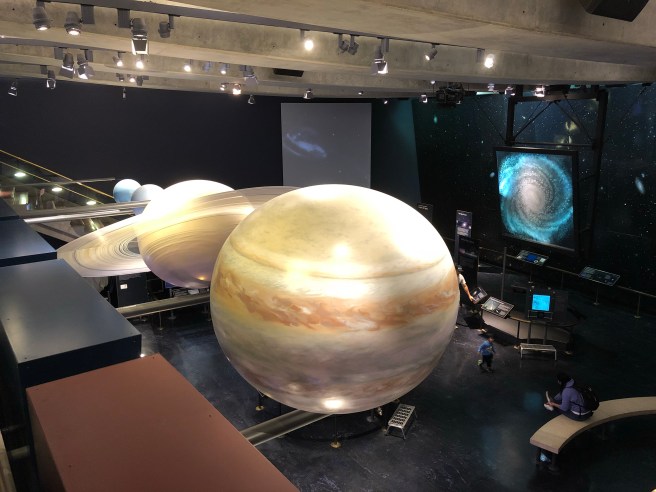
Early the next morning, I drove to the hills just north of Los Angeles to check out the Griffith Observatory. Whenever I travel, I am always in search of vantage points that will offer jaw-dropping vistas, which led me to this location. I was not disappointed. In addition to a close-up view of the famous “HOLLYWOOD” sign, the hill-top site provides near-360-degree scenery featuring the nearby green hillsides, the surrounding neighborhoods, and the skyline of the city in the distance. What I didn’t expect was how much I would enjoy the Observatory itself, which serves as a museum of astronomy. From the Fresco painted ceiling above the Foucault Pendulum at the entrance to the wonderful exhibits featuring the sun, other stars, the moon, and planets, the Griffith Observatory is a must-do for anyone who appreciates the mysteries of space. I was particularly impressed to see that a theater in the Observatory is named after the late Leonard Nimoy, the talented actor who portrayed Mr. Spock from the Star Trek television series and movies. He and his wife, actress Susan Bay-Nimoy, made a generous gift for the expansion and renovation of the Observatory. I always liked Nimoy as an actor and an artist, but learning about his philanthropy made me admire him even more.
Solar system exhibit in the Griffith Observatory
My next stop was the place that most vividly puts the tinsel in this town. Still recognized by many as the shrine of the entertainment industry, Hollywood covers three and a half square miles of prime commercial real estate in central L.A. Strolling down Hollywood Boulevard is an experience that can be recreated nowhere else in the country. The star-studded Walk of Fame stretches for fifteen blocks and is likely the most dangerous sidewalk in California because most people are looking at the ground the whole time they’re strolling along. Tourists also have near collisions with each other in front of the famous Chinese Theatre, where legends of film and television have literally left their mark with hand and footprints in the large cement blocks in the forecourt. Hollywood & Highland Center is a busy multi-story shopping complex that includes the Dolby Theatre, home of the Academy Awards. Of course, there are plenty of retailers, restaurants, specialty shops, and tourism stands up and down the street. Most impressive to me were the historic facades of the classic old theaters along both sides of the Boulevard — El Capitan, Egyptian, Pantages, and Pacific — they recall the golden age of film from the early to mid-20th century. It is easy to imagine what a glamorous time it must have been. Yes, Hollywood Boulevard would have to be classified as a tourist trap, but how can you visit L.A. for the first time and skip this legendary feature of the city?
Hollywood BoulevardBougainvillea arbors at the Getty Center
My last stop of the day was the Getty Center of the J. Paul Getty Museum. Situated on a 24-acre hill-top campus, the Getty Center is a remarkable combination of art, architecture, and nature overlooking greater metropolitan Los Angeles and Santa Monica Bay. The views of the city and the ocean from the various porticoes, terraces, and gardens are unbelievable. The collection, changing exhibitions, and outdoor art on view at the Getty Center reach across European and American history—from medieval times to the present. I was particularly delighted by the central garden, which boasts more than 500 species. The 134,000-square-foot design features a natural ravine and tree-lined walkway. A stream that winds through a variety of plants gradually descends to a plaza where bougainvillea arbors explode into bloom. I rushed through several of the galleries in the complex of buildings but was only able to get a taste of this astonishing cultural wonder. I hope to return to the Getty again someday to enjoy much more of what it has to offer, and when I do, I am sure there will be plenty of other treasures to explore in “The town of Our Lady of the Angels of Porciúncula” — The City of Angels.
Travel is stimulating. Visiting new places outside our own environs infuses so many of us with a sense of wonder and renewal. Travel literature goes back at least to the 2nd century with the Greek geographer Pausanias. In the modern era essayists, journalists, and even novelists have treated readers to highly-descriptive narratives that feed the imagination and make us feel like we have actually visited places we have never even seen. Writers like Charles Darwin, Mark Twain, John Muir, and Robert Louis Stevenson were gifted with keen perception and carefully-crafted language, combined with illustrations, that gave their readers a sense of “being there.” The introduction of photography enhanced the experience, and one could argue that publications like National Geographic served as travel literature in serial form.
Beginning in the 20th century, film and television added a whole new dimension to the genre, which required less imagination but awarded viewers with essentially a reproduction of the sights and sounds a traveler would enjoy. There are numerous television channels across the globe devoted to providing this type of content around the clock. The Internet has now made it possible for both professionals and amateurs to share their travel adventures through personal and hosted websites, blogs, social media, and photo and video sharing sites.
For those who are unable to travel for any number of reasons, the opportunities to see the world vicariously through the content provided by others is almost endless, which is quite wonderful. However, and this is the sad truth, when it comes to truly absorbing the magnificence of many locations on the planet, there is no real substitute for literally being there. One of the times this realization was made abundantly clear to me was when my wife and I visited the south rim of the Grand Canyon in northern Arizona in 2008.
View of the Grand Canyon from the south rim
A video of this impressive geological feature, as much as 18 miles wide in some places, will give the viewer a sense of its massive size, beautiful colors, varied textures, and even the sounds of the wind as it rushes through its 4,000-foot depths. What a video cannot recreate is the tingle down your spine when you stand at the rim’s edge as your mind and body react to the overwhelming expanse and the dangers presented by the chasm before you. It is also difficult for a flat screen to depict the depth and breadth of the canyon that the eye perceives. The video cannot provide you with the brush of the wind against your skin and the smells all around you. The audio can record many of the sounds you would hear, but it cannot accurately reproduce that low, soft “wwwwwhhhhh” created by the air swirling in this enormous space that your ears detect. Obviously, I don’t have the vocabulary to describe it either. There are several places we have visited, and I am sure many more we haven’t, that a book or video simply cannot do justice. Sometimes you just have to be there, and that’s why we travel.
My mother loved Indians. More accurately, she loved the traditional characterization of the Indians in American arts and crafts. It was a romantic view of the people who were inhabiting North America when Europeans began to migrate west and “settle” on the continent. My mother was not interested in bows and arrows, spears, or war paint. She collected inexpensive artwork (prints, plates, figurines, etc.) featuring lovely brown-skinned people in traditional Indian attire as they were portrayed by Hollywood, for the most part. I would be the last to criticize her taste because some of the pieces she decorated our house with were indeed beautiful. She probably didn’t know much about the history of the numerous nations and tribes that were scattered all across North America, and she didn’t need to in order to appreciate her image of the Indian.
When I was young, one of our family’s favorite vacation spots was Gatlinburg, Tennessee, a tourist mecca in the Great Smoky Mountains with attractions, miniature golf, sky-lifts, and shops selling everything from taffy to stuffed black bears. To get to Gatlingburg, we had to go through the smaller town of Cherokee, North Carolina, which is also the home of the Eastern Band of the Cherokee Nation. We always stopped in Cherokee because, in the 1960s, it was a place of wonder where local residents used about the only thing they had, their history and heritage, as a way to scrape out a living. The town had live bears wasting away in cages, shops filled with Chinese-manufactured Indian souvenirs, and the occasional celebrity walking around the town to be photographed with visitors. I had my picture taken with Jon Provost, whose name probably means nothing to most folks today, but to a young lad in the late 1960s, he was an almost grown-up version of a television hero: Timmy Martin, the boy who had a dog named Lassie.
I also remember that, along the roadside passing through Cherokee, there would always be local men, young and old, dressed up like Hollywood Indians. They wore leather loincloths and moccasins, were often shirtless, had their faces decorated with paint, and usually had full feather headdresses (for the record, the Cherokee traditionally did not wear full feather headdresses at all). Vacationers were expected to pay them for a photograph, and looking back, I can only hope that this type of enterprise was not their only source of income, although it certainly may have been. The town of Cherokee today still has a vestige of the tourist trap atmosphere of the mid-20th century, but much of the most deplorable exploitation I remember from my childhood is gone. Some would argue what has taken its place is just as bad. The tribe owns a fairly large casino resort in Cherokee operated by Caesars Entertainment under the brand Harrah’s. The Eastern Cherokee do not live on a reservation, which is defined as land given by the federal government to a tribe. They own 57,000 acres of land which they bought in the 1800s and which is now owned by them but held in trust by the federal government.
There is an attraction in Cherokee that has moved away from the trappings of my childhood memories and beyond my mother’s fantasies of the “noble savage.” It is a temporary refuge from the slot machines, the gift shops, and the traffic. The Museum of the Cherokee Indian offers a cultural and historical overview of the people of the southern Appalachian Mountains going back 13,000 years. Contrary to popular opinion about appropriate nomenclature, it is actually more acceptable and accurate to use the term “American Indians” than “Native Americans” when referring to the tribes that occupied the western hemisphere before European exploration began. Combining interactive video with intriguing displays, the museum invites visitors to take a self-guided tour complete with computer-generated imagery, special effects, and an extensive artifact collection.
Museum of the Cherokee Indian
The museum’s interpretation is divided into two permanent exhibits: “Story of the Cherokee” and “Emissaries of Peace.” The first exhibit follows the history of the Cherokee from the early origins when mastodons roamed the region, through the Woodland and Mississippian periods, contact with Old World explorers and conquerors, the tragic Trail of Tears removal, and up to the present day. The second exhibit tells the story of Henry Timberlake’s visit to the Cherokees in 1762, and how he took Cherokee leaders to London to meet with King George III. These narratives are told through animation, audio-visual presentations, life-sized figures, artwork, and priceless artifacts.
Museum of the Cherokee Indian
The Museum of the Cherokee Indian is not a tourist trap designed only for entertainment or to perpetuate stereotypes about Indians portrayed in early motion pictures. It is managed by knowledgeable professionals who care about the Cherokee people’s heritage and dignity as an independent tribe. The executive director, James “Bo” Taylor, earned a degree in anthropology with a minor in Cherokee Studies from Western Carolina University. He has learned the Cherokee dances, which he performs regularly, and can read and write the Cherokee language. Taylor also teaches the Cherokee language in intensive ten-day immersion classes. The museum’s education director, Dr. Barbara R. Duncan, earned her Ph.D. in Folklore and Folklife from the University of Pennsylvania in 1982 and has lived in the southern Appalachian Mountains since 1983. She has written and edited award-winning books about Cherokee history and culture, including Living Stories of the Cherokee and Cherokee Heritage Trails Guidebook (with co-author Brett Riggs).
Museum of the Cherokee Indian
In addition to exhibits, the museum offers workshops, performances, guided tours of the region, publications, and classes. The museum archives is a repository of thousands of books, photographs, manuscripts, personal papers, and digital collections, all of which are accessible to museum members and qualified scholars. Visitors to the museum can spend an hour or two strolling through the halls, or a day or two becoming completely immersed in the displays and collections. This facility is a real treasure and not to be missed by those who are truly interested in the story of the Cherokee Indians, or as they originally called themselves, Aniyunwiya, “the principal people.” Enjoy the casino, but take a break from the tables and check out the Museum of the Cherokee Indian, and make sure to use part of your winnings to purchase a souvenir from the museum’s gift shop.
Europeans moved into the Mexican-held area of what is now Las Vegas in the early 1800s on expeditions to open trade routes between New Mexico and California. “Las Vegas” is Spanish for “the meadows,” which described the grassy area in the desert that was fed by a series of springs. By the mid-19th century, this valley region was a part of the United States. The railroads came through in the early 20th century, but southern Nevada was still very much a frontier region. Everything began to change in 1931 with a huge project that would completely alter the physical and cultural landscape of the valley: the construction of Hoover Dam on the Colorado River. Thousands of workers needed entertainment, and they found it on the city’s only paved road, Fremont Street, where gambling houses and saloons began to pop up with their signature flashing neon signs made possible with the plentiful electricity generated at the dam.
Vegas Vic from the Pioneer Club
As mob money funneled from the east began to pour into the city, the funds went from playing the tables to building casinos, and even legal investors became interested, including the Mormon Church. By the mid-1950s, millions of tourists were making their way to the city, driving up the demand and the supply of casinos, hotels, and night clubs. The Old-West character of the city was replaced by massive, more modern resorts in the 1960s with the interest and influx of cash from big players like Howard Hughes. Into the 1980s and 90s, investors such as Steve Wynn pushed the envelope even further with the introduction of the Mirage and numerous resorts popped up with international themes from places like Paris, Venice, Egypt, and Rome.
Las Vegas resorts
With its reputation for providing an endless supply of legal amenities around the clock, such as gambling, striptease shows, and alcohol, along with the not-so-legal activities of drugs, money-laundering, and prostitution, Las Vegas has earned the nickname “Sin City.” It is the premiere destination for self-indulgence, excess, and over-the-top entertainment for adults. Over the decades the city has produced a distinctive sub-culture and has inspired hundreds of cliches, myths, and jokes. It attracts more than 41 million visitors each year from every state in the union and all around the world. Seventeen of the twenty largest hotels in the country are in Las Vegas, and they are all luxurious.
Las Vegas night life
Both historians and sociologists have observed that among the advanced countries in the world, America is still like a reckless, impetuous adolescent — full of energy and life, always on the run, flashy and even gaudy, a little out of control, and perhaps a bit naughty. If this is a fair assessment, then Las Vegas is an exhibition of America to the extreme. Visitors come to the city for many different reasons, but most of those reasons revolve around the entertainment options available. Certainly, Vegas is not everyone’s cup of tea, and many people find it shallow, gratuitous, or even repulsive. Be that as it may, this city undeniably presents us with an honest and vivid reflection of an important part of the American spirit. We are a nation driven by sensation. We love to be dazzled, impressed, shocked, and amazed. Las Vegas never fails to deliver.
For those who enjoy hiking, perhaps the first places that come to mind for the activity are wilderness sanctuaries offered at national and state parks or through the U.S. Forestry Service. Surprisingly, there are also some major metropolitan areas that provide hiking opportunities both inside the city and in the surrounding countryside. Inner-city parks are great places to enjoy nature and leg-stretching. Sometimes, just walking the streets can end up being a good cardio workout, especially when cities are built in hilly sections of the country. One of the best destinations for hiking in the U.S. is the San Francisco Bay area. The city is characterized by steep hills and valleys, and there is an abundance of parks and wilderness all around the bay.
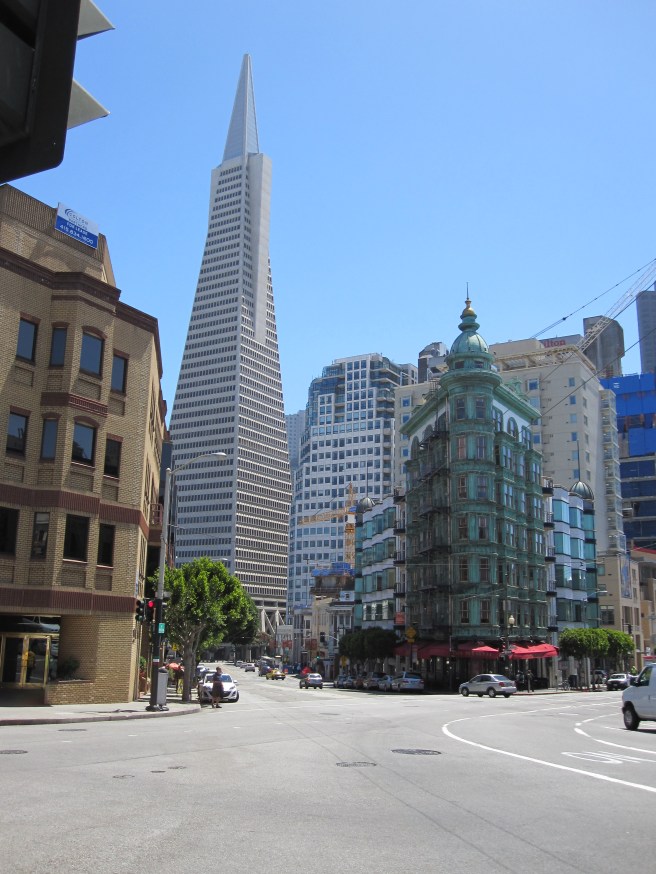
Transamerica building in San Francisco
The city of San Francisco is built on a peninsula in a grid pattern with a collection of over forty hills, some of which reach a height of nearly 1,000 feet. There are plenty of books and websites devoted to urban hiking for San Francisco, and there are groups organized specifically for walking in the city for health, recreation, relaxation, social interaction, and learning about the history of the area. There are even companies that offer guided walks, such as Urban Hiker San Francisco. Most walks are a moderate challenge to people in fairly good health, and some of them have the added bonus of stellar views of the city. For example, the 40-minute loop trails at Bernal Hill crisscross 26 acres of pathways, some of which lead to the summit with 360-degree views of San Francisco all the way to Daly City, Oakland, and Berkeley.
Once you get outside the city, there are loads of hiking options to the north, east, and south. The California Coastal Trail is very popular and yields spectacular views of the Pacific Ocean and the rugged cliffs along the California Coast. There are also nice trails with beautiful bay vistas and distant views of the Golden Gate Bridge in suburbs such as Point Richmond to the east. Located along the rocky cliffs to the south and overlooking the ocean, Lands End is easily one of the most popular spots for a scenic walk. The trails are accessible from a parking lot just north of the world-famous Cliff House and directly in front of another major San Francisco attraction — the ruins of the Sutro Baths, a former swim palace built in the 19th century which featured the world’s largest indoor swimming pool at the time of its opening. The waves crashing against the giant rocks on the beach at Lands End is like something out of a movie!
Lands End waves crashing on the beach
Looking for a more traditional hiking experience? Just a short drive north of the city is Muir Woods National Monument. Named for the adventurous naturalist who devoted so much of his life to preserving the wonderful natural resources of the west, this National Park Service property is home to a primeval forest of old growth coast redwoods, cooling their roots in the fresh water of Redwood Creek and lifting their crowns to reach the sun and fog. The diversity of flora and fauna at Muir Woods is incredible. The redwoods themselves dominate the scene, but the humble Steller’s jay, ladybugs, ancient horsetail ferns, and the banana slug hold their own beneath the canopy. Plants adapt to low light levels on the forest floor, while whole plant and animal communities bustle in the canopy.
Muir Woods
Of course, the bay is the true centerpiece of this portion of the Pacific Coast. With an average depth of only 12-15 feet, this large body of water looks more like a massive inland lake than a gateway to the ocean. The main body of the bay covers about 400 square miles. Approximately 40% of California’s water systems drains into the bay. Most visitors to the area probably take in the view of the bay from Golden Gate Bridge, but to truly appreciate its size, the perspective from the surrounding hillsides is best. My personal favorite vantage points are along the east side at Richmond and from the north at Muir Woods. Hiking is a great form of exercise, but what we see along the way makes the experience so memorable. With that objective in mind, San Francisco is a hiker’s dream.
After visiting a city like Paris, most people when they return home will talk to friends and family about the famous sights they saw. Why not? Paris is filled with internationally-famous landmarks, museums, churches, historic places, and all kinds of other attractions. My wife and I took our first but hopefully not our last trip to Paris during the summer of 2016, and as anyone would expect, we spent plenty of time planning our visit to ensure we saw as much as possible during the short week we were there. Several weeks before we left for Paris, we were talking to a colleague about our upcoming trip and all the sightseeing we had planned. He had been to the city more than once, and as a travel veteran, he gave us some valuable advice. He told us to schedule plenty of time to sit at a sidewalk café and soak up the Parisian atmosphere – the people, the sounds, the smells, and of course, the flavors. At the time of our conversation, I was thinking “we have too much to see to waste time sitting at a table sipping wine. We can do that anywhere.” I was wrong.
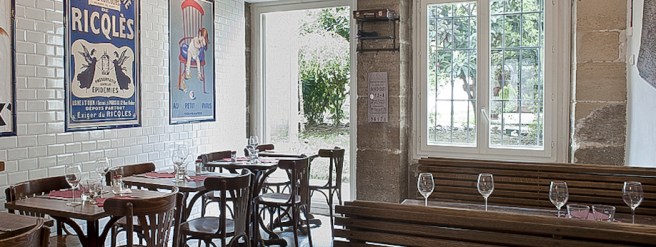
As is the case in many European cities, a meal in Paris involves much more than eating and drinking, especially in the evening. It is an opportunity to relax, reflect on the day, participate in engaging conversation, and enjoy some of the best food anywhere. There is absolutely no rush. The wait staff is not the least bit concerned, as in America, about turning the table. There is no sense of urgency to order as soon as you are seated, but getting a drink to start things off is certainly not a problem either. Depending upon the establishment, its location, the time of year, and the weather conditions, you may prefer to dine inside, but almost every bistro has sidewalk seating. We had some of our best meals in Paris at tables set just outside the door of bistros. There were a few exceptions, such as the Metropolitan, located in the section of Paris called The Marais a couple of blocks from where we were staying. This cozy little restaurant lives up to its name with wooden benches and other interior décor that are reminiscent of the train platforms from the early years of the Metro transportation system in the city. Chef Paul-Arthur Berlan, a semi-finalist on Top Chef in 2011, creates a limited but impressive collection of dishes. The menu was printed completely in French, and we were clueless. But, when we asked our attentive waitress for help, she was so gracious and said, “Even French people have trouble with our menu!” The food was excellent, and the atmosphere in the restaurant was perfectly reflective of what we observed about Parisians in general: they are such happy and vivacious people.
Metropolitan Restaurant, Paris
A significant part of the adventure of visiting a city in a foreign country is trying something new, and for me in Paris, this meant eating escargot for the first time. Someone told me that ordering escargot is simply an excuse to eat lots of garlic butter. I’m fine with that! Actually, the snails reminded me of another mollusk, saltwater mussels, that I have eaten many times on the Atlantic coast in the U.S. – incredibly delicious. Another important aspect of dining in Paris is the variety of cuisine you find there, which is usually the case in most cities with such ethnic diversity. One of our best meals was at a Roman bistro on the sidewalk under a large canopy within sight of the Arch de Triumph, where we feasted on grilled chicken over pasta with the lightest and most flavorful cream sauce I have ever tasted. Magnifique!
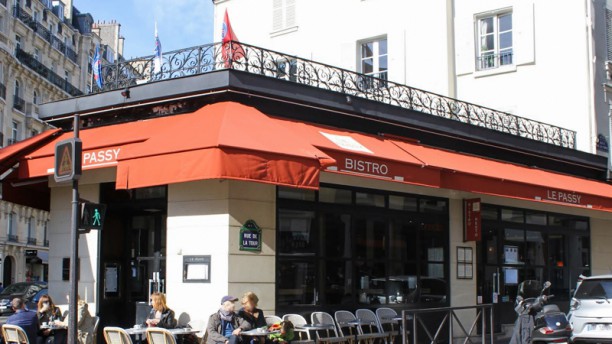
One day around noon after taking a dozen photographs of the Eiffel Tower, we wandered across the Pont de Bir-Hakeim (a bridge crossing the Seine River near the Tower) and up a series of steps just beyond the Passy Metro station where we discovered what was once a separate village known as Passy before it was incorporated into Paris in the 1860s under Napoleon III. At a round-about intersection, we walked up to a bistro to have lunch. We didn’t know at the time, but the place is called Le Passy. We had scrumptious salads at a small sidewalk table, and I indulged in a Mojito (or two). We were fascinated watching people walk by, coming from local markets and stores with packages in their arms. Other patrons were also having lunch, reading, or chatting. We were doing exactly what our colleague back home had suggested, immersing ourselves in a neighborhood of Paris and soaking in the culture of the place. To my way of thinking, this kind of experience makes the difference between touring and traveling.
Le Passy Bistro, Paris
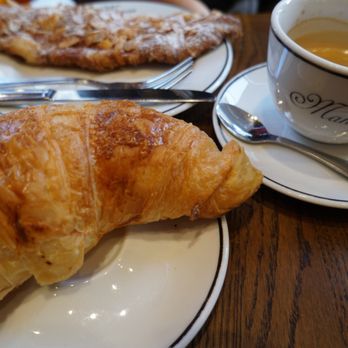
I cannot end this recollection without mentioning our favorite breakfast spot, a small bakery just a few blocks down from our apartment. Miss Manon is not unlike a hundred other bakeries all around the city, but this one was so convenient, and the chocolate-filled pastries were exceptional. The women who manage the shop (could one of them have been THE Miss Manon?) were patient with us, even though it took us a few visits to understand the proper dine-in protocol: patrons look at the mouth-watering selection of goodies in the glass cases, make their selection, then find a seat and wait for the staff to bring their food to them. I think they told us several times, but here again, we don’t speak French, and their English was limited. We still got along marvelously. It was a bit cool in the early mornings, so we sat inside. It was fascinating to hear the interaction of the women out front with the men who were baking in the back and bringing out trays of fresh pastries, breads, baguettes, and tarts. At times the women sounded irritated with the men, but then they would laugh and shake their heads, and greet the next customer with a cheerful “Bonjour!”
Miss Manon Bakery, Paris
We were able to learn about Paris from tour guides, museums, books, maps, and videos. We saw the amazing attractions, walked through the churches, strolled around the gardens, and wandered through the streets to experience so much of what the city has to offer. Even then, we did not get the sense that we were connected with the city. Only when we stopped, sat at a table, ate and drank, and watched and listened did we begin to hear the heartbeat of this enchanting place.
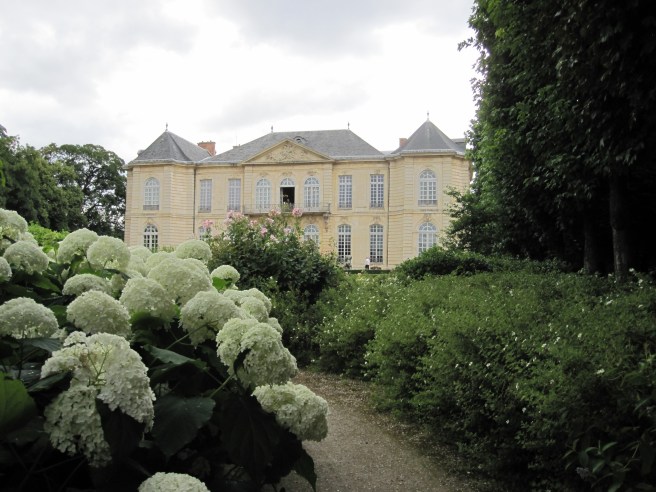
Visitors to Paris will often want to include in their itinerary a side trip to the Palace of Versailles, which is about a thirty-minute train ride from the city. The round trip isn’t so time-consuming, but actually seeing the palace and grounds takes a minimum of half a day, even more if one truly explores the garden, which is 800 hectares (over 1,900 acres) in size. Unfortunately, some travelers are on a tight schedule and hardly have enough time to see the major attractions in Paris, much less places outside the city. There is no substitute for seeing the Palace of Versailles, which is quite magnificent and offers a visual representation of the wealth and power of the monarchy in the 17th and 18th centuries. The garden is certainly spectacular and difficult to match; however, if there is a substitute in Paris that can serve as a rival, albeit on a smaller scale, the garden at the Musée Rodin must be near the top of the list.
Rodin gardens from mansion balcony
The Musée Rodin is housed in a mansion, formerly called the Hôtel Peyrenc de Moras, now known as the Hôtel Biron. Auguste Rodin was a 19th-century French sculptor who is known for creating several iconic works, including “The Age of Bronze,” “The Thinker,” “The Kiss,” and “The Burghers of Calais.” The collection in the restored mansion is interesting for the novice and probably a treasure for artists and art historians, but almost everyone can appreciate the beauty of the garden. Its size is minuscule compared to Versailles, but it is still impressive. The grounds are divided into a rose garden, north of the mansion, and a large ornamental garden, to the south, while a terrace and hornbeam hedge backing onto a trellis conceal a relaxation area, at the bottom of the garden. Two thematic walks are also part of the garden: the “Garden of Orpheus,” on the east side, and the “Garden of Springs”on the west side.
Rodin garden roses and shrubs
In addition to the abundance of plants, the garden is also decorated with some of Rodin’s sculpture. Rodin started to place selected works in the garden in 1908, together with some of the antiques from his personal collection. Male and female torsos, copies made in the Roman or modern period, after Greek works, were presented in these natural surroundings. Other pieces were added after his death. The first bronzes were erected in the gardens before World War I. Since 1993, they have been regularly cleaned and treated so as to preserve their original patinas.
Anyone who has visited Paris knows the frustration of wanting to see more, to do more, than limited time will allow. Tourists have to be selective, discriminating, and reasonable about what they will be able to cover during the time they are in the city. Any attraction that offers more than one type of experience is probably worth including. The Musée Rodin fits that description with historic architecture and provocative sculpture but also a landscape that is in itself a work of art, offering the visitor an opportunity to rest and reflect.