

I have written about gardens several times in this blog. They are among my most favorite places in the world. I love them in all their many forms: small residential gardens, larger private ones, arboretums, botanical gardens, public gardens, and those you find at houses of worship, city parks, river walks, and even businesses. They brighten up any space with texture, structure, color, and incredible beauty. They are places of refuge and contemplation. There are so many features to enjoy, including ponds, streams, waterfalls, varying terrain, rocks, boulders, statuary, fountains, and other built structures. Whenever my wife and I travel, we almost always look for gardens to visit or revisit.
In September 2024, we took a two-week trip to Paris and various locations in Switzerland. On our last day in Paris, we spent the better part of the morning wandering around one of the most spectacular spots in the city, Luxembourg Garden. Located in the 6th arrondissement in an artsy part of the city, the Jardin du Luxembourg comprises 25 hectares (56.8 acres) adjacent to the grand building that houses the French Senate, thus its more familiar name for Parisians, Jardin du Sénat. The Luxembourg Garden comprises formal English gardens, 3,000 trees of various species, 5,000 square meters of flower beds, an orchard containing more than 500 old varieties of pear and apple trees, a collection of exceptional orchids, and 102 statues and monuments, including the famous Médicis fountain.

The garden’s origins date back to the 17th century when Marie de Médicis, the widow of Henry IV, built an Italian palace on property once owned by François, Duke of Piney-Luxembourg. The French Senate took over ownership of the garden in the early 1800s after the palace became the home of the governing body in 1799. It wasn’t until the last half of the 19th century with the restoration projects in Paris under Napolean III that the garden began to take its more modern shape. Luxembourg Garden has appeared in numerous works of literature by authors such as Victor Hugo, Henry James, and William Faulkner.
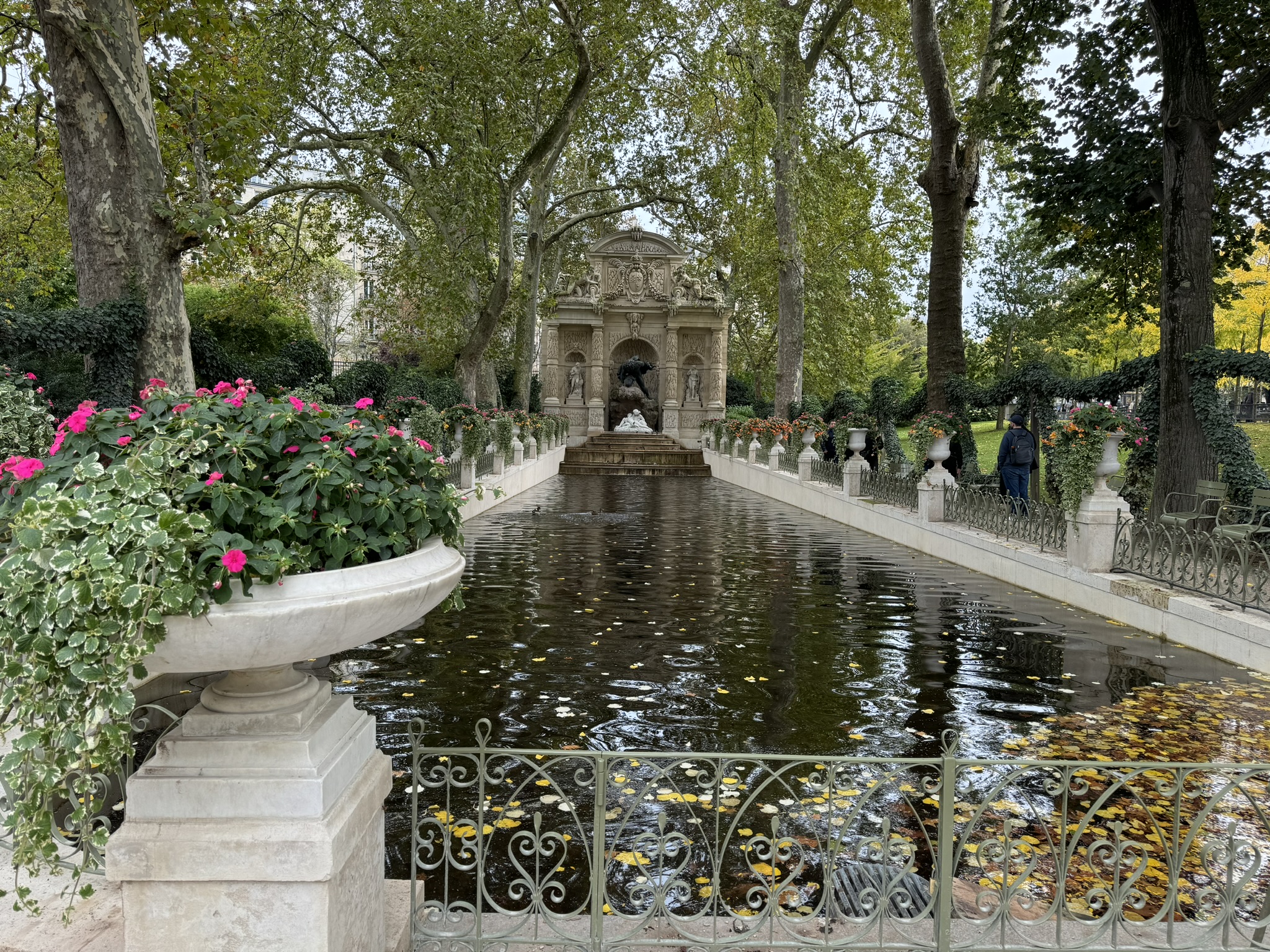
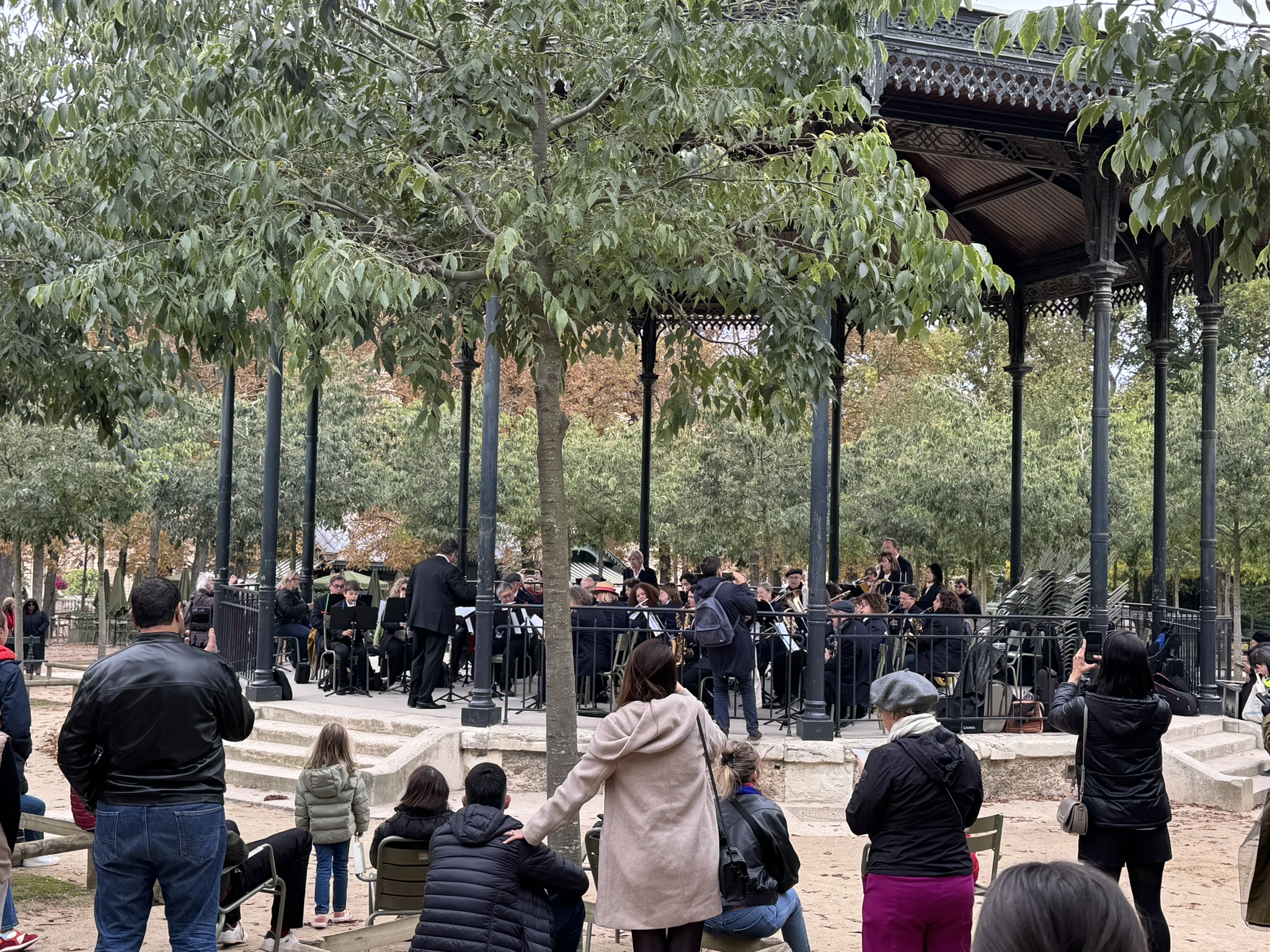
As we entered the garden that Sunday morning at the Porte Gay-Lussac, we were greeted by the sounds of music coming from what appeared to be a small community orchestra at the nearby Kiosque à musique. We made our way counterclockwise to the Médicis fountain and then past the Senate building, protected by a high metal fence and guards with firearms. We continued around the perimeter of the garden, making side trips into the interior from time to time. Before leaving, we spent a few moments near the Grand Bassin, a large octagonal basin of water surrounded by raised balustraded terraces adorned with a series of statues of former French queens, saints, and other historical figures.

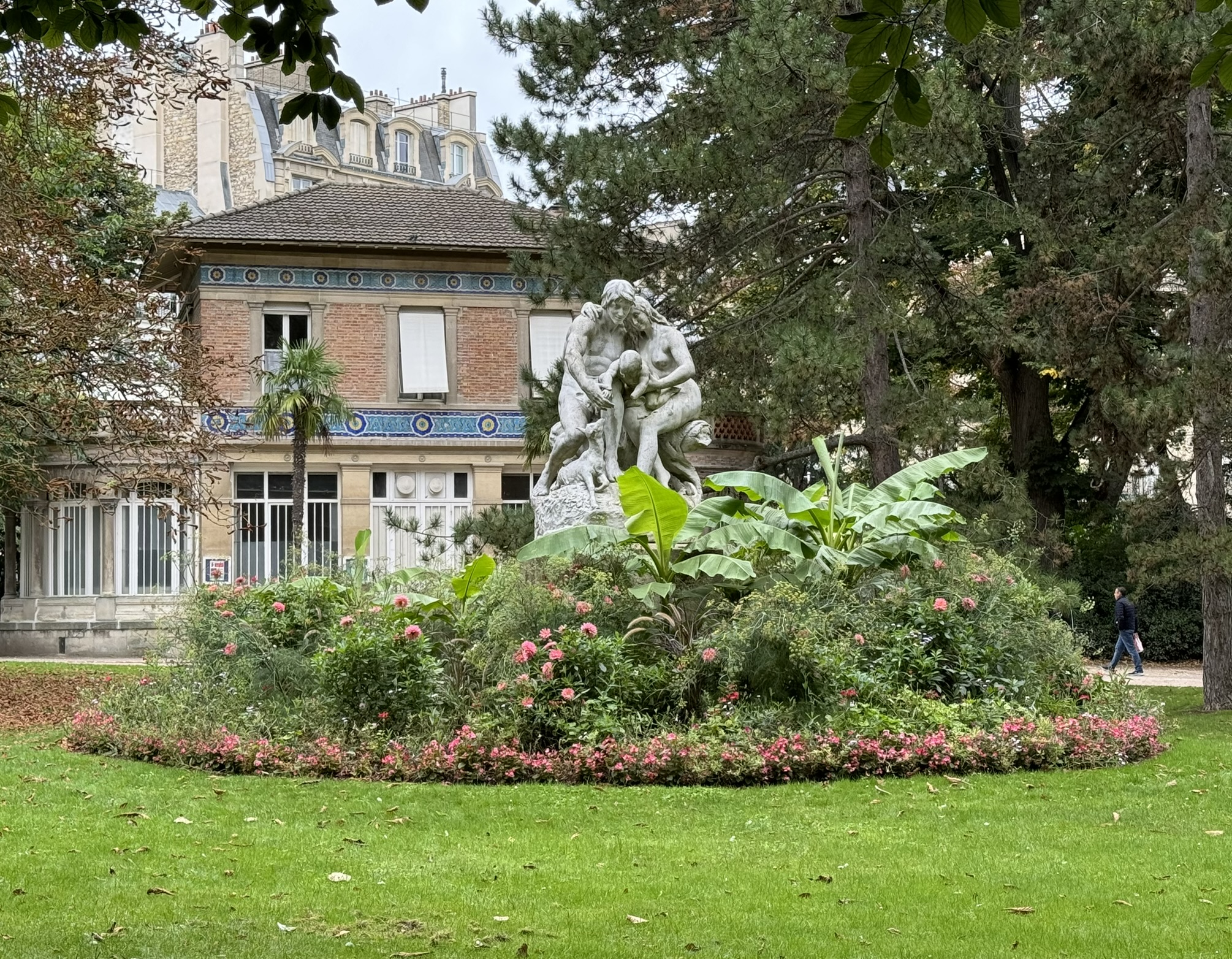
What impressed me most about this garden is how brilliantly the built environment blends with and enhances the horticultural surroundings. Walkways wind through trees, hedges, shrubs, lawns, and planted beds, encouraging us to meander and gaze. Statues, sculpture, and other features are spaced out and in the open or tucked neatly into nooks and crannies, inviting us to explore and pause to appreciate and learn. Luxembourg Garden is truly an oasis we can enjoy simply for its beauty and design. However, it’s also an outdoor classroom for aspiring students of all ages who wish to be schooled in botany, art, architecture, history, and so much more.


 If You Want My Opinion