Visiting Ireland has been on our travel bucket list for quite some time. My wife and I had planned to be at the Emerald Isle in April of 2026, but illness forced us to postpone the trip a few months to September. The delay still placed us squarely in the country’s shoulder season for tourism, which to our delight turned out to be just about perfect. We could not have asked for better temperatures or weather in a place that embraces the traditional idiom: “It’d be a grand country if you could just put a roof on it.”
In her reliable travel wisdom, my wife arranged for us to anchor in Dublin and scheduled three separate day trips to explore places of interest on the southern part of the island, all inside the Republic of Ireland. We spent our first couple of days and our last full day exploring Dublin, but we left the city for three consecutive days heading southwest, south, and west, in that order.
The other brilliant idea my wife had was to hire a driver to take us to various spots of interest we had researched well in advance for the day trips. The roads in Ireland are notoriously narrow – barely single-lane in many locations – and driving safely takes a level of skill we didn’t think we had, especially while occupying the left side of the road. We also thought it would be terribly frustrating to rent a car for one of us to drive white-knuckled and never look anywhere except straight ahead while the other one of us was praying with closed eyes the entire time we were on the road. We wouldn’t have seen a single inch of the magnificent countryside or curiosities along the way to our destinations.
We didn’t know exactly what a wise decision hiring a driver was until we had been comfortably seated for an hour in a passenger van driven by a fine Irishman named Alan Ingoldsby. The concierge at our hotel in Dublin recommended him. He was gold. Going far beyond getting us from point A to point B, Alan was a wealth of cultural and historical knowledge about all things Ireland. He was a genuine tour guide and a mighty fine one at that. In his conversations with us, he learned about our interests and a little bit about our personalities that allowed him to tailor our travels accordingly. He was incredibly accommodating – my wife never opened the door of the van to exit or enter. Alan was always there before she could even reach for the handle!
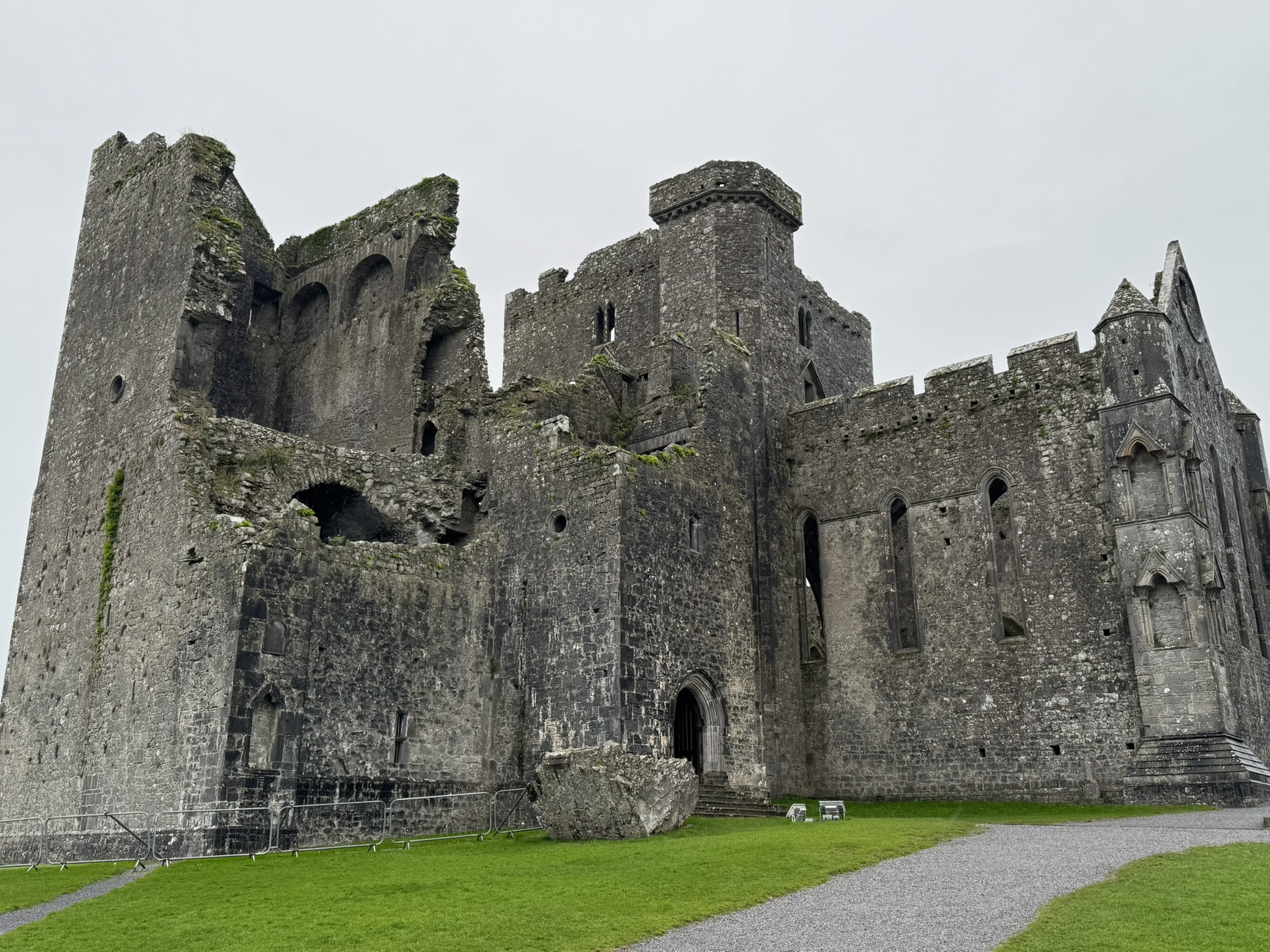
On our first day trip, we headed toward the harbor town of Cork located at the southern end of the island on the Celtic Sea. Our first stop on the way was the Rock of Cashel, an impressive collection of medieval stone buildings and graves of royalty and dignitaries dating as far back as the 16th century. This was the only place during our entire time in Ireland that we had rain, which was really more of a drizzle than a downpour. We were prepared with our raincoats and were not altogether disappointed because the weather offered an appropriate environment for wandering among the stone ruins and the ancient gravestones, tilting or even toppled from centuries of exposure on the massive limestone outcropping overlooking the Plain of Tipperary.
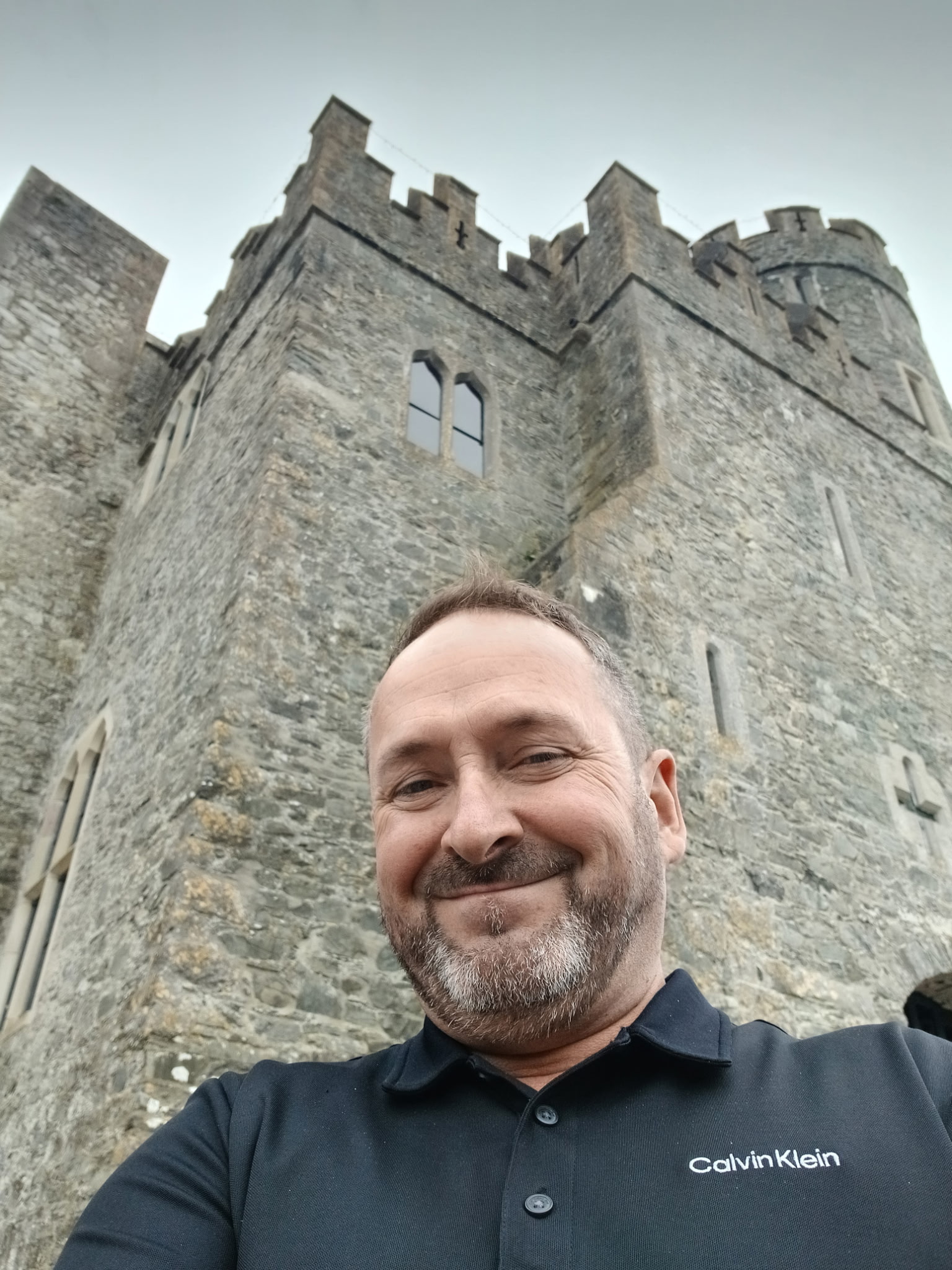
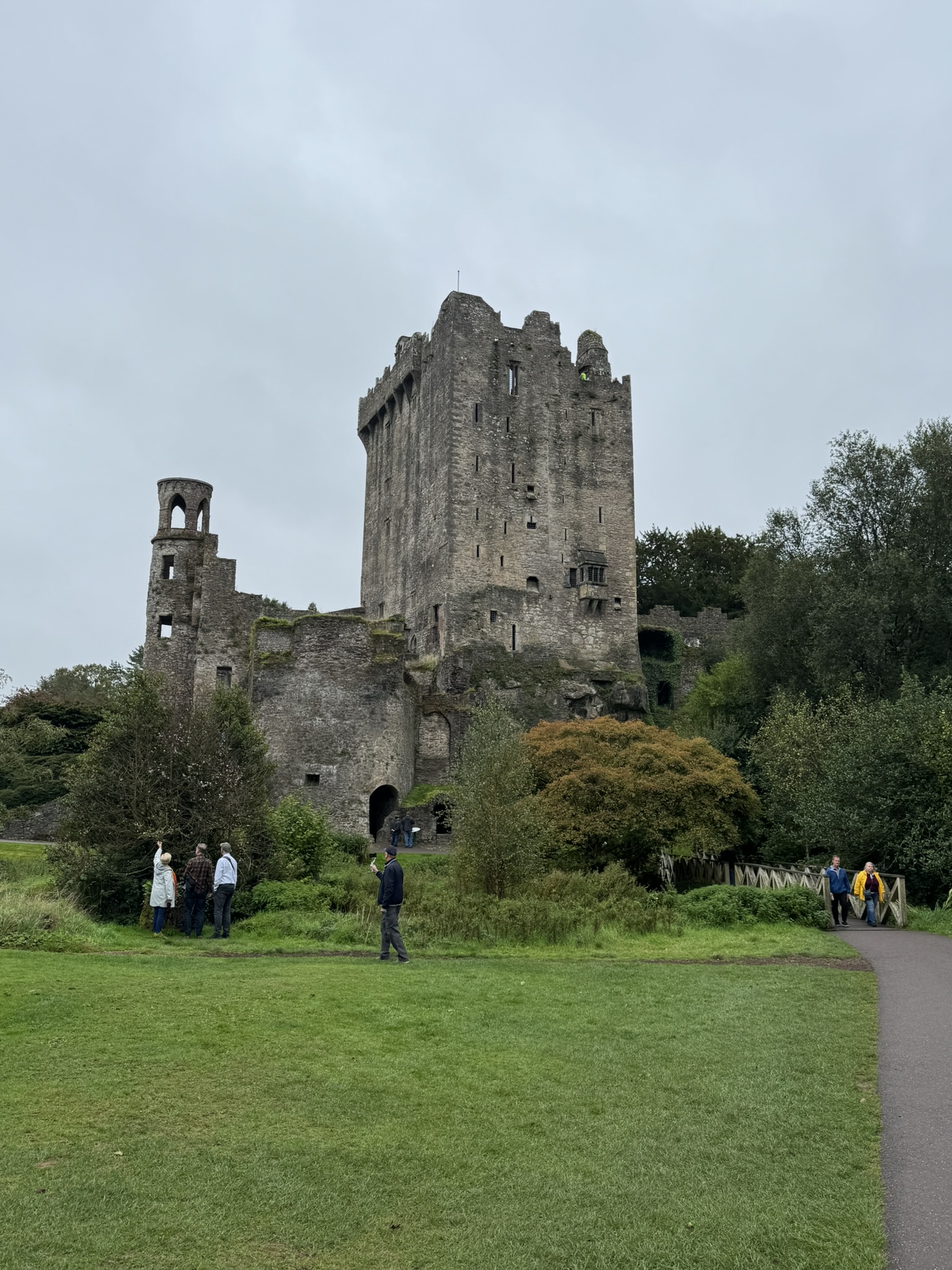
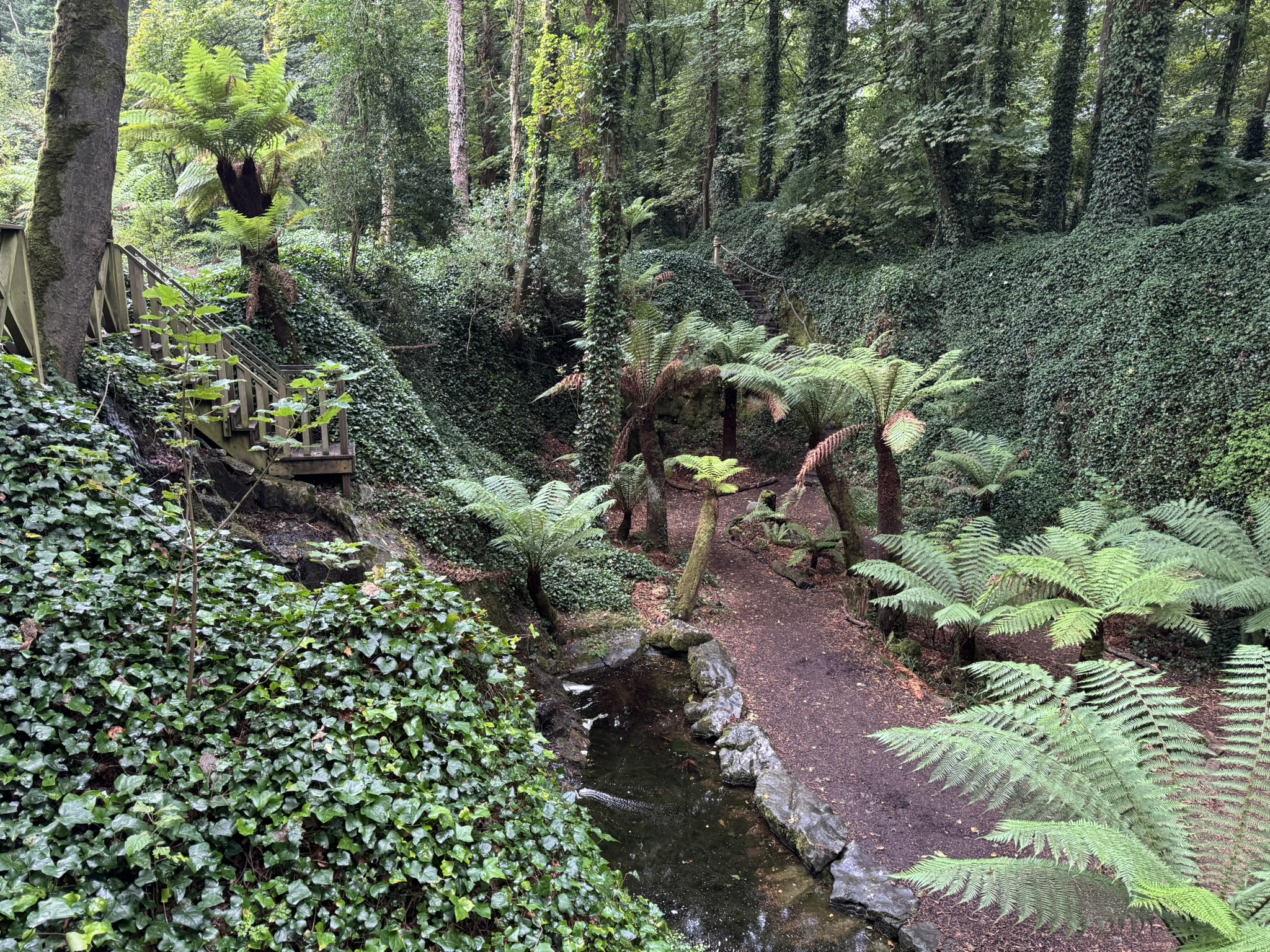
Our next stop on day one was the ever-popular Blarney Castle just outside Cork. Most tourists will spend anywhere from 30 minutes to an hour standing in line to enter this iconic medieval stronghold, climb the tower, lean upside down from the battlements, and kiss the legendary Blarney Stone in hopes of being granted the gift of persuasion. We are not most tourists (forgive the snobbery). We were much more satisfied to spend our time wandering the 60 acres of magnificent castle grounds, featuring a variety of gardens, arboretums, trails, and streams. It really is a beautiful place.
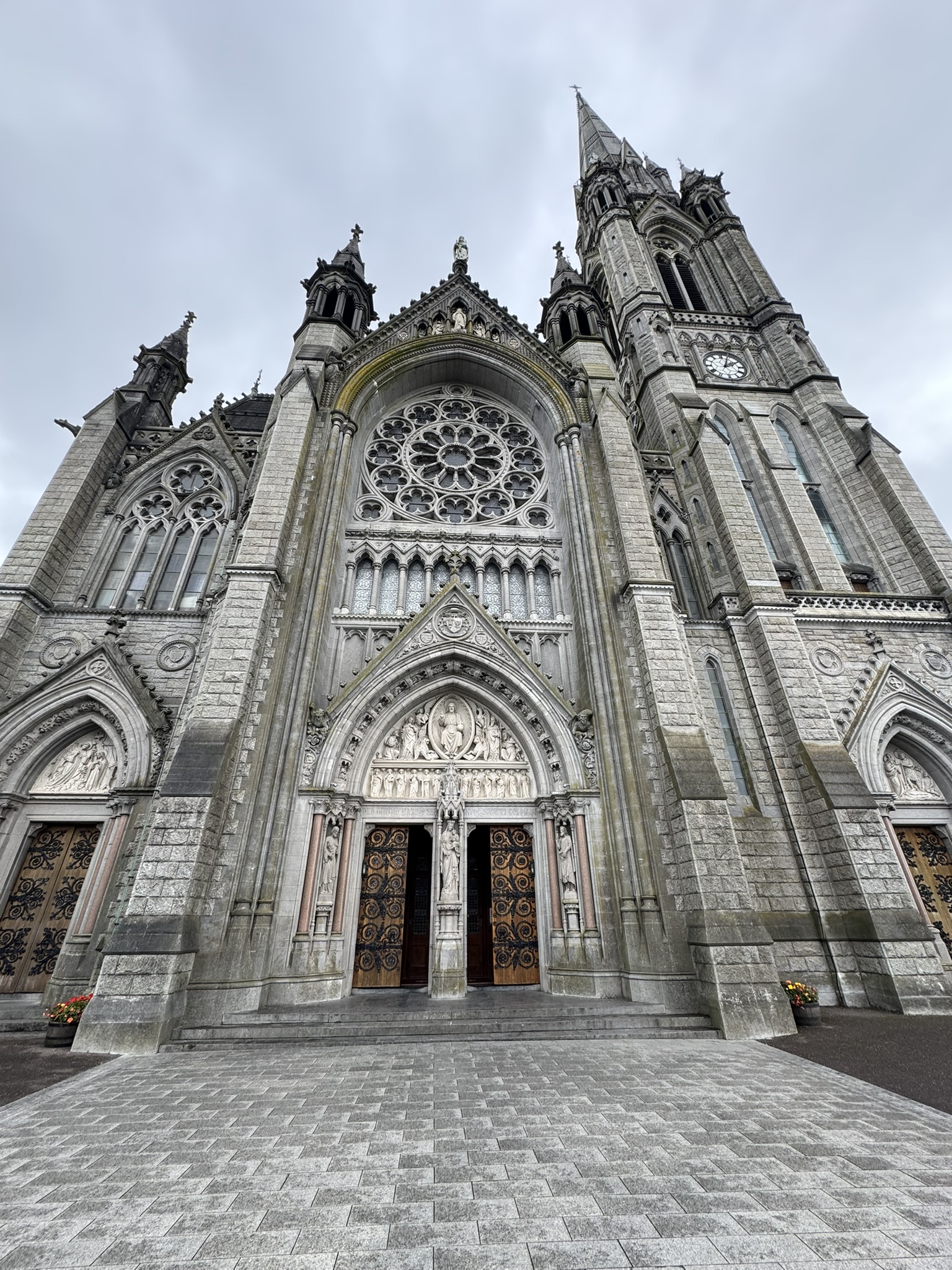
Finally, we drove through Cork, the second largest city in the Republic of Ireland. We went around the harbor to the township of Cobh, where we took a walk along the water’s edge and saw the historic White Star Line building, the site of the final port of call for the RMS Titanic, which launched on her maiden and only voyage there on April 11, 1912. Before heading back to Dublin, we took a few moments to visit St. Colman’s Cathedral positioned on a hill overlooking the harbor at Cobh.
Our second day trip took us due east from the city to explore Dublin Bay, where we saw some of the locals taking a dip in the frigid water, just above 50 degrees Fahrenheit. We strolled along the rocky shore and walked past the James Joyce Tower, which is a Martello stone structure located at Sandycove Point in Dún Laoghaire. Although the Irish writer only stayed here for six nights in 1904, he used the location as a setting for the opening scene of his masterpiece, Ulysses.
During our trip the previous day, Alan learned that I am a musician, which prompted plenty of conversations about music and even listening to a few of his favorite Irish tunes off his playlist. On this second day, he slightly altered our tour to take us by the entrances to two musically significant properties situated on the Dublin Bay: the copper and iron gate leading to the residence of Bono with the band U2 and the miniature castle that is the home of Enya, the Irish singer-songwriter of haunting Celtic music. This side excursion was a real treat and took us to places we would not have even known to look for on our own.
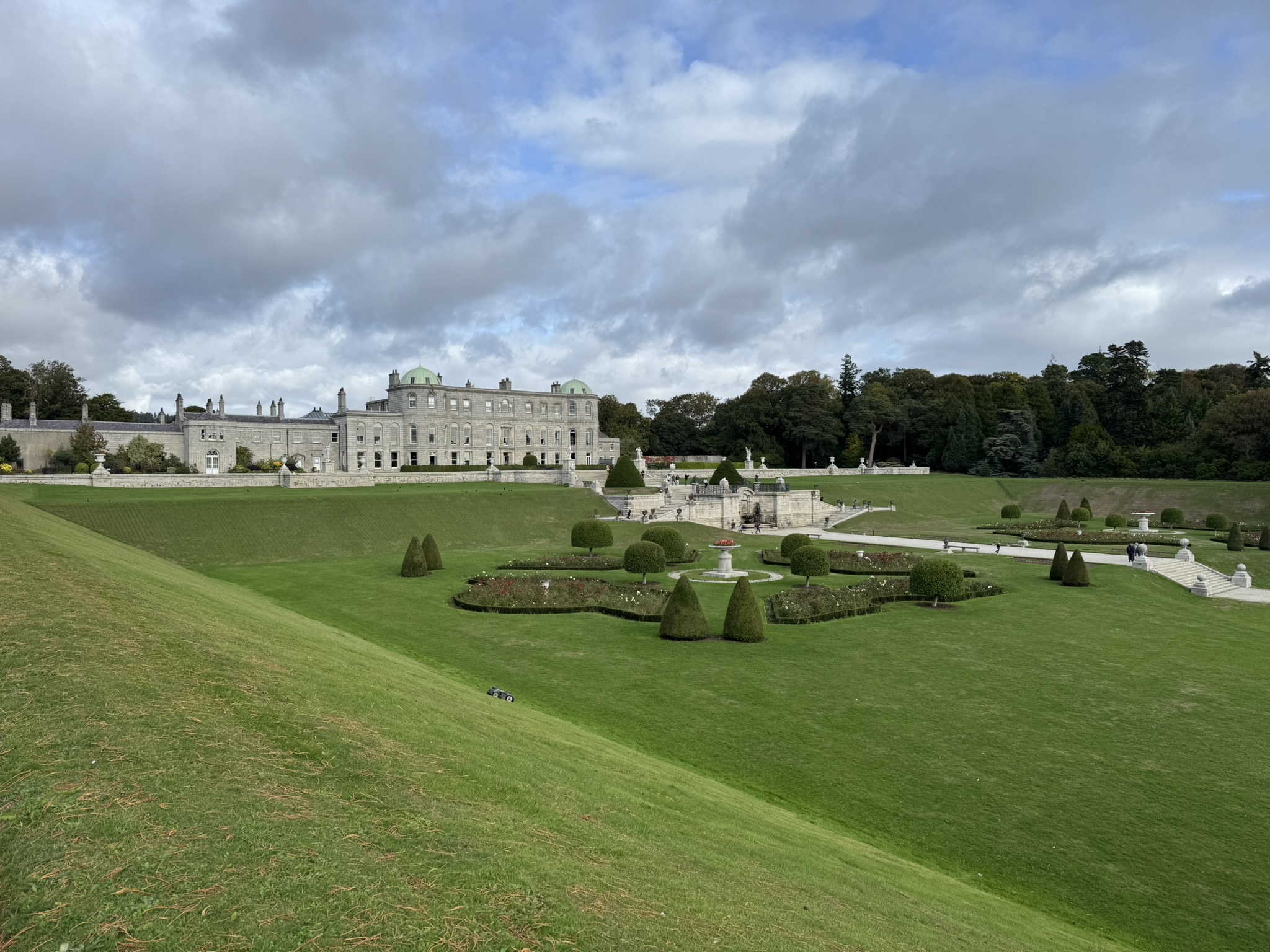
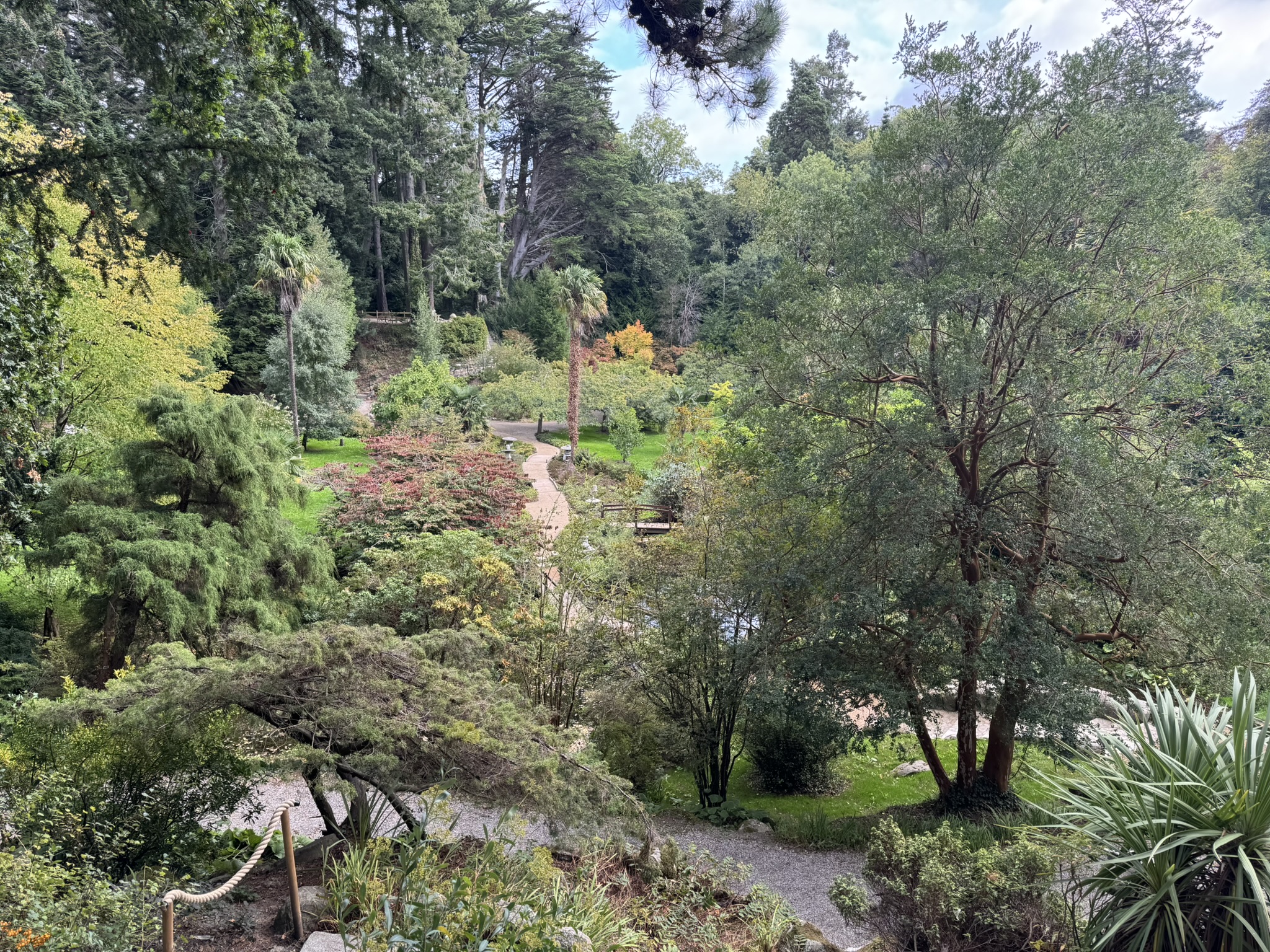
This second day trip took us down to Wicklow and to the amazing gardens of the Powerscourt Estate. The 13th century castle was redesigned in the 18th century as a Palladian mansion by architect Richard Cassels. The structure is impressive, but we were much more enchanted by the collection of gardens, both formal and natural, stretching out over 47 acres. There are fountains and ponds, enormous trees, beautiful beds of blooming plants and vines, and a serene Japanese garden that is simply stunning.
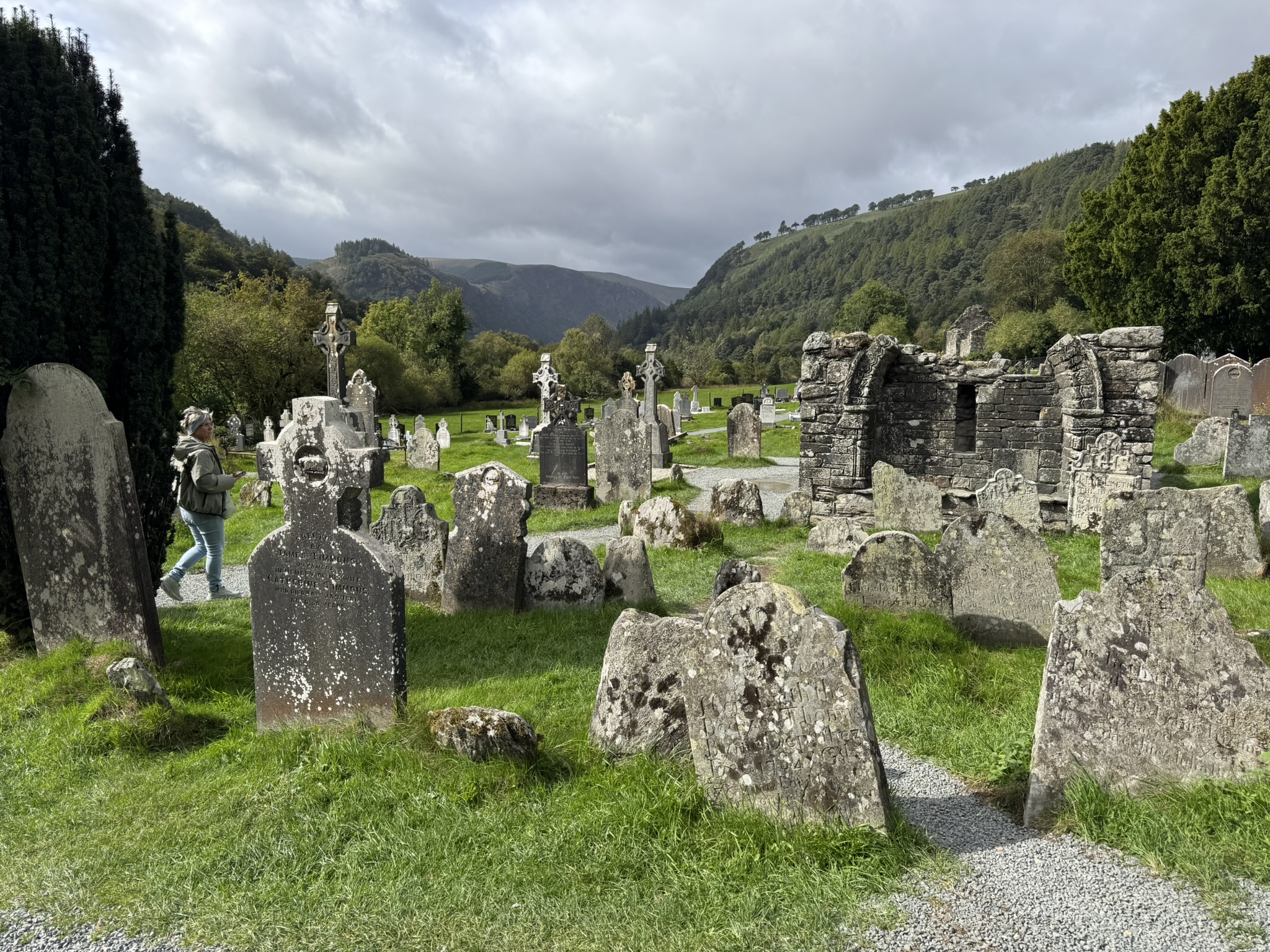
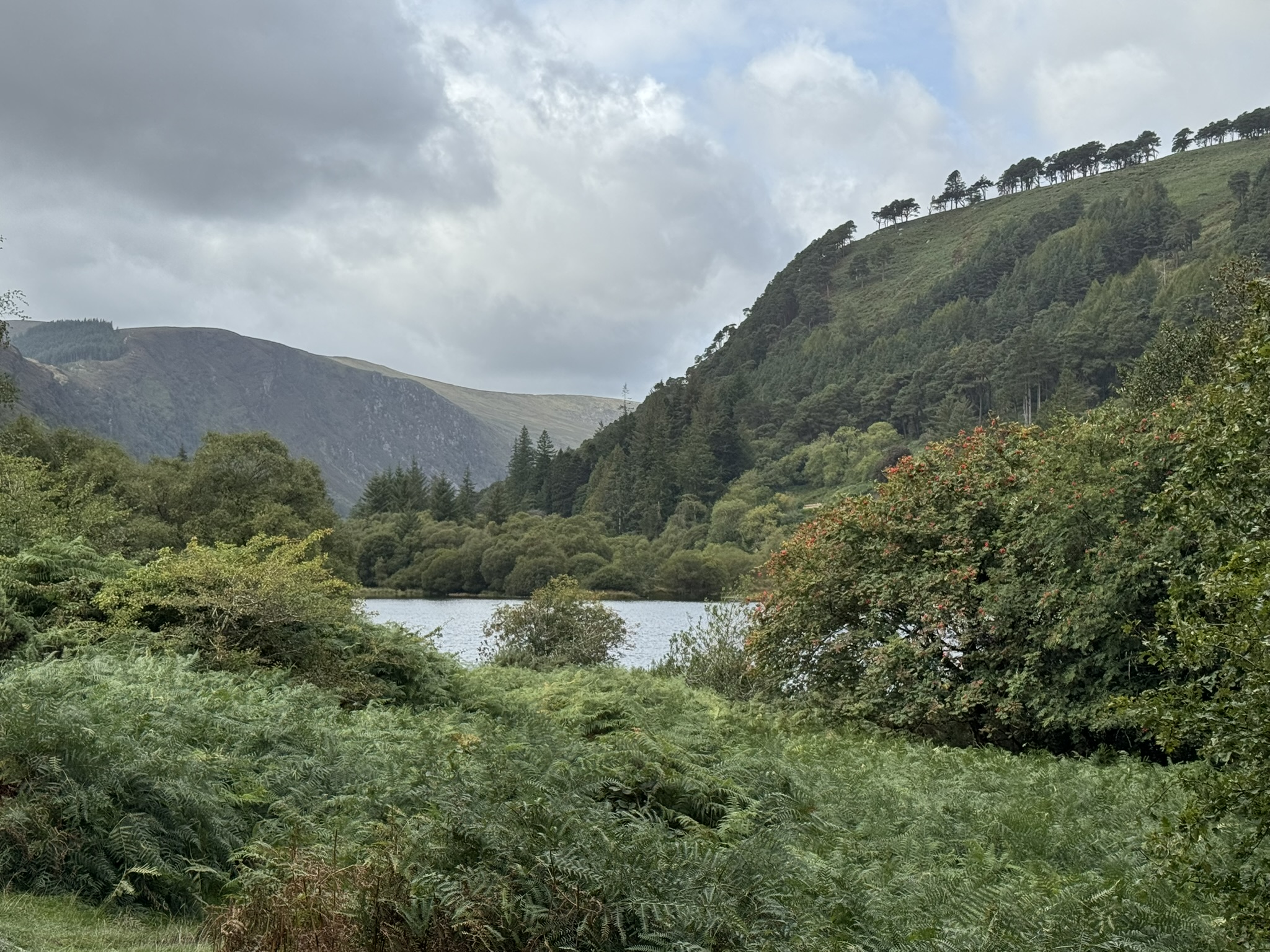
From Powerscourt we traveled to nearby Glendalough where we walked around the ruins of the famous monastery and cemetery just outside of town. Founded in the late 6th century by a hermit monk named Saint Kevin, this monastery grew to become a respected center of learning and pilgrimage that lasted for over 900 years. From the ruins we followed a paved path to see the upper and lower Glendalough Lakes nestled in the Wicklow Mountains, which is quite a sight to behold. We drove on through scenic countryside to a hilly region near Wicklow where we stood on a high bluff to look down in the valley at Guinness Lake, so named because of its brown color and foamy shoreline, which mimics a pint of the most famous brew in Ireland.
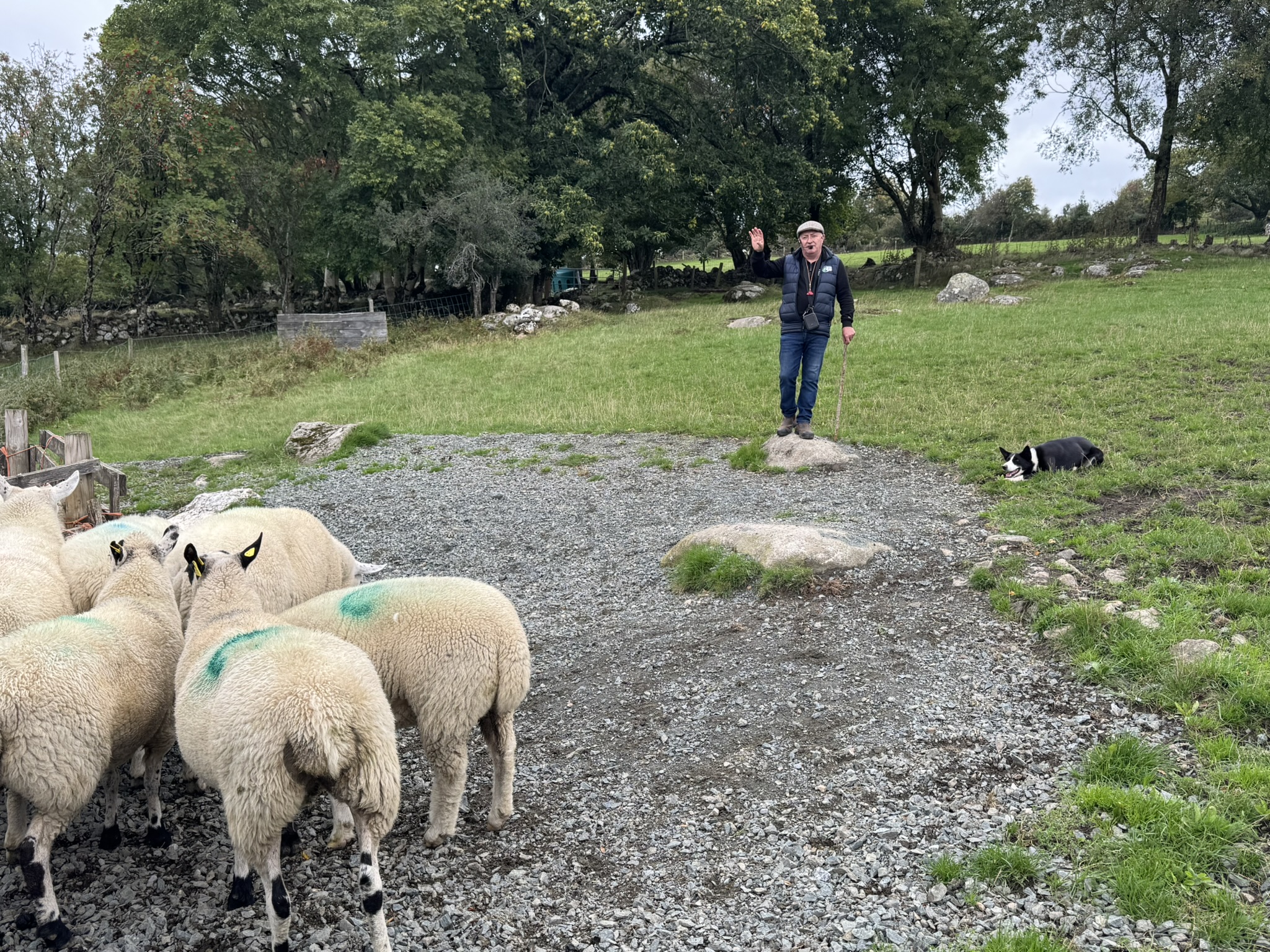
We rounded out our second day with a sheepdog demonstration at Cullen Sheep Farm just outside Wicklow. On this fourth generation working family farm, Richard Cullen explains how border collies are trained and how their natural herding instincts make them perfect for the job of corralling sheep, moving them around the fields, and keeping them safe. Richard’s whistles and verbal commands are fascinating, and the way his dog follows those commands at lightening speed is incredible. Someone at the demonstration asked, “How do you think the sheep feel about the whole process?” Richard gave a subtle smile and replied in his thick Irish accent, “The sheep would be perfectly happy if they never saw a dog ever again.”
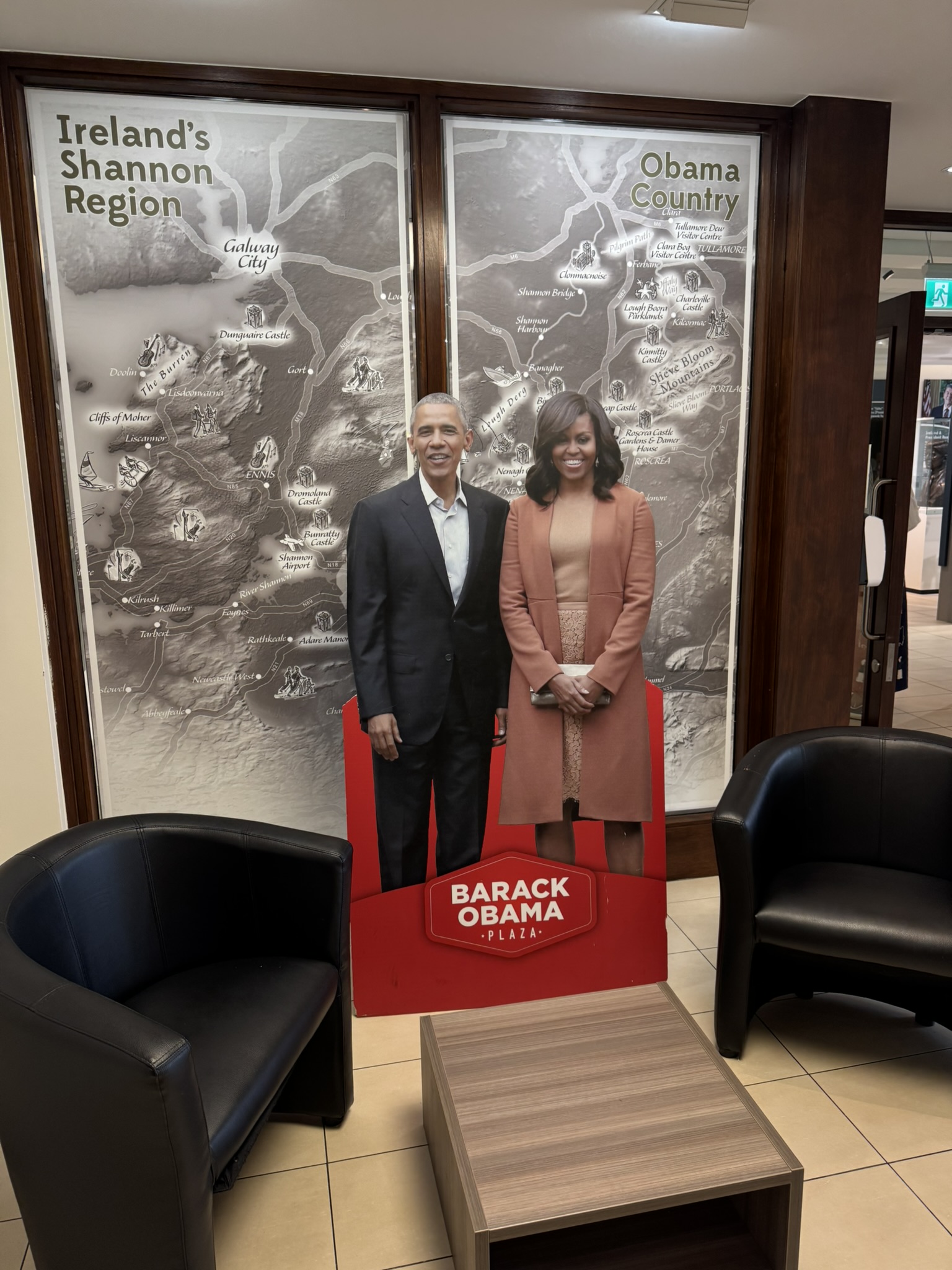
Alan Ingoldsby was ill on our third excursion day, so he sent us a substitute named Les who was delightful and quite knowledgeable about all things Ireland, especially our final day trip destinations. We headed west out of Dublin, and our first stop was a completely unexpected surprise: Barak Obama Plaza! This indoor and outdoor exhibit space is located at a Circle K service station of all places just off the M7 motorway. The small museum on the second floor of the station highlights Irish-American presidential history, but it also commemorates President Obama’s historic 2011 visit to nearby Moneygall, which is the documented ancestral home of his third great-grandfather, Falmouth Kearney.
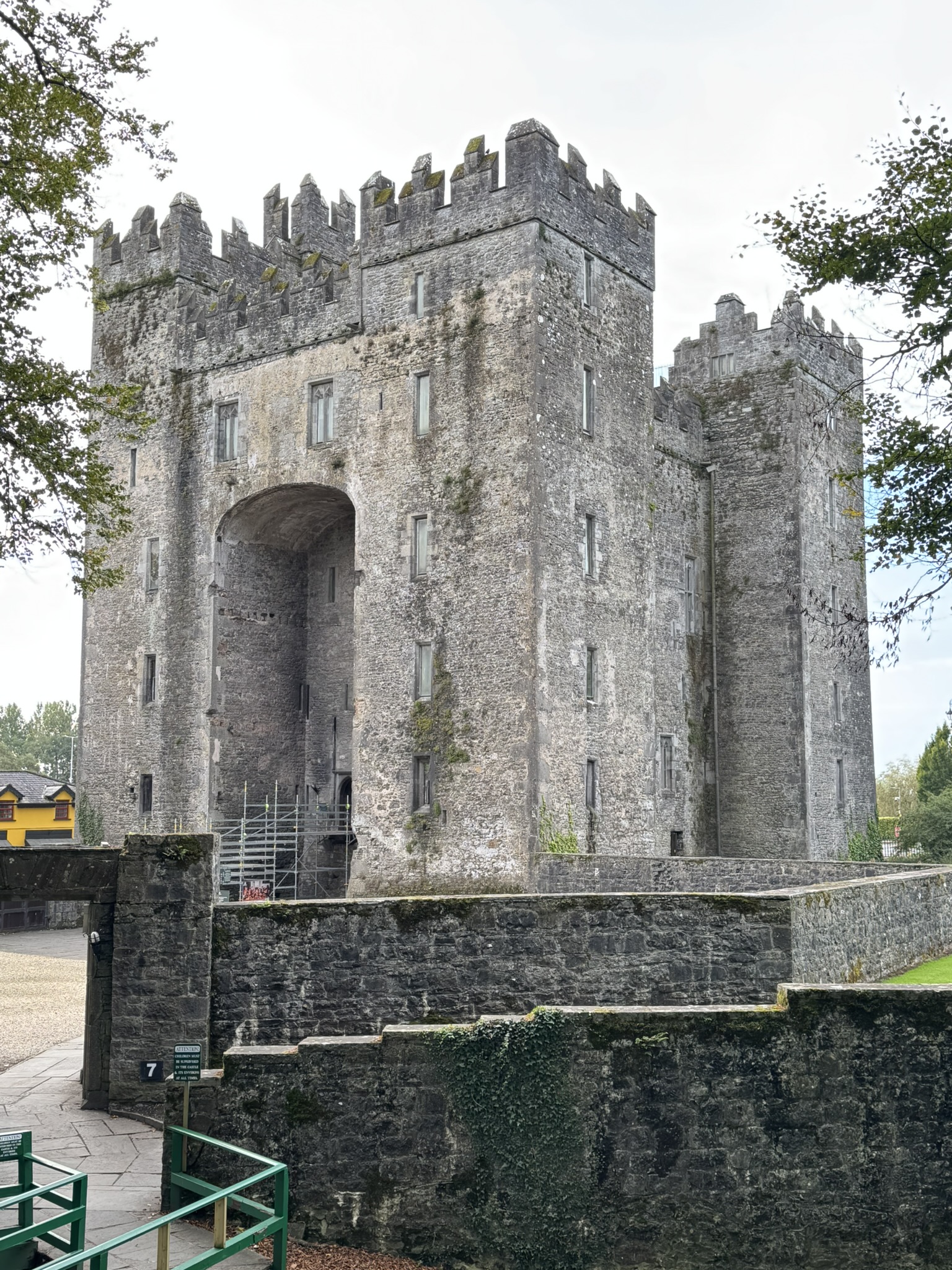
Our second stop that day was at Bunratty Castle and Folk Park. This iconic 15th-century tower house sits on a strategic bend of the Ratty River and is likely the most complete, authentic restored medieval fortress in Ireland. The adjacent recreated village offers a glimpse at what life may have been like in this part of Ireland much later in the 19th century. We spent a while exploring the 26-acre property and its structures.
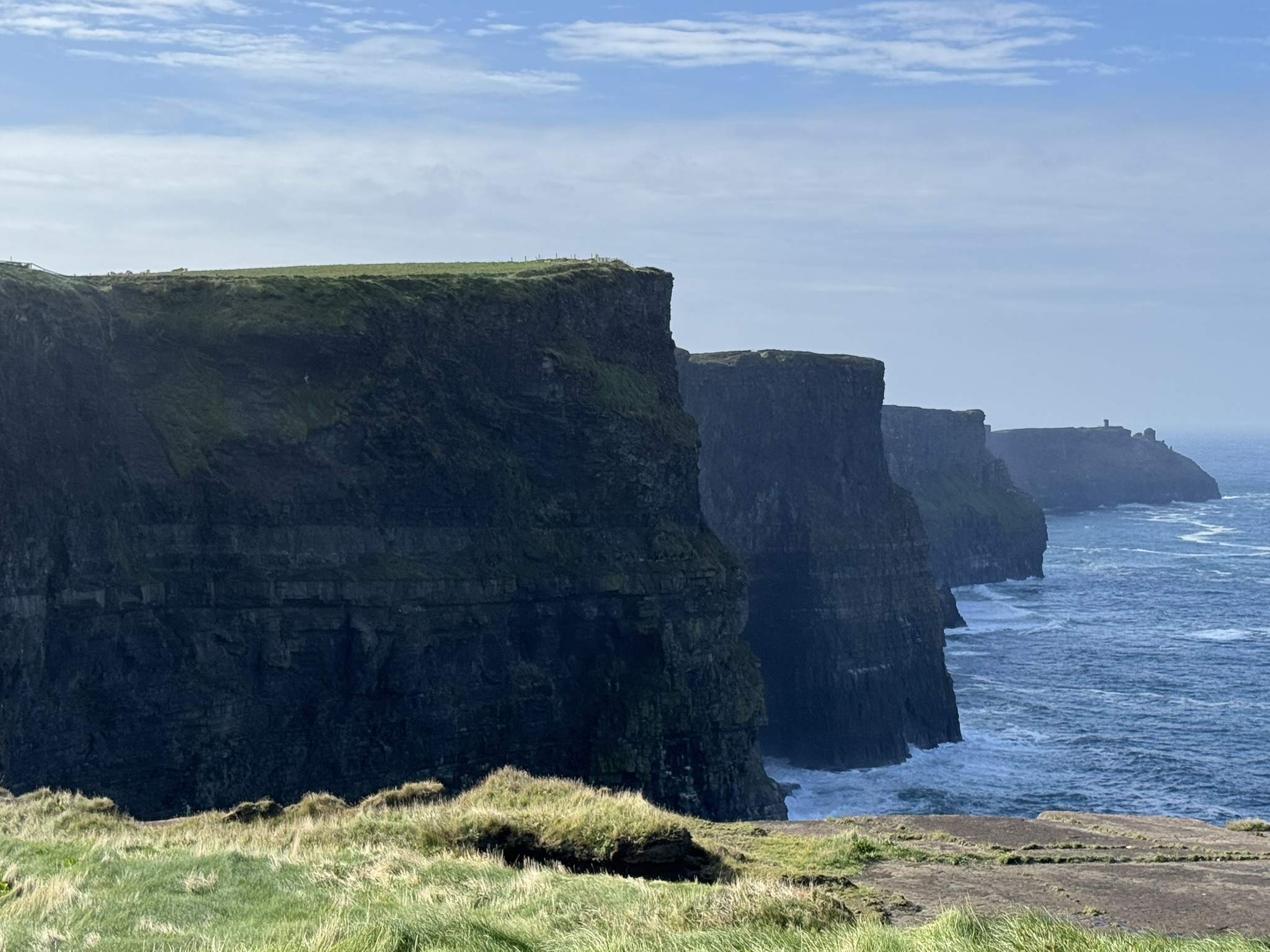
From Bunratty we continued west until we reached the island’s western coast and the spectacular Cliffs of Moher. These majestic sandstone cliffs rise from the Atlantic Ocean to a maximum height of 702 feet and stretch over eight miles along the rugged coastline. Geologists estimate it took over 300 million years for these cliffs to form. There are plenty of days out of the year when the weather makes it all but impossible to see anything from the top of the cliffs due to rain and fog. We had initially scheduled our trip to the cliffs for our first day, but Alan Ingoldsby suggested we swap our first and third days because he knew the weather would be more favorable on our final day to see the cliffs. This type of foresight, planning, and flexibility is why a driver-guide like Alan is so valuable and worth every Euro we spent to hire him and Les.
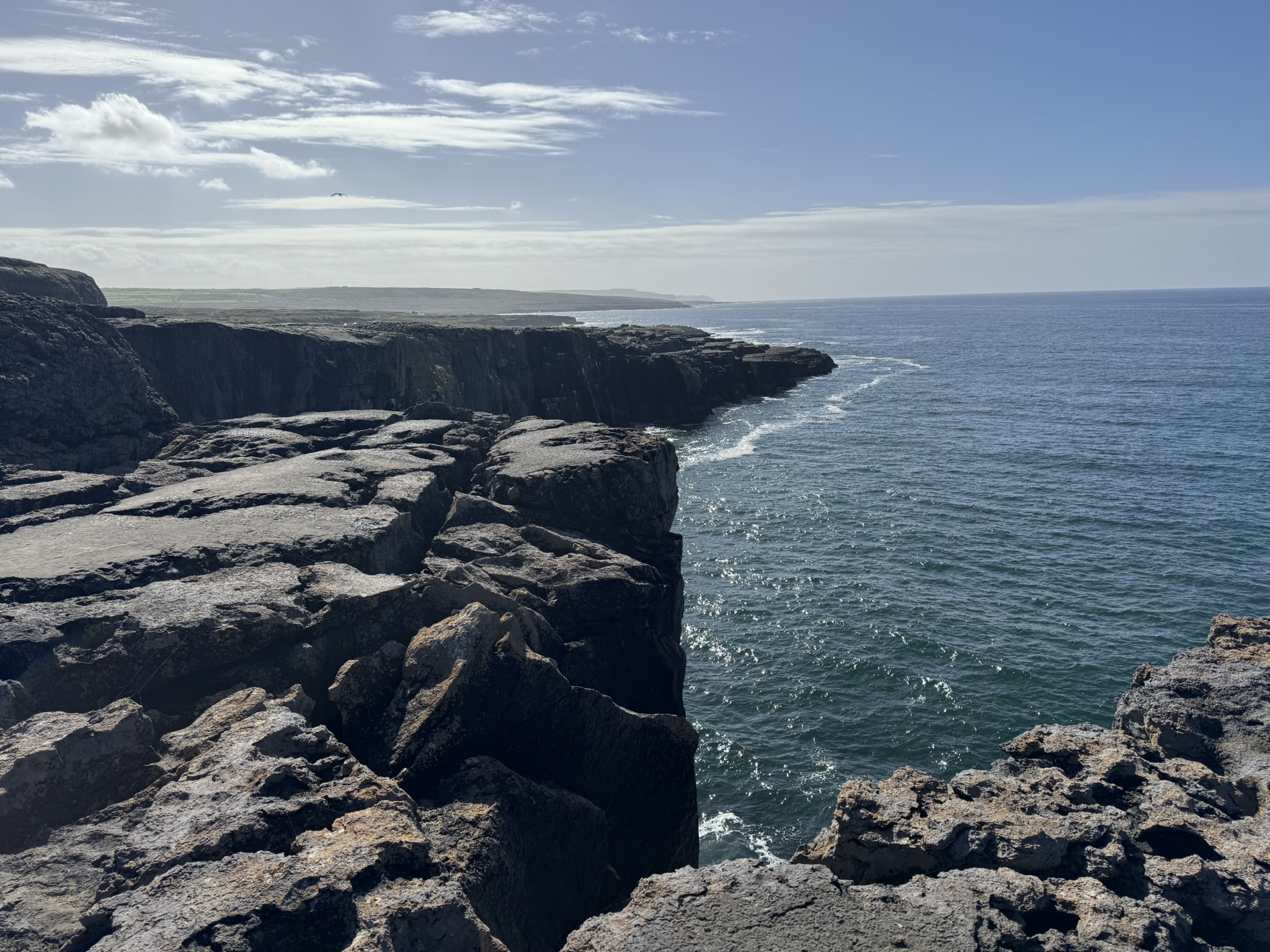
Instead of heading straight back to Dublin, Les drove us through the coastal village of Doolin and along the glacio-karst landscape of The Burren on Galway Bay, where we witnessed gigantic waves crashing against rock outcroppings and beaches. The sound, smells, and scenery reminded me somewhat of the northwest Pacific coast of Oregon. It’s another one of those places that a camera cannot not fully capture or reproduce – you have to feel it.
We strongly advise hiring a driving guide for seeing the countryside and sites of interest in Ireland, especially for those who have any reservations about maneuvering a vehicle along narrow roads in unfamiliar settings. It is an expensive luxury perhaps, but we learned so much about life, culture, politics, and history in the Republic from these two gentlemen. They were clever and funny but never silly or obnoxious. They were opinionated but never rude or argumentative. They were proud of and honest about their homeland but eager to know more about life in the U.S., even though they interact with Americans all the time. We never felt like we were being lectured, but we were definitely in a learning environment for three full days. We loved every minute of it.

