Restoring My Soul

My wife and I have fairly stressful jobs, hers much more than mine.  I have mentioned before how much we like to be outdoors when we can, and we look for such opportunities and plan for them when we take vacation trips.  We also enjoy kayaking, and we are fortunate enough to have two Hobie kayaks, which are equipped with peddles so we can use our legs to propel them instead of just paddling.  Our previous home was on a rather large lake, so kayaking was as simple as pulling the boat out of the garage and going across the yard to the water’s edge and taking off.  Now, we don’t get out as much and have to plan for the water outings, but we live in an area with plenty of small lakes close by to explore, and a few very large ones not too far away.  During the warm months of the year, we load the kayaks on our pickup truck and head out to one of the nearby lakes, often after we get off work, just for a couple of hours.

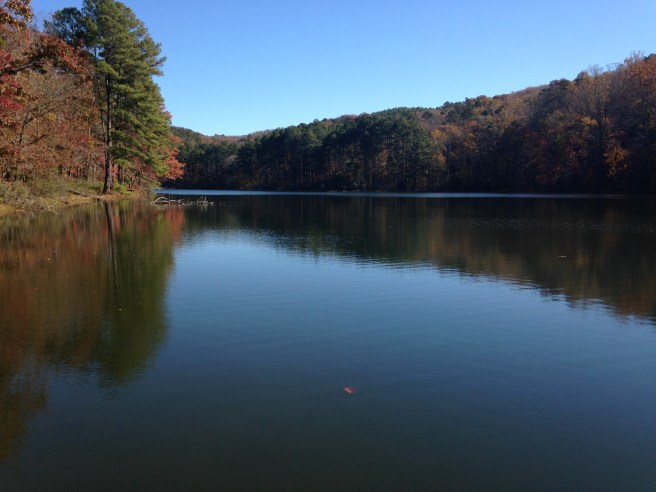
Lake Russell 2
Lake Russell, Habersham County, GA

Being out on the water gives us a chance to slow down, talk, laugh, recall the wonderful times we’ve had together, and make plans for the future.  Some of the places we go are fairly secluded, although there are usually a few people around either fishing or swimming.  She and I typically stay out for about an hour.  We enjoy being together, and while we like to be with family and friends, we also cherish the times we spend with just each other.  We work well together; as we often say, “We’re a good team.”  Beyond the recreation and exercise that this activity provides, I think for both of us it offers an opportunity to reflect on how precious time is, how beautiful the world is, how grateful we are for each other, and how lucky we are to be alive.

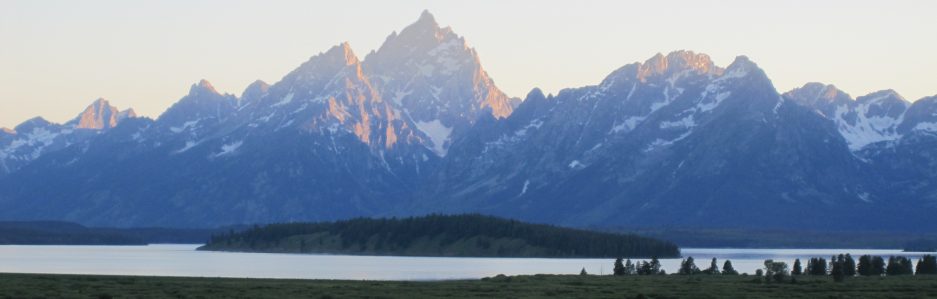
The Mountains Are Calling . . .

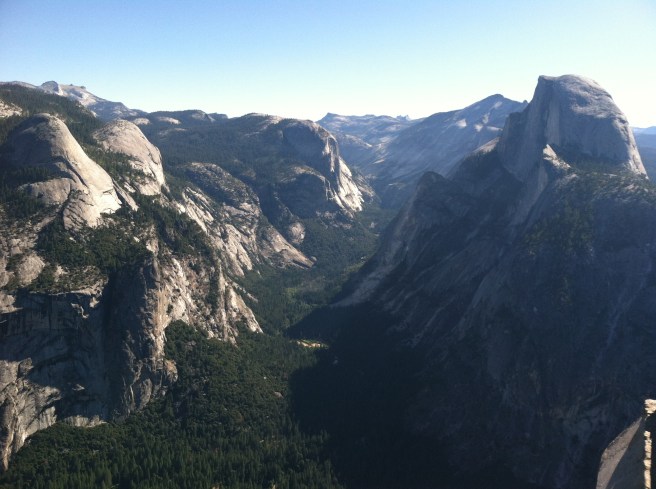
One of the most magnificent places I have ever visited is Yosemite National Park in California.  Ancient glacier activity in this region of the High Sierra left behind enormous rock formations that created a natural cathedral unsurpassed by anything ever designed by human minds or hands.  One of the early Europeans to explore the valley described it in these same terms.  John Muir visited Yosemite several times in the 19th and early 20th centuries, spending several years there in spite of the fact that he had a wife and children in San Francisco.  His appreciation for the beauty and wildness of Yosemite drove him to fight for its long-term preservation.  Some battles he lost, but by and large, his petitions to government officials are responsible for the establishment of the national park there.

Yosemite Valley
Yosemite Valley from Glacier Point

Lately I have been reading Muir’s descriptions of the land forms, his detailed identification of the flora and fauna, and his natural history of Yosemite in selections from the e-book, The Collected Works of John Muir.  I am amazed at how much ground he was able to cover and the extent to which he cataloged so many of the species in the area.  Without the aid of modern equipment or the assistance of the infrastructure later installed for hikers, Muir explored parts of the valley and surrounding region that only the most experienced hikers and climbers would attempt today. He craved the wilderness almost like a lover.  In the mountains and forests he found adventure, inspiration, stimulation, and peace.  For those who have visited Yosemite and were left speechless by its wonders, I highly recommend John Muir’s works — he manages to articulate what I could not put into words when I first saw this marvelous spectacle.

Right of Way

Before my wife, younger son, and I made our trip to Yellowstone this summer, we did like so many other families do before major trips and spent some time reading about the park, its unique features and characteristics, places of particular interest, and potential hazards to avoid.  I even watched a few videos about Yellowstone, both professionally-produced and amateur.  Of course, one of the major elements that brings millions to this park every year is the wildlife, and for most visitors, the principle of “the bigger the better” holds true.  Most of us want to see a bear, at least from a safe distance, but they tend to stay away from the roadways — we were lucky enough to see a mother and her cub the last day we were there.  The elk and moose are quite impressive in the size category too.  We saw several elk but not a moose.

The largest creature in the park, at least by weight, is one that is not very shy at all.  According to the National Park Service website about Yellowstone, this park “is the only place in the United States where bison have lived continuously since prehistoric times. Yellowstone bison are exceptional because they comprise the nation’s largest bison population on public land and are among the few bison herds that have not been hybridized through interbreeding with cattle. Unlike most other herds, this population has thousands of individuals that are allowed to roam relatively freely over the expansive landscape of Yellowstone National Park and some nearby areas of Montana. They also exhibit wild behavior like their ancient ancestors, congregating during the breeding season to compete for mates, as well as migration and exploration that result in the use of new habitat areas. These behaviors have enabled the successful restoration of a population that was on the brink of extinction just over a century ago.”

We knew that bison often made their way to the major roadways in the park and that traffic could be stopped for significant periods of time for herds of the animals to pass.  What we didn’t expect was that sometimes the bison actually use the roads as a path, slowly ambling their way along the pavement, almost as if they are curious about the visitors and have arrived for an inspection.  There are close to 5,000 bison in the park, so sightings of large herds are frequent.  Professional and amateur photographers come out before daybreak to claim their favorite spots on small hills in the bison hotspots, such as Hayden Valley, to get the best shots of the beasts in their natural environment.  However, as we discovered on our first day at Yellowstone, you can get a pretty good close-up photograph of a bison from the window of your car, as so many visitors have been doing for years.  I took this one from my window as we waited for a group of the animals to clear the road.

Bison
Yellowstone bison

Notice that these hooved creatures are following the center yellow line, almost as if it were a trail marker.  They were walking along slowly, seemingly with no fear or even regard for the nearby vehicles and their occupants.  The dangerous assumption by some park visitors is that these are harmless animals, but as calm as they seem to be, they can become extremely aggressive and dangerous if approached or if they feel threatened.  Park literature and signs are abundant warning people to stay a very safe distance from all wild animals in the park , especially bears and bison.  Several visitors are seriously injured each year from foolish encounters with bison.

As these massive animals passed our car, I was taken with how they brought everything to a standstill, commanding the right of way.  They marched through like royalty participating in a parade — the trooping of the colors as it were.  In many ways, the park is theirs, along with the other multitude of species that call Yellowstone home, as it should be.  I wish people would always keep in mind that we are only visitors, and as such, we should be on our best behavior to ensure that places like Yellowstone are preserved and treasured.

Of Beauty and Bridges

I took a recent business trip to Connecticut, a state I had never visited.  I flew into Hartford and drove an hour or so to the charming little hamlet of Cornwall in the northwest part of the state.  I stayed overnight in a garage apartment of the across-the-street neighbor of the person I was there to see.  This was late September and a chill was starting to settle in the air, though the leaves showed not much sign of color yet.  I had just enough free time while I was there to spend a few hours driving around the countryside and was delighted by the abundance of forests and hills in which the small towns in that portion of the state are nestled.

Covered Bridge in West Cornwall

Again, I found myself wandering around in places where it is nearly impossible to take a bad photograph.  I somewhat regret that wall calendars are no longer very useful in this age where today’s date is so easily ascertained with a mobile device regardless of one’s whereabouts.  The vistas afforded me on this trip could fill up the top half of wall calendars for decades to come.  This covered bridge, which I crossed a few times, is a perfect example, along with the river that flows to and under it.  The bridge was built in 1841 in Litchfield County, in the Berkshires region of Connecticut, to cross the Housatonic River.  With the last remaining fog of morning rising from the water and through the trees, the image below looks more like a painting than a photograph.

Housatonic River in West Cornwall, CT

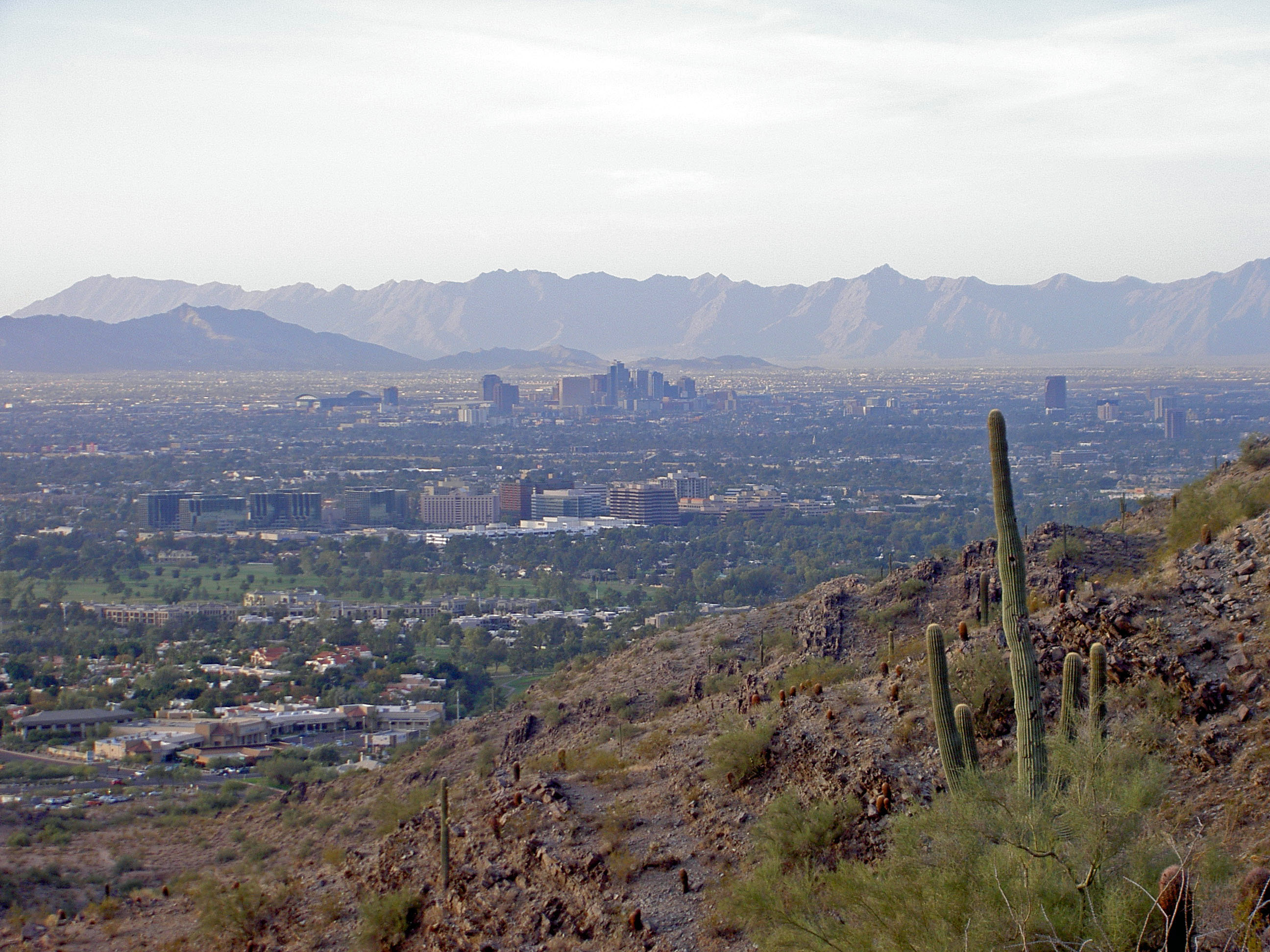
Phoenix Mountains Preserve

I have written several blog entries about hiking, an activity that my wife and I so enjoy and one that I am missing terribly since I broke my ankle last month.  I have also written about some of our favorite places to hike, which are often located in areas that offer distant vistas, most particularly mountains and valleys.  Truly one of the most spectacular places we have hiked is in Phoenix, Arizona, the city where my wife lived for nineteen years, before we met.  She has told me about how, when she lived in the area, she regularly drove to the Phoenix Mountains Preserve to hike the trails on over 6,000 acres of land owned by the city and managed by the Phoenix Mountains Preservation Council.  The network of trails in the Preserve winds up through small mountains and hills that reach about 2,000 feet above the desert floor and about 3,000 feet above sea level.  These elevations, combined with the mostly treeless landscape, provide hikers with incredible views of the enormous valley below and the vast sprawl of the metropolitan city and suburbs.

View from one of the trails

I traveled to Arizona for the first time in 2008 with my wife, and while we were there, she took me to the Preserve.  We hiked up one of the hills, not to the top but far enough to take some great photos that I have used on occasion as computer wallpaper, like the one above.  Somehow the mountains in the distance look so much higher than they are because they soar up from the flat, desert floor.  There is a very definite contrast between earth and sky in many portions of the west, and this is one of those places.  The diversity of plant life in the desert is far greater than most people who have not seen it can imagine.  The terrain is rocky and sandy but not too difficult to maneuver.  The Preserve is well used and a wonderful recreational asset for the people of Phoenix.

Macy’s in Bloom

Four years ago, my wife and I took my younger son and a girlfriend for a short trip to New York City for spring break.  Although my wife had been to the city before, for the rest of us it was the first time.  New York is iconic and so over the top.  I can’t imagine any first-time visitor not being impressed, or at least astounded.  Of course, we hit several of the top tourist sites, such as the Statue of Liberty and Times Square, but we also took in the major stores on Madison Avenue and Fifth Avenue.  We even made a few small purchases just for the bragging rights.

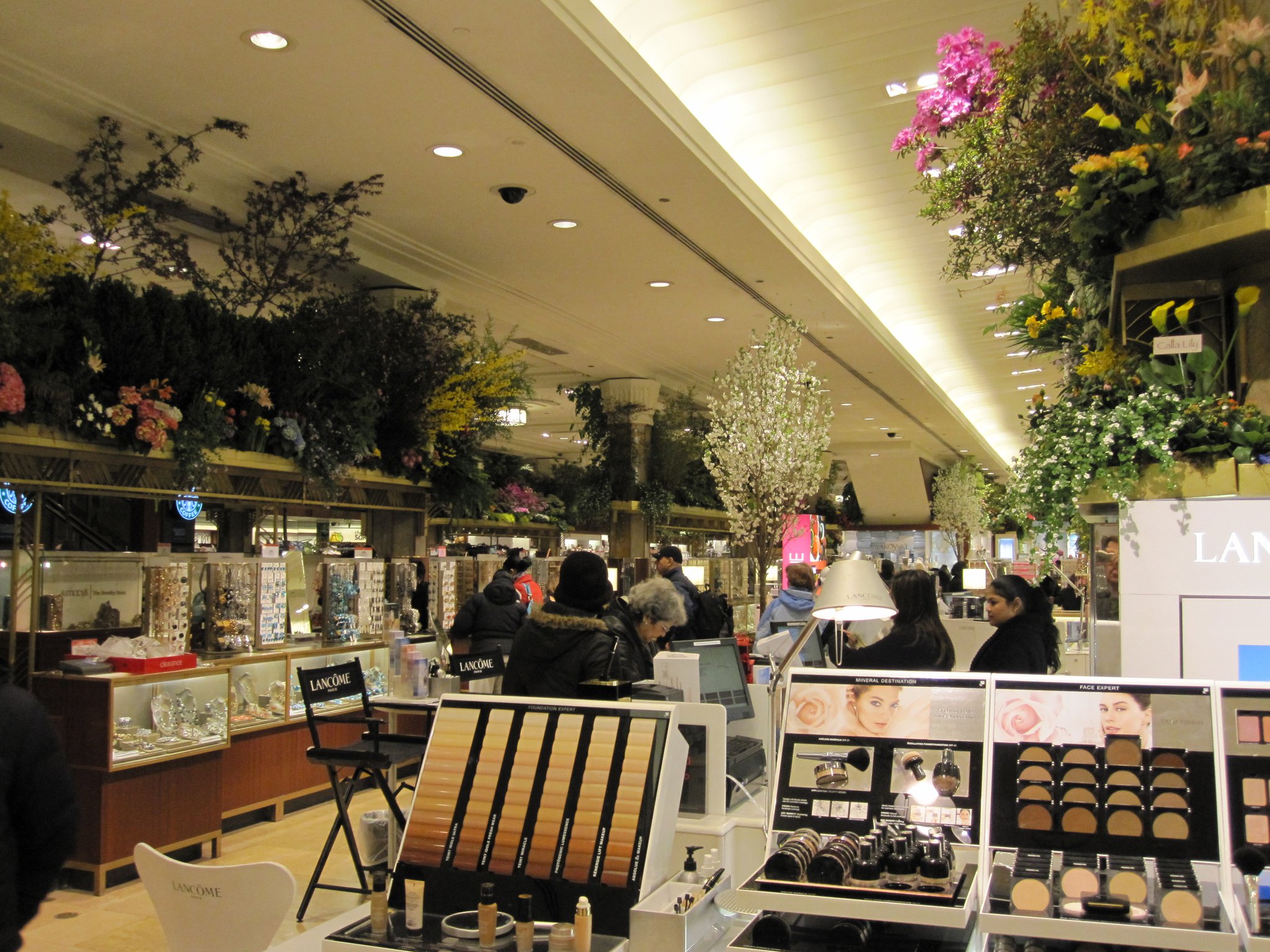
Oddly enough, the most beautiful and stunning site I saw on the trip was not one of the traditional NYC landmarks but was inside Macy’s Department Store.  The Flower Show, with its elaborate gardens and beautiful arrangements, has been a Macy’s spring tradition for the past 41 years.  Every available space was like an oasis of color and foliage.  Plants were all arranged on the tops of display cases, tucked into shelves, and scattered on counters throughout the entire store.  Corners were transformed into mini gardens.  There were exotic plants from around the world, and Macy’s brings in some of the top arrangers to put it all together.  It is a spectacular event that I highly recommend.

Macys flowers
Macy’s Flower Show, 2011

As I was wandering around from one department to the next, I kept imagining how much work it would take to pull off something like this show.  The set up must go on for days, and the clean up afterwards has to be a nightmare.  Macy’s has a special page on their website devoted to the annual event, which includes a fascinating time-lapse video of the installation of the show.  It’s truly amazing to watch.

A Deliberate Disconnection

On our family trip this summer to Yellowstone National Park, my wife found great accommodations for us at Headwaters Lodge at Flag Ranch.  It is conveniently located just a few miles from the southern entrance to the  park, providing easy access to Yellowstone and to Grand Tetons National Park.  The cabins we stayed in were comfortable enough, but not luxurious in the least.  They were not equipped with AC, which in the evening was no problem. We could open the windows, and the temperatures dropped significantly overnight.  There were no televisions or radios, and there was absolutely no cell service or wifi access.  The park literature made it clear that this kind of “disconnection” was somewhat deliberate, making it possible for visitors to appreciate the natural resources without electronic distractions.

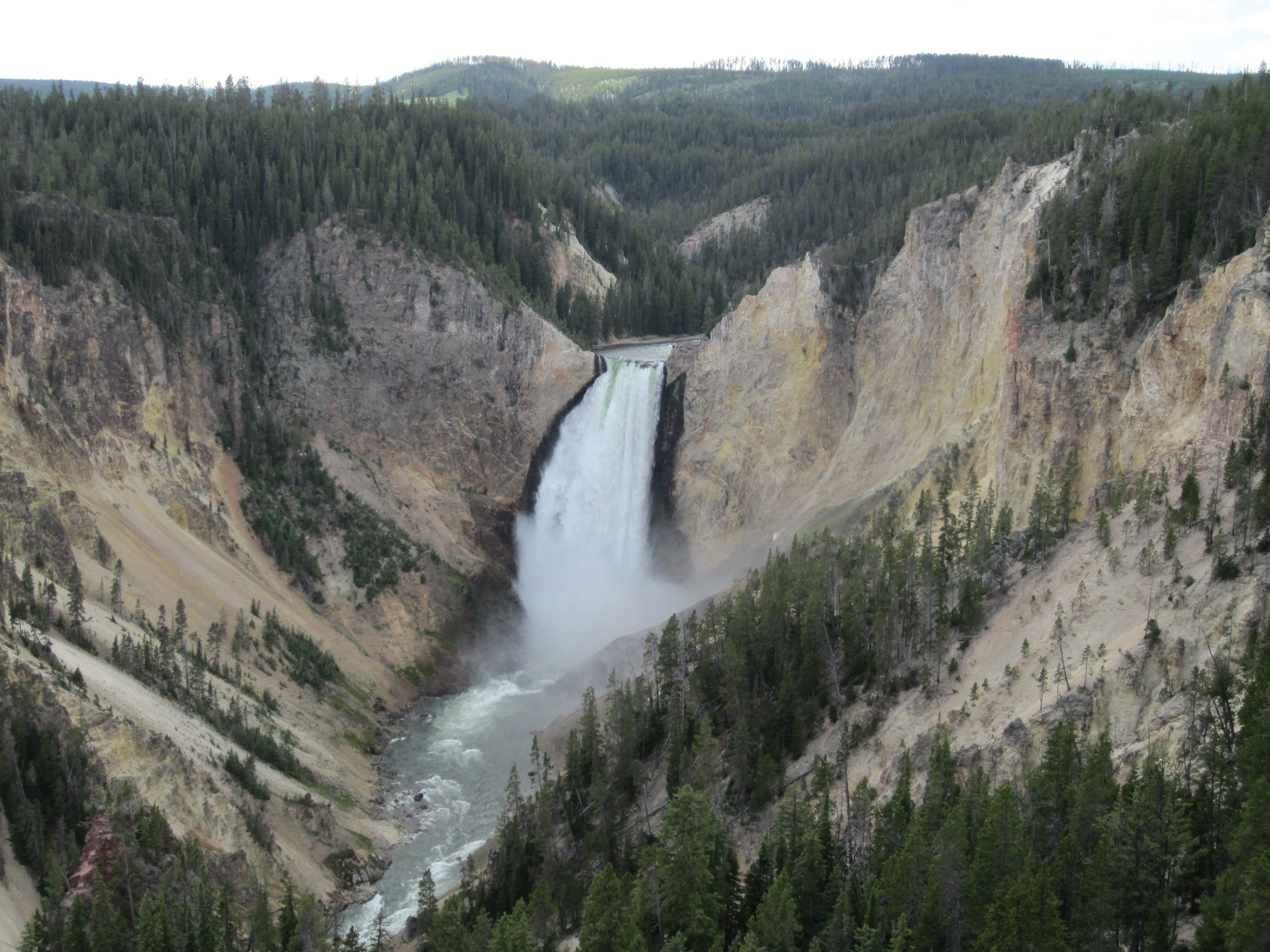
Lower Yellowstone Falls

Our campground was in quite a remote area between the two national parks, so we really weren’t surprised that we would have no cell service or wifi.  The lodge claimed to have wifi access, but we were never able to connect.  What was a bit surprising was the lack of cell service throughout the parks.  The only time we had a decent signal was at two or three of the major attractions, such as Old Faithful Lodge, or at a few of the stores and restaurants.   It took a day or so to get used to the idea of this kind of isolation, but the adjustment finally came, for me at least.  The other functions of our devices worked, of course, and I was grateful to have the capability of taking photos with my phone, mainly as a backup for my small Cannon point-and-shoot.  Not being able to get calls from my other son back home or other family members was a little unsettling, I must admit.  I wouldn’t want to be that out of reach for weeks at a time, but for a few days, it was okay to be really away from so many of the elements of civilization.

I suspect the parks will eventually find it necessary to expand their cell service and even the wifi access, not only for park personnel, but also for vendors and visitors.  Doing so will no doubt change the experience of being in these wilderness sanctuaries for most visitors, and that is a bit unfortunate.  Being immersed in the sights, sounds, and smells of the outdoors is certainly hindered by our gadgets, and having an opportunity to explore the wonders of nature without them definitely enhanced the encounter for me.

Wide Open Spaces

Recently, I took another one of those “trips of a lifetime” with my wife and one of my sons — this time to Yellowstone National Park.  Although my wife had briefly visited some years back, my son and I had never been.  We stayed for three full days in a cabin just a few miles from the south entrance of the park, which afforded us great access not only to Yellowstone but also to the Grand Tetons National Park as well as Jackson, Wyoming.  Like my other experiences traveling to the west, I was most taken by the enormity of space in this portion of the country.  The sky goes on forever.  The landscape melts into the distance in a blue haze.  The vistas are simply overwhelming.

Yellowstone National Park

Of course, like many visitors to this National Park, my son and I were hoping to see plenty of wildlife, which is practically unavoidable.  In fact, there have been several recent incidents of people/wildlife encounters that have ended up not too pleasant for the humans involved, especially with bison.  At a safe distance, and in the protection of an automobile, it is so rewarding to see animals in their own habitat, protected as they are from most human threats.  We were fortunate enough to see bison, elk, prong horns, and an otter.  We desperately wanted to see a grizzly bear but were not willing to hike in the back country where one would typically find them.  However, on the last day, we were lucky enough to see a mother brown bear and her playful cub resting in the shade of some trees, just a hundred or so yards from the roadway.

I will write more posts about this trip in the weeks ahead, so we will consider this short piece an introduction.  For those who haven’t been but have contemplated a trip to Yellowstone, I would strongly encourage placing it near the top of your bucket list, especially if you have an appreciation for the great outdoors.

I Love Waterfalls

As I have mentioned before on this blog, I enjoy hiking.  I am also attracted to water – mostly water that is moving fast enough to make sound.  I have hiked along the coast, through the mountains, in the desert, in deep forests, along rocky peaks, and in suburban areas.  More often than not, I select a place to hike that is either in sight of water or has running water as a destination.  My family takes advantage of state park trails which are frequently near the shoreline of a lake or wind along a creek or river.

The ultimate culmination of a hike to me is a waterfall — the bigger and louder the better.  One of the tallest I have seen recently is just outside Cherokee, North Carolina.  Mingo Falls is on the Cherokee Indian Reservation (Qualla Boundary), just outside Great Smoky Mountains National Park.   At 120 feet tall, the waterfall is one of the tallest and most spectacular in the southern Appalachians.  The hike on Pigeon Creek Trail to the waterfall is only 0.4 miles in length, but is considered moderate in difficulty because it is largely composed of steps and a fairly steep climb up to the falls.

2014-12-27 14.40.15

I took this photograph in December, just after Christmas.  It was a great time to get a shot because the foliage was gone from most of the trees, which revealed a good portion of the width of the falls as well as the vertical expanse.  I was standing on the small bridge at the base of the falls where the creek continues cascading down the hillside.  The sound is mighty but not deafening.  I love waterfalls, and this is one of my favorites.  In fact, it is currently the home-screen photo on my iPhone.

Exploring Yonah Lake on Kayaks

My younger son and I went out on the Hobie kayaks for the first time this season.  We explored a lake in northeast Georgia that we’ve never visited before: Yonah Lake.  We accessed the lake at Georgia Power Company’s campground, Tugaloo Park.  The lake is more like a very wide river winding its way between the hills near Tallulah Gorge.  The mountain laurel around the shoreline is still in bloom and quite beautiful.  There is at least one brook that feeds into the lake in a great little shady cove that we could reach with our yaks.  We also saw a guy skiing on a device that looked like a ski on top of an underwater blade.  He was obviously training, performing some pretty impressive flips on the wakes.  We will definitely come back to this spot again, perhaps to fish.

2015-05-11 11.07.17 2015-05-17 11.35.54 2015-05-17 11.54.33