I have seen and heard restaurant owners for years use the phrase “dining experience” to describe what it is like to have a meal at their establishment. For a long time I considered the phrase to be poor marketing at best and false advertising at worst. If I wanted an experience I would go see a good movie or play, not eat a plate of ravioli with a side Caesar salad. However, my attitude changed several years ago when my wife and I took a trip to San Francisco, which also included a drive down the coast on Highway 1 to spend a night at Carmel-by-the-Sea. We were only there for a short time, and we wanted to have a good meal before heading out the next day. We began searching for restaurants online and decided on a place called Casanova in the little village of Carmel. Nestled among the shops and galleries there, Casanova is a quaint, unassuming place with a simple façade that would be easy to walk past unnoticed. And that would be a mistake.
Casanova is a family owned and operated restaurant that serves rustic and classic cuisine, obviously with an Italian flavor. Ingredients come from local, small organic farms and fisheries. The world-class wine cellar is managed by a certified wine educator. The chef’s menu selections range from veal dishes to lamb, beef, and seafood. They have inside and outside seating. We were seated outside in a small courtyard area with plastic sheeting and heaters. It wasn’t closed off enough to keep small birds from flitting in and out looking for crumbs on the ground left by diners, which we decided was charming instead of a deterrent or distraction.
Our meal was exquisite, from appetizers all the way through the courses to dessert. We were there for almost two hours but never once felt like the evening was dragging. We were not in a secluded, dimly-lit corner of a dining room, but the setting was still completely romantic. We could easily forget that there were other diners around us, which was made possible by the most professional waiter I have ever had the pleasure of meeting. I don’t recall his name. I do remember that he was a middle-aged man who was extremely well-spoken, impressively knowledgeable about the restaurant’s offerings and specialties, and very skilled at his profession. He was attentive without hovering, interesting but not intrusive. The food and our waiter turned that dinner into a true dining experience that I will not forget. I never had a meal in Rome, Italy, that was better than what we had at Casanova.
The restaurant’s website now announces that they have acquired the table at which Vincent Van Gogh enjoyed his meals at the Auberge Ravoux. The arrival of the table marks the beginning of a cultural exchange between these two artistic communities: Carmel-by-the-Sea and Auvers-sur-Oise, France, where Van Gogh spent the last days of his life. Dining at Casanova involves much more than just enjoying a delicious meal. It is about being transported from the malaise to the magnificent! As they say in the book reviews: “highly recommended.”
Sometime in February while I was scrolling through Facebook, someone posted a short video of himself playing his guitar. In the message that accompanied the video, he mentioned that he was on a solo retreat in a cabin. It had never occurred to me until then that a weekend of solitude and reflection could be so attractive. A wise scholar and friend recently observed that, like she and her husband, my wife and I are “well married.” It’s a phrase that we had not used before but now fully embrace. We are indeed well married. We have been together nine years and married for eight of them. We enjoy each other’s company. We like working at the same place, coming home for lunch together and having dinner together, either at home or at a restaurant. We love to travel; we love to hike; we love working on projects; we enjoy our time at home, especially our evenings and weekends. My wife has some friends and colleagues that she will occasionally meet for lunch or dinner, and sometimes she makes it an overnight trip. It is good and healthy for her to stay connected to these people because they have been so important in her life and her profession. Sadly, there are more such connections in other parts of the country where she has previously lived, and it is difficult to see them regularly, but she makes an effort to do so when possible.
I have a good friend who lives not too far away from us – someone that I have been close to for over twenty years now. We see each other about once a year or so, and I enjoy catching up with him. We also stay in touch by phone, texts, and Facebook. I don’t have as many good friends as my wife does, that is, people I have maintained a close relationship with through the years. As gregarious as I probably appear to colleagues and acquaintances, the truth is I am a bit shy around people I don’t know, unless I am speaking to groups professionally or performing music. I was in a band for ten years, so I’m sure there are folks who would scoff at the idea of my being bashful in any shape or form. There are times, and only for brief periods, when I truly cherish being alone.
When I saw that Facebook video post, I began to think about what it would be like to have a solo weekend, something I have not done in decades. I started thinking about what I would do for 36-48 hours away from my bride, my sons, my job, our home – away from anyone I know. I could read, write, study, play music, think . . . and think some more. I was a bit nervous about pitching this idea to my wife, because the last thing I wanted her to think was that I don’t adore her company. This woman who clearly loves me unconditionally thought the idea was marvelous and whole-heartedly supported my decision to find a cabin in the mountains for an early spring mini-sabbatical. Now, as I write this blog entry, it is Saturday afternoon. I am looking out the window of my retreat cabin in the high country of North Carolina less than a mile from the Blue Ridge Parkway.
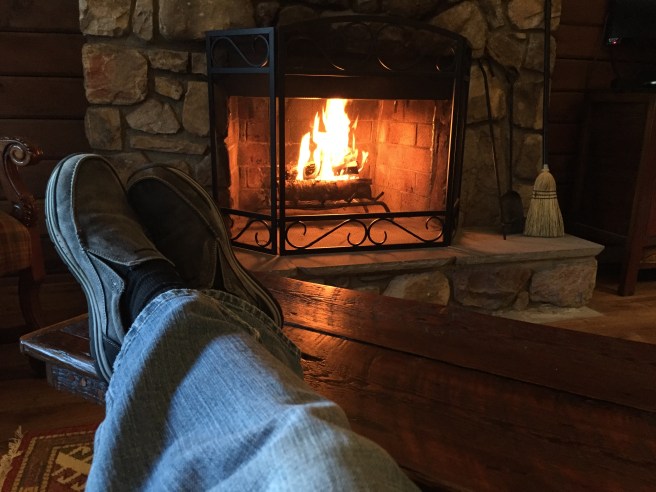
I arrived yesterday afternoon, checked in with the inn keeper in town, drove a few miles to my cabin, settled in quickly, poured a glass of Jack Daniel’s Tennessee Honey and headed to the front lawn to relax in a comfortable chair and take in the view. I followed the inn keeper’s recommendation for dinner at a local bistro, which was an excellent choice. I bought just enough provisions at the grocery store to keep me satisfied for 24 hours, and then I came back to the cabin and sipped more whiskey. A storm came through last night and dusted the surrounding hillsides with snow, just enough to make it pretty but not so much to make it a nuisance. I got up a little before 8:00, put on the coffee, and started reading Fitzgerald’s The Great Gatsby, a novel I read many years ago and have mostly forgotten. I have been reading news and op-ed pieces from the New York Times. I have had a fire in the fireplace for the last couple of hours, and I have played songs on my guitar that I haven’t attempted in years. I don’t intend to leave the cabin until heading out for dinner this evening. I am enjoying a full earth’s rotation of intense relaxation.
Relaxing by the fire
Just now, as I sat down to reflect on this opportunity and record it, I was reminded with great humility and appreciation of just how fortunate I am. When people from my past ask me if I’m happy, I usually reply, “I’m the luckiest guy I’ve ever met.” I am lucky to have a wife who ignores my inadequacies, my rough edges, my occasional crudity, and loves me with a devotion that is almost frightening. It is also a gift to love her more than I have ever loved another woman. I am lucky that my sons seem to be stable and healthy in spite of great tragedy and loss they have endured. I am lucky to have extended family who may not always understand me and perhaps even worry about me, but who also love me deeply and take joy in my happiness. I am lucky to have been raised by parents and grandparents who encouraged creativity, loved to laugh, believed in the virtue of hard work, and exhibited rock-solid faith in their God and their church. While not having the advantages afforded by a higher formal education, my parents made the necessary sacrifices to ensure that I received the advanced degrees I desired and that have opened up so many possibilities for me through the years. I have had some incredibly inspiring teachers.
I have lived almost 56 years with few significant health challenges. I have some modest talents and skills that are fulfilling to me and that I have been able to share with others. My wife and I have a standard of living that is not enjoyed by a large majority of the world’s population. We are grateful, even though we know our generosity does not extend as far as it should. My career path has presented me with so many memorable encounters and experiences, and I know how rare that privilege is. Lastly, we have the resources that make it possible for me to rent a cabin in the Appalachian Mountains to be self-indulgent for a weekend and to contemplate the precious gift of a good life that I’m sure I don’t deserve but for which I am eternally grateful. And to my bride, the love of my life: thank you for giving me this place and time.
My wife and I made a trip to Santa Fe, New Mexico during the summer of 2014. She had been to the town several times, but I had not. We both love art, culture, and the southwest, and Santa Fe is one of those places where all three intersect. We stayed in a lovely, rambling house just off Canyon Road, which placed us in walking distance from the major downtown attractions and more art galleries than anyone could possibly explore in a year’s time — alas, we were there for less than a week.
We also took some excursions outside the town to places like Taos, a famous haven for artists. I went out to the center of the Rio Grande Gorge Bridge, the 7th highest bridge in the United States and the 82nd highest bridge in the world. We ate incredible, authentic Mexican food at a little roadside taco stand. We flew in and out of Albuquerque, so we were able to see some of the state’s desert landscape on the road between the two locations.
We met up with some friends one evening who live in Albuquerque who routinely make the drive up to Santa Fe to attend the opera located just outside town. They invited us to go with them. I was not raised with any exposure, appreciation, or understanding of opera. I was raised with the music of the Allman Brothers (outside of church, that is); the singing of Elton John; the acting of Robert Redford. The closest I came to an opera performance was a Bugs Bunny cartoon or a Disney movie. Even as an adult, although I am more familiar with famous operas, I still don’t know much about the art form. Unfortunately, my cultural horizons don’t expand very far beyond literature and the thick forests of popular music, theater, and cinema.
For those who fall into this same category, I have good news. There is a place you can go to appreciate opera even if you have no interest in it whatsoever. The Santa Fe Opera House has been attracting audiences to watch performances and take in the magnificent views of the mountain ranges of northern New Mexico since 1957. According to its website, more than 2,000 performances of 164 different operas have been given here, including fourteen world premieres and 45 American premieres. Many singers whose names are now found on the rosters of the world’s leading opera houses began their careers in Santa Fe. The company was founded by the late John Crosby, a young conductor from New York, who had an idea of starting an opera company to give American singers an opportunity to learn and perform new roles in a setting that allowed ample time to rehearse and prepare each production.
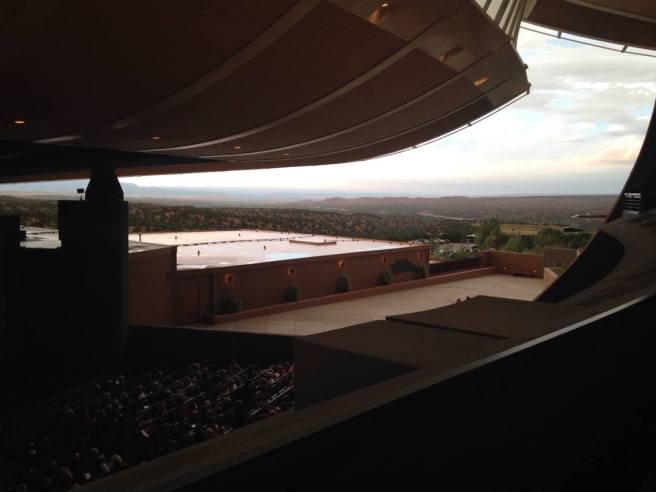
The Crosby Theater was built in 1998 and takes the idea of “open air” to a whole new level. The modern structure features white sail-like wind baffles, a clerestory window for light, and a backstage that is almost completely open. The sides of the theater are also open, so the audience can see the mountain peeks rising many miles away. The breathtaking views are enough to distract even the most devoted opera enthusiast, but for someone like me who is a bit less than enthusiastic, this venue became the attraction. We had a lovely dinner on the grounds of the opera before the performance. The show we saw was a comedy, all in another language, of course. There were hilarious parts, the orchestral music was excellent, and I ended up enjoying it more than I had anticipated. Still, I can’t imagine a stage performance anywhere in the world that could be more impressive than the setting of the expansive desert as night approaches. If you love opera, you have to go to the Santa Fe Opera. If you don’t love opera, this is where you need to go to start appreciating it.
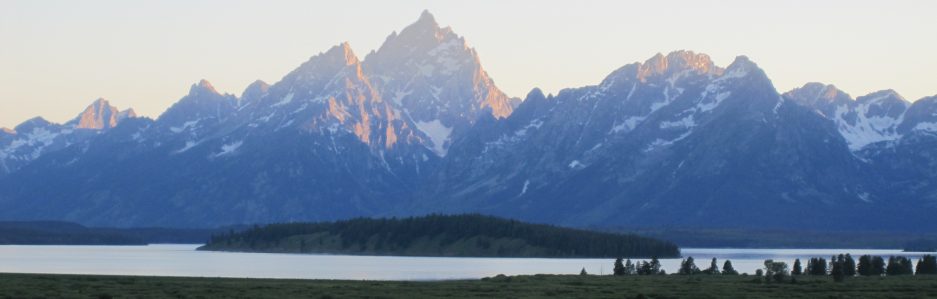
They call the range of mountain peaks at Jackson Hole the Grand Tetons, although there is actually one peak in the range that is identified as “Grand Teton.” Whether you choose to believe the name is derived from the French term for large breasts or the Native-American Teton Sioux tribe, the adjective is about the best we can come up with to describe this majestic geological feature — GRAND. But when you are standing on the deck of Jackson Lake Lodge, or sitting inside the lobby with its 60-foot tall windows, peering across the great expanse of land and water at those rocky crags rising thousands of feet into the sky, you soon realize that a word like “grand” doesn’t touch it. Somehow, this is one of those sights, for me at least, that language fails to describe, that photographs cannot completely reproduce, that videos do not totally capture. Of course, recognizing all of this did not stop me from making video clips and taking photographs, like the one here. Grand Teton National Park is another one of those places I have had the joy of visiting where I am reminded how small I am and just how magnificent the natural world is. Put it on your bucket list.
About six years ago, my wife and I were on a business trip in Savannah, Georgia, with her boss. We decided to have dinner at one of the best restaurants in the historic section of the city, a place called the Olde Pink House on Abercorn Street. We didn’t have reservations but were fortunate enough to get a table in the basement bar, where there was a fire blazing in a large fireplace, and the light in the room was soft and low. It was a very relaxed setting, with an old world kind of atmosphere, which is exactly what one should expect in one of the South’s oldest cities. Our waiter was quite knowledgeable about their wine selection, so we asked him to decant a nice, dry wine to go with dinner. He brought the bottle to the table, poured half the contents through the filter into the large decanter, swirled the liquid to release the bouquet, and allowed us to smell the wine before he poured each of us a glass. I have now forgotten the variety (probably a merlot), but I do remember that it was just about the best glass of wine I had ever tasted. We asked him about the brand, and he told us it was a Hess. We had never heard of it, but we were determined to find out more about the winery.
Entrance to Hess Winery
The Hess Collection winery is in the Mount Veeder area of Napa Valley in California. Grapes have been cultivated on the property at least as far back as the 1870s. From 1900 to 1929, the property was owned by Colonel Theodore Gier, who built a three-story building that would eventually hold the Hess Collection’s historic barrel chai and art gallery. After a few more owners and continued development and expansion through the 20th century, a man named Donald Hess purchased 900 acres on Mount Veeder to begin the Hess Collection. Over 600 acres are set aside as undeveloped land to support wildlife corridors, fish-friendly farming practices, and biodiversity. The Hess Collection opened to the public in June, 1989, following a two-year renovation of the facility which includes 13,000 square feet of Donald Hess’s personal contemporary art collection.
In 2011, my wife and I took a fabulous vacation to San Francisco, which included several side trips. One of our excursions was a drive up to Napa to pay a visit to the Hess Collection winery. It was magnificent. In addition to tasting several varieties and buying a case to take home with us, we also visited the incredible art gallery and gardens. According to the website, “Donald Hess began collecting art in 1966. Today, the Hess Collection houses less than a quarter of a collection that is shown in museums worldwide. His collecting style is a personal endeavor driven by passion rather than monetary investment or current trends. He develops a close dialogue with an artist to better understand what drives him or her to create and he carefully limits his focus as a collector to 20 living artists whose work he faithfully supports long term. As is evident by the caliber of the collection, he collects with the uncanny ability to acquire works by lesser known artists who often go on to become well known and respected in their disciplines. His typical commitment to an artist spans decades and various stages of his career.”
Gardens at Hess Winery
My wife and I drink wine fairly often. We are nowhere close to being authorities, and we are certainly not wine snobs. Grocery store brands work fine for us most of the time. Our favorable impression of the wine we had that evening at the Olde Pink House may have had more to do with the company and the dining experience than the sophistication of our palates, but we liked it enough to search out where the grapes are grown, which gave us an even deeper appreciation for the brand. The story of Donald Hess and his enterprise, which he has now passed down to the next generations, is a fascinating one. Seeing the actual vineyards where a great bottle of wine originates presented us with a wonderful moment of connection that I’m sure we will remember for a long time.
I have been on one cruise in my life. When my sons were much younger, their mother and I signed up with a group of families we knew and booked a vacation on the Disney Cruise Lines for four nights in the Caribbean, dropping in on the Bahamas along the way. It was a great trip, and Disney knows how to entertain adults and children almost equally. I especially liked the all-inclusive nature of the experience, where food, most drinks, and all entertainment were part of the package — no need to carry around cash or credit cards. Unfortunately, it was shortly after we came in from the sea and returned home that I realized something wasn’t quite right in my head (yes, the jokes could go on forever). I stayed on that damned boat for an additional two weeks, or in other words, it took that long for me to regain my land legs, as my doctor diagnosed it. The feeling was similar to the sense of motion when riding on a fast elevator . . . without the elevator. After about two weeks it began to diminish until it completely vanished, but I was miserable in the interim. Most doctors refer to this problem as Mal de debarquement (disembarkment) syndrome. It was bad enough that I will never get on a ship again. It happens after I fly also, but inconsistently and not with symptoms as severe as those following the Disney cruise.
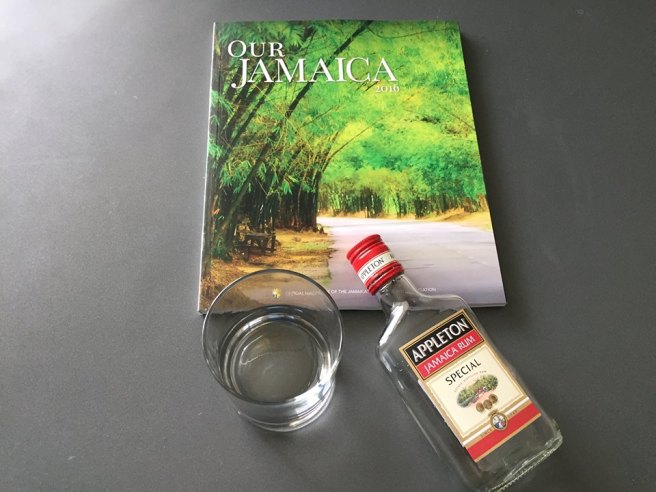
My wife loves cruises and went on several before we met. In recent years, we have been searching for resorts that would offer the similar all-inclusive package without having to set sail to get it. We heard from a colleague at work about the all-inclusive resorts at Jamaica, specifically at Montego Bay. After a bit of research, we decided on the Hyatt Zilara Rose Hall Resort in Montego Bay, Jamaica. The Zilara is an adult-only resort and is actually a recent addition to the older but expanded and renovated Rose Hall Ziva, formerly owned and operated by Ritz Carlton. The two complexes are directly adjacent to one another with shared restaurants and retailers. All meals, room service, alcohol, gym privileges, and many amenities are included in the price of the room. The rooms are very upscale, with bath tubs, fancy showers, large balconies and way-above-average balcony furniture. The view from our room was fantastic.
View from our balcony
Obviously, the options are limited at a land resort. There are no ports-of-call, the entertainment is not very extensive, and the food is not as plentiful. But, the rooms are vastly more spacious than a ship cabin, there are no rough seas, and my head did not spin, even though I drank enough alcohol to practically send it into orbit. We were introduced to a drink called a Dirty Banana (I like to call it a Nasty Nanna) that became a good friend. We did decide to pay a little extra for a couples’ massage in a cabana located only a few yards from the lapping waves of the shores. It was heaven. In short, the Zalara met up to, if not exceeded, our expectations for what an all-inclusive resort should be, and we would definitely consider returning at some point in the future.
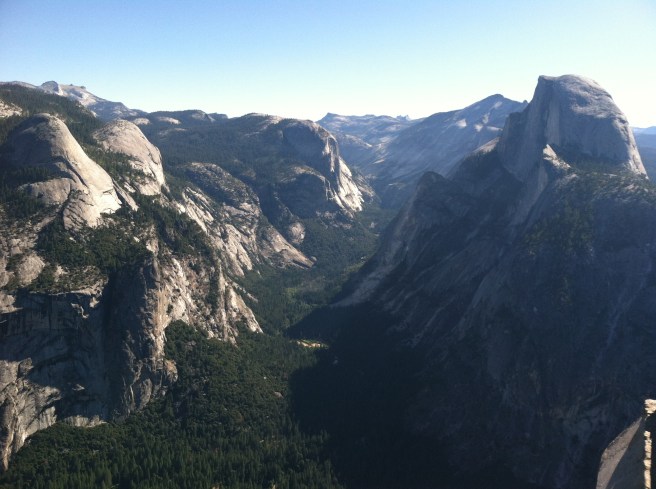
One of the most magnificent places I have ever visited is Yosemite National Park in California. Ancient glacier activity in this region of the High Sierra left behind enormous rock formations that created a natural cathedral unsurpassed by anything ever designed by human minds or hands. One of the early Europeans to explore the valley described it in these same terms. John Muir visited Yosemite several times in the 19th and early 20th centuries, spending several years there in spite of the fact that he had a wife and children in San Francisco. His appreciation for the beauty and wildness of Yosemite drove him to fight for its long-term preservation. Some battles he lost, but by and large, his petitions to government officials are responsible for the establishment of the national park there.
Yosemite Valley from Glacier Point
Lately I have been reading Muir’s descriptions of the land forms, his detailed identification of the flora and fauna, and his natural history of Yosemite in selections from the e-book, The Collected Works of John Muir. I am amazed at how much ground he was able to cover and the extent to which he cataloged so many of the species in the area. Without the aid of modern equipment or the assistance of the infrastructure later installed for hikers, Muir explored parts of the valley and surrounding region that only the most experienced hikers and climbers would attempt today. He craved the wilderness almost like a lover. In the mountains and forests he found adventure, inspiration, stimulation, and peace. For those who have visited Yosemite and were left speechless by its wonders, I highly recommend John Muir’s works — he manages to articulate what I could not put into words when I first saw this marvelous spectacle.
Before my wife, younger son, and I made our trip to Yellowstone this summer, we did like so many other families do before major trips and spent some time reading about the park, its unique features and characteristics, places of particular interest, and potential hazards to avoid. I even watched a few videos about Yellowstone, both professionally-produced and amateur. Of course, one of the major elements that brings millions to this park every year is the wildlife, and for most visitors, the principle of “the bigger the better” holds true. Most of us want to see a bear, at least from a safe distance, but they tend to stay away from the roadways — we were lucky enough to see a mother and her cub the last day we were there. The elk and moose are quite impressive in the size category too. We saw several elk but not a moose.
The largest creature in the park, at least by weight, is one that is not very shy at all. According to the National Park Service website about Yellowstone, this park “is the only place in the United States where bison have lived continuously since prehistoric times. Yellowstone bison are exceptional because they comprise the nation’s largest bison population on public land and are among the few bison herds that have not been hybridized through interbreeding with cattle. Unlike most other herds, this population has thousands of individuals that are allowed to roam relatively freely over the expansive landscape of Yellowstone National Park and some nearby areas of Montana. They also exhibit wild behavior like their ancient ancestors, congregating during the breeding season to compete for mates, as well as migration and exploration that result in the use of new habitat areas. These behaviors have enabled the successful restoration of a population that was on the brink of extinction just over a century ago.”
We knew that bison often made their way to the major roadways in the park and that traffic could be stopped for significant periods of time for herds of the animals to pass. What we didn’t expect was that sometimes the bison actually use the roads as a path, slowly ambling their way along the pavement, almost as if they are curious about the visitors and have arrived for an inspection. There are close to 5,000 bison in the park, so sightings of large herds are frequent. Professional and amateur photographers come out before daybreak to claim their favorite spots on small hills in the bison hotspots, such as Hayden Valley, to get the best shots of the beasts in their natural environment. However, as we discovered on our first day at Yellowstone, you can get a pretty good close-up photograph of a bison from the window of your car, as so many visitors have been doing for years. I took this one from my window as we waited for a group of the animals to clear the road.
Yellowstone bison
Notice that these hooved creatures are following the center yellow line, almost as if it were a trail marker. They were walking along slowly, seemingly with no fear or even regard for the nearby vehicles and their occupants. The dangerous assumption by some park visitors is that these are harmless animals, but as calm as they seem to be, they can become extremely aggressive and dangerous if approached or if they feel threatened. Park literature and signs are abundant warning people to stay a very safe distance from all wild animals in the park , especially bears and bison. Several visitors are seriously injured each year from foolish encounters with bison.
As these massive animals passed our car, I was taken with how they brought everything to a standstill, commanding the right of way. They marched through like royalty participating in a parade — the trooping of the colors as it were. In many ways, the park is theirs, along with the other multitude of species that call Yellowstone home, as it should be. I wish people would always keep in mind that we are only visitors, and as such, we should be on our best behavior to ensure that places like Yellowstone are preserved and treasured.
I took a recent business trip to Connecticut, a state I had never visited. I flew into Hartford and drove an hour or so to the charming little hamlet of Cornwall in the northwest part of the state. I stayed overnight in a garage apartment of the across-the-street neighbor of the person I was there to see. This was late September and a chill was starting to settle in the air, though the leaves showed not much sign of color yet. I had just enough free time while I was there to spend a few hours driving around the countryside and was delighted by the abundance of forests and hills in which the small towns in that portion of the state are nestled.
Covered Bridge in West Cornwall
Again, I found myself wandering around in places where it is nearly impossible to take a bad photograph. I somewhat regret that wall calendars are no longer very useful in this age where today’s date is so easily ascertained with a mobile device regardless of one’s whereabouts. The vistas afforded me on this trip could fill up the top half of wall calendars for decades to come. This covered bridge, which I crossed a few times, is a perfect example, along with the river that flows to and under it. The bridge was built in 1841 in Litchfield County, in the Berkshires region of Connecticut, to cross the Housatonic River. With the last remaining fog of morning rising from the water and through the trees, the image below looks more like a painting than a photograph.
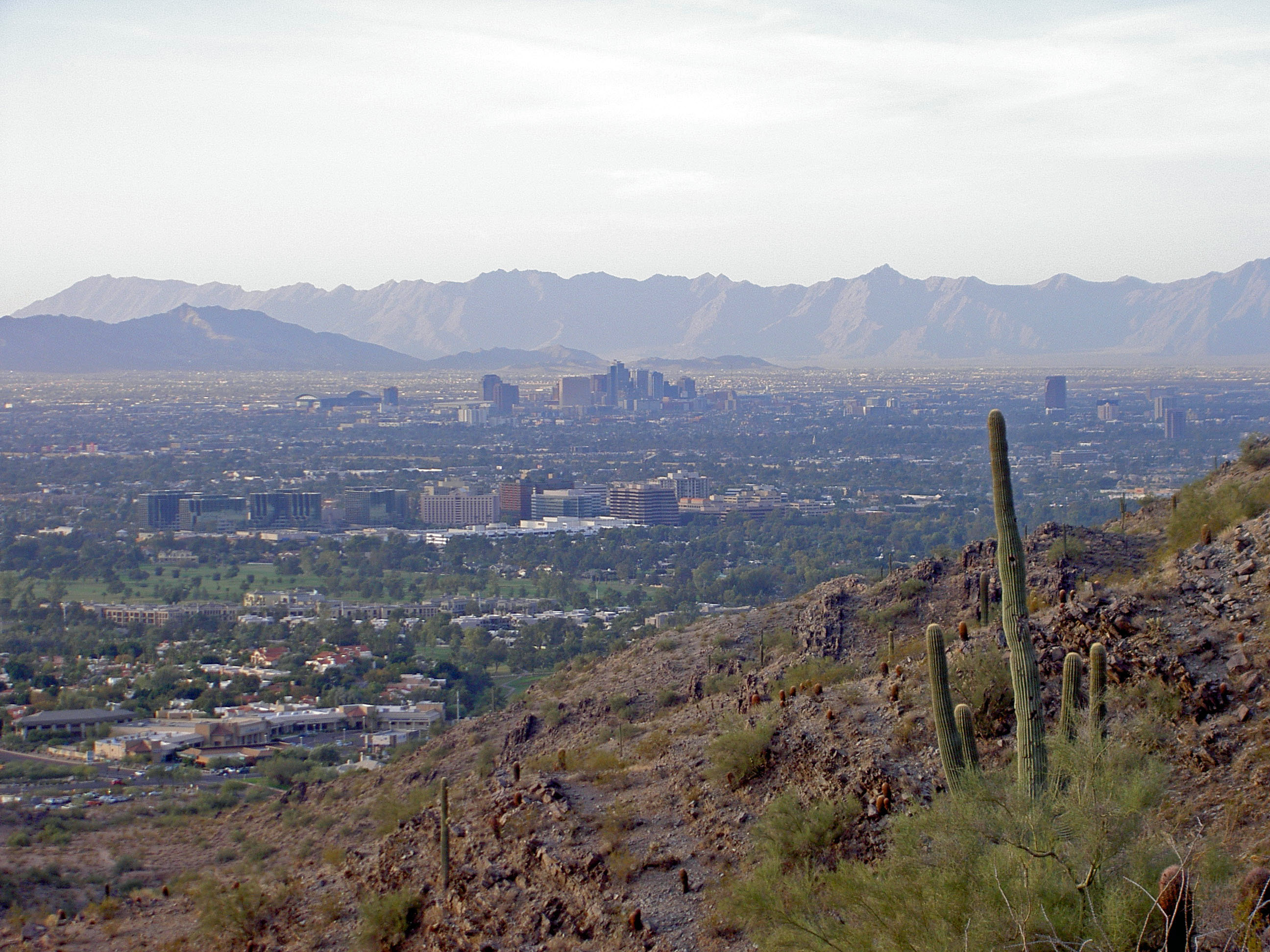
I have written several blog entries about hiking, an activity that my wife and I so enjoy and one that I am missing terribly since I broke my ankle last month. I have also written about some of our favorite places to hike, which are often located in areas that offer distant vistas, most particularly mountains and valleys. Truly one of the most spectacular places we have hiked is in Phoenix, Arizona, the city where my wife lived for nineteen years, before we met. She has told me about how, when she lived in the area, she regularly drove to the Phoenix Mountains Preserve to hike the trails on over 6,000 acres of land owned by the city and managed by the Phoenix Mountains Preservation Council. The network of trails in the Preserve winds up through small mountains and hills that reach about 2,000 feet above the desert floor and about 3,000 feet above sea level. These elevations, combined with the mostly treeless landscape, provide hikers with incredible views of the enormous valley below and the vast sprawl of the metropolitan city and suburbs.
View from one of the trails
I traveled to Arizona for the first time in 2008 with my wife, and while we were there, she took me to the Preserve. We hiked up one of the hills, not to the top but far enough to take some great photos that I have used on occasion as computer wallpaper, like the one above. Somehow the mountains in the distance look so much higher than they are because they soar up from the flat, desert floor. There is a very definite contrast between earth and sky in many portions of the west, and this is one of those places. The diversity of plant life in the desert is far greater than most people who have not seen it can imagine. The terrain is rocky and sandy but not too difficult to maneuver. The Preserve is well used and a wonderful recreational asset for the people of Phoenix.






 If You Want My Opinion