The Reading Spot

If you are an avid reader, then you most likely have a favorite place to read.  I have certainly had some nice ones over the decades: a legless chair on the floor in the corner of my room as a teen, a library study room in college, an office in my first house, a recliner in my second house, a comfy chair in the loft overlooking the lake in the first house with my wife, and now an even more comfortable chair in our living room where I can watch the birds feeding with the forest as a backdrop.  There are loads of Pinterest pages devoted to reading spots, blogs that explore their enchantment, and even an Annual Unusual Reading Spot Contest .

Designating a space for reading gives the activity a certain reverence, doesn’t it?  Not that we can’t do something else in that space, but we associate it with the pleasure of being immersed in someone else’s imagination (and our own), research, or advice.  The reading spot becomes a type of sanctuary, where the reader deliberately separates herself from her surroundings, and when she leaves the spot, she is not the same ever again.  Alice is indeed in Wonderland.

I also, through the decades, have developed the habit of rising as early as I can to read. That is to say, I get up as early as I can drag out of bed with enough sleep to function for the day.  I am most alert early in the morning and can focus on the words.  A cup of coffee and a book are the most perfect early-morning companions, aside from my wife, that I can imagine.

God is a Gambler. Who Knew? (Part 2)

(continued from January 29, 2016)

If you tell students that the Book of Job illustrates how human beings are easily dispensable to God, who is quite willing to use them to prove a point, they don’t exactly embrace this vision too comfortably.  Nevertheless, it is difficult to read this story and not come away with a less-than-flattering description of God’s nature.  When God turns Job over to Satan, the evil one goes to work quickly.  In short order, all of Job’s livestock and servants are killed, along with ten of his children.  Poor Job tears his clothes and shaves his head in mourning, but he still blesses God in his prayers, which prompts Satan to return to God to increase the stakes.  To further prove how strong Job’s faith really is, God allows Satan to inflict physical torment on the poor guy.  Afflicted with horrible skin sores, Job is in so much misery that his wife encourages him to curse God, give up the struggle, and die.  Still Job stands fast and continues to honor God.

You can push a person so far though, and Job comes close to reaching his limit.  His close friends offer him philosophical rhetoric to bring him comfort and to explain his horrible predicament, and they even try to convince him that he must have done something to anger God — repent and all will be well.  One of his pals, Elihu, explains that physical suffering helps the victim to comprehend God’s love and forgiveness when he finally is well again, knowing that God has rescued him from misery.  Again, what a disturbing view of God’s relationship to humanity!  Job doesn’t buy it.  He is confident in his righteousness and refuses to admit to uncommitted sins.  Still, he grows weary and finally gets a bit demanding of God, and goes so far as to express his wish that he had never been born.  From an ancient Hebrew perspective, this just may be where he crosses the line and prompts God to blast him with what could be the best poetry in the Bible, even though much is certainly lost in the translation.

Out of a mighty whirlwind, God poses a series of blistering, rhetorical questions to Job, most of which begin with the phrase “Where were you . . . ,” which are designed to show Job how ignorant he is of the majesty of creation and how magnificent God truly is.  After he picks himself up out of a heap, good old Job admits to the limitations of his human knowledge, a response that apparently pleases God.  According to many Biblical scholars, the original story (which is one of the oldest in the Bible) ends at this point.  However, in the Biblical narrative, the plot continues, and God returns Job’s health and even more property than he had before.  God blesses Job with new children and gives him an extremely long life as an added bonus.  Of course, one could argue that property can easily be replaced, but ten children?  In the end, God won the bet and proved Satan wrong, which is the most important thing to remember, right?  As I stated before, a tad disconcerting.

The reason that the Book of Job is so important in Hebrew literature, or any literature for that matter, is because it creatively explores the age-old question of why an omnipotent God allows good people to suffer.  After all, Job isn’t selected as the pawn in this contest between God and Satan because he is bad, but because he is the best.  For modern Christians, especially those who espouse the prosperity gospel so popular in America, Job’s story presents quite a quandary.  If you follow God’s commands and live a life of righteousness, you just may come to ruin as a reward for your faithfulness!  Somehow I doubt Joel Osteen preaches from Job very often — I could be wrong.

Considering that the ancient Hebrews had no concept of personal eternity and were convinced that, as God’s chosen people, they were fulfilling God’s plan for creation and living up to their side of the covenant with God, this story becomes somewhat more palatable for the modern reader.  The Hebrews were commanded by God to be fruitful and multiply, to spread across the land, and to bear witness to God’s preeminence among all other deities.  There is no room in this arrangement for the wish of never having been born.  The survival and well-being of the individual was vastly overshadowed by the importance of the survival and fruition of the Hebrew nation.  The suggestion is that human beings should not dare question God’s divine justice because they cannot possibly appreciate its complexity.

What I find particularly fascinating is how the Book of Job serves as an excellent foreshadow for the coming of Christ and his sacrificial death to save humanity.  Jesus wasn’t chosen to face horrible agony because he was a rotten sinner.  Jesus was sent by God to suffer because he was the spotless lamb.  With all respect and deference to the modern descendants of the Hebrew nation and culture, the story of the New Testament messiah conveniently “resurrects” the suffering servant, who even has his own moments of doubt and questioning in the garden.  This is the same Jesus who charges those who profess to love him to take up their cross and follow him.  I guess you could say that’s just part of the deal.

God is a Gambler. Who Knew? (Part 1)

For ten years, I taught a freshman course covering the first half of world history as an adjunct instructor at a small public liberal arts college.  I knew that a good portion of my students had been raised in Protestant homes, and most were probably very active in their home churches.  Because so much of early world history ends up being a class in comparative religions, I thought it only fair to give my students the following disclaimer on the first day of class: “I am the college teacher your preacher warned you about.”  I knew that much of what I was going to cover about the origins of the world’s major religions, including Christianity, was going to be met with some resistance.  A few students probably thought I was an agent of Satan.  Having come out of a fundamentalist Christian background (Southern Baptist), I could certainly sympathize with that position.

What I thought would be particularly helpful was to spend quality time talking about a book from the Old Testament in the Bible, the work that is raised to the level of idolatry by so many pastors and their congregants.  By looking at the book as both a work of literature and as holy scripture, I attempted to help them see some basic tenants of their faith from a different angle than what they were exposed to in church.  I hoped to offer a bit more historical context too, helping my students understand the genesis of three of the world’s religions: Judaism, Christianity, and Islam.  The book I chose is my favorite of the wisdom literature from the Biblical Hebrew tradition and one that I think is most representative of that tradition.  This book does such a good job of exploring the complexity of the human condition, especially as it is impacted by faith.  The book I selected was Job.

The major reason that Job is such a good book to teach to students who are familiar with Bible stories from church is because it presents all kinds of challenges to the traditional image of God and the accepted nature of God’s relationship to humanity.  Here we have the story the takes off with a discussion between God and Satan about a man named Job.  God is obviously very proud of Job, who seems to be the model of human creation.  In a little chat with Satan, God says, “Have you considered my servant Job? There is no one on earth like him; he is blameless and upright, a man who fears God and shuns evil.”  Of course, this is taken as a direct challenge to God’s adversary, Satan, who claims that Job is such a swell guy only because God is taking very good care of him.  After all, Job is wealthy, has a large family, and performs purification rituals for his family even when he knows of nothing they have done wrong.  He is described as the greatest man among all the people of the region.

So Satan decides to make a little bet with God, just to prove God wrong.  Satan presents God with this challenge concerning Job’s welfare: “Stretch out your hand and strike everything he has, and he will surely curse you to your face.”  And how does the creator of all the universe, including Job but also Satan and his minions, respond to this challenge?  Does God dismiss it as petty?  Does God make clear to Satan that God doesn’t need to prove anything to anyone?  Well, no.  Essentially God’s response to Satan is, “Oh yea?  Is that what you think?  Fine then!  You’re on!!”  In verse twelve of the Book of Job, we read:  “The Lord said to Satan, ‘Very well, then, everything he has is in your power, but on the man himself do not lay a finger.’”  The deck may be stacked in God’s favor, but still, God apparently likes to play the game!  Who knew?  And, the events that unfold after this exchange between God and Satan present us with a view of the deity that is both unexpected and just a tad disconcerting.

Everything’s Included; No Problem

I have been on one cruise in my life.  When my sons were much younger, their mother and I signed up with a group of families we knew and booked a vacation on the Disney Cruise Lines for four nights in the Caribbean, dropping in on the Bahamas along the way.  It was a great trip, and Disney knows how to entertain adults and children almost equally.  I especially liked the all-inclusive nature of the experience, where food, most drinks, and all entertainment were part of the package — no need to carry around cash or credit cards.  Unfortunately, it was shortly after we came in from the sea and returned home that I realized something wasn’t quite right in my head (yes, the jokes could go on forever).  I stayed on that damned boat for an additional two weeks, or in other words, it took that long for me to regain my land legs, as my doctor diagnosed it.  The feeling was similar to the sense of motion when riding on a fast elevator . . .  without the elevator.  After about two weeks it began to diminish until it completely vanished, but I was miserable in the interim.  Most doctors refer to this problem as Mal de debarquement (disembarkment) syndrome.  It was bad enough that I will never get on a ship again.  It happens after I fly also, but inconsistently and not with symptoms as severe as those following the Disney cruise.

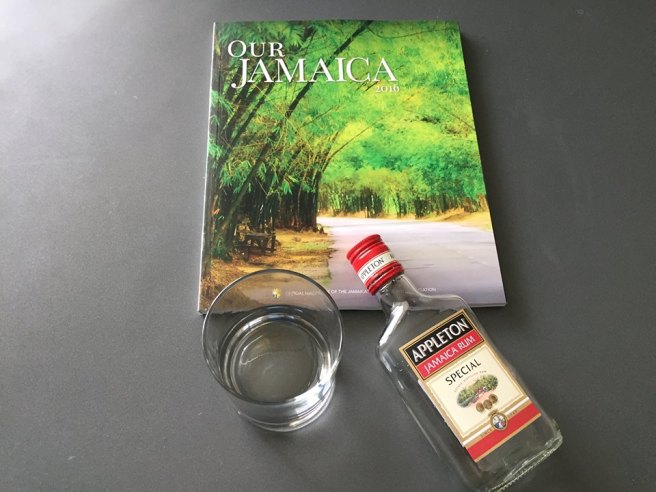
My wife loves cruises and went on several before we met.  In recent years, we have been searching for resorts that would offer the similar all-inclusive package without having to set sail to get it.  We heard from a colleague at work about the all-inclusive resorts at Jamaica, specifically at Montego Bay.  After a bit of research, we decided on the Hyatt Zilara Rose Hall Resort in Montego Bay, Jamaica.  The Zilara is an adult-only resort and is actually a recent addition to the older but expanded and renovated Rose Hall Ziva, formerly owned and operated by Ritz Carlton.  The two complexes are directly adjacent to one another with shared restaurants and retailers.  All meals, room service, alcohol, gym privileges, and many amenities are included in the price of the room.  The rooms are very upscale, with bath tubs, fancy showers, large balconies and way-above-average balcony furniture.  The view from our room was fantastic.

Hyatt Montego Bay Jamaica
View from our balcony

Obviously, the options are limited at a land resort.  There are no ports-of-call, the entertainment is not very extensive, and the food is not as plentiful.  But, the rooms are vastly more spacious than a ship cabin, there are no rough seas, and my head did not spin, even though I drank enough alcohol to practically send it into orbit.  We were introduced to a drink called a Dirty Banana (I like to call it a Nasty Nanna) that became a good friend.  We did decide to pay a little extra for a couples’ massage in a cabana located only a few yards from the lapping waves of the shores.  It was heaven.  In short, the Zalara met up to, if not exceeded, our expectations for what an all-inclusive resort should be, and we would definitely consider returning at some point in the future.

Jamaican Rum
All in all, it was a pretty good vacation

Panther Creek Falls

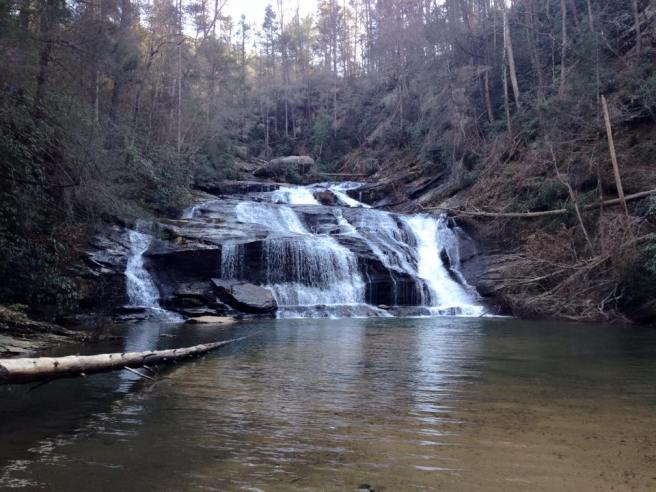
I have expressed my appreciation for waterfalls in previous posts, and we are fortunate to live in an area of the country where creeks, lakes, and waterfalls are abundant.  Even better, many of these features are freely accessible at state parks, national forests, and recreational areas.  One of the most popular waterfalls close to our home is Panther Creek Falls, located a few miles south of Tallulah Gorge in northeast Georgia.  This waterfall is located in the Panther Creek Recreation Area at the end of a 3.5-mile moderate walk along Panther Creek. The National Forest parking area is located on old U.S. Highway 441 north of Clarkesville.

Panther Creek Falls Trail is 5.5 miles long and follows Panther Creek through stands of hemlock and white pine along steep, rocky bluffs of the creek. The trails passes a series of cascades as well as Panther Creek Falls. It terminates where Davidson Creek joins Panther Creek.  When my younger son and I explored the trail last February, we decided to take the 3.5-mile hike to the falls and return to the parking area for a 7-mile excursion.  We had plenty of company on that mild winter day, with other hikers and campers all along the path.  The trail is noted for its beautiful variety of wildflowers and ferns. The stream offers excellent opportunities for trout fishermen too.  Some rock scrambling is required, and there are some steep sections, but much of the hike is relatively flat.  Erosion has caused several trail sections to drop sharply and suddenly to the creek below, demanding extra caution.  I was amazed at how many families with small children were there when we hiked the trail — some were even carrying strollers with them!

Panther Creek Falls
Panther Creek Falls

I was so enamored with the trail that I took my wife back at a later date, and while we only hiked in and out about a mile or so, she could appreciate the beauty of the forest and the creek without seeing the falls.  A large, shallow pool forms at the base of the falls, which is a wonderful destination for families and hiking groups.  The setting is beautiful, surrounded by hills covered in trees and laurel.  For those who like seclusion and privacy when they commune with nature, this recreation area is probably not a good choice.  In the warmer parts of the year, I’m sure it gets quite crowded.

Panther Creek Falls
View from the top of Panther Creek Falls

The naming of the creek is a source of curiosity for me.  I have not read anything official that links the name to animals that may have inhabited the area in the past.  According to some sources, a subspecies of the puma, the Florida panther, survives in a small, isolated and precarious population at the rapidly urbanizing southern tip of Florida. However, these animals were once widespread, even inhabiting portions of Georgia.  Another subspecies, the eastern puma (also known as cougar or mountain lion) may have once occupied regions of north Georgia.  Although in recent years there have been claims of sightings in north Georgia and South Carolina, the U.S. Fish and Wildlife Service has declared the eastern puma extinct and removed it from the list of protected wildlife and plants under the Endangered Species Act.  Regardless of nomenclature of the falls, this trail offers a great opportunity to get outside and enjoy the natural resources that are so abundant in the hills and mountains of north Georgia.  We will definitely return.

The Centre Cannot Hold

According to a 2014 survey conducted by the Pew Research Center, “Republicans and Democrats are more divided along ideological lines – and partisan antipathy is deeper and more extensive – than at any point in the last two decades.”  The chasm is exhibited in more than just politics, although the divisions are greatest among those who are the most engaged and active in the political process.  In a report issued on June 12, 2014, the Center made the following observation.

Partisan animosity has increased substantially over the same period. In each party, the share with a highly negative view of the opposing party has more than doubled since 1994. Most of these intense partisans believe the opposing party’s policies “are so misguided that they threaten the nation’s well-being.”

America seems to be the land of extremes. The labels employed so frequently in public discourse are usually an indictment and a stamp of extreme disapproval: right wing, left wing, socialist, capitalist, communist, opponent, liar, criminal, idiot, moron, etc. We are either desperately searching for the next word or deed that will offend us or someone else, or we are so self-absorbed that we care nothing about those outside our circle of friends and supporters. The polarization is crippling. There is no room for compromise but only intense fear that any concession will result in a quick trip down the proverbial slippery slope. Common ground is gone; there are only camps. An opinion or policy is either right or wrong, not worthy of thoughtful consideration or discussion. There are no intentions of improving on an idea or a plan; either reject any suggestions or scrap it altogether. Considering a different path along the same trajectory is out of the question; only the opposite direction is acceptable.

As much as I dislike doom and gloom forecasts based on the current political climate, I am nevertheless disheartened by what appears to be the disappearance of an ideological center in America.  So many issues now divide us as a population: abortion, immigration, terrorism, gun violence, the economy, same-sex marriage, etc.  Interestingly enough, the research indicates that Democrats are becoming more liberal at a faster rate than Republicans are becoming more conservative (many of my friends would disagree with this finding).  A third political party that poses a platform blending hot-button items into some semblance of a synthesis has very little chance of succeeding.  The viability of a third party of any kind is almost inconceivable, including the Libertarian Party.

America has a colorful history of political antagonism, even to the point of violence.  The Civil War makes the current political waters seem relatively calm by comparison.  Yet looking back at the first half of the 20th century when America went through two world wars, it seems that members of those generations had the ability to put their differences aside to concentrate on greater problems. Even during the Reagan administration, when I started paying attention to politics, the divisions didn’t seem as deep as they are now.  Sadly, the spirit of cohesion and reconciliation that followed an event as horrific as the terrorist attacks of 9/11 was short lived.  Hostility almost seems to be equally directed internally and externally.

I know that round-the-clock news coverage from so many sources has certainly heightened awareness of the national debates, and social media sites are breeding grounds for vitriolic memes and declarations that serve to further divide people on a wide variety of issues, from 2nd Amendment rights to welfare reform.  The spectacular, if not outrageous,  Presidential campaign underway now obviously is bringing a tremendous amount of tension to the surface, forcing so many of us to dive deeper into our tribal nature and choose sides.  I am reminded of the familiar lines from the poem by William Butler Yeats, “The Second Coming.”

Things fall apart; the centre cannot hold;
Mere anarchy is loosed upon the world . . .

Perhaps our enemies don’t really need to attack us at all; they just need to be patient, and wait.

In Living Color

One of the passions I developed as a fairly young man was ornamental gardening and light landscape designing. I have lived at four different houses over the last thirty years, from the most southern to the most northern sections of the 7b agricultural zone, and have had the opportunity to experiment with a wide variety of plants.  My wife and I currently live in the foothills of the Appalachian mountains where the Piedmont shifts into the Blue Ridge.  The southern Appalachian region is one of the most diversified botanical places on the planet, with rich soil and enough rainfall to support lush, thriving ecosystems.

Flower garden
Flower garden

We were fortunate to find a house two years ago with previous owners who were just as passionate as we are about surrounding the house with beautiful plants.  They had done a lot of work with the structure of the property, especially in the front of the house.  They had established two beds in front of the porch, split by a brick walkway and steps.  Short to medium-sized shrubs are spread out on either side to complete the dressing of the house, and a large island is positioned between the house and the street, which has a nice and expanding collection of trees, shrubs, ornamental grasses, and perennials.  Among our own additions to that island is our favorite container, the large concrete planter with a “face” in full relief (visible in the background of the photo above).  We call her Annabel, named after Annabel Lee, the poem composed by Edgar Allan Poe, because she has a melancholy face reminiscent of the poem’s theme.  We usually plant something each year in Annabel that will make her look like she has hair growing from the top!

I am by no means a Master Gardener, nor am I much of a purist when it comes to plant selection.  I have a growing appreciation for native plants and received a book on native plants of the southeast as a Christmas gift.  I hope to incorporate more native species in our garden in the years ahead.  I love annuals and typically fill the front porch beds with New Guinea impatiens and coleus.  We have to be very diligent in spraying most of the plants in the yard with deer repellent, and non-native plants are much more susceptible to damage from animals.  Still, I love the big bang of color provided throughout the growing season by imported and hybrid annual cultivars.

For Father’s Day many years ago, my sons gave me a mortar-fabricated flat stone engraved with the following words: “Gardening comes second only to reading.”  The stone is still a permanent fixture in our garden, as it has been in every garden I have tended.  In many ways, this statement could easily be adopted as my philosophy, with the possible addition of family, music, and a few other passions.  I have savored countless hours in planning, designing, planting, and maintaining shrub and flower gardens.  It is another one of those activities that is so restorative for me.  It grounds me, with no pun intended.  Ralph Waldo Emerson once wrote that “the earth laughs in flowers.”  What a wonderful way to express the joy experienced in nature’s palette displayed in the beauty of plants.

A Passing Literary Glance

The Georgia Writers’ Association held its 1955 annual meeting in Atlanta in early December.  On this occasion the Association honored Lillian Smith (social justice advocate and author of the controversial works Strange Fruit, Killers of the Dream, and The Journey) as the winner of the Georgia Writers’ Award for the best book of nonfiction with the most literary value written by a Georgian in 1954.  She felt the award was overdue but was proud at any rate that the Association exhibited the courage to recognize her importance as an artist.  Smith was terribly amused by the annual meeting – a sentiment I can almost imagine would have been shared by another Georgia writer named Flannery O’Connor who was also in attendance.

Lillian Smith
Lillian Smith

Lillian Smith was not invited to speak at the award ceremony; however, after meeting her and talking with her, the organizers decided to ask her to give an impromptu speech the next day, which she did.  Afterwards, an elderly woman in the audience came up to compliment the writer on how sweet and well-bred she was, exclaiming that Lillian Smith must have had the best intentions in the world, regardless of what she may have written in her books.  On the previous day, Flannery O’Connor delivered a luncheon address to this convention titled “Some Problems of the Southern Writer.”  Lillian Smith was at the luncheon, and this is what she had to say about O’Connor’s presentation:

Flannery’s talk was one of the funniest things I ever listened to.  Do you know – I don’t believe she had the vaguest notion how she shocked the crowd.  She told em off; told Georgia off; told the South off; told would-be writers off. . . . The stuffed shirts and the would-be writers (the place was full of them) began listening smilingly because they had heard she was “literary” and “talented” and nothing she wrote threatened anybody, certainly not on the conscious levels of their life.  But after about two paragraphs they realized that a nice little snake was sinking her fangs deep into their complacency and they began to look at each other and shake their coiffured heads and whisper, “Well . . . .what do you know . . .”
(all quotations from How Am I To Be Heard: Letters of Lillian Smith, edited by Margaret Rose Gladney; The University of North Carolina Press, Chapel Hill, 1993)

Smith mentioned O’Connor’s presentation in a letter to her editor at Viking Press, Denver Lindley, who also served as an editor for Flannery O’Connor.  There was a tone of bitterness, if not irritation, when Smith wrote that “these young writers can now say things out loud without any realization, actually, of how one or two of us down in the South opened the way for them.”

As far as I know, this was the only time that Lillian Smith and Flannery O’Connor were in the same room together, although they lived only 150 miles apart.  O’Connor confided to her friend Cecil Dawkins that, although she considered Lillian Smith to be a nice person, O’Connor was not impressed with Smith’s writing.  In a letter dated December 2, 1955, to Lon and Fanny Cheney, Flannery O’Connor stated that, at the Association meeting, Lillian Smith invited her for a visit to her home, but O’Connor declined.  In her essay titled “Flannery O’Connor and Lillian Smith: A Missed Opportunity,” published in the 2007 issue of the Flannery O’Connor Review, Virginia Wray observes that O’Connor’s brief remarks about her fellow Georgia writer in this letter carry with them a tone of sarcastic dismissal.  I know those who have studied O’Connor’s life are shocked by this revelation!  It’s no secret that O’Connor reserved some of her most acidic comments for other writers, especially those close to home.  O’Connor’s comments about Smith were rather tame by comparison.

Lillian Smith would go on to publish several more books, fiction and nonfiction, and numerous articles and essays on social justice and racial equality.  The last book published before her death came out in 1964, the year that Flannery O’Connor died; however, she continued to contribute to periodicals and newspapers until her own death on September 28, 1966.  One of the pieces Lillian Smith wrote for publication the year before she died was a book review for the Chicago Tribune.  The title of the review was “With a Wry Smile Hovering Over All.”  As fate would have it, Lillian Smith would get the proverbial last word in this evaluation of Flannery O’Connor’s second collection of short stories, Everything That Rises Must Converge.  It is worth noting that Smith and O’Connor had both developed an admiration for Teilhard de Chardin, although Smith claimed that, in the title story of the collection, O’Connor had twisted the Jesuit priest’s “profound and poetic vision into something small enough for her to smile at wryly.”  With regard to the other stories in the collection, Smith perceived that the author’s point of view lacked compassion and empathy, which should make us all wonder if she read O’Connor’s first collection of short stories.  Still, Lillian Smith considered O’Connor to be a highly gifted writer and described the title story as a masterpiece, where every line counts, every word.  No fan of O’Connor’s work could disagree with that assessment.

Letting It Go

Sometime around 1970, my father received an invitation from his uncle to take our family to a house that he and his family owned on the outskirts of the small town of Blue Ridge in the north Georgia mountains.  We all fell in love with the area and began taking short vacations there, along with my mother’s sister’s family, including the cousins that my sister and I grew up with.  Soon thereafter, my great uncle helped my parents find a small vacant house for sale located just a few blocks from the quaint downtown of Blue Ridge.  Dating back to the turn of the century, the house had been vacant for years and was in rather rough shape, but my father was an electrician by trade and a very good carpenter.  With his uncle’s help, Dad was able to make the little house habitable again.

Typical of my father’s utilitarian style, the house was restored with very baseline interior finishes: pine sheet paneling, unpainted molding, and linoleum square tile partially covered in large carpet pieces salvaged from our primary home.  My mother, her mother, and her sister all tried to do what they could to add some charm to the interior on a very limited budget.  Dad filled the three main rooms with furniture that friends and family had thrown out, making the minor repairs necessary to make them functional.  The rooms served as living quarters and bedrooms, with enough beds and pull-out sofas to sleep up to fourteen people.  He added a second bathroom, purchased the lowest-end appliances for the kitchen, and installed space heaters discarded by our home church.  He added a propane tank behind the house that he found for free — a tank designed to be buried in the ground with the typical metal column rising from the middle to enclose and provide access to the meter and valves.  Of course, he mounted the tank above ground.  I joke here about my father’s minimalist approach with this vacation house affectionately, with the full realization that purchasing and maintaining a second home was an amazing accomplishment for a lower-middle-class family like ours.  If nothing else, Dad was remarkably resourceful.

Mountain Vacation House
Family Mountain Vacation House

Over the course of the next forty years, my parents shared the use of this vacation home with extended family and close friends.  My sister and I and my sons, my cousins, and now my wife all have wonderful memories of such happy, peaceful times spent at this little sanctuary.  As my parents’ generation aged, they could no longer maintain the place, so the responsibility was left to my sister and me.  Now, the house belongs to my wife and me, and my sister and my cousins still take a vacation or two every year to the house, as do we.

Regrettably, I was not blessed with my father’s skills.  My wife and I have done some painting, and family members have graciously chipped in to do some minor repairs, but we have also spent quite a bit of money in recent years trying to keep the house from collapsing.  Due to poor foundations, settling, and just general old age, the house has become even less “tight” than it was in the past.  It has suffered from damage from ground hogs in the crawl space beneath and other rodents in the walls and ceilings.  Mice started to find their way inside several years ago, but the most disturbing invasion was evidenced this past fall when my wife and I found a three-foot-long snake skin that had been left behind in the kitchen.  In a state of temporary despair, I sat on the edge of one of the beds and told my wife, “I’m done.”  She wasn’t exactly sure what I meant!  We had a lengthy discussion and came to the difficult decision to finally give up on attempting to salvage the unsalvageable.  We are going to demolish the house and build something new in its place.

We spent our weekend sitting on the front porch rockers using our iPads to look for house plans.  My wife found a charming cottage plan, and we have taken the first steps toward this big change.  My sister and cousins are understandably saddened by the impending loss of a house that holds so many happy memories for all of us.  So are we.  But, they do understand why this is really our only alternative.  By this time next year, we hope to have a new place for the family to retreat and continue to enjoy the many opportunities for relaxation and entertainment that this area provides.  The town of Blue Ridge has drastically changed from the sleepy (if not dying) little village it was when my parents bought the vacation home so many years ago.  I will save for another post my thoughts about the changes we have seen over the decades in Blue Ridge.

It is never easy to let go of anchors from the past, especially when they are so concretely identified with people we have loved dearly who are no longer with us.  As cliche as it sounds, this vacation house was truly a home to our families and close friends.  We hate to see it go.  We are fortunate to have very good photographic and video-graphic records of the house, happy times, and the people who enriched our lives there.  We look forward to a new, modern structure to enjoy for many years to come, but there is a definite sense of loss as we say goodbye to this special house forever.

Restoring My Soul

My wife and I have fairly stressful jobs, hers much more than mine.  I have mentioned before how much we like to be outdoors when we can, and we look for such opportunities and plan for them when we take vacation trips.  We also enjoy kayaking, and we are fortunate enough to have two Hobie kayaks, which are equipped with peddles so we can use our legs to propel them instead of just paddling.  Our previous home was on a rather large lake, so kayaking was as simple as pulling the boat out of the garage and going across the yard to the water’s edge and taking off.  Now, we don’t get out as much and have to plan for the water outings, but we live in an area with plenty of small lakes close by to explore, and a few very large ones not too far away.  During the warm months of the year, we load the kayaks on our pickup truck and head out to one of the nearby lakes, often after we get off work, just for a couple of hours.

Lake Russell 2
Lake Russell, Habersham County, GA

Being out on the water gives us a chance to slow down, talk, laugh, recall the wonderful times we’ve had together, and make plans for the future.  Some of the places we go are fairly secluded, although there are usually a few people around either fishing or swimming.  She and I typically stay out for about an hour.  We enjoy being together, and while we like to be with family and friends, we also cherish the times we spend with just each other.  We work well together; as we often say, “We’re a good team.”  Beyond the recreation and exercise that this activity provides, I think for both of us it offers an opportunity to reflect on how precious time is, how beautiful the world is, how grateful we are for each other, and how lucky we are to be alive.