A Passing Literary Glance

The Georgia Writers’ Association held its 1955 annual meeting in Atlanta in early December.  On this occasion the Association honored Lillian Smith (social justice advocate and author of the controversial works Strange Fruit, Killers of the Dream, and The Journey) as the winner of the Georgia Writers’ Award for the best book of nonfiction with the most literary value written by a Georgian in 1954.  She felt the award was overdue but was proud at any rate that the Association exhibited the courage to recognize her importance as an artist.  Smith was terribly amused by the annual meeting – a sentiment I can almost imagine would have been shared by another Georgia writer named Flannery O’Connor who was also in attendance.

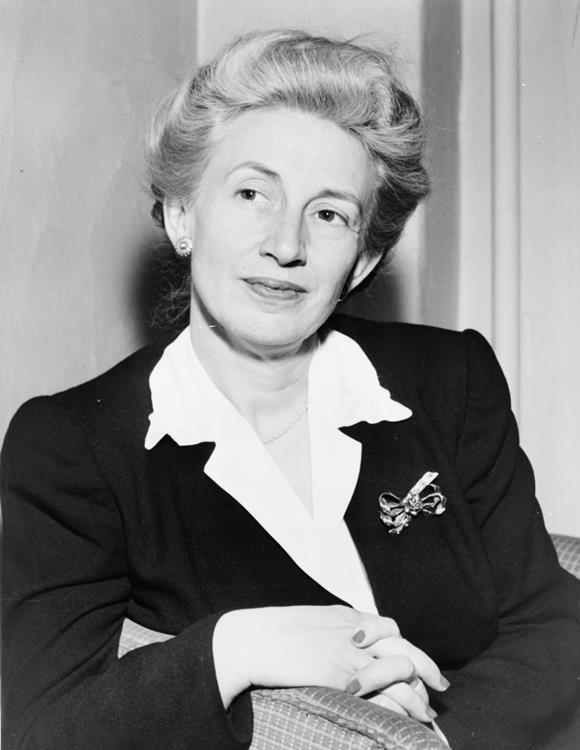
Lillian Smith
Lillian Smith

Lillian Smith was not invited to speak at the award ceremony; however, after meeting her and talking with her, the organizers decided to ask her to give an impromptu speech the next day, which she did.  Afterwards, an elderly woman in the audience came up to compliment the writer on how sweet and well-bred she was, exclaiming that Lillian Smith must have had the best intentions in the world, regardless of what she may have written in her books.  On the previous day, Flannery O’Connor delivered a luncheon address to this convention titled “Some Problems of the Southern Writer.”  Lillian Smith was at the luncheon, and this is what she had to say about O’Connor’s presentation:

Flannery’s talk was one of the funniest things I ever listened to.  Do you know – I don’t believe she had the vaguest notion how she shocked the crowd.  She told em off; told Georgia off; told the South off; told would-be writers off. . . . The stuffed shirts and the would-be writers (the place was full of them) began listening smilingly because they had heard she was “literary” and “talented” and nothing she wrote threatened anybody, certainly not on the conscious levels of their life.  But after about two paragraphs they realized that a nice little snake was sinking her fangs deep into their complacency and they began to look at each other and shake their coiffured heads and whisper, “Well . . . .what do you know . . .”
(all quotations from How Am I To Be Heard: Letters of Lillian Smith, edited by Margaret Rose Gladney; The University of North Carolina Press, Chapel Hill, 1993)

Smith mentioned O’Connor’s presentation in a letter to her editor at Viking Press, Denver Lindley, who also served as an editor for Flannery O’Connor.  There was a tone of bitterness, if not irritation, when Smith wrote that “these young writers can now say things out loud without any realization, actually, of how one or two of us down in the South opened the way for them.”

As far as I know, this was the only time that Lillian Smith and Flannery O’Connor were in the same room together, although they lived only 150 miles apart.  O’Connor confided to her friend Cecil Dawkins that, although she considered Lillian Smith to be a nice person, O’Connor was not impressed with Smith’s writing.  In a letter dated December 2, 1955, to Lon and Fanny Cheney, Flannery O’Connor stated that, at the Association meeting, Lillian Smith invited her for a visit to her home, but O’Connor declined.  In her essay titled “Flannery O’Connor and Lillian Smith: A Missed Opportunity,” published in the 2007 issue of the Flannery O’Connor Review, Virginia Wray observes that O’Connor’s brief remarks about her fellow Georgia writer in this letter carry with them a tone of sarcastic dismissal.  I know those who have studied O’Connor’s life are shocked by this revelation!  It’s no secret that O’Connor reserved some of her most acidic comments for other writers, especially those close to home.  O’Connor’s comments about Smith were rather tame by comparison.

Lillian Smith would go on to publish several more books, fiction and nonfiction, and numerous articles and essays on social justice and racial equality.  The last book published before her death came out in 1964, the year that Flannery O’Connor died; however, she continued to contribute to periodicals and newspapers until her own death on September 28, 1966.  One of the pieces Lillian Smith wrote for publication the year before she died was a book review for the Chicago Tribune.  The title of the review was “With a Wry Smile Hovering Over All.”  As fate would have it, Lillian Smith would get the proverbial last word in this evaluation of Flannery O’Connor’s second collection of short stories, Everything That Rises Must Converge.  It is worth noting that Smith and O’Connor had both developed an admiration for Teilhard de Chardin, although Smith claimed that, in the title story of the collection, O’Connor had twisted the Jesuit priest’s “profound and poetic vision into something small enough for her to smile at wryly.”  With regard to the other stories in the collection, Smith perceived that the author’s point of view lacked compassion and empathy, which should make us all wonder if she read O’Connor’s first collection of short stories.  Still, Lillian Smith considered O’Connor to be a highly gifted writer and described the title story as a masterpiece, where every line counts, every word.  No fan of O’Connor’s work could disagree with that assessment.

Letting It Go

Sometime around 1970, my father received an invitation from his uncle to take our family to a house that he and his family owned on the outskirts of the small town of Blue Ridge in the north Georgia mountains.  We all fell in love with the area and began taking short vacations there, along with my mother’s sister’s family, including the cousins that my sister and I grew up with.  Soon thereafter, my great uncle helped my parents find a small vacant house for sale located just a few blocks from the quaint downtown of Blue Ridge.  Dating back to the turn of the century, the house had been vacant for years and was in rather rough shape, but my father was an electrician by trade and a very good carpenter.  With his uncle’s help, Dad was able to make the little house habitable again.

Typical of my father’s utilitarian style, the house was restored with very baseline interior finishes: pine sheet paneling, unpainted molding, and linoleum square tile partially covered in large carpet pieces salvaged from our primary home.  My mother, her mother, and her sister all tried to do what they could to add some charm to the interior on a very limited budget.  Dad filled the three main rooms with furniture that friends and family had thrown out, making the minor repairs necessary to make them functional.  The rooms served as living quarters and bedrooms, with enough beds and pull-out sofas to sleep up to fourteen people.  He added a second bathroom, purchased the lowest-end appliances for the kitchen, and installed space heaters discarded by our home church.  He added a propane tank behind the house that he found for free — a tank designed to be buried in the ground with the typical metal column rising from the middle to enclose and provide access to the meter and valves.  Of course, he mounted the tank above ground.  I joke here about my father’s minimalist approach with this vacation house affectionately, with the full realization that purchasing and maintaining a second home was an amazing accomplishment for a lower-middle-class family like ours.  If nothing else, Dad was remarkably resourceful.

Mountain Vacation House
Family Mountain Vacation House

Over the course of the next forty years, my parents shared the use of this vacation home with extended family and close friends.  My sister and I and my sons, my cousins, and now my wife all have wonderful memories of such happy, peaceful times spent at this little sanctuary.  As my parents’ generation aged, they could no longer maintain the place, so the responsibility was left to my sister and me.  Now, the house belongs to my wife and me, and my sister and my cousins still take a vacation or two every year to the house, as do we.

Regrettably, I was not blessed with my father’s skills.  My wife and I have done some painting, and family members have graciously chipped in to do some minor repairs, but we have also spent quite a bit of money in recent years trying to keep the house from collapsing.  Due to poor foundations, settling, and just general old age, the house has become even less “tight” than it was in the past.  It has suffered from damage from ground hogs in the crawl space beneath and other rodents in the walls and ceilings.  Mice started to find their way inside several years ago, but the most disturbing invasion was evidenced this past fall when my wife and I found a three-foot-long snake skin that had been left behind in the kitchen.  In a state of temporary despair, I sat on the edge of one of the beds and told my wife, “I’m done.”  She wasn’t exactly sure what I meant!  We had a lengthy discussion and came to the difficult decision to finally give up on attempting to salvage the unsalvageable.  We are going to demolish the house and build something new in its place.

We spent our weekend sitting on the front porch rockers using our iPads to look for house plans.  My wife found a charming cottage plan, and we have taken the first steps toward this big change.  My sister and cousins are understandably saddened by the impending loss of a house that holds so many happy memories for all of us.  So are we.  But, they do understand why this is really our only alternative.  By this time next year, we hope to have a new place for the family to retreat and continue to enjoy the many opportunities for relaxation and entertainment that this area provides.  The town of Blue Ridge has drastically changed from the sleepy (if not dying) little village it was when my parents bought the vacation home so many years ago.  I will save for another post my thoughts about the changes we have seen over the decades in Blue Ridge.

It is never easy to let go of anchors from the past, especially when they are so concretely identified with people we have loved dearly who are no longer with us.  As cliche as it sounds, this vacation house was truly a home to our families and close friends.  We hate to see it go.  We are fortunate to have very good photographic and video-graphic records of the house, happy times, and the people who enriched our lives there.  We look forward to a new, modern structure to enjoy for many years to come, but there is a definite sense of loss as we say goodbye to this special house forever.

Restoring My Soul

My wife and I have fairly stressful jobs, hers much more than mine.  I have mentioned before how much we like to be outdoors when we can, and we look for such opportunities and plan for them when we take vacation trips.  We also enjoy kayaking, and we are fortunate enough to have two Hobie kayaks, which are equipped with peddles so we can use our legs to propel them instead of just paddling.  Our previous home was on a rather large lake, so kayaking was as simple as pulling the boat out of the garage and going across the yard to the water’s edge and taking off.  Now, we don’t get out as much and have to plan for the water outings, but we live in an area with plenty of small lakes close by to explore, and a few very large ones not too far away.  During the warm months of the year, we load the kayaks on our pickup truck and head out to one of the nearby lakes, often after we get off work, just for a couple of hours.

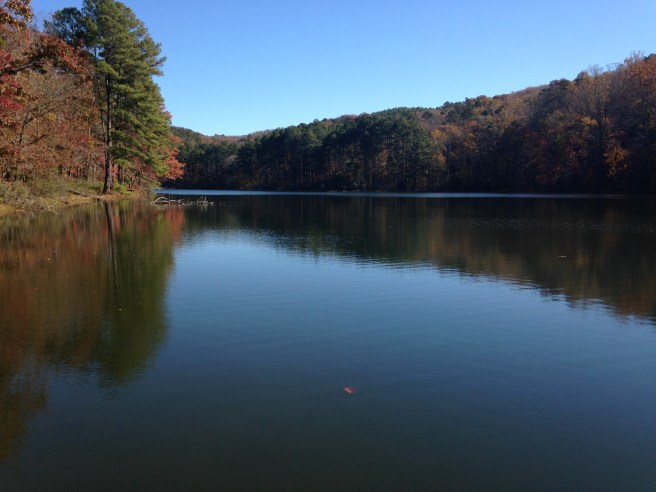
Lake Russell 2
Lake Russell, Habersham County, GA

Being out on the water gives us a chance to slow down, talk, laugh, recall the wonderful times we’ve had together, and make plans for the future.  Some of the places we go are fairly secluded, although there are usually a few people around either fishing or swimming.  She and I typically stay out for about an hour.  We enjoy being together, and while we like to be with family and friends, we also cherish the times we spend with just each other.  We work well together; as we often say, “We’re a good team.”  Beyond the recreation and exercise that this activity provides, I think for both of us it offers an opportunity to reflect on how precious time is, how beautiful the world is, how grateful we are for each other, and how lucky we are to be alive.

The Sky Is Falling

World leaders are meeting for the next week or so in Paris to discuss ways in which the major countries around the globe can reduce carbon emissions in hopes of warding off catastrophic effects from global warming.  How serious this problem is has become a topic of “heated” debate in this country, just like almost everything else, from Starbucks holiday coffee cups to Syrian refugees coming to America.  A handful of scientists (about 3% worldwide) are not convinced that the current climate changes we are experiencing are caused by human activity, which is all the evidence needed to call the whole idea a scam by a growing minority of people in this country who completely distrust any message coming from the federal government or the research of individuals, institutions, agencies, and organizations funded by federal tax dollars.  They are convinced that restrictions imposed by governments due to climate change will result in onerous taxes, economic ruin, burdensome regulations, dictatorial bureaucrats, and higher energy costs.

It would appear that the denial of climate change issues has moved into the realm of conspiracy theory.  Some of my friends argue that scientists are lying and falsifying data to appeal to liberal policy makers who pay them and who seek even further control over our lives and property.  They point to the changes in terminology — moving away from phrases like global warming and toward phrases like climate change — as an indication that the science is not solid and that climatologists are not to be trusted.   Here’s a flash.  What we are seeing around the planet IS global warming, but we have folks who can’t understand that global warming is NOT a term to describe weather.  There is a difference between climate and weather, so the vocabulary was modified in an attempt to increase understanding about the problem, which obviously failed.

Frankly, I don’t feel qualified to speak too much about climate change from a scientific standpoint, so I have to trust the consensus of opinion of the majority of climatologists around the world, just like I feel compelled to trust the vast majority of doctors who believe immunization is more helpful than harmful. I could list many other examples. I can remember a time when conservatives thought that recycling was a trick on dumb liberals, that is, until they discovered there is plenty of money to be made in the recycling business. Then it became desirable. I suspect we will eventually see this same pattern evolve with the reduction of carbon emissions, sustainable energy sources, and other similar initiatives.  I believe in being skeptical, but skepticism on the level of global scientific opinion of such a large majority seems unreasonable.

The Mountains Are Calling . . .

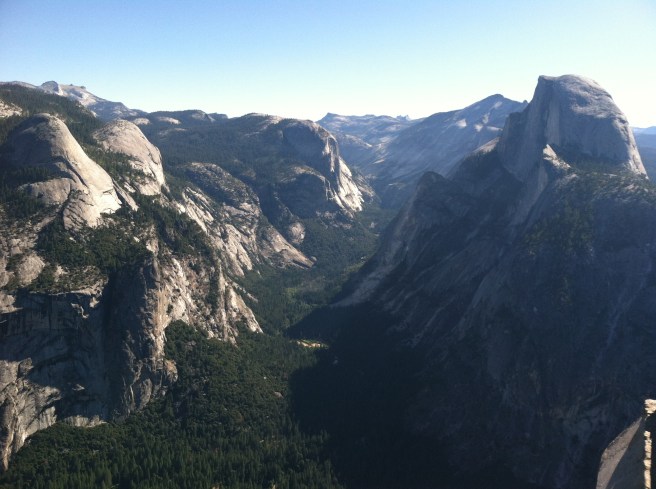
One of the most magnificent places I have ever visited is Yosemite National Park in California.  Ancient glacier activity in this region of the High Sierra left behind enormous rock formations that created a natural cathedral unsurpassed by anything ever designed by human minds or hands.  One of the early Europeans to explore the valley described it in these same terms.  John Muir visited Yosemite several times in the 19th and early 20th centuries, spending several years there in spite of the fact that he had a wife and children in San Francisco.  His appreciation for the beauty and wildness of Yosemite drove him to fight for its long-term preservation.  Some battles he lost, but by and large, his petitions to government officials are responsible for the establishment of the national park there.

Yosemite Valley
Yosemite Valley from Glacier Point

Lately I have been reading Muir’s descriptions of the land forms, his detailed identification of the flora and fauna, and his natural history of Yosemite in selections from the e-book, The Collected Works of John Muir.  I am amazed at how much ground he was able to cover and the extent to which he cataloged so many of the species in the area.  Without the aid of modern equipment or the assistance of the infrastructure later installed for hikers, Muir explored parts of the valley and surrounding region that only the most experienced hikers and climbers would attempt today. He craved the wilderness almost like a lover.  In the mountains and forests he found adventure, inspiration, stimulation, and peace.  For those who have visited Yosemite and were left speechless by its wonders, I highly recommend John Muir’s works — he manages to articulate what I could not put into words when I first saw this marvelous spectacle.

Southern Word of the Day

For the last couple of years, I have been entertaining myself (not difficult) and my Facebook Friends with posts that I have coined “The Southern Word of the Day.”  Obviously, this gig is a direct rip-off of the comedian Jeff Foxworthy’s redneck words, and there is certainly some overlap.  However, I have imposed some rules on myself that Foxworthy didn’t always follow. For instance, I only use legitimate English-language words, which includes the occasional place name but mostly just regular words.  So I would never use Foxworthy’s “widgedidga” because it isn’t a legitimate word, even though it clearly is a phonetically-correct Southern word that translates to “with you did you.”  So Foxworthy’s word “mayonnaise” as a substitute for “man there is” serves as a good example of my method.  I also try to stay away from the simple two-syllable rip-offs like aster = asked her, or cider = beside her, or otter = ought to, or stark = it’s dark.

I have decided to put together a list of my favorite Southern words that I have posted, and perhaps Jeff Foxworthy has used these too.  No plagiarism is intended here; I can only plead ignorance, which for me is not a stretch at all.

Fornication.  Usage: “Charlene’s dress is perfect fornication like tonight.”

Covetous.  Usage: “It was so cold that Momma pulled out a blanket and covetous up with it.”

Quesadilla.  Usage: “You need to have your brights on in quesadilla runs out in front of us.”

Spectators.  Usage: “Broccoli is fine, but I spectators would taste a whole lot better with that steak.”

Anemone.  Usage: “I was running just fine anemone started hurting, and I had to stop.”

Ammonia.  Usage: “Would you come open the door?  Ammonia front porch!”

Motif.  Usage: “Billy Bob would smile more if he just had motif.”

Enema.  Usage: “My mother-in-law is always sticking her nose enema business.”

Pasteurize.  Usage: “I walked right pasteurize, and you didn’t even see me!”

September.  Usage: “We have grown everything on that 40 acres you can imagine September.”

Annuity.  Usage: “He was having trouble getting it out, but annuity was trying to say.”

Annihilator.  Usage: “We got stuck in traffic and ended up getting there annihilator than we thought we would.”

Opportunity of a Lifetime

As I have indicated before, I began my career as a librarian in a medium-sized public library in a small county of around 42,000 people.  As is typical in small communities, there were plenty of personal interconnections.  When I graduated with an MA in History in 1985 from a state college in this same county, I started work shelving and cataloging books in the public library.  With the encouragement, patience, and generous assistance from the library director, I and another worker in the library commuted to Emory University twice a week for two years to complete our Masters degrees in Librarianship (MLn).  I served as a reference librarian for most of my fifteen years there, but when the director left during my twelfth year, I was offered the position.  I served as the library’s director for three years.

One morning, during the spring of my last year, the husband of our children’s librarian walked into my office to say he had a proposition for me.  His wife was serving in this position at the library before I began there.  Her husband was a local attorney.  I knew them both very well — we attended social events and my first wife and I had even house-sat for them and had taken care of their two children for a weekend.  As it happened, he was the lawyer for the estate of a major American writer, who also was (and still is) one of my favorite authors: Flannery O’Connor.  She had lived a good portion of her life in this town where her family had deep roots going back to the early 19th century.  She spent the last thirteen years of her life at the family’s farm, called Andalusia, located on the north end of town.

foc_eberhart_photo
Flannery O’Connor
His clients were two sisters who were also first cousins of O’Connor.  Flannery O’Connor died in 1964, but her mother, Regina, lived until 1995.  As executors of Regina O’Connor’s estate, these two women were also in charge of Flannery O’Connor’s literary estate, which was primarily administered through a trust that had been established by Regina O’Connor’s will.  As co-executors and co-trustees, one of their responsibilities was to establish a non-profit foundation to maintain Andalusia as a proper memorial to O’Connor and also to perpetuate her legacy as a writer.  They needed someone to help establish this organization.  They also needed someone to work with a sizable archive of personal papers, correspondence, writings, photographs, memorabilia, and artifacts belonging to Flannery O’Connor.  The archive needed to be organized, cataloged, and properly stored for preservation purposes.  The co-executors asked the lawyer to find someone who might be interested and capable of doing both of these tasks.  He came to my office in the library that spring day, explained the proposition from the estate, and asked me if I would consider taking the job as an independent consultant working for the co-executors.  I accepted, which changed almost everything for me.

I will no doubt dedicate several future posts recounting my experiences as a consultant and then later the director of the Flannery O’Connor-Andalusia Foundation that I assisted in establishing.  I was there for thirteen years — as long as Flannery O’Connor lived there.  That was long enough, or arguably, a bit too long.  While I can look back and think about plenty of mistakes I made and how I should have made different decisions, I don’t have any real regrets.  With a BA in English, an MA in History, and an MLn, I don’t think I could have been any better suited for the job with regard to my education and training.  I had the help of some talented and dedicated mentors, board members, volunteers, colleagues, and for a few years, a trusted co-worker and friend.  What I can state with absolute certainty is that this path that departed from my expected trajectory led me to some of the richest experiences I have ever had and offered me opportunities that other people with my education and training will, sadly, never enjoy.  I am humbly grateful, and hope that Flannery O’Connor would be pleased with the work we accomplished at Andalusia.

A Little Less Anonymity

When I started this blog back in April, I had some misguided notion that I should keep my identity hidden, primarily because I thought that some of the future content would be personal or sensitive, and I feared offending my family, friends, and associates.  What I have come to discover is just how difficult it is to write about my own experiences and opinions while remaining completely anonymous.  There are significant stories and memories that I have had to avoid to stay in hiding.  No more I tell you!

I still prefer not posting my personal information in my profile; however, the stories I tell will definitely reveal my identity to people whom I have encountered over the last few decades.  In so doing, I am accepting a few restrictions: some stories will be better left untold, and I will have to be a bit sensitive and careful in the memories I do elect to share.  Yes, I admit that all of this sounds a tad melodramatic and narcissistic — my arrogance in thinking that this blog will reach such a wide audience that even friends and acquaintances will someday be following my posts.   Even so, getting a little more personal with the details will make for a better journal and, I hope, more engaging narratives.

Right of Way

Before my wife, younger son, and I made our trip to Yellowstone this summer, we did like so many other families do before major trips and spent some time reading about the park, its unique features and characteristics, places of particular interest, and potential hazards to avoid.  I even watched a few videos about Yellowstone, both professionally-produced and amateur.  Of course, one of the major elements that brings millions to this park every year is the wildlife, and for most visitors, the principle of “the bigger the better” holds true.  Most of us want to see a bear, at least from a safe distance, but they tend to stay away from the roadways — we were lucky enough to see a mother and her cub the last day we were there.  The elk and moose are quite impressive in the size category too.  We saw several elk but not a moose.

The largest creature in the park, at least by weight, is one that is not very shy at all.  According to the National Park Service website about Yellowstone, this park “is the only place in the United States where bison have lived continuously since prehistoric times. Yellowstone bison are exceptional because they comprise the nation’s largest bison population on public land and are among the few bison herds that have not been hybridized through interbreeding with cattle. Unlike most other herds, this population has thousands of individuals that are allowed to roam relatively freely over the expansive landscape of Yellowstone National Park and some nearby areas of Montana. They also exhibit wild behavior like their ancient ancestors, congregating during the breeding season to compete for mates, as well as migration and exploration that result in the use of new habitat areas. These behaviors have enabled the successful restoration of a population that was on the brink of extinction just over a century ago.”

We knew that bison often made their way to the major roadways in the park and that traffic could be stopped for significant periods of time for herds of the animals to pass.  What we didn’t expect was that sometimes the bison actually use the roads as a path, slowly ambling their way along the pavement, almost as if they are curious about the visitors and have arrived for an inspection.  There are close to 5,000 bison in the park, so sightings of large herds are frequent.  Professional and amateur photographers come out before daybreak to claim their favorite spots on small hills in the bison hotspots, such as Hayden Valley, to get the best shots of the beasts in their natural environment.  However, as we discovered on our first day at Yellowstone, you can get a pretty good close-up photograph of a bison from the window of your car, as so many visitors have been doing for years.  I took this one from my window as we waited for a group of the animals to clear the road.

Bison
Yellowstone bison

Notice that these hooved creatures are following the center yellow line, almost as if it were a trail marker.  They were walking along slowly, seemingly with no fear or even regard for the nearby vehicles and their occupants.  The dangerous assumption by some park visitors is that these are harmless animals, but as calm as they seem to be, they can become extremely aggressive and dangerous if approached or if they feel threatened.  Park literature and signs are abundant warning people to stay a very safe distance from all wild animals in the park , especially bears and bison.  Several visitors are seriously injured each year from foolish encounters with bison.

As these massive animals passed our car, I was taken with how they brought everything to a standstill, commanding the right of way.  They marched through like royalty participating in a parade — the trooping of the colors as it were.  In many ways, the park is theirs, along with the other multitude of species that call Yellowstone home, as it should be.  I wish people would always keep in mind that we are only visitors, and as such, we should be on our best behavior to ensure that places like Yellowstone are preserved and treasured.

Of Beauty and Bridges

I took a recent business trip to Connecticut, a state I had never visited.  I flew into Hartford and drove an hour or so to the charming little hamlet of Cornwall in the northwest part of the state.  I stayed overnight in a garage apartment of the across-the-street neighbor of the person I was there to see.  This was late September and a chill was starting to settle in the air, though the leaves showed not much sign of color yet.  I had just enough free time while I was there to spend a few hours driving around the countryside and was delighted by the abundance of forests and hills in which the small towns in that portion of the state are nestled.

Covered Bridge in West Cornwall

Again, I found myself wandering around in places where it is nearly impossible to take a bad photograph.  I somewhat regret that wall calendars are no longer very useful in this age where today’s date is so easily ascertained with a mobile device regardless of one’s whereabouts.  The vistas afforded me on this trip could fill up the top half of wall calendars for decades to come.  This covered bridge, which I crossed a few times, is a perfect example, along with the river that flows to and under it.  The bridge was built in 1841 in Litchfield County, in the Berkshires region of Connecticut, to cross the Housatonic River.  With the last remaining fog of morning rising from the water and through the trees, the image below looks more like a painting than a photograph.

Housatonic River in West Cornwall, CT