Defining Art

Yes, I realize the title of this post is about as vague as it gets.  Nevertheless, how we define what is, and isn’t, art as a worldwide culture is something that puzzles me.  In America at least, so many of us seem to have no real criteria by which to judge if a work can be considered art — no standard.  I understand how subjective the appreciation of art is, and I suspect survival from generation to generation has played a major role in determining what has been defined as art throughout human history.  In my lifetime, Americans have become less and less prescribed in their definition of art, and to my way of thinking, this is an unfortunate trend.  We tend to use the terms “art” and “artist” to describe almost any form of creativity.  I am the first to admit that I don’t have a true appreciation for a great deal of modern art, which includes painting, sculpture, poetry, and a few other mediums.  Okay, those are perhaps my own shortcomings and limitations due to a lack of education or sensibility.  


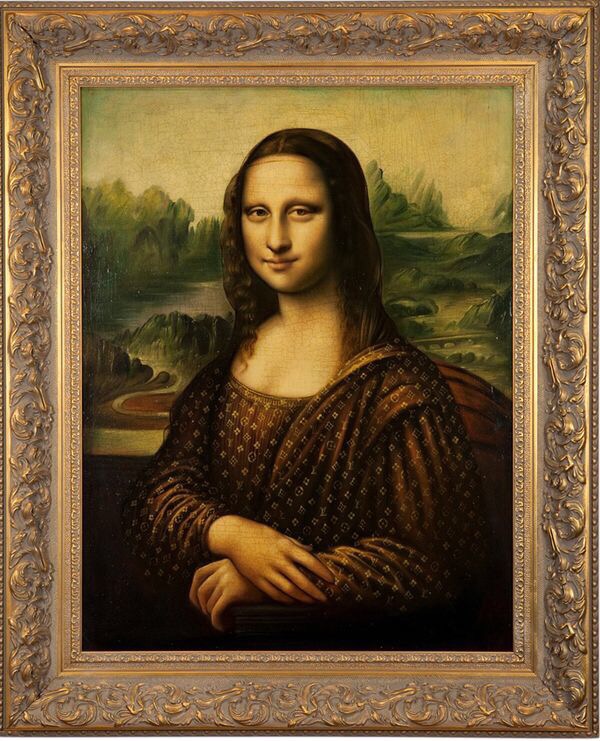
What I’m referring to here, though, is how modern culture seems to lump all creativity into one huge basket, with very little discernment or discrimination.  We use the term “artist” so loosely.  We consider Leonardo da Vinci to be an artist, but we also use the same word to describe Thomas Kinkade.  Most people would recognize Beethoven as an artist, but we hear the same word used to describe Taylor Swift.  Really?  What happened to words like “entertainer?”  I play the guitar a little, the piano a bit more, and I sing well enough that people have paid me to do so at weddings, funerals, parties, etc.  I have even written a handful of songs that I think are pretty good.  Am I an artist?  I would be embarrassed if someone referred to me that way or called my creations art.  I am an amateur musician, singer, and composer.  There are plenty of people who have made a very good living doing the same thing, only a whole lot better than I do.  Are they artists?  Well, not in my mind.  I would call them professionals, and that goes for many of my musical idols.

I am not advocating that, as a culture, we have to have some kind of hard and fast rule to define art and identify artists.  But I would like to see a little more differentiation to show respect to those among us who have exceptional gifts of creativity — timeless, perhaps.  I suppose we all know that Michelangelo is actually a great artist or even a master, and that his work is not comparable to the images of Elvis we see painted on velvet canvases for sale at roadside stands.  Or do we?

Mountain Hiking

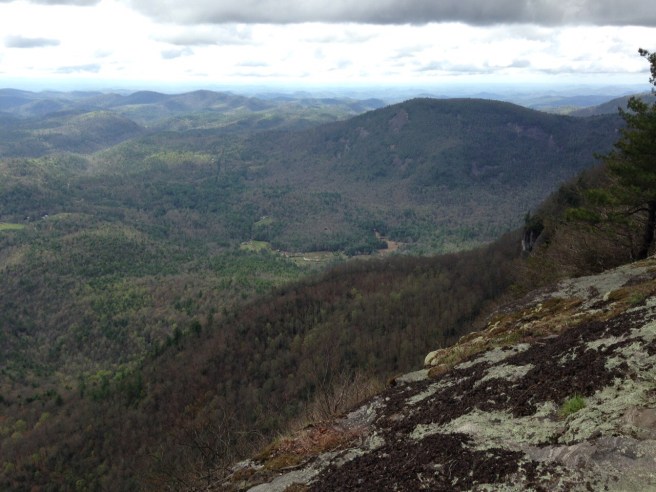
My wife and I really love to hike, and we have had the opportunity to hike in some beautiful spots: along the Pacific coast, in the desert, at Yosemite, and many other lesser known spots.  Some of the greatest rewards of hiking are the vistas that some trails include, and some of the best I have ever seen are on mountain trails.  Today, we hiked along the ridge that goes to the summit of  Whiteside Mountain just outside Highlands, NC.  The view from 4,800 feet was breathtaking.  We have certainly been at higher elevations in other places, but the view today was spectacular, probably because of the mix of sun and clouds and the multiple shades of green introduced by the onset of spring.


I cannot understand people who have no appreciation for the outdoors — for the majestic presence of mountains and seashores, the mighty rumbles of thunder, the magnificent beauty of an ancient tree, a field in bloom, or a rushing river.  I look forward to more excursions to follow trails like the one on this mountain, to see open sky and miles and miles of the earth below. 

Who’s Waging the War on Christianity?

Anywhere from 79% to 87% of Americans identify themselves as religious, with the overwhelming majority being Christian. Not a single member of the U.S. Congress claims to be atheist, at least implying that 100% of Congress is religious. The overwhelming majority faith in Congress is Christianity.  And yet, increasingly we hear that there is a war on Christianity in this country.  My question: who exactly is waging this war?

On the official recess calendar for the U.S. Congress posted by the Office of Congressional and Legislative Affairs, the only official holiday listed is CHRISTmas.  It is still legal for the Old Testament Ten Commandments to be displayed on government property.  There are Congressional committee meetings that still begin with prayer (a Christian one, specifically), and you can bet that plenty of state legislatures open their sessions with a Christian prayer — Allah’s name is never invoked, you can bet your last BBQ sandwich on it.

The dominant holiday across the land, especially in the commercial arena, is Christmas.  It has almost completely engulfed the national holiday of Thanksgiving (which still has strong overtones of Christianity — who are we thanking, after all?) and is extending its reach further back in the year to early November.  Hanukkah is like a subdivision of the metro area of Christmas in this country.  And forget Ramadan — it’s not even a hamlet out in the rural countryside compared to the big city of Christmas.

There are several cable television networks that feed Christian programming around the clock, and plenty of other cable networks include Christian programs or movies with clear Christian themes.  Local affiliates broadcast Sunday morning church services in many areas of the country.  There are loads of U.S. publishers that do nothing else than print Bibles and Christian literature.

Yet when someone decides that the prevailing presence of Christianity is not appropriate in a certain venue, particularly in a government setting, the angry reaction that has become so predictable now is “Christianity is under attack in America!”  Really?  Are the rights of Christians all across the nation being trampled on because some of us see the real value of separating Church and State?  If some of us want to see a little more equality among religious practice in the U.S., or even a safe haven from religious practice for those with no faith, does that hinder Christians from going to church and worshiping just as they have been doing for generation after generation in America?  Somehow, this just doesn’t feel quite like war.

John Irving – A Prayer for Owen Meany

If you haven’t read at least one book by John Irving, then you are missing out on one of the best modern American novelists.  I have read a few of Irving’s works, but none was as brilliant to me as A Prayer for Owen Meany.  A tragic accident brings the two main characters together and links them in a mystery that defines their lives.

I read this novel many years ago, and like many other books from my past, I have forgotten so much of it.  Prolific readers have to come to terms with this unavoidable reality — most of us simply can’t retain the vast majority of what we read.  And, I don’t read all that much.  What is encouraging to me is the side benefit of reading, especially serious fiction.  I may not remember character’s names, specific events, or even the story line, but I know that great books have an impact on my way of thinking and the way I view the world and my own journey.  Sometimes, they alter my path and help me find new avenues that I had no idea existed.

I really wasn’t looking for Christian symbolism when I read this book, but by the time I finished, I had decided that Owen Meany WAS Christ.  Someday I want to return to this novel to see how different my reaction to it will be.  In fact, I would like to do the same thing with several other titles.  So many books, so little time . . . .

4473

Summers Past

Some families have favorite places that they go each year for vacation. I suspect this is still a trend as it was in the 1960s and 70s when my family vacationed almost every summer in Daytona Beach, Florida. It was a magical place with so much to see and do — almost like an extended amusement park with the main attraction being the incredibly popular beach.  I learned how to swim in Daytona; how to body surf, throw a Frisbee, play miniature golf, and so much more. Some of the happiest times I remember with my family growing up were spent there.  


It’s no surprise that going back as an adult, with my own children, was a completely different experience.  The carefree hours on the beach were replaced with keeping constant watch on children to make sure they were still in sight in the breakers or on the sand.  Sleeping late was replaced by getting up early enough to watch the sun rise over the ocean horizon — a spiritual and peaceful moment.  Begging for money for snacks on the beach gave way to worrying about how I was to pay the inevitable credit card bill that would all-too-quickly follow the one week of family fun.

Now that my sons are adults (or almost), my visits to the beach are different yet again.  The commercial overload of the Boardwalk and Highway A1A are not quite as appealing as they once were.  My wife and I live farther away from the coast now than I ever have lived before.  I need time at the beach occasionally for my sanity, so I get there as often as I can.  I am sure that I will get back to Daytona at some point in the near future, and I want to take my wife with me because she has never been.  I have to wonder if some small portion of the magic from my childhood will still be there.

How Can You Not Love Ferns?

Of all the plants I see on my excursions through the forest, I think some of the most beautiful to me are among the most primitive — ferns.  With origins going back anywhere from 300 to 400 million years, ferns have been around as long as reptiles and were spreading across the planet at least 100 million years before mammals arrived.  By contrast, the primates only showed up about 60 million years ago, and the species we know as modern human beings have only been here for about 250,000 years.

Fern bed near gravesiteToday, there are literally thousands of species of ferns growing in various habitats all around the world.  They flourish mainly in places where flowering plants can’t grow because it is too wet or too shady.  In other words, they have evolved to take advantage of habitats that the more dominant seed-bearing plants can’t handle.  Instead of becoming extinct, they adapted. There seems to be a philosophical message there.

I think my attraction to ferns comes from the delicate fronds that are characteristic of so many of the species.  In America, they are often found in shady, moist places that are cooler then the surrounding area, and their lush, green color implies fertility and vitality.  The way they pulsate with the slightest breeze has such a calming effect on me.  Apparently, my interest in ferns is shared by quite a few folks in this country, illustrated by the existence of an organization devoted to studying the plants.  You can find out so much more information about ferns at the website of the American Fern Society.

Worse Things Than Death

I made the 5.5 hour round trip today to see my father, who resides in a nursing home in the town where I once lived.  I moved him to that town after my mother died, so I could be closer to him.  He started out in an assisted living facility, but then dementia and other problems made it necessary to admit him into a nursing home.  He has been in a wheelchair for about 6-7 years.  I say he resides in this facility because basically he is just existing, day after day, until such time that he will cease to exist.  He has no quality of life; he cannot talk beyond a whisper, and it is almost impossible to understand a single word he attempts to say.  Other than dementia and legs that no longer work, he is in relatively good health for someone who is 94.  He takes no prescription medicine — only Tylenol.  Occasionally he gets agitated, which is not surprising, and the nurses give him a sedative, which seems to work.  Unfortunately, he has fallen a few times and has suffered lacerations bad enough for a trip to the ER for stitches.  Oddly enough, he hasn’t broken a single bone, and hardly complains about pain at all — ever.  He fought the staff tooth and nail (well, just nails, since he has no teeth anymore) when they removed his stitches last time, but I think that was from fear and confusion more than pain.

It is heartbreaking to see him linger in this state, and I told him today that I was sorry that he had to do so.  I wish what is left of his life could end.  I wish he could fall asleep forever.  Anyone who has lived too long, or is close to someone who has, knows all too well that there are worse things than death.  I will never wish for a long life — only a full one.

I Prefer to Peddle

When I tell people that my wife and I like to take our kayaks out and do a little peddling, they usually want to correct me by saying, “You mean paddling, right?”  Actually, with our kayaks we can do both.  We discovered about three years ago the Hobie line of kayaks equipped with foot-driven flippers called the Mirage Drive.  These kayaks are larger and heavier than the standard sit-on-top crafts, and they are definitely pricier.  However, if you enjoy getting out on large water — deep rivers and canals, lakes, and even the ocean — then peddling has such an advantage over paddling, especially for speed, distance, and longevity.  You can still use a paddle to propel the kayak if you prefer, and at times you need to, such as in tight spots and shallow water or for docking.  If you’re really athletic or feel the need for a total-body workout, you can do both.  But, in open water using just the Mirage hyper-drive paddles, the Hobie will cruise at about 5 mph with little more effort that riding a bicycle.  In a three-hour excursion you can cover quite a bit of water.  The length and width of the Hobie kayaks make them more stable than standard models, so you can stay dry during most if not all of your trip, especially if you enter and exit the craft from a dock ladder.  The only major disadvantage is transporting the Hobies.  They can be strapped to the top of a car, but getting them up there is almost impossible without two people or a very complicated lift system.  We use a pickup truck with a bed extender — works like a charm.  I have seen some of the most beautiful sunrises and mystical horizons while riding my kayak.  I’m always looking forward to the next trip.

Hobie Kayak
Hobie Kayak

Carl Sagan and Ann Druyan – Shadows of Forgotten Ancestors

Reading is easily one of my favorite activities.  Outside of newspapers, magazines, and websites, I tend to read more novels than anything else.  I like the immersion experience and the sense of accomplishment after finishing a well-written novel.  However, I do enjoy nonfiction works, and I gravitate toward works on history, religion, and natural science.  I am also fascinated by human origins, evolution, and anthropology.  There are a few books I can recall that truly had a life-altering effect on my way of thinking.  One of those was Shadows of Forgotten Ancestors by the late Carl Sagan and co-authored by Ann Druyan.

First published in 1992, this book is an exploration of who we are and how human beings have been shaped by the development of the planet over millions of years.  The authors explore origins of traits central to our current predicament: sex and violence, love and altruism, hierarchy, consciousness, language, technology, and morality.  It is easily the best book on human origins and anthropology for the lay-reader that I have ever read. I’m sure some scholars in the field are still not fond of Sagan’s work, but he really did a good job of making science accessible and fascinating for the rest of us.  For that effort and accomplishment, I am grateful.


A Wooded Path

If you like hiking, or simply taking a walk on a nature trail, the state parks and national forests in north Georgia are some of the best places to enjoy this activity.  The state of Georgia does a fine job, with dwindling resources I am quick to add, with the access to natural resources it provides through the state park system.  The trails vary in length and difficulty levels to accommodate almost any age and degree of fitness.  Most parks have trails that are wheelchair accessible.  The diversity of flora and fauna in the southern Appalachia is unmatched anywhere in the U.S.  There are very few weeks out of the year where the weather makes outdoor exploration uncomfortable here.  I have spent many hours wandering mountain paths through densely wooded countryside and have always come away restored.

Visit Georgia State Parks website

View from Black Rock Mountain State Park visitor center